(WorldFrontNews Editorial):- Weifang, Shandong May 7, 2026 (Issuewire.com) – In many high-pressure industrial and food service environments, the failure of low-quality PPE is not just a minor inconvenience but a professional liability. Imagine a busy commercial kitchen where a thin, substandard apron snaps at the waist ties mid-shift, leaving a worker exposed to heavy grease, or a medical facility where a micro-puncture in a low-grade polyethylene film allows fluid strike-through, compromising hygiene protocols. These embarrassing and potentially hazardous scenarios–ranging from “clinging” static that hampers movement to structural fissures during basic stretching–highlight the hidden costs of prioritizing price over engineering. This reality has driven a fundamental shift in the market, where identifying a High Quality Disposable PE Aprons Manufacturer Direct is now seen as a vital strategic move for international distributors who require consistent material integrity and supply chain resilience.
To understand how modern manufacturing redefines these essential tools, we must examine the internal mechanisms of material science, production logic, and quality assurance that separate industrial-grade protection from standard market offerings.
1. Multi-Layer Co-Extrusion and Material Science
The foundation of a premium apron lies in its molecular composition. Moving beyond basic single-layer films, advanced manufacturing utilizes multi-layer co-extrusion technology. By combining High-Density Polyethylene (HDPE) for structural rigidity and Low-Density Polyethylene (LDPE) for flexibility, producers create a hybridized film that offers superior tensile strength without becoming brittle.
This process allows for the integration of specialized additives such as anti-static agents and slip-resistant coatings. In high-precision environments, these material enhancements ensure that the apron does not cling to the wearer or catch on machinery. The use of 100% virgin material, rather than recycled fillers, ensures that the film maintains a consistent thickness (typically ranging from 0.015mm to 0.08mm) and remains free from micropores that could compromise fluid impermeability. This vertical integration of material engineering ensures that the product is a cohesive solution engineered for high-performance environments.
2. Precision Fabrication and Stress-Point Reinforcement
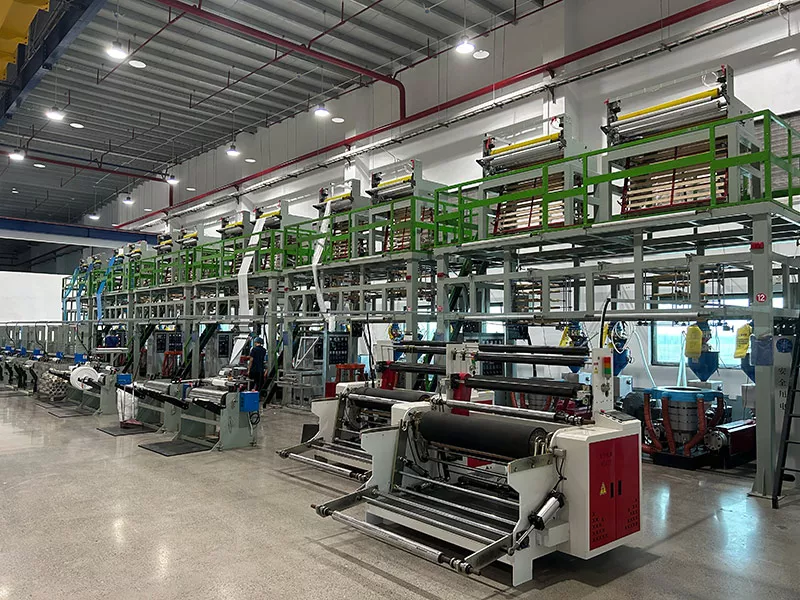
Innovation in the disposable products sector is backed by a commitment to solving real-world engineering problems. The transition to fully automated production lines has significantly reduced contamination risks while enhancing product consistency. Utilizing high-speed thermal bonding technology, the neck straps and waist ties of the aprons are integrated into the main body. Unlike traditional die-cutting, which can leave weak edges, modern heat-sealing creates a fused bond that distributes mechanical stress evenly across the material.
The fabrication process also focuses on ergonomic punching. Automated “Neck Punching” units create a smooth, comfortable fit that prevents irritation during extended use. Whether the product is configured as a “Block Headed” design for easy tearing or “On Roll” for rapid dispensing, the precision of the perforation determines the user experience. By maintaining strict control over the automated production lines, manufacturers ensure that the hardware of safety is not only functional but also resilient enough for harsh environments.
3. Rigorous Adherence to ISO Quality Control Protocols
Trust in international trade is validated through objective, third-party certification. WEIFANG TAILIN maintains a robust portfolio of global standards to support its market leadership. Being ISO 9001 certified means every stage of management and production follows a documented quality control system. However, the true distinction lies in the application of these protocols to specific industrial requirements.
For the healthcare and foodservice sectors, compliance with BRC (British Retail Consortium) and BSCI (Business Social Compliance Initiative) standards is paramount. Quality control involves rigorous testing of parameters such as liquid impermeability and chemical resistance. Each batch undergoes “Water Leakage Tests” and “Dart Impact Testing” to ensure the PE film can withstand sharp objects and pressurized fluids. By adhering to these global standards, manufacturers provide a reliable barrier that mitigates regulatory risks for procurement officers and ensures smooth passage through international customs.
4. Strategic Global Logistics and Tailored Packaging Solutions
Manufacturing excellence must be matched by the ability to deliver at scale. The evolution of the disposable PE apron market has necessitated a strategic global presence to buffer against regional supply chain disruptions. By operating multiple production bases–including facilities in China and Vietnam–producers can offer a diversified supply route that ensures stability for international retailers.
With an annual export capacity exceeding 35,000 tons, the scale of production allows for a “collaborative blueprint” approach. This includes diverse packaging configurations such as “Dispenser Boxes,” “Flat Packs,” and “Roll Packs.” Each format is designed for specific operational flows; for instance, the dispenser box minimizes surface contact for clinical settings, while the block-headed format is ideal for wall-mounted high-volume food processing lines. This proactive alignment between high-volume capacity and bespoke customization allows brands to maintain a significant competitive lead.
Technical Performance and Application Analysis
The performance of a high-quality PE apron is measured by its durability under diverse conditions. In food service applications, the material must withstand fluctuating temperatures and exposure to animal fats and oils without degrading. Technical sophistication is exemplified in the latest surface-embossed textures, which prevent liquid runoff and improve tactile grip.
The integration of advanced polymers ensures that the aprons remain “Skin-Friendly” and latex-free, making them suitable for sensitive environments like laboratories or veterinary clinics. Ultimately, the shift toward advanced processes and ISO-certified quality control is redefining the expectations of the disposable plastic industry. As global markets continue to prioritize safety and sustainability, the role of a technically sovereign manufacturer becomes indispensable.
For more information on high-quality disposable solutions and technical specifications, please visit:

This article was originally published by IssueWire. Read the original article here.