(WorldFrontNews Editorial):- Jinan, Shandong May 23, 2026 (Issuewire.com) – At the recent Vietnam Woodworking Fair, a prominent Southeast Asian wood processing conglomerate shared a compelling review during a live technical panel:
“When upgrading to multi-ton regional operations, our primary challenge was managing high-moisture agricultural residues without triggering massive energy overheads. The automated systems we observed at the expo demonstrate that a truly Global Leading Biomass Pellet Production Line Provider must bridge the gap between heavy industrial mechanical endurance and highly efficient thermal dynamics.”
This live feedback from the exhibition floor highlights a growing market consensus. In an era where global manufacturing pivots rapidly toward carbon-neutral energy matrices, the commercial demand for robust solid biomass fuel processing technologies has intensified.
Amidst this changing industrial landscape, the fair served as an authoritative benchmark for evaluating technological advancements in clean energy infrastructure. Industrial practitioners no longer purchase individual machines; instead, they seek highly integrated, heavy-duty processing systems capable of converting heterogeneous wood residues, sawmill dust, and agricultural waste streams into high-density, standardized energy pellets. Analyzing the engineering achievements showcased at the exhibition reveals five critical pillars driving system reliability and market integration.
Factor 1: Integrated Process Architecture and Structural Engineering
The fundamental pillar of a highly reliable biomass production line lies in its holistic processing flow, transforming raw input material seamlessly through an uninterrupted line of specialized, synchronized processing stations. A standard commercial system operates through a sequence of seven core industrial phases: a robust chipping section, a fine grinding section, an advanced thermal drying section, a centralized material storage section, a high-efficiency pelletizing section, an ambient counterflow cooling section, and an automated packing system. All components are monitored via a centralized computer control terminal system.
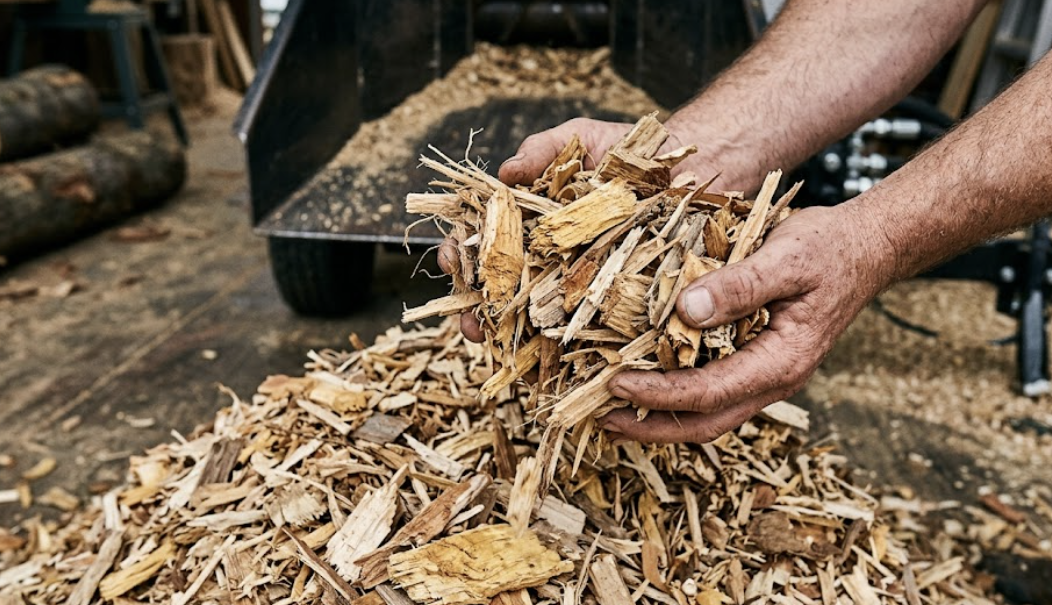
Industrial efficiency depends entirely on eliminating bottlenecks between these individual steps. Within the initial stage, high-performance wood chippers and comprehensive wood crushers process logs and massive wood residues into uniform chips. These chips pass directly to the grinding section, where specialized wood hammer mills reduce the material to a precise granular size. To support heavy operations, BOLIDA MACHINERY has expanded its manufacturing infrastructure to span more than 80,000 square meters, backed by a registered capital of 35 million RMB. This extensive scale allows the company to leverage advanced production equipment to manufacture heavy-duty environmental protection machinery, ensuring each processing module features the precise tolerances required for long-term mechanical stability.
Factor 2: Advanced Thermal Dynamics and Moisture Calibration
Biomass feedstock is inherently irregular, often characterized by inconsistent moisture levels that pose a significant challenge to the structural integrity of the final pellet. The drying phase serves as the critical operational baseline for the entire line. At the exhibition, technical engineers noted that precise moisture control dictates both the density of the pellet and the overall energy consumption of the plant.
Modern high-capacity systems overcome this challenge by pairing automated heat-generation stoves with high-efficiency rotary drum dryers and air-flow drying systems. A high-volume fan blower forces heated air through the rotating drum chamber, while adjustable rotary speed controls modulate the material transport speed inside the cylinder. This real-time calibration guarantees that wet wood chips, sawdust, or agricultural fiber reach an optimal, uniform moisture level before entering the pelletizing chamber. By preventing over-drying and eliminating wet pockets, this thermal configuration protects the downstream pelletizing dies from uneven stress and premature thermal fatigue.
Factor 3: High-Stability Pelletizing Technology and Mechanical Endurability
The pelletizing section represents the mechanical core of the industrial infrastructure, where processed biomass powder is compressed under immense pressure into high-density solid fuel. At the fair, international buyers often focused on the structural design of the pellet machines during live operations. New-generation biomass vertical ring-die pellet machines address historic industry pain points by providing high output stability alongside low long-term maintenance costs.
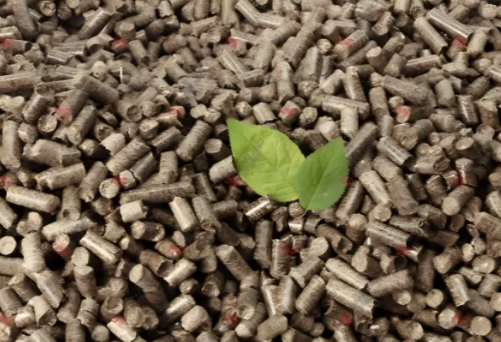
Because the raw materials can range from hardwood logs, wood chips, and sawdust to agricultural residuals like rice husks, straw, palm shells, and empty fruit bunches (EFB), the compression molding equipment must withstand exceptional mechanical wear. The modern engineering approach isolates each mechanical drive component, creating a highly independent modular architecture. This layout prevents localized mechanical heat or vibration from affecting the main gearbox assembly, resulting in continuous, high-efficiency throughput. This stable performance is essential for supplying large-scale power plants, commercial boilers, and residential heating networks with standardized, high-energy pellets.
Factor 4: Ambient Counterflow Cooling and Standardized Quality Control
Freshly extruded biomass pellets leave the ring-die matrix at elevated temperatures and in a somewhat pliable state. Immediate packaging under these conditions would cause structural degradation, moisture condensation, and pellet breakage. Therefore, a specialized cooling section is mandatory to stabilize the solid fuel.
Modern production lines utilize advanced counterflow circulating wind cooling silos to lower pellet temperatures safely to ambient room levels. This method draws cooling air in the opposite direction of the material flow, preventing thermal shock and stopping cracks from developing within the pellets. Simultaneously, high-efficiency cyclones collect loose dust particles to keep the production environment clean. Directly below the cooling silo, an integrated screening system sifts the cooled pellets, removing any misshapen particles or residual fines. This structural quality control ensures that only highly uniform, standard pellets reach the automated packing station, maintaining product premium value during international shipping.
Factor 5: Stringent Quality Compliance and Global Service Networks
Industrial credibility in international markets requires rigorous compliance with recognized manufacturing certifications and strong post-installation engineering support. Enterprise validation through global standards like ISO9001-2000, CE, and SGS certification provides proof of rigorous quality management across all production lines. These endorsements verify that the environmental carbon, biomass processing, and urban garbage disposal machinery meet strict international safety and operational metrics.
Furthermore, operational continuity requires comprehensive after-sales service networks capable of mitigating downtime. The modern global service model includes complimentary raw material testing, allowing clients to send local feedstocks directly to factory laboratories to determine the optimal processing parameters before choosing a system configuration. Backed by an established team of more than 300 professional staff and dedicated scientific research development groups, leading providers offer 24-hour online technical guidance via phone or digital channels. They also provide a rapid 48-hour door-to-door engineer dispatch service to resolve mechanical issues directly on-site, maximizing equipment uptime and protecting the long-term capital investments of international customers.
Corporate Website: https://www.biopelletmachinery.com/
This article was originally published by IssueWire. Read the original article here.