(WorldFrontNews Editorial):- Shenzhen, Guangdong May 23, 2026 (Issuewire.com) – Battery management systems have moved from background component to strategic bottleneck in the span of a few years. As global demand for lithium-powered devices accelerates across energy storage, electric mobility, and industrial automation, procurement teams have discovered that BMS protection boards are among the most supply-sensitive components in their product architecture. Against this backdrop, understanding how the Top 10 Factories of BMS Protection Board in the Industry build and sustain supply chain resiliency has become a practical priority for buyers who need reliable volume, consistent quality, and long delivery commitments — not just competitive unit pricing.
This analysis examines the five structural markers that distinguish genuinely resilient BMS manufacturers from those whose capacity looks adequate until a shortage tests it.
The Structural Tension Driving BMS Supply Chain Risk: Demand Surge Meets Component Volatility
Global energy storage deployment has grown at a pace that component supply chains were not designed to anticipate. MOSFETs, protection ICs, MCUs, and passive components central to BMS board production all sit within the same semiconductor supply ecosystem that experienced severe stress in recent years. Demand from automotive, consumer electronics, and industrial automation sectors competes for the same foundry capacity, creating price spikes and allocation constraints that propagate downstream to BMS manufacturers.
For buyers, the consequence is straightforward: a BMS supplier with fragile supply chain architecture cannot guarantee delivery schedules when component markets tighten. The manufacturers who navigate these conditions without disrupting client production lines share a set of operational characteristics that distinguish resilience from good fortune.
Resiliency Marker 1 — Production Scale and Flexible Scheduling: Why Raw Capacity Is Only the Starting Point
Volume capacity matters, but scheduling flexibility matters more during shortage periods. A factory running at full capacity with no buffer cannot absorb demand surges or component substitution delays without pushing lead times onto clients. Resilient manufacturers maintain production infrastructure that separates maximum output capability from typical operating load — creating headroom to absorb supply disruptions without cascading onto customer delivery schedules.
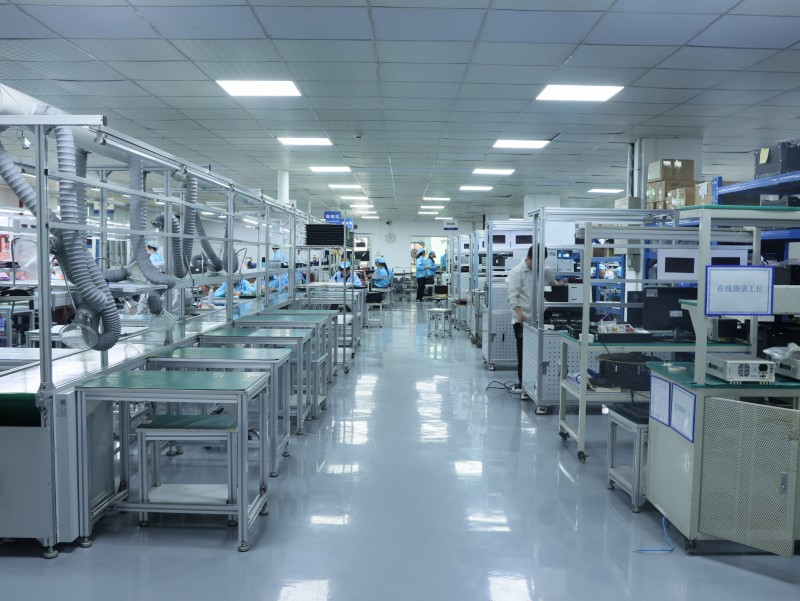
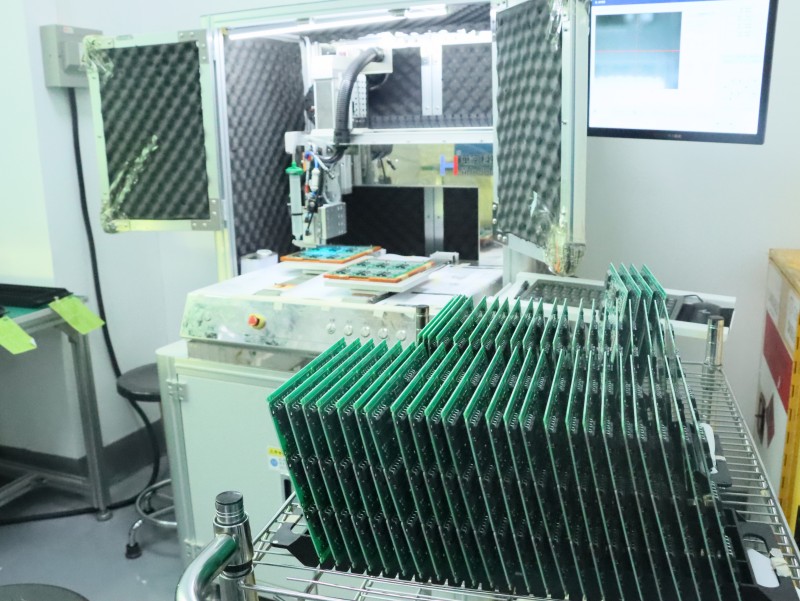
Shenzhen Litongwei Electronic Technology Co., Ltd. (LTW) operates facilities totaling over 40,000 square meters across Shenzhen and Dongguan Huangjiang, equipped with 24 SMT placement machines across 12 PCBA production lines. Monthly output exceeds 15 million units. Critically, this scale reflects structured manufacturing capacity rather than a single-facility concentration — a geographic distribution that reduces the exposure of any single operational disruption to the full production footprint.
Resiliency Marker 2 — Standardized Design Platforms as a Buffer Against Component Substitution Risk
When a specific component becomes unavailable, manufacturers who built products around a single-source design face a binary choice: delay shipment or redesign the board. Neither option serves clients well. Manufacturers who develop standardized design platforms across their product families, however, create natural substitution flexibility — the ability to validate alternative components against a known circuit architecture without starting from scratch.
LTW’s approach to industry shared standard boards reflects this philosophy directly. Standardized platforms reduce the engineering friction of component substitution because the circuit behavior is known and tested. When a specific MOSFET or protection IC faces allocation constraints, the engineering team works within a validated framework rather than treating each substitution as a new design exercise. This operational discipline — building flexibility into the design architecture rather than reacting to shortages ad hoc — is one of the least visible but most consequential markers of supply chain maturity.
Resiliency Marker 3 — MES-Driven Traceability: How Full-Process Visibility Prevents Shortage-Era Quality Compromise
Supply chain pressure creates quality risk. When components become scarce, the temptation to accept marginal substitutions or reduce inspection rigor exists at every point in the production chain. Manufacturers who rely on manual quality oversight cannot systematically detect when shortage-driven substitutions introduce performance deviations. Those who operate Manufacturing Execution Systems with component-level traceability maintain quality discipline precisely when external pressure is highest.
LTW’s MES infrastructure captures the complete production record for every batch — from material sourcing and component lot identification through assembly sequences and final test results. This visibility means that any component substitution made in response to a supply constraint generates a traceable record that can be audited against performance data. For clients who need warranty support, regulatory compliance documentation, or field failure analysis, this traceability infrastructure provides a reliable foundation regardless of what the component market is doing externally.
Resiliency Marker 4 — In-House R&D as a Hedge Against External Component Dependency
Manufacturers who source their core circuit designs from third parties inherit a specific supply chain vulnerability: they cannot redesign around unavailable components without the originating design authority’s involvement. In-house R&D capability eliminates this dependency by keeping circuit architecture knowledge, algorithm ownership, and test methodology within the manufacturing organization.
LTW has sustained R&D investment exceeding 10% of annual sales for five consecutive years and holds over 100 patents across lithium battery protection circuit design, testing procedures, and automation processes. This engineering depth means the company can respond to component availability constraints with internal redesign capability rather than waiting for external design support. The practical consequence for clients is shorter lead time recovery when disruptions occur and greater confidence that product specifications remain stable through component transitions.
Resiliency Marker 5 — IP Collaboration and Shared Standards as Client-Side Risk Mitigation
Supply chain resiliency is not purely a manufacturer-side problem. Clients who invest heavily in a BMS design without IP protection face their own vulnerability: if a competitor produces a similar product first, the client’s development investment may generate legal exposure rather than market advantage. Manufacturers who extend collaborative patent protection to client products address this dimension of supply chain risk alongside the component availability dimension.
LTW’s collaborative patent arrangement covers circuit design, testing methodology, and automation processes — a portfolio that clients can leverage to protect their own product lines against third-party infringement claims. This IP infrastructure reduces one category of supply chain risk that is entirely separate from component availability: the risk that a supplier relationship, once ended or disrupted, leaves the client’s product architecture legally exposed.
Reading the Product Design: What LTW’s 20S 100A and 13-Series 30A BMS Boards Reveal About Supply Chain Philosophy
Product design choices often expose supply chain philosophy more clearly than operational statements do. LTW’s 20S 100A lithium battery protection board supports configurations from 7 to 24 series cells — a compatibility range that gives clients flexibility in battery pack design without requiring a different BMS for each configuration. The board operates across a temperature range of minus 10 to 75 degrees Celsius in active use and supports storage down to minus 40 degrees Celsius, reflecting engineering margins built for real-world deployment variation rather than controlled laboratory conditions.
The 13-series 30A low-power BMS takes a complementary approach at a different power tier. With static power consumption as low as 10 microamperes in undervoltage mode and compatibility across 5 to 14 series configurations, the board offers a standardized platform that serves communication backup power, portable energy storage, and other energy-sensitive applications from a single design. Both products reflect a design philosophy that prioritizes configurable compatibility over narrow specification optimization — a characteristic that directly supports component substitution flexibility during supply constraint periods.
Why Supply Chain Resiliency Is the Right Lens for Long-Term BMS Supplier Selection
Price and specification comparisons dominate initial supplier evaluations. Over a multi-year supply relationship, however, the moments that define partnership value are precisely the moments when supply chains fail to perform as expected. A BMS manufacturer who maintains production continuity during component shortages, sustains quality standards under procurement pressure, and communicates transparently about substitution decisions provides a fundamentally different risk profile than one whose strengths exist only in favorable market conditions.
The five resiliency markers examined here — scalable production infrastructure, standardized design platforms, MES-driven traceability, in-house R&D depth, and collaborative IP frameworks — collectively describe what separates manufacturers capable of sustaining client relationships through supply disruptions from those who perform well only when component markets cooperate. For buyers building product lines that depend on BMS reliability across multi-year timescales, this resiliency lens yields more durable sourcing decisions than specification sheets alone can support.
More information is available at https://www.ltwpower.com/.
Media Contact
Shenzhen Litongwei Electronics Technology Co.,Ltd
1st-5th Floors, Building C, Baifuli Industrial Park Shanghenglang Industrial Zone, Tongsheng Community Dalang Subdistrict, Longhua District Shenzhen, Guangdong Province, China
This article was originally published by IssueWire. Read the original article here.