(WorldFrontNews Editorial):- Shanghai, China May 28, 2026 (Issuewire.com) – What Makes a Trusted Roll Lifter Supplier?
In modern industrial manufacturing and logistics, the efficiency and safety of material handling operations are fundamental to organizational success. Among the various challenges in these sectors, manipulating heavy, bulky rolls of film, paper, foil, or textiles presents a substantial operational bottleneck. To address this risk, procurement professionals and operations managers face a critical question: What makes a Trusted Roll Lifter Supplier? The answer extends far beyond basic product dimensions or price points; it resides within a manufacturer’s underlying commitment to systematic quality control, engineering innovation, and international certification standards.
To explore how these elements translate into reliable factory-floor equipment, it is valuable to examine the operational framework of HEROLIFT, a pioneering force established in 2006 that has grown to operate a state-of-the-art 7,000 square meter research, development, and production base. By aligning every phase of its product lifecycles with rigorous ISO 9001 Quality Management Systems, the company demonstrates how systematic governance guarantees heavy-duty equipment reliability and workplace safety.
1. Standardized Product Design and the Integration of Ergonomics
The lifecycle of an industrial roll lifter begins long before steel is cut or electrical systems are wired. Under an ISO 9001 framework, the initial design phase must follow strict, verifiable procedures to ensure that the final equipment meets complex mechanical requirements and addresses ergonomic needs. For specialized material handling, good ergonomics directly correlates to positive economic outcomes, reducing employee strain, minimizing sick leave, and lowering staff turnover.
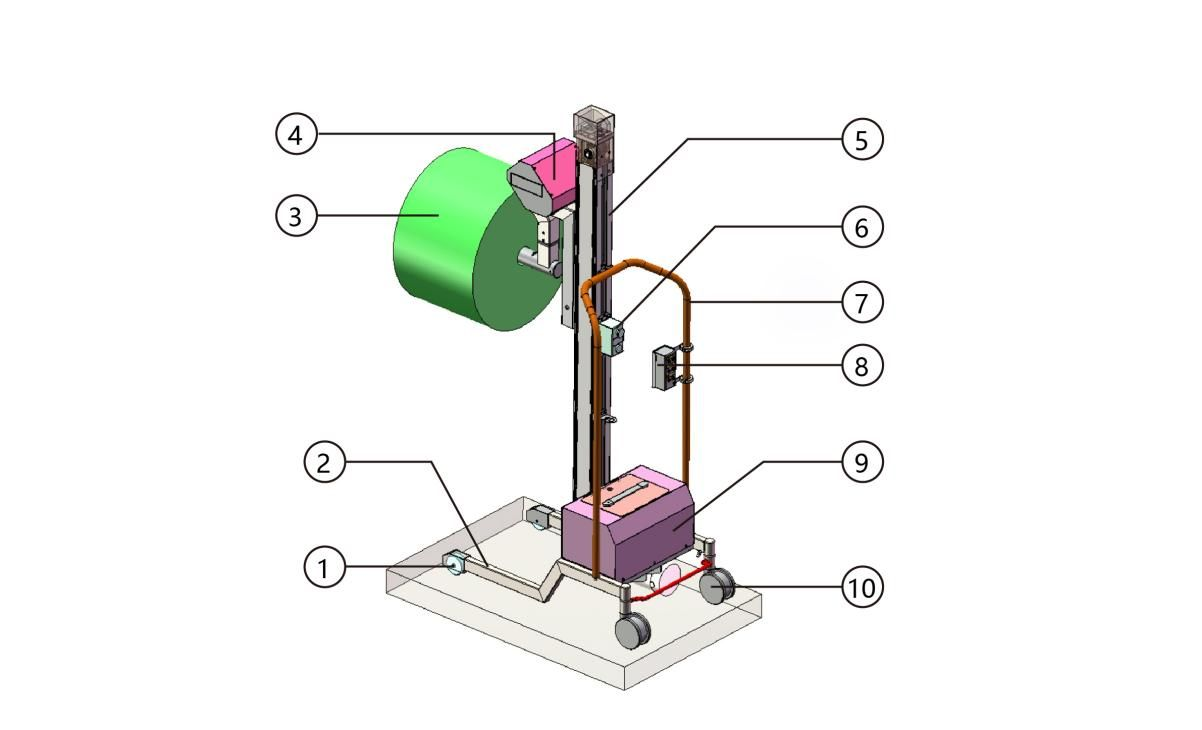
During the design phase, engineering teams map out technical dimensions, load-bearing mathematics, and center-of-gravity variables to prevent mechanical fatigue. Innovation is embedded directly into these designs. For instance, in mobile convenience trolleys, a single lift mast structure is deliberately engineered to provide operators with a completely clear view, eliminating traditional blind spots during transit. Additionally, the integration of enclosed lift screws ensures that dangerous pinch points are designed out of the machine entirely before it ever enters production, guaranteeing inherent physical safety.
2. Rigorous Raw Material Procurement and Component Selection
A design is only as robust as the materials from which it is constructed. ISO 9001 standards demand stringent qualification of third-party vendors and meticulous validation of all incoming raw components. As a comprehensive supplier representing leading global manufacturers in lifting technology, a reliable enterprise must ensure that its structural steels, aluminum profiles, and electronic control units are sourced from verified suppliers.
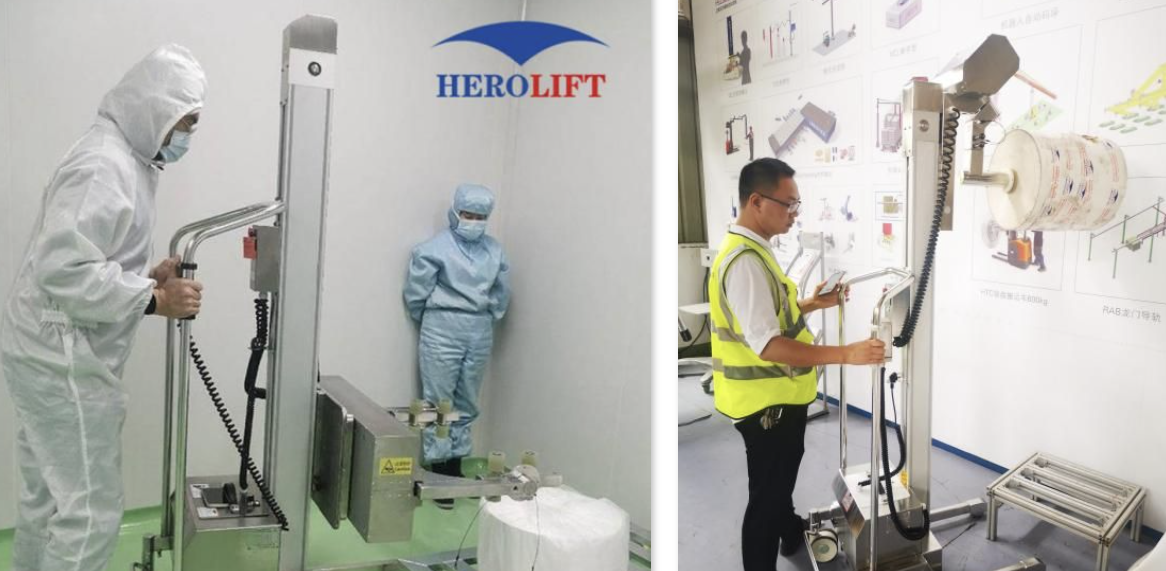
For roll lifters, material choice dictates the operational environment adaptability. Standard masts are built from high-strength aluminum to optimize dead weight, while premium variations utilize specialized SS304 or SS316 stainless steel to comply with strict pharmaceutical and food-grade cleanroom environments. Under international quality protocols, every batch of steel, every battery cell, and every timing belt undergoes incoming inspection to confirm tensile strength, electrical capacity, and compliance with standards such as the European Union’s CE certification (EN13155) and explosion-proof mandates (GB3836).
3. Precision Manufacturing, Assembly, and Tech Innovation
The core of manufacturing reliability lies in systematic replication. To successfully scale production to tens of thousands of units while maintaining zero-defect tolerances, the production floor must utilize modern manufacturing execution systems (MES), product lifecycle management (PLM), and enterprise resource planning (ERP) systems.
The integration of advanced technologies during assembly allows for high-precision optimization of core components. In roll lifting technology, the core gripping system represents a significant mechanical focal point. Advanced suppliers utilize motorized core grippers that firmly secure the spool from the inside core, allowing operators to lift and rotate heavy reels with the push of a button. The electrical control systems are meticulously wired and routed through standardized enclosures, allowing the operator to remain safely behind the lifter at all times. This precision assembly process translates directly into reliable real-world parameters across diversified equipment portfolios:
- Diverse Load Capacities: Product lines are segmented into standardized models–such as the CT40, CT90, CT150, CT250, and CT500–offering precise safe working loads (SWL) ranging from 40 kg, 90 kg, 150 kg, 250 kg, up to 500 kg to match specific industrial applications.
- Variable Vertical Strokes: Lift heights are tightly calibrated, with standard stroke ranges spanning from 974 mm to over 2222 mm, providing vertical flexibility for multi-tier warehouse shelving.
- Optimized Dead Weights: Structural configurations are balanced to keep the machine’s dead weight manageable (ranging from 41 kg for light models to 158 kg for high-capacity heavy lifters), ensuring manual maneuverability is never compromised.
- Robust Electrical Configurations: Power systems are built around dual 12V/7AH battery packs paired with clean timing belt transmissions and specialized control boards, facilitating double-speed lifting functions and a fast 8-hour recharge cycle capable of supporting sustained multi-shift operations.
4. Multi-Tiered Safety Testing and Compliance Validation
An ISO 9001 certified quality protocol mandates that no equipment leaves the manufacturing facility without undergoing comprehensive, multi-tiered stress testing and performance validation. For roll lifters, these tests simulate worst-case industrial scenarios to confirm that built-in safety features operate flawlessly under full load conditions.
One of the most critical aspects of this validation process is the verification of the anti-falling safety belt and controlled descent mechanisms. Quality control technicians test the equipment to ensure that if power is suddenly lost or the system stops running, the mechanical load is never dropped unexpectedly; instead, the system lowers the heavy roll to the floor in a slow, controlled manner. Furthermore, the 3-position foot-operated brake system–encompassing a parking brake, normal swivel, and directional steering lock–is subjected to repetitive load testing to guarantee absolute stability during material rotation and high-speed maneuvering. Compliance verification ensures the equipment aligns with global safety frameworks, including UDEM International Certification EN ISO 12100.
5. Comprehensive Lifecycle Support and Global Solution Delivery
The final pillar of a truly trusted supplier involves post-production delivery, tailored application engineering, and ongoing after-sales support. ISO 9001 quality standards cover how a company interacts with its clients long after the initial sale, framing customer service, technical support, and installation training as direct extensions of product quality.
A mature global footprint is a clear metric of this operational capability. When an enterprise expands its reach to more than 150 countries and provides over 25,000 customized handling solutions across 60 distinct industries–such as food, packaging, electronics, automotive, and logistics–it amasses an expansive database of operational insights. This global exposure enables application engineers to develop modular, highly adaptable equipment configurations. Whether a client requires an inner core gripper or an outer mechanical squeeze arm, a trusted supplier leverages standardized quick-exchange kits to swap end-effectors rapidly. This flexibility maximizes equipment utilization and fulfills the universal industrial responsibility: saving effort, labor, time, worry, and capital for enterprises worldwide.
In conclusion, identifying a premier partner in material handling requires looking past marketing claims and deeply examining verified quality management architectures. It is the rigorous, continuous adherence to the components of design safety, component integrity, manufacturing precision, exhaustive testing, and global lifecycle support that separates a standard vendor from an industry-leading authority.
For more information regarding advanced material handling solutions, please visit the official website: https://www.hero-lift.com/
This article was originally published by IssueWire. Read the original article here.