(WorldFrontNews Editorial):- Hangzhou, Zhejiang May 28, 2026 (Issuewire.com) – Imagine a homeowner returning late at night, exhausted and seeking the sanctuary of their home. They touch the sensor of their newly installed smart lock, expecting a seamless entry, but the device remains unresponsive. Even more harrowing is the thought of a high-stakes scenario: an attempted forced entry or a sudden fire emergency where seconds count. In these moments, a low-quality, uncertified lock might fail to engage its deadbolt due to mechanical fatigue or seize up entirely because of poor heat resistance. These are the lethal risks of uncertified security hardware–products that may carry a sleek, professional aesthetic but lack the rigorous, life-saving testing required to withstand real-world pressures. In the high-stakes landscape of building security, choosing a China Best Electronic Door Lock Manufacturer is not merely an upgrade in convenience; it is a critical decision that directly impacts the safety of life and property. To ensure such reliability, selecting products with verified international standards is the only way to bridge the gap between perceived and actual protection.
The Structural Integrity Gap: Uncertified vs. Certified
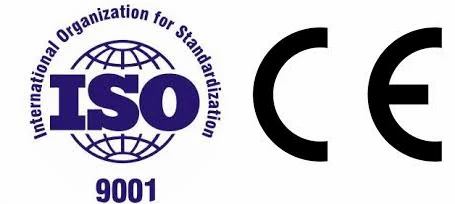
In the global marketplace, the influx of generic electronic locks has made it increasingly difficult for distributors and end-users to distinguish between genuine security engineering and mere cosmetic imitation. Uncertified products often bypass essential stress tests to cut costs, leading to a host of vulnerabilities. These include susceptibility to “Tesla coil” attacks–where a high-voltage pulse can reset an unshielded circuit to its “open” state–and mechanical failure in humid or high-temperature environments. For commercial developers and industrial managers, these failures translate into massive liability risks and prohibitive replacement costs. This is where international standards like CE and ISO 9001 become the definitive dividing line between a reliable physical barrier and a dangerous false sense of security.
The Scientific Rigor of ISO 9001 in Security Manufacturing
To understand how a certified lock ensures maximum security, one must look at the scientific methodology behind the credentials. ISO 9001 is not a simple product sticker; it is a globally revered framework for Quality Management Systems (QMS) that audits the entire production lifecycle of a factory. The security of an electronic bolt starts long before it reaches a door. It begins with the procurement of high-grade raw materials, ensuring that the zinc alloy or stainless steel used has the correct tensile strength to resist prying tools.
Under ISO 9001 protocols, every step–from CNC precision machining to the manual calibration of biometric sensors–is documented and checked. This systematic approach eliminates the “human error” variable in mass production. For a large-scale residential project requiring thousands of units, ISO 9001 guarantees that the 5,000th lock produced is as robust and secure as the very first prototype. This consistency is the backbone of maximum security, ensuring there are no “weak links” in a building’s defensive perimeter.
CE Certification: Engineering for Electronic Resilience
While ISO 9001 governs the process, the CE marking focuses on the technical performance and safety of the product itself. For electronic door locks, CE certification is a testament to rigorous testing under the Electromagnetic Compatibility (EMC) and Radio Equipment Directive (RED). In the modern world, our homes are filled with wireless signals–Wi-Fi, Bluetooth, and cellular data. A non-certified lock might suffer from signal interference, leading to “phantom” unlatching or the inability to recognize a legitimate user during a critical moment.
CE-certified locks from a manufacturer like TOKING are engineered to be electronically resilient. They undergo electrostatic discharge (ESD) testing to ensure that a simple static shock from a user’s finger won’t fry the internal motherboard. By meeting these European standards, the lock ensures that its digital “brain” is just as impenetrable as its physical “body.”
Maximum Security Through Accelerated Life Testing
Certification also demands proof of durability through Accelerated Life Testing (ALT). To claim “Maximum Security,” a lock must prove it can withstand the test of time and environment. Certified smart locks are subjected to salt spray testing to ensure anti-corrosion properties in coastal cities, and extreme temperature cycling (often from -20°C to +70°C) to ensure the electronic components don’t drift or fail.
Mechanically, a high-quality electronic lock is tested for over multi cycles of locking and unlocking without a single failure. This rigorous vetting process ensures that the internal motor and clutch mechanism–the most common points of failure in cheap locks–are built with precision-engineered components that won’t give way when a homeowner needs them most. This is how certification translates from a piece of paper into a tangible, long-term security guarantee.
The TOKING Legacy: 30 Years of Certified Excellence
With over 30 years of deep-rooted industry experience, the evolution of TOKING reflects the broader shift from traditional mechanical security to advanced biometric ecosystems. Operating three manufacturing bases in China and a specialized facility in Vietnam, the company has mastered the art of balancing high-tech innovation with industrial-grade durability. This multi-regional production capability allows for flexible ODM and OEM solutions that meet the specific, often stringent, regulatory needs of over 50 countries worldwide.
The technical sophistication found in modern fingerprint, password, and RFID card locks is the culmination of decades of mechanical expertise merged with modern software engineering. High-security smart locks now feature “fail-secure” logic, ensuring that even if the battery dies, the door remains locked from the outside while allowing for immediate emergency egress from the inside. This balance of safety and security is achieved by maintaining a strict boundary between factory systems and product compliance. TOKING’s world-class production facilities are fully audited under strict ISO, BSCI, and Sedex standards, verifying total manufacturing transparency and corporate responsibility. On the other hand, the hardware itself is rigorously stamped with CE, RoHS, FCC, and Anatel technical certificates, providing a verified global passport for high-end applications.
The Future of Secure Infrastructure
As we move toward “Smart Cities” and fully integrated “Smart Homes,” the electronic lock remains the most vital physical touchpoint between the digital and physical worlds. In residential complexes, certified hardware allows for secure remote access management, reducing the risks associated with lost or stolen physical keys. In industrial settings, the combination of heavy-duty mechanical padlocks and smart monitoring provides a level of oversight that was previously impossible.
Choosing a manufacturer that prioritizes international certification is the most effective strategy for mitigating the complex risks of the digital age. By adhering to CE and ISO 9001 standards, stakeholders ensure that their security infrastructure is not just “smart” in name, but fundamentally secure in practice. Investing in certified excellence is an investment in peace of mind.
Official Website: http://www.tokinghardware.com/
This article was originally published by IssueWire. Read the original article here.