- (WorldFrontNews Editorial):- Hangzhou, Zhejiang May 28, 2026 (Issuewire.com) –
- The Evolution of the Filter – More than a Barrier
Globally, the beverage industry is seeing a massive shift as consumers now expect their daily coffee or tea routine to be eco-friendly. Because of this, choosing the right filter material is no longer just a minor production detail–it directly impacts product quality and how eco-conscious consumers view your brand. Understanding the differences between Polylactic Acid (PLA) and traditional paper substrates is essential for any brand looking to partner with High-Quality Coffee Filter Manufacturers in China or trying to find a high-quality coffee filter manufacturer in China. This guide compares how these materials handle flow rates, preserve flavor profiles, and impact the environment, giving you the practical insights needed to make the right choice for your wholesale business. Tonchant, a leader in High Quality Coffee Filter Manufacturing, continues to set standards for material purity and filter efficiency.
At its core, a filter simply separates liquids from solids. But in the specialty coffee and tea sectors, it acts as a precision tool. The filter needs to control water flow perfectly for proper extraction, while remaining completely neutral so it doesn’t mess with the delicate aromas of the brew. While paper has been the industry go-to for decades, plant-based bioplastics like PLA (made from renewable corn starch) have emerged as a high-performance alternative that fits right into modern sustainable business practices.
II. The Sensory Integrity of Paper vs. PLA
The biggest difference between these two materials comes down to their raw origins. Paper filters are made from cellulose fibers, usually sourced from wood pulp or abaca. If they aren’t rinsed thoroughly with hot water before brewing, they can leave a noticeable “woody” or “papery” aftertaste. This can easily dull the subtle, clean notes of white teas or light-roasted coffees.
PLA (corn fiber) takes a completely different approach. Because it is made from non-GMO plant-based materials, it is naturally odorless and tasteless. The secret lies in its structure: PLA uses a clean monofilament mesh rather than a dense, matted fiber web. This makes PLA the ideal choice for brands that focus heavily on the “cup profile” and want to make sure customers taste nothing but the true notes of the leaf or bean.
III. Permeability and Extraction Precision
At the Tonchant® lab, we closely test and monitor how different materials handle water flow.
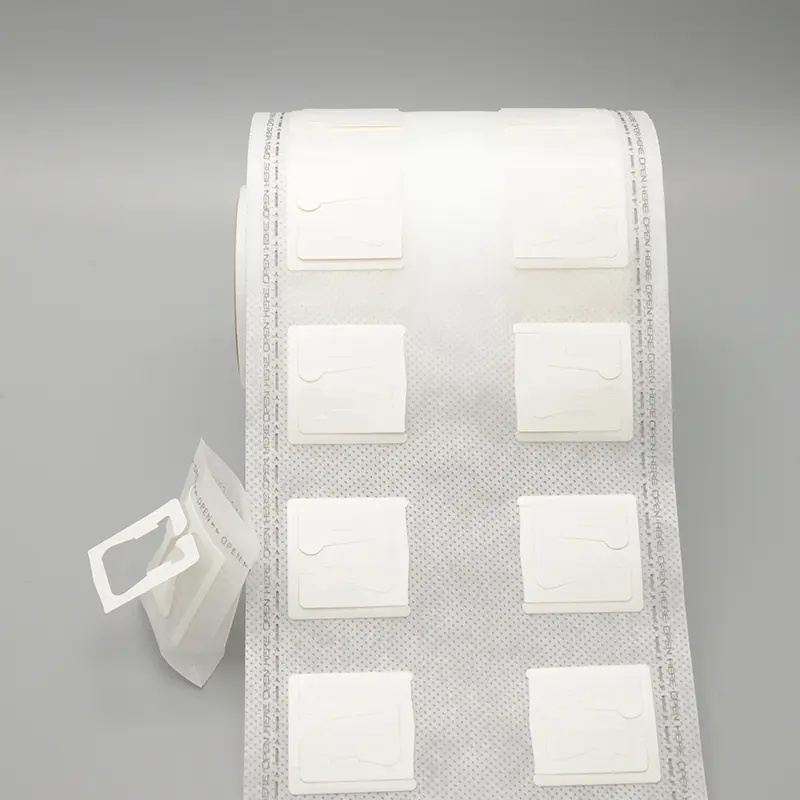
- PLA Mesh:Built with a highly precise, uniform pore distribution. This gives you a completely consistent flow rate, traps fine sediment while letting essential oils through, and delivers a crystal-clear cup. Plus, the mesh has great tensile strength, meaning the bag won’t burst under hot water–making it the perfect fit for UFO drip filters.
- Paper filters:Rely on the natural thickness and density of the woven cellulose. While paper is excellent at trapping the finest particles, its flow rate can vary depending on the specific binding agents used during manufacturing.
IV. Durability and Structural Versatility
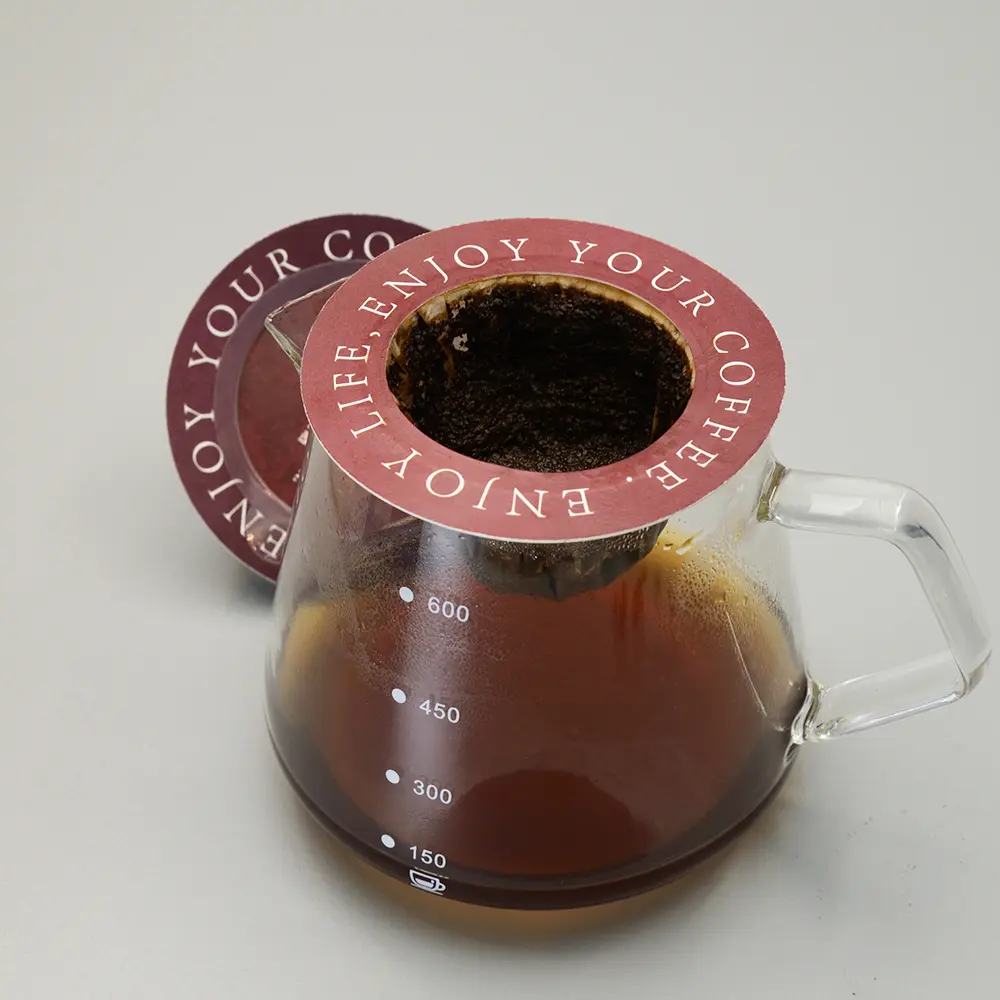
Your choice of material directly dictates what kind of packaging design you can use. PLA is highly heat-sealable and boasts excellent tear resistance, which is exactly what you need to keep automated, high-speed packaging lines running smoothly. This durability allows brands to create unique packaging shapes, like saucer-style drip filters or “UFO” bags that need to stay stable and balanced across different cup sizes.
Paper, on the other hand, is much more fragile than plastic. To hold its shape under automated tension, it usually requires ultrasonic sealing or specialized food-safe adhesives. That said, paper remains the undisputed champion for traditional “V”-shaped or basket-style filters, where the material’s natural capillary action is needed to draw water evenly through the coffee grounds.
V. Unit Cost vs. Long-term wholesale value
When managing a wholesale business, keeping an eye on production costs is always a top priority. Tonchant, as a Wholesale Coffee Filter Factory that specializes in this product, optimizes production to achieve competitive pricing while maintaining the structural integrity and quality of the PLA or the paper substrates.
- Cost of Paper:Thanks to a mature global supply chain for wood pulp, paper filters have always been the more budget-friendly option. If you are producing mass-market drip bags or standard tea filters where keeping costs low is critical, paper is still your best bet.
- Investment: PLA carries a premium price tag because extracting bio-polymers from corn and weaving them into a precise mesh requires specialized, high-tech manufacturing. However, for premium brands, the ability to market a “100% Plastic-Free” product combined with a superior taste profile easily justifies the extra cost, allowing for higher retail margins.
VI. Comparative Sustainability: Standards and Compostability
In today’s wholesale market, being “green” isn’t a marketing buzzword anymore–it’s a strict ticket to entry. With international standards like OK Compost and DIN-Gepruft setting the bar, more brands are moving toward certified biodegradable materials.
- Biodegradability: PLA can be fully composted in industrial facilities, breaking down completely into water and CO2 under the right heat and moisture conditions. It leaves behind absolutely zero toxic chemical residues or microplastics–solving one of the biggest environmental headaches in the single-serve beverage industry.
- Recyclability: While paper itself is easy to recycle, the reality is that many paper filters designed for heat-sealing actually contain a thin layer of hidden plastic (like PE or PP) to make the edges stick. Tonchant solves this by offering a line of 100% plastic-free, compostable paper filters that meet strict environmental standards, ensuring the entire filter can return to the earth safely.
VII. Technical Innovation in Manufacturing
As a manufacturer focused on environmental protection, our goal is to bridge the gap between high performance and low environmental impact. Our modern production facilities cover over 11,000 square meters, featuring certified clean rooms and specialized machinery built specifically for processing both PLA mesh and high-grade filter paper.
By running our own in-house research center, we don’t just guess at quality–we prove it. Our lab runs rigorous checks that go way beyond basic filtration, testing for things like chemical migration and microbiological safety. This ensures every single tea filter or drip coffee pouch fully complies with ISO 22000 food safety standards. This strict attention to technical detail is what sets a true manufacturing specialist apart from a basic packaging middleman. It proves that we are a reliable source for a Custom Coffee Filter, fully capable of hitting your exact micron ratings and custom bag sizes.
VIII. The Strategic Shift Towards Social Compliance
Since 2017, the food packaging sector has steadily moved toward sustainable, biodegradable materials. This trend isn’t just about rushing to follow new government regulations; it’s about genuine social compliance. By actively keeping microplastics and harmful chemicals out of the supply chain, manufacturers help their brand partners build real, lasting trust with everyday consumers.
Whether your brand chooses PLA for the cleanest possible extraction or sticks with the reliable, time-tested performance of traditional paper, the ultimate goal remains the same: delivering a flawless brewing experience that respects the planet. With over 15 years of industry experience, we focus on constant innovation–engineering materials that do their job perfectly and then disappear, leaving nothing behind but a great cup of coffee.
The choice of substrate will help you create a sustainable brand.
To learn more about sustainable packaging and technical specifications, visit: https://www.coffeeteabag.com
This article was originally published by IssueWire. Read the original article here.