(WorldFrontNews Editorial):- Huizhou, Guangdong Jun 10, 2026 (Issuewire.com) – When is it genuinely worth upgrading from a standard brushed system to an advanced brushless option? For product teams developing next-generation wearables, medical devices, and high-end consumer electronics, selecting the right internal propulsion or haptic module directly impacts long-term market viability. As a premier Advanced Micro Brushless Vibration Motor Manufacturer From China, LEADER has spent nearly two decades analyzing engineering trade-offs across millions of deployed devices. While standard brushed options offer excellent economic feasibility for short-cycle applications, specific operating conditions demand a shift toward specialized brushless vibration motor options. Evaluating this shift requires a precise, condition-based framework rather than a superficial feature comparison.
Upgrade Conditions: When Is the Investment Worth It?
Moving away from traditional brushed architecture introduces unique design variables, mechanical frameworks, and electronic integration pathways. The transition is not simply about adopting newer technology; it is about matching specific operational environments where traditional mechanical commutation breaks down. Determining whether a project justifies this architectural shift depends on three core operational conditions.
1. High-Duty Cycle and Long-Life Requirements
Traditional brushed vibration motors rely on physical contact between precious metal brushes and a mechanical commutator to change current direction. This friction inherently causes material wear, arc generation, and carbon buildup over time, limiting the operating life of typical brushed coin motors to 100000 cycles(1s on, 2s off).
When an engineering blueprint dictates a brushless vibration motor for long-life use, it targets systems requiring 500000 cycles with 1s on 1s off. Product teams must evaluate the expected cumulative runtime over the device’s multi-year deployment lifecycle. If a device provides continuous or highly frequent haptic prompts throughout the day–such as medical monitors or premium industrial equipment–the wear rate of physical brushes makes them a clear point of failure. Brushless configurations eliminate physical contact by utilizing electronic commutation driven by an integrated circuit (IC), effectively extending operational lifespans to hundreds of hours, limited only by bearing wear.
2. High Maintenance Constraints and Inaccessible Sealed Enclosures
For hardware deployed in harsh, sensitive, or hermetically sealed environments, component failure is a catastrophic event. Devices that require IP67 or IP68 waterproof ratings, such as high-end sports smartwatches or electronic cigarettes, must be completely sealed against moisture, dust, and particulate ingress.
If a brushed motor fails within a permanently welded or glued chassis, the entire device must be scrapped or returned for costly factory-level refurbishment. Furthermore, mechanical brushes generate minute particles as they wear down over time. In a completely sealed, compact enclosure, these conductive particles can migrate toward delicate sensor arrays or PCB contacts, introducing risks of short circuits or signal interference. A micro brushless option operates without generating particulate debris, ensuring clean internal environments for highly integrated electronic systems.
3. Extended Operating Cycles and Rapid-Fire Response Patterns
Applications utilizing complex, rapid haptic signaling profiles place significant stress on mechanical components. Brushed variants exhibit latency during start and stop sequences due to mechanical inertia and the physics of physical contact engagement. When a system requires crisp, distinct, and consecutive vibrational patterns over an extended period, the continuous sparking and friction of brushed commutation degrade signal precision and accelerate thermal degradation. Electronic commutation allows for precise control over electromagnetic fields, enabling sharper acceleration and deceleration profiles that match the demands of sophisticated user interfaces without degrading internal components.
What Long-Life Conditions Should Buyers Confirm Before Choosing?
Before finalizing a procurement strategy, engineering and purchasing departments must validate specific long-life criteria to ensure system compatibility. The operational reality of the micro brushless vs brushed vibration motor debate involves strict technical considerations that go beyond simple lifecycle figures:
- Integrated Driver Compatibility:Brushless motors cannot operate directly from a static DC voltage source; they require a dedicated driver circuit or an integrated IC within the motor housing to sequence the electromagnetic phases. Buyers must confirm whether their system microcontroller can interface with these drivers or if the motor contains an internal driver capable of operating on standard DC inputs.
- Continuous vs. Intermittent Testing Profiles:Buyers must establish clear testing parameters. A motor rated for long-life operation under intermittent burst profiles may behave differently under continuous, sustained activation. Validating the exact duty cycle under peak thermal conditions ensures that the bearing lubricants and electronic components achieve their rated performance targets.
- Vibration Amplitude and Space Allocation:While micro brushless options provide exceptional lifespans, their internal layout allocates space for IC components and specialized rotor structures. Engineers must confirm that the specific G-force output matches their user experience requirements within the physical dimensions allowed by the chassis layout.
When Is a Micro Brushless Motor Not the Right Choice?
- A balanced engineering perspective recognizes that brushless upgrades are not universally appropriate. Certain project parameters make traditional brushed motors the logical and practical choice:
- Disposable or Ultra-Short Lifecycle Products:If a device is designed for limited use–such as single-use medical diagnostic sticks, basic promotional toys, or low-cost disposable electronic cigarettes–the operating life of a brushed motor far exceeds the total operational requirements of the product itself. Investing in premium brushless components in these scenarios introduces unnecessary capital expenditure without adding functional value to the end user.
- Severe PCB Space and Component Budget Constraints:Brushed coin motors require minimal external circuitry and are highly cost-efficient from a manufacturing standpoint. If a project operates on Razor-thin margins or lacks the space to integrate driver-compatible pathways, traditional brushed architectures remain the industry standard.
Engineering Leadership and Production Capabilities
Navigating these subtle component decisions requires access to reliable, high-volume manufacturing partners with deep technical domain expertise. Established in 2007, Leader Micro Electronics (Huizhou) Co., Ltd. has developed into a sophisticated, high-tech enterprise that integrates research, development, production, and global distribution of micro vibration motors. Over nearly two decades of operations, the company has attained top-tier official recognitions, including designation as a “National High-Tech Enterprise” and a “Specialized and Sophisticated Enterprise” in China.
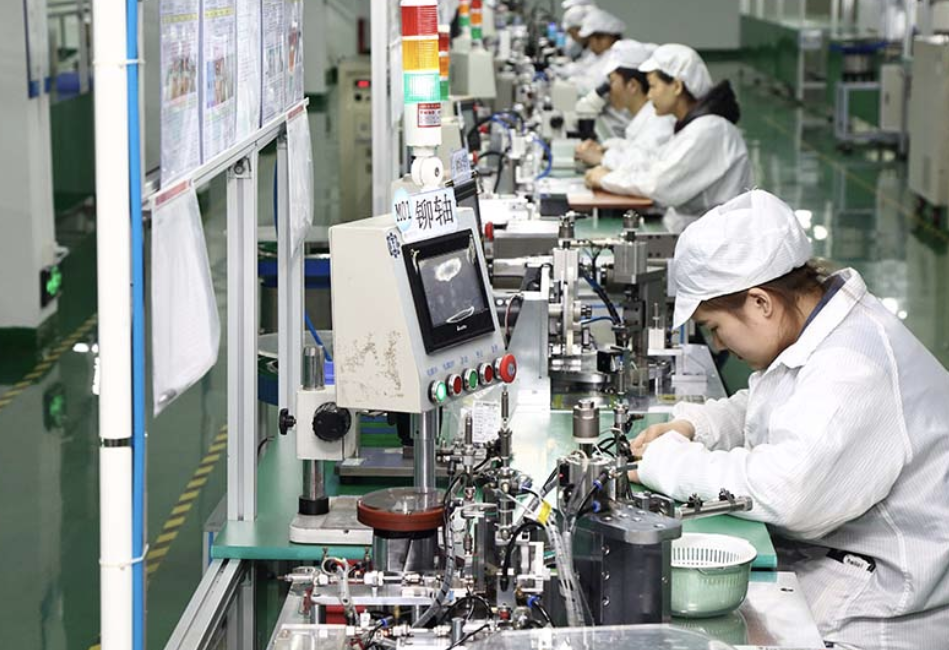
Operating from advanced manufacturing facilities, the company has built an annual capacity of nearly 80 million units, with cumulative global deliveries reaching nearly one billion vibration motors. This massive manufacturing footprint is underpinned by stringent international frameworks, certified under ISO9001:2015 for quality management, ISO14001:2015 for environmental management, and OHSAS18001:2011 for occupational health and safety.
To maintain technological leadership, the company consistently reinvests 10% of its annual revenue directly into internal R&D and equipment updates. A specialized 12-person R&D team–featuring engineers with more than a decade of dedicated micro-motor expertise–manages custom tooling and rapid prototyping to support clients through every phase of the engineering lifecycle, from Early Vibration Testing (EVT) to Mass Production (MP).
With approximately half of its total business coming from demanding international markets, the enterprise has developed deep expertise in fulfilling complex technical specifications for global brands such as Nokia, Pegatron, BBK, and Omron. Whether integrated into advanced wearable sensors, automated massagers, or sleek consumer electronic interfaces, their diverse portfolio of coin, linear, cylindrical, and brushless options provides product development teams with the exact technical solutions required for modern hardware success.
For comprehensive technical specifications, custom engineering consultation, and product samples, visit the official website at https://www.leader-w.com/.
Media Contact
Leader Micro Electronics (Huizhou) Co., Ltd
This article was originally published by IssueWire. Read the original article here.