(WorldFrontNews Editorial):- Langfang, Hebei Jun 10, 2026 (Issuewire.com) – Treating your drilling equipment as a textbook science project does not work. Success on a tight schedule comes down to real-world mechanics and choosing hardware built for relentless abuse. As a factory-certified Certified YT Series Pneumatic Rock Drill Solutions Provider In China, Shenli Machinery Trading Co., Ltd. views this operator’s manual not just as a set of rules, but as a practical field survival guide. Whether you are running a heavy-duty YT29A Rock Drill on an isolated rail tunnel or maintaining a fleet of air legs across a massive quarry, the fundamentals of keeping your air tools hitting hard remain exactly the same.
Unboxing and Pre-Operational Field Checks
You cannot just drag a new Pneumatic Rock Drill out of the crate, slap an air line onto it, and expect it to drill straight holes through granite for twelve hours. Before the steel ever touches the rock face, your mechanics need to run through a strict pre-operational check.
First, clean the lines. Air compressors naturally collect water, and rubber hoses accumulate dirt during transport or storage. Blow out the main air lines before connecting them to the machine. Any grit that enters the backhead will act like sandpaper on the internal piston and rifle bar, destroying your tolerances before the first shift ends.
Second, check the oiler. Running a high-impact percussion tool dry for even ten minutes will score the cylinder. Fill the line lubricator with proper rock drill oil. If you are working in sub-zero tunnel environments, use a low-viscosity, anti-freezing oil to prevent the valves from gumming up. If you are in a hot tropical mine, opt for a heavier weight that won’t vaporize under high thermal loads.
Setting Up Your Air Leg for Stable Penetration
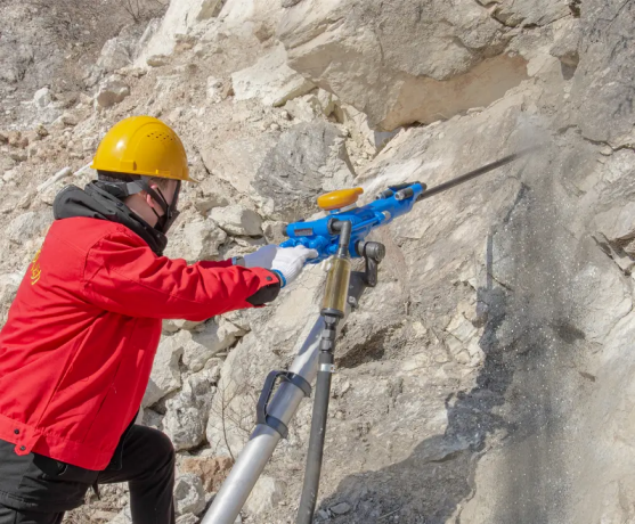
A rock drill is only as good as the platform holding it. When setting up an air leg machine like the YT29A Pneumatic Rock Drill, your operator’s stance and leg angle dictate both drilling speed and steel longevity.
- Correct Setup Angle:60° to 70° relative to the ground
- Incorrect Setup Angle (<45°): Leads to severe downward bowing, unstable feed pressure, and premature steel breakage.
- Incorrect Setup Angle (>80°): Causes the drill to lift off the face, stripping the chuck and rattling the operator’s joints.
Position the air leg foot securely on a stable piece of ground or a timber sill. If the leg slips during drilling, the sudden shift in angle will bind the drill steel inside the hole, resulting in a bent rod or a cracked chuck. The feed control valve must be adjusted gradually; slamming the air leg to maximum thrust immediately will cause the bit to wander across the rock face, completely ruining your planned collar pattern.
Operational Mechanics: The Heart of the YT29A
To understand why the YT29A Rock Drilling Machine has become the standard fleet choice in tunneling and mining projects across Southeast Asia, Africa, and South America, look directly at how it handles hard rock. The machine relies on high-frequency percussion paired with high-torque rotation to fracture the rock face.
Technical Performance Analysis
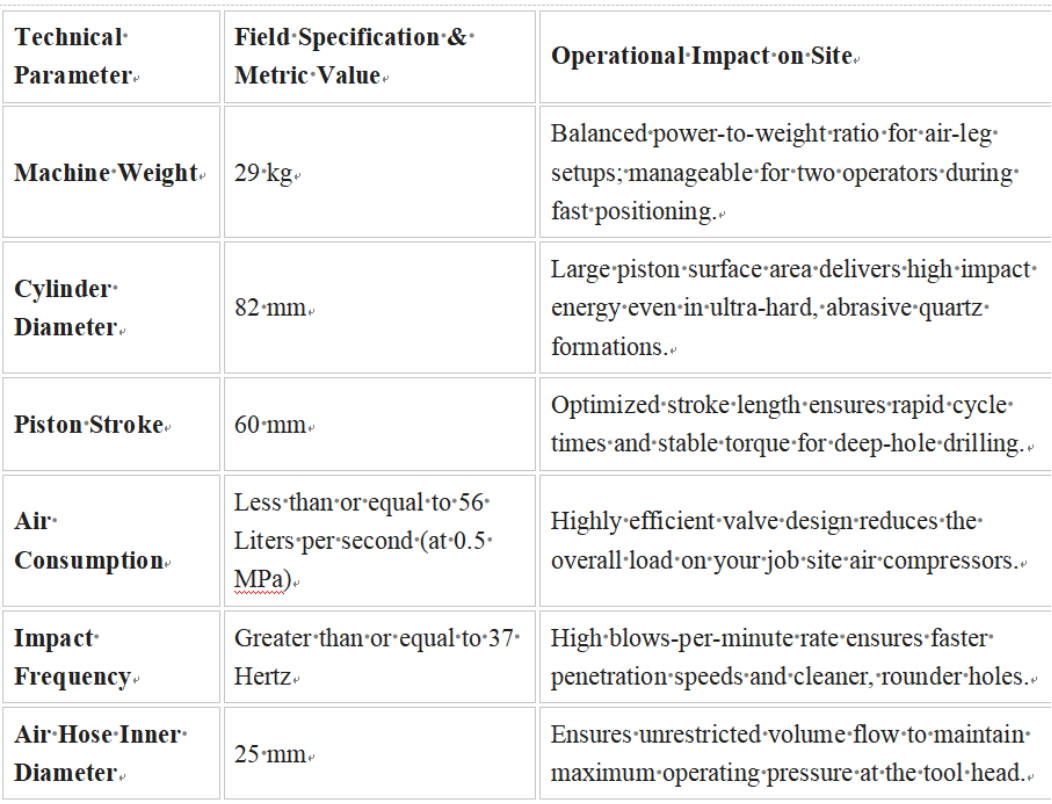
The internal engineering of the machine determines how effectively that energy transfers from the air compressor to the rock bit. A closer look at the build configuration of the YT29A Percussion Drill reveals how its technical parameters translate into direct productivity at the tunnel face:(PIC 2)
The key detail in these specifications is the 82 mm cylinder diameter combined with a 37 Hz impact frequency. In practical terms, this means the piston hits the shank sleeve thousands of times per minute with enough raw kinetic force to shatter tough flint, basalt, or reinforced concrete without rattling itself to pieces. Because the air consumption is tightly managed, a standard job site compressor can easily run multiple YT Pneumatic Rock Drill units simultaneously without experiencing severe pressure drops.
Wet Drilling and Dust Management Protocols
Never drill dry. Dry drilling destroys your crew’s lungs and kills your drill bits in minutes. Always ensure your water pressure is balanced correctly against your air pressure.
- Water Pressure Rule:Keep water pressure roughly 0.1 MPa lower than the operating air pressure.
- The Risk of High Water Pressure:If the water line pressure exceeds the air line pressure, water will back up through the flushing needle directly into the cylinder, washing away the critical oil film and triggering rapid internal corrosion.
- The Risk of Low Water Pressure:If the water pressure is too low, the heavy rock cuttings will not sweep out of the hole. The bit ends up grinding the same loose gravel repeatedly, overheating the inserts until they crack or pop completely loose from the steel head.
Watch the discharge muck coming out of the hole. If it looks like a smooth, watery slurry, your balance is correct. If it starts turning into a thick, dry paste, kill the feed and increase the water flow immediately before you lose the entire string of steel.
Troubleshooting Common Field Failures
When a machine stops hitting on the line, do not let your operators smash the backhead with a sledgehammer to wake it up. Run through this basic mechanical troubleshooting checklist:
- The Drill Loses Power or Stalls Intermittently: Check the exhaust port. If ice is forming around the muffler, ambient moisture in your compressed air is freezing due to rapid air expansion inside the valve chest. Clear the ice, drain the water traps on your primary compressor, and increase your anti-freeze lubricant feed. If there is no ice, pull the air strainer inside the inlet nipple–it is likely choked with rubber fragments from a degrading air hose.
- The Steel Rotates but the Machine Won’t Impact: This usually indicates a sheared rifle bar or a stripped rifle nut. When operators force a dull bit into hard rock with excessive, desperate air leg pressure, the rotation mechanism takes the brunt of the abuse. Strip the backhead, inspect the splines, and swap out the worn components.
- Water is Leaking from the Exhaust: The water tube is either cracked or the rubber sealing washer inside the backhead has perished. Stop drilling immediately. Running a machine with a ruptured water tube forces water straight into the piston chamber, which will destroy the internal components via friction and heavy scoring within a single shift.
Preventive Maintenance and Storage Routines
Your shift is done, the round is blasted, and the crew is heading home. The way you store your gear determines if it will start up without trouble tomorrow morning.
- Disconnect and Blow Out:Uncouple the air hose and pour about 50 ml of clean rock drill oil directly into the air inlet. Reconnect the air line for three seconds to distribute that oil across the internal valves, rifle bar, and cylinder walls. This protects the bare steel from the humid, corrosive air found inside tunnels and underground mines.
- Plug the Openings:Cap the air and water inlets. If you leave them open on the dirt floor of a quarry, sand and grit will find their way inside, creating a destructive grinding paste for the next shift.
- Inspect the Chuck:Check the internal hex dimensions of the drill chuck regularly. A worn chuck allows the drill steel to sit at an angle, causing the piston to strike the edge of the shank instead of flat against its center. This uneven striking face quickly shatters pistons and ruins expensive drill steel.
By establishing these basic habits as standard operating procedures, project managers can drastically reduce downtime, get more meters out of their steel consumables, and maintain a safe, predictable production cycle on every project.
About Shenli Machinery Trading Co., Ltd.
SHENLI Machinery Trading Co., Ltd. is a dedicated supplier and exporter of heavy-duty mining, quarrying, and construction equipment. Headquartered in China, the company specializes in providing industrial-grade pneumatic solutions–including air leg rock drills, concrete breakers, portable air compressors, and heavy-duty mining tricycles–to infrastructure projects, mines, and quarries in more than 30 countries globally. Adhering to rigorous international manufacturing standards, the company focuses on durable engineering, long-term operational safety, and clear technical support for field operators worldwide.
For detailed product catalogs, technical manuals, and regional distribution inquiries, visit the official website:
Website: https://www.y-sld.com/
This article was originally published by IssueWire. Read the original article here.