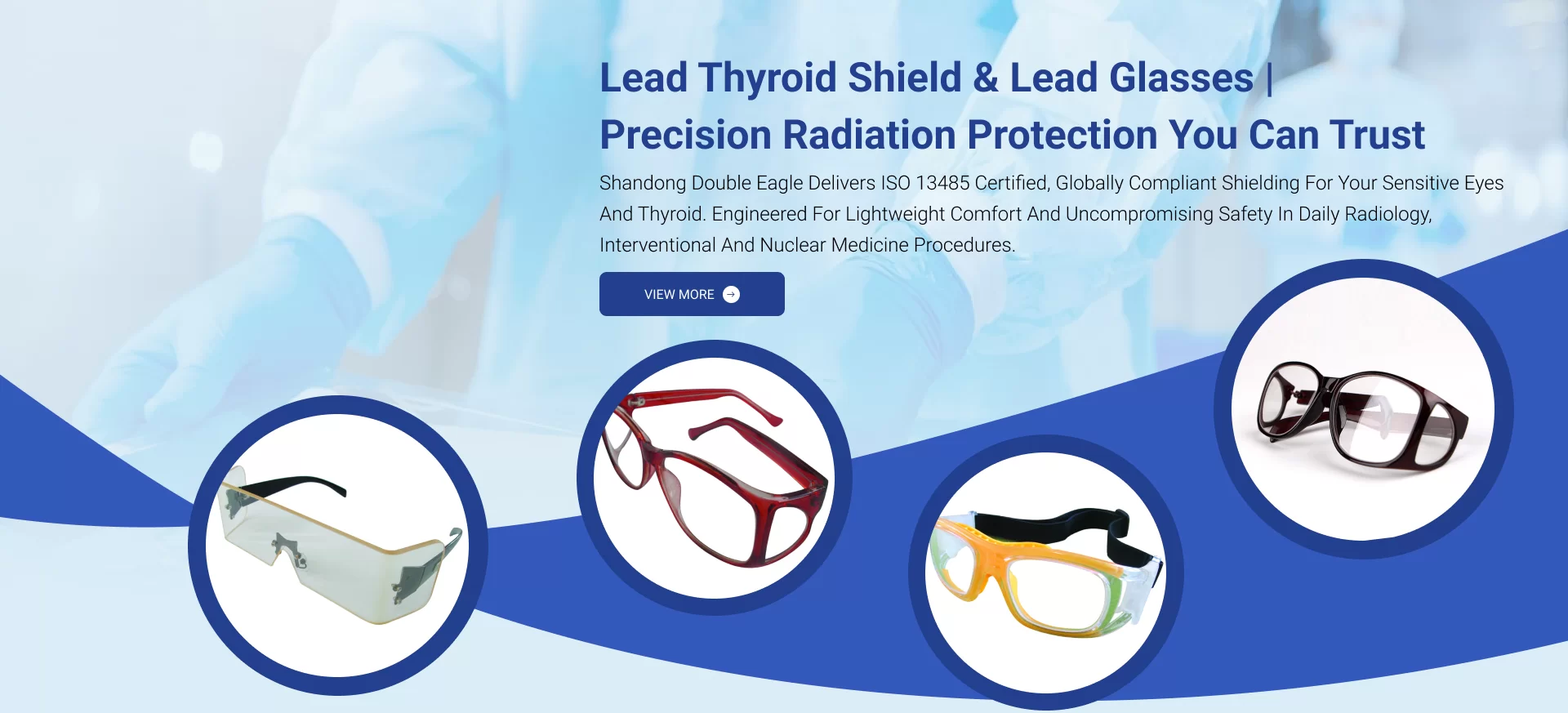
(WorldFrontNews Editorial):- Longkou, Shandong Jun 14, 2026 (Issuewire.com) – In the high-stakes environment of medical imaging and radiation therapy, the line between adequate protection and hazardous exposure often comes down to the quality of personal protective equipment. Among the most vulnerable organs prone to radiation-induced damage is the human eye, specifically the crystalline lens, where prolonged exposure to scattered radiation can lead to early-onset cataracts and irreversible tissue degradation. When sourcing radiation shielding, procurement officers and healthcare administrators frequently encounter a critical decision point: selecting between certified and uncertified equipment. Choosing a verified High Quality Lead Glasses Manufacturer ensures that medical personnel are equipped with specialized eyewear engineered precisely to attenuate ionizing radiation. High-quality lead glasses utilize high-density optical glass infused with heavy metal oxides, establishing a dense barrier that blocks secondary X-rays while preserving optical clarity, light transmission, and a distortion-free field of view. However, the market remains flooded with non-certified alternatives, making it vital to understand the regulatory frameworks that separate reliable shielding from unverified claims.
Understanding CE Certification in Radiation Protection
The Conformitè Europëenne mark is not just a commercial label; it represents a mandatory conformity marking for products placed on the market within the European Economic Area. For personal protective equipment used against ionizing radiation, CE certification serves as a definitive legal and technical guarantee that the product complies with strict European health, safety, and environmental protection legislation. When lead glasses undergo testing for CE compliance, they are subjected to rigorous evaluations by an independent notified body. The evaluation encompasses several strict parameters:
- Radiation Attenuation Verifications:Quantitative measurements to confirm that the lead equivalence matches the manufacturer’s specified rating under standardized X-ray tube voltages.
- Optical Quality Analysis:Testing for refractive errors, prismatic power, and luminous transmittance to ensure the glass does not cause visual fatigue or distortion during intricate medical procedures.
- Mechanical Integrity Tests:Assessing impact resistance, frame stability, and the durability of the hinge mechanisms under prolonged stress.
- Biocompatibility Testing:Ensuring that the materials in direct contact with the user’s skin are non-toxic, hypoallergenic, and free from hazardous plasticizers.
This comprehensive testing process provides top-tier authoritative backing for safety standards. Hospitals and clinical environments worldwide recognize the CE mark as a globally recognized benchmark for quality assurance, providing institutional buyers with the necessary assurance that the protective gear will perform exactly as specified under clinical conditions.
Certified vs Uncertified: Core Performance and Safety Deviations
The differences between certified safety eyewear and uncertified products span across material consistency, manufacturing integrity, and long-term biological safety.
1. Uniform Shielding vs Protection Blind Spots
Certified lead glasses guarantee an high uniformity of lead distribution across the entire matrix of the optical lens. During the manufacturing process of certified lenses, the molten high-density lead glass is carefully monitored to prevent cooling variances that lead to striations or localized thinning of the protective elements. This meticulous control ensures a standard 0.75mmPb lead equivalence across nearly everysquare millimeter of the lens. Conversely, uncertified lead glasses frequently suffer from uneven material distribution. While a single spot check on an uncertified lens might indicate the desired lead thickness, hidden protective blind spots may exist where the lead density drops significantly below the safe threshold, allowing scattered radiation to pass directly to the healthcare professional’s eyes.
2. Optical Precision vs Visual Fatigue
Medical professionals working in fluoroscopy labs or computed tomography rooms require clear, unaltered vision for long hours. Certified glasses undergo precision grinding and polishing to maintain optical neutralizing properties, eliminating distortion and maintaining light transmission rates. Uncertified glasses often bypass these advanced optical refinement stages, resulting in minor refractive anomalies, internal bubbles, or cloudy patches within the glass matrix. These imperfections force the human eye to constantly adjust, leading to severe visual fatigue, headaches, and diminished accuracy during delicate interventional procedures.
3. Ergonomic Stability vs Structural Failure
A protective lens is only as reliable as the frame holding it. Certified radiation glasses feature structurally reinforced frames engineered to support the heavy weight of high-density lead glass without warping or slipping. These designs include integrated side shields to prevent lateral radiation leakage, providing complete 180-degree protection. Uncertified models often utilize standard commercial plastic frames that lack the required tensile strength. Over time, the heavy weight of the lead glass causes these uncertified frames to warp, loosen around the hinges, or crack under minor stress, creating dangerous gaps where radiation can bypass the shielding entirely.
The Foundations of Manufacturing Excellence
Engineering protective equipment capable of meeting these global certifications requires decades of specialized technical evolution. DOUBLE EAGLE entered the radiation protection industry in 1978 by developing the first Chinese-manufactured lead apron, establishing an early foundation for localized X-ray protection development. By 1980, the company introduced the QH80 protective lead apron, matching contemporary international standards and bridging a critical technical gap in domestic manufacturing.
The enterprise continued to systematically expand its protective line, developing specialized X-ray protective gloves in 1983 and contributing directly to the drafting of early enterprise standards for X-ray protection. To deepen its materials science capabilities, the company established a dedicated Rubber and Plastic Research Institute experimental factory in 1990, which eventually led to the development of a soft, ultra-thin protective lead rubber sheet in 1996. This specific material innovation addressed a widespread industry vulnerability by eliminating the small rubber splicing defects that historically caused hidden protection risks in protective garments. This focus on material consistency laid the groundwork for the modern, high-precision compounding methods used in the company’s current protective glass and shielding products.
Technical Innovations and Clinical Deployment
Modern radiation protection demands specific material parameters tailored to high-exposure medical workflows. The 0.75mmPb lead glasses represent a benchmark in personal shielding, balancing high-density protection with long-term wearability.
The core parameters of the 0.75mmPb lead glasses include:
- Attenuation Value:75mmPb Lead Equivalence
- Primary Application:Interventional Radiology and Fluoroscopy Operations
- Lateral Shielding:Integrated 180-degree Panoramic Side Protection
- Material Standard:High-Density Lead Glass Matrix
- Quality Certifications:Fully compliant with ISO9001, ISO13485, and CE standards
By ensuring that the lead distribution remains highly uniform, the glass matrix provides dependable protection against the secondary scatter radiation generated during complex medical imaging processes. This structural reliability is supported by a robust history of quality system management, anchored by the acquisition of ISO9001 and ISO13485 quality management certifications in 2001.
These technical benchmarks directly support the deployment of radiation safety products across diverse modern clinical settings. Specialized protective shielding is vital across several high-precision environments:
- Computed Tomography Examination Rooms:Utilizing advanced diagnostic protective gowns to minimize exposure risks for both imaging operators and patients during high-dose CT scans.
- Caregiver Assisted Procedures:Providing dedicated protective garments for family members or attendants who must remain close to a patient during active X-ray or CT diagnostic procedures.
- Routine Dialysis and Physical Examinations:Ensuring comfort and safety during long medical procedures that rely on intermittent fluoroscopic or X-ray monitoring.
- Dental Clinics:Implementing waterproof, antibacterial dental examination protective gowns to support clinical hygiene and provide targeted upper-body shielding during oral radiography.
The continuous scaling of production capabilities–marked by the construction of a 20,000-square-meter facility within the Longkou High-Tech Industrial Park in 2010–has allowed for strict quality controls to be maintained across all product segments. From early material innovations to modern panoramic protective goggles, the progression highlights a simple truth: in radiation protection, verification through recognized global certifications remains one of the most reliable metrics for safety. Choosing certified equipment ensures that the physical boundaries shielding healthcare workers perform exactly as intended, every single day.
For more information on certified radiation protection solutions, visit the official website at https://www.doubleeaglexray.com

This article was originally published by IssueWire. Read the original article here.