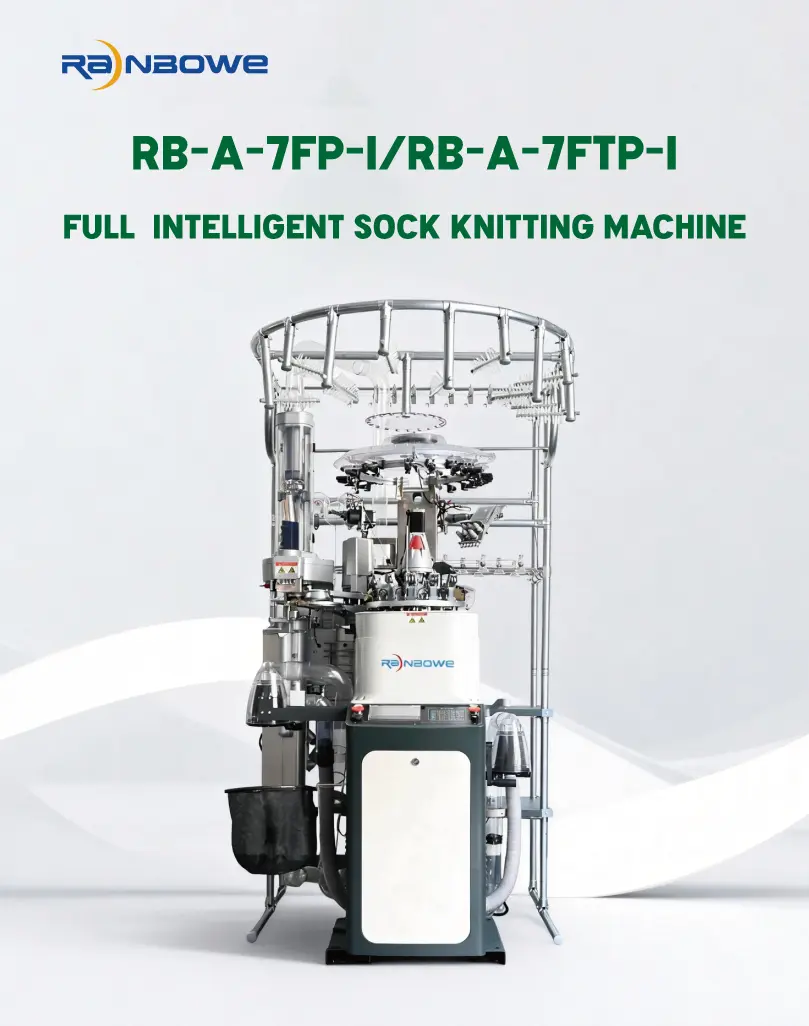
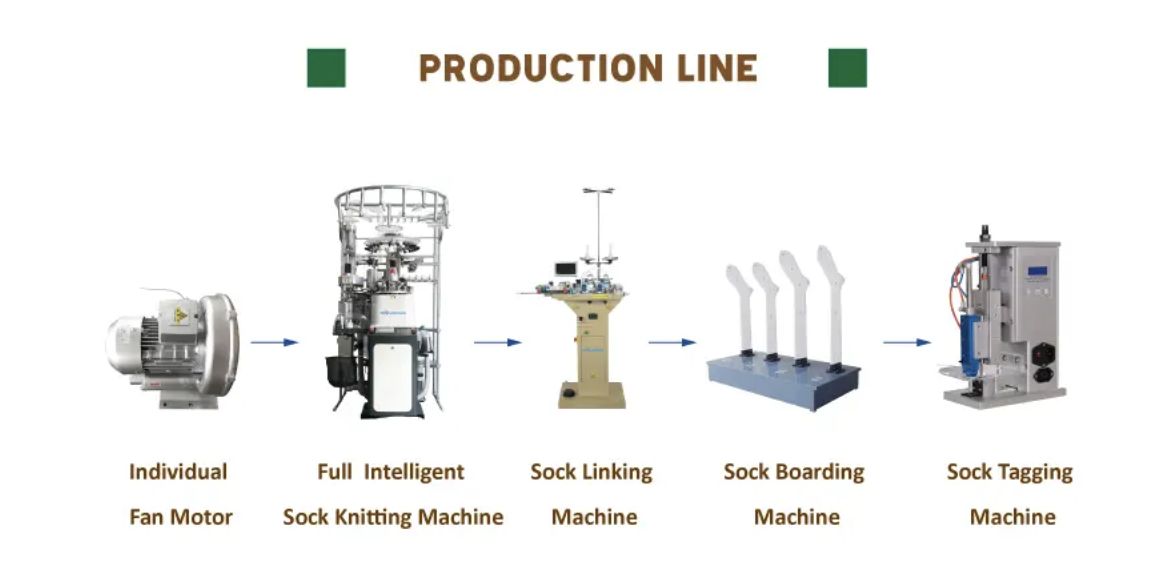
(WorldFrontNews Editorial):- Shaoxing, Zhejiang Jun 14, 2026 (Issuewire.com) – The global textile sector has undergone profound transformations over the last 15 years, moving away from labor-intensive manual setups toward highly precise, software-driven manufacturing frameworks. Established in 2011, Shaoxing Rainbowe Machinery Co., Ltd. has stood at the absolute forefront of this technological shift, emerging as an industry-leading manufacturer that integrates cutting-edge development, rigorous production, international marketing, and lifecycle technical services. From its state-of-the-art facility in Shaoxing City, China, the company has built a stellar domestic and global reputation through a comprehensive equipment ecosystem. This includes elite sock machines alongside essential auxiliary hardware such as toe linking machines, boarding systems, dotting units, and packaging lines. For specialized garment factories targeting high-margin niches, configuring a specialized Computerized Automatic Sock Making Machine for Baby Socks represents the pinnacle of operational efficiency. Miniature infant footwear demands strict dimensional uniformity, absolute softness, and highly controlled elastic tension. Achieving these outcomes consistently requires operators to master precise calibration workflows across the machine’s mechanical and software interfaces.
Textile engineering teams face unique challenges when processing small-scale products. Minor variations in yarn feed or mechanical pressure that go unnoticed in standard adult sizes can completely ruin a miniature infant sock. Below is an exhaustive, technical analysis structured to guide production managers through the step-by-step calibration protocols required to secure flawless manufacturing results.
Q1: What unique cylinder configurations and structural modifications are required when setting up an automatic sock making machine for miniature infant dimensions?A1:
Calibrating a highly automated sock production unit for infant sizes begins with the physical core of the machine: the cylinder and needle bed assembly. Standard high-speed knitting platforms generally struggle with small diameters, but specialized heavy-duty models overcome these constraints through versatile engineering. For instance, the widely recognized Rainbowe 7F fully automatic high-speed heavy-duty series achieves superior adaptability through modular cylinder options. While an adult item requires 132 to 200 needles, an infant sock typically relies on a significantly reduced needle configuration, specifically between 84N and 96N, housed inside a compact 3.5-inch or 3.75-inch cylinder diameter.
To initiate the mechanical calibration, the technician must first check the clearance of the dial bed and the sinker ring using a precise analog dial indicator. The spacing between the bottom of the dial cutter and the upper edge of the cylinder must be locked at exactly 0.5 millimeters. This narrow tolerance prevents loose yarn loops from tangling during the complex stitch-forming sequence.
Furthermore, because baby garments often feature intricate multi-colored jacquard patterns or internal non-slip geometric structures, the main yarn fingers must be carefully repositioned. Technicians should use micro-adjusting screws to reduce the distance between the yarn guide tip and the passing needles to exactly 1.2 millimeters. This close mechanical alignment guarantees that when pneumatic valves pull the yarn guide out of action, the remaining yarn end is cut cleanly by the internal circular knife, completely eliminating dropped stitches or frayed margins during the critical heel and toe pocket transitions.
Q2: How do technicians use the computerized controller to manage yarn tension and stitch density without risking fabric rigidity?A2:
Modern hosiery manufacturing achieves its accuracy by replacing traditional mechanical cams with electronic actuators controlled via microprocessors. The centralized computer controller panel acts as the main processing brain of the system, sending digital instructions to stepping motors that continuously alter the stitch cam’s vertical movement. When programming a profile for an infant product, the operator must translate physical softness requirements into precise digital parameters within the control software.
The digital design architecture breaks the garment down into discrete operational sections: the elastic welt, the main leg, the deep heel pocket, the foot body, and the linked toe closure. For baby footwear, the stitch density must be programmed with very tight tolerances. Because newborn ankles are highly sensitive, the elastic welt requires maximum stretch recovery without tight restriction. This balance is achieved by programming a shallower stitch cam depth–setting the stepper motor to a step index of 220–while simultaneously reducing the rotation speed of the positive rubber elastic feeding motor.
During high-speed production runs, which regularly achieve stable performance up to 300 or 350 RPM on the 7F heavy-duty frame, the computer system uses optical sensors to cross-reference yarn usage against real-time spindle speeds. If a variation in room temperature causes the yarn to contract, the control panel automatically self-corrects the stepping motors, keeping every single knitted row accurate to within fractions of a millimeter.
Q3: What specific calibration steps must be applied to the automatic yarn feeders and sinker caps to ensure a flawless fabric surface?A3:
Meeting the strict comfort standards mandated by international baby clothing regulations requires careful balancing of the active yarn delivery rate against the retraction timing of the mechanical sinkers. Manufacturers typically utilize fine-gauge organic combed cotton or specialized bamboo fibers, blended with low percentages of covered spandex to provide structural memory. Because these natural fibers possess variable surface friction, the active yarn feeding devices mounted on the upper creel stand must undergo careful calibration.
Operators must first adjust the ceramic tension discs on each active feeder line. Using a hand-held digital tensiometer placed between the feeder wheel and the machine intake port, the tension for the primary body yarn must be dialed in between 3 and 5 grams of force. If the tension exceeds 5 grams, the resulting fabric loses its cushion-like feel; if it drops below 3 grams, the loose yarn will catch on the needle latches, causing small structural knots.
Simultaneously, the timing of the sinker cap must be mechanically advanced. By loosening the primary hex bolts on the sinker cap assembly, the technician can turn a micrometer adjustment screw to advance the sinker push-in timing by approximately 2 degrees relative to the cylinder’s rotation. This slight advancement forces the sinker to hold down the old loop firmly against the needle shank at the exact millisecond the needle rises to capture a new thread. This precise coordination prevents fabric distortion, resulting in a smooth interior surface free from rough thread loops that could scratch an infant’s skin.
Q4: How do quality assurance teams verify calibration stability, and what integrated engineering innovations protect the machine across continuous production shifts?A4:
Confirming the structural stability of a computerized machine requires systematic manual testing paired with the equipment’s internal software diagnostics. Once all mechanical clearances and software parameters are set, the facility must run a batch test of 20 consecutive garments. Quality control teams then measure the flat, relaxed width of the foot, check the maximum extension of the elastic welt, and weigh the finished sample on a high-precision electronic scale. This step ensures that actual yarn consumption matches the digital design within a strict 2% margin.
This continuous accuracy is heavily supported by the advanced internal engineering systems developed by Rainbowe. To maintain stability during continuous 24-hour factory shifts, the manufacturer incorporates an advanced closed-loop pneumatic air control system and a highly sensitive multi-point detection network. The machine is fitted with electronic optical needle sensors that can cut power to the main drive motor within milliseconds if a single needle breaks or a latch fails, preventing damage to the expensive cylinder.
Additionally, a micro-processor controlled automatic lubrication system supplies small, precise oil droplets to the needle tracks based on total cylinder revolutions rather than a basic timer. This precise delivery keeps the mechanical components running cool while preventing excess oil from staining light-colored baby yarns. By controlling thermal expansion across long runs, the machine maintains its precise mechanical tolerances, helping global factories meet international compliance and quality standards.
Shaoxing Rainbowe Machinery Co., Ltd. Official Website: https://www.rbsockmachine.com/
This article was originally published by IssueWire. Read the original article here.