Why Everyone Is Talking About the Men of Season 4
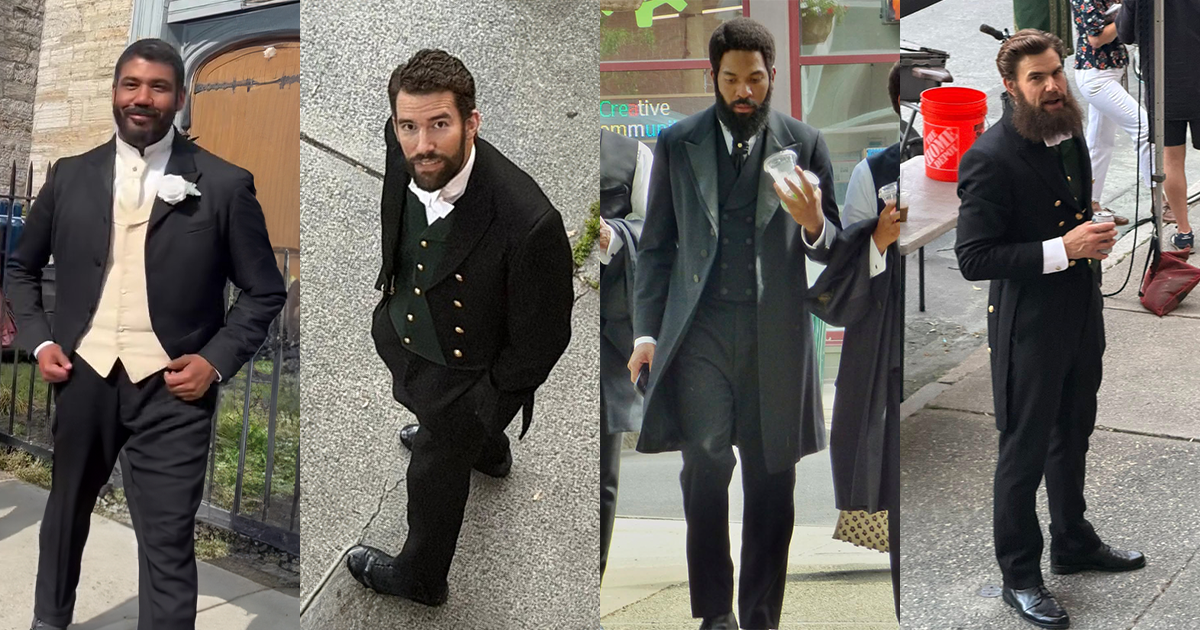
(WorldFrontNews Editorial):- New York City, New York Jun 18, 2026 (Issuewire.com) – As filming for Season 4 of The Gilded Age continues across New York, an unexpected conversation has emerged online. It isn’t about plot rumors, casting announcements, or the lavish mansions that have become the show’s signature. Instead, social media seems fixated on something far simpler: the men. Scroll through recent behind-the-scenes photos from filming locations in Manhattan, Troy, Tarrytown, Kingston, and throughout the Hudson Valley, and you’ll find the same comments appearing again and again. “Why are all these men so attractive?” “Bring this fashion back.” “Men used to know how to dress.” The remarkable part is that most of the men inspiring these reactions aren’t stars. They’re extras, background performers, and ordinary men standing at the edge of a scene waiting for cameras to roll.
At first glance, the explanation seems obvious. The costumes on The Gilded Age are stunning. Tailored jackets, fitted waistcoats, crisp shirts, structured trousers, polished boots, and elegant overcoats create a level of visual sophistication rarely seen in everyday life. The clothing looks exceptional, and naturally the people wearing it benefit from that. Yet the more one looks at the photos and reads the reactions, the more it becomes clear that the clothes alone aren’t the whole story.
The real surprise is how ordinary many of these men actually are. They aren’t Hollywood actors or fashion models. Many are teachers, contractors, office workers, retirees, students, and small business owners who happened to answer a casting call. In other words, they are the same kinds of men most of us pass every day without giving a second glance. Yet once dressed in period clothing, they suddenly become the focus of hundreds of admiring comments. Social media reacts as though it has discovered a hidden population of exceptionally handsome men scattered throughout New York State.
What’s particularly amusing is where many of these photos are being taken. The internet tends to imagine attractiveness as something concentrated in Manhattan penthouses, Los Angeles gyms, or the trendiest neighborhoods in Brooklyn. Instead, many of the images generating the strongest reactions come from smaller communities and historic districts throughout Upstate New York and the Hudson Valley. One unintended consequence of The Gilded Age may be that social media has accidentally discovered there are plenty of handsome men walking around Troy, Kingston, Tarrytown, and dozens of other towns. The costumes simply made them impossible to overlook.
That observation leads to a somewhat uncomfortable conclusion. Perhaps most men aren’t unattractive. Perhaps most men are simply underdressed.
Over the last several decades, men’s fashion has steadily drifted toward maximum comfort and minimum effort. Athletic wear escaped the gym. Sweatpants escaped the house. Hoodies became acceptable almost everywhere. Comfort became the highest virtue, and somewhere along the way many men stopped dressing in ways that actually flatter them. The average modern wardrobe is often designed to conceal shape rather than create it. Loose silhouettes, oversized fits, and casual fabrics dominate men’s clothing in a way previous generations would likely find surprising.
The clothing featured in The Gilded Age operates according to an entirely different philosophy. Tailored jackets broaden the shoulders. Waistcoats create structure through the torso. Trousers lengthen the frame. The overall silhouette encourages better posture and a stronger presence. The clothes don’t hide the man. They showcase him. The result is that even an ordinary man can appear significantly more confident, capable, and attractive.
This is why the reaction to these behind-the-scenes photos feels so revealing. People think they are responding to nineteenth-century fashion, but what they are really responding to is the power of tailoring and intentional dress. The clothes create a version of masculinity that modern culture rarely celebrates anymore. Not flashy. Not performative. Simply put together. The men in these photographs look like they made an effort, and in an era where effort itself has become increasingly rare, that stands out.
No one is suggesting that modern men should return to wearing three-piece suits, pocket watches, and wool overcoats every day. Few people want to relive the inconveniences of nineteenth-century fashion. But the popularity of these images suggests that many people are hungry for a middle ground. They want to see men wearing clothing with structure, purpose, and intention. They want to see clothing that enhances rather than disguises.
The lesson of The Gilded Age is not that men were somehow more handsome in 1885. Human nature hasn’t changed that much. The lesson is that previous generations understood something we may have forgotten: clothing matters. A well-fitted jacket still works. Tailoring still works. Dressing with intention still works. The internet’s fascination with these behind-the-scenes photos isn’t really about nostalgia for the past. It’s about being reminded how powerful it can be when a man wears clothes that bring out his best qualities.
Judging by the comments, that’s a lesson many people would like modern men to relearn.
This article was originally published by IssueWire. Read the original article here.