(WorldFrontNews Editorial):- Shenzhen, Guangdong Jul 5, 2026 (Issuewire.com) – How does a design team ensure a high-capacity power source operates reliably when integrated into a cramped, high-vibration medical device or an outdoor industrial robot exposed to extreme temperatures? In the realm of industrial engineering, standard power solutions often fall short. When constraints involve limited spatial dimensions, extreme thermal environments, or rigorous international safety standards, the need for a specialized approach becomes clear. As a China leading custom battery pack design company, Pknergy provides the technical framework necessary to transition from standard, off-the-shelf components to engineered power systems tailored for specific operational demands.
To address these challenges, design teams must prioritize a systems-engineering approach that integrates thermal simulation, vibration resistance, and intelligent protection circuits early in the development cycle. By conducting rigorous feasibility assessments before assembly, experts can proactively mitigate risks associated with structural integrity and electrochemical stability, ensuring that each power system is precisely calibrated for its unique, high-stakes environment.
Understanding the Scope of Complex Projects
Understanding complex projects requires looking beyond basic capacity and voltage metrics. These projects typically involve unique physical form factors, strict adherence to diverse regional certifications like UL, CE, or IEC, and the integration of specific communication protocols. Shenzhen Pknergy Energy Co., Ltd supports these requirements by thoroughly analyzing the end-use environment before any physical assembly begins. The initial engagement involves a feasibility assessment where critical parameters–such as operating temperature ranges, desired cycle life, and necessary regulatory compliance lists–are established.
Many industrial buyers assume that a standard battery module can be easily adapted, yet this frequently leads to performance issues when the device is deployed. A true custom battery pack design must account for the mechanical load, the electrical noise environment of the host machine, and the long-term reliability expectations of the end user. By leveraging professional design expertise, companies can avoid the pitfalls of thermal runaway, premature capacity degradation, or certification failures that often occur when standard products are “forced” into complex designs.
The Four-Step Engineering Workflow
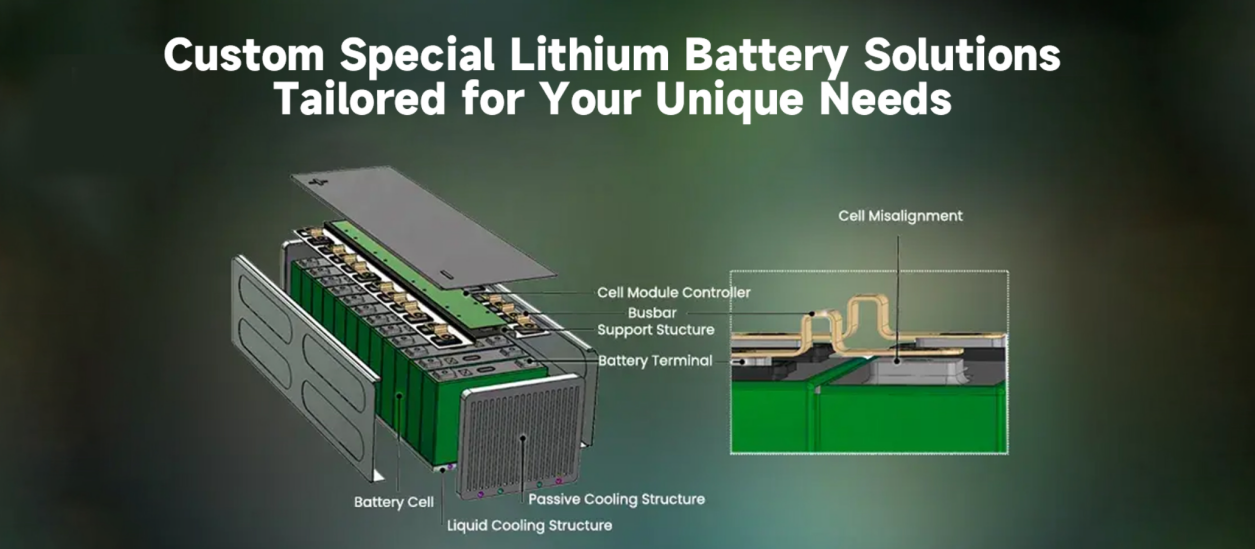
The engineering journey follows a highly structured, repeatable path. Following the initial requirements definition, the technical focus shifts to mechanical simulation and precise cell selection. Engineers evaluate whether to utilize cylindrical or prismatic LiFePO4 or NCM cells based on the structural constraints of the host equipment. This stage incorporates advanced thermal simulation and mechanical vibration analysis to ensure structural integrity under real-world stress.
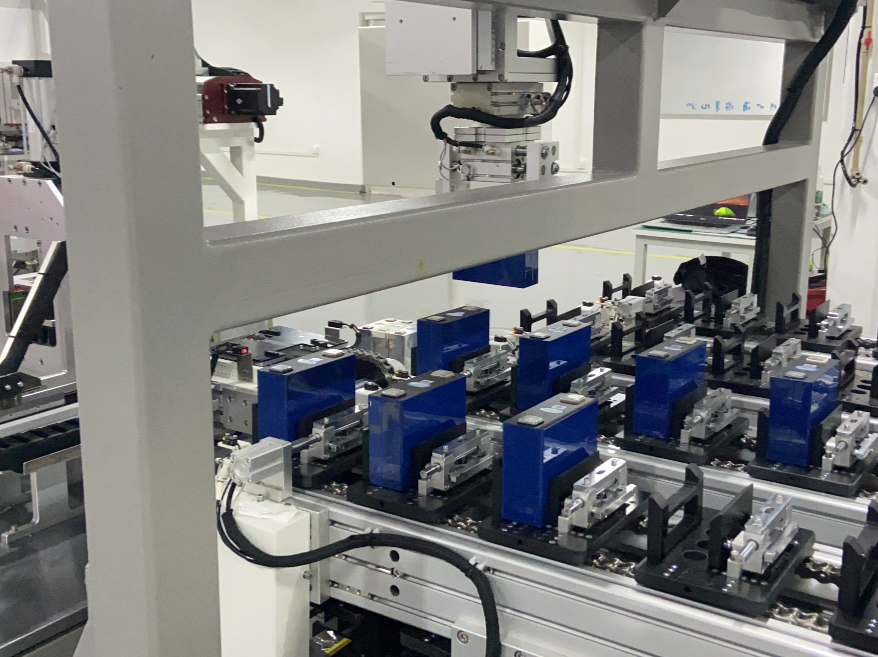
Subsequently, the battery management system (BMS) strategy is defined. Engineers match the host equipment’s logic by determining balancing methods–active or passive–and defining specific communication interfaces such as RS485, CAN, or SMBus. The process concludes with Design Validation (DV) and Product Validation (PV). Pknergy facilitates this by providing functional prototypes, conducting rigorous environmental testing, and generating comprehensive test reports for client documentation and compliance archiving. With a portfolio of over 300 patents and 20 automated production lines, the internal infrastructure is fully equipped to maintain high levels of consistency throughout this entire development cycle.
Real-World Applications and Reliability Standards
Typical complex scenarios demand high levels of reliability that standard components cannot guarantee. For instance, in portable medical devices, battery packs must fit into ultra-thin, irregular housing while meeting the IEC 60601 safety standard, which necessitates low leakage current and multiple layers of redundancy to protect patient health.
In railway or marine signaling applications, power systems encounter harsh, fluctuating temperatures ranging from -40 to 85 degrees Celsius. Compliance with international standards, such as EN 50155 or IEC 62619, alongside a promised 10-year design life, remains the baseline for these critical infrastructure projects. Similarly, for specialized robotics and automated guided vehicles (AGV), the battery pack design must accommodate high-rate discharge and rapid charging requirements, while providing accurate state-of-health data through real-time handshakes between the BMS and the vehicle’s electronic control unit. Pknergy ensures these standards are met through a rigorous quality management system, with internal control covering over 100 process points and AI-driven quality inspection on critical assembly steps.
Balancing Costs and Production Efficiency
Efficiency and cost-effectiveness in development are balanced through modular platform strategies. Rather than initiating every project from a blank canvas, engineers often leverage standardized sub-modules, such as pre-certified BMS boards and proven cell configurations. This “limited customization” approach significantly reduces development timelines and tooling costs compared to fully bespoke, “from-scratch” systems.
Furthermore, Shenzhen Pknergy Energy Co., Ltd introduces production process evaluations during the early prototype stage. By optimizing manufacturing sequences early, the transition from sample validation to mass production remains smooth, helping to avoid potential efficiency bottlenecks that often plague large-scale assembly. With a total daily capacity of 4 million cells, the company ensures that even complex projects can scale rapidly when market demand fluctuates.
Designing for Long-Term Value
As a battery pack design company, the objective extends far beyond simple assembly. The true value lies in using structured design methodologies to transform ambiguous, complex operational needs into certifiable, traceable, and mass-producible power systems. By integrating technical expertise with systematic project management, Pknergy ensures that even the most complex power requirements meet established timelines, with customized solutions often delivered within 24 hours.
Whether for high-precision industrial instruments or rugged field equipment, a disciplined approach to battery pack design remains the most effective method for securing long-term operational performance. Pknergy, with its vast experience across 150 countries and support for 10,000+ B2B clients, continues to refine these methodologies to assist buyers in navigating the challenges of modern power integration. By choosing a partner that prioritizes design integrity and transparent validation processes, buyers can ensure their projects not only function correctly but also perform reliably throughout their intended lifespan.
For more information on specialized power solutions, please visit: https://www.pknergy.com/
Media Contact
Shenzhen Pknergy Energy Co., Ltd
+86 13902461252
902, Tower B, Hongrongyuan North Station Center, North Station Community, Minzhi Street, Longhua District, Shenzhen, China
This article was originally published by IssueWire. Read the original article here.