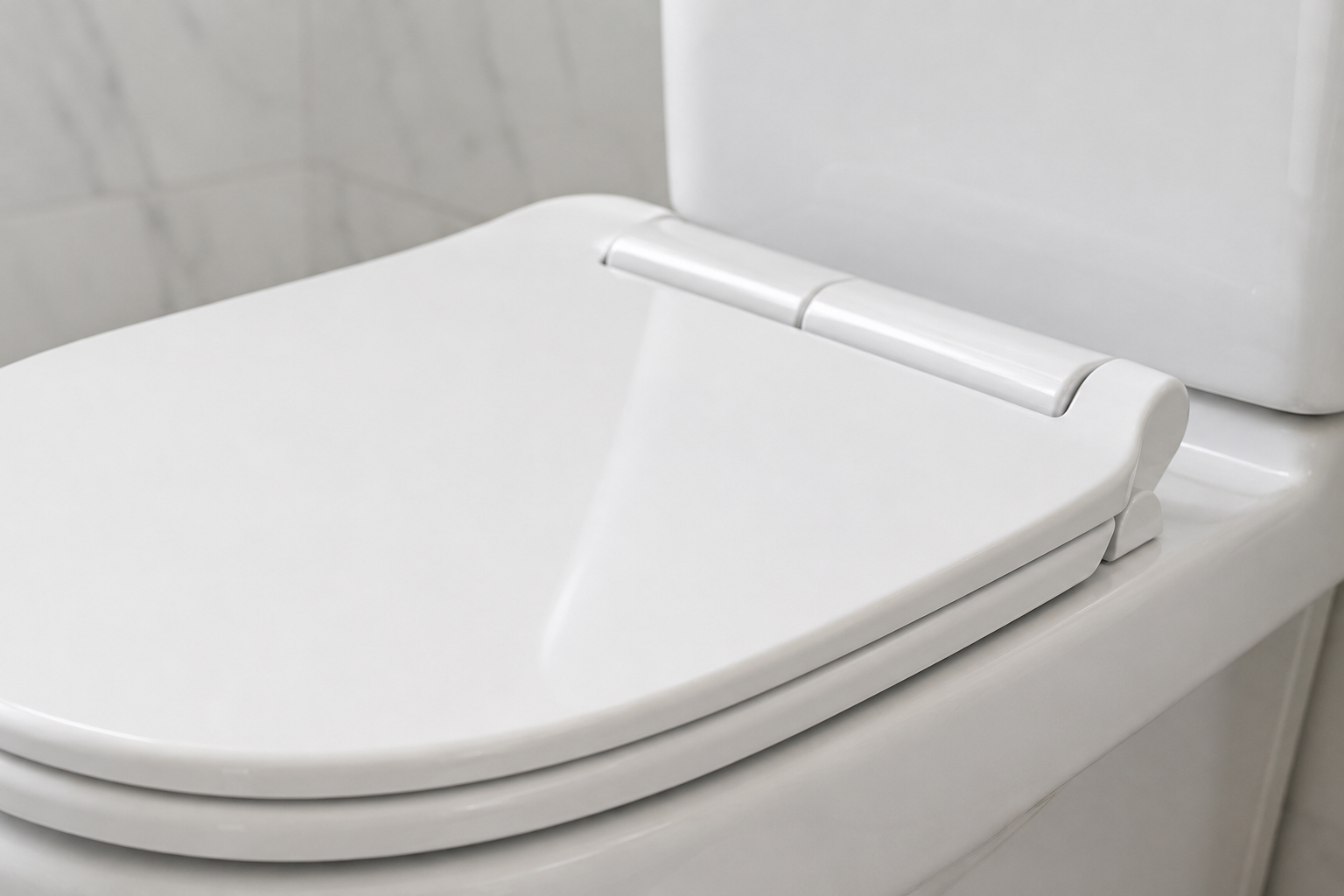
(WorldFrontNews Editorial):- Xiamen, Fujian Jul 8, 2026 (Issuewire.com) – The global sanitary ware market is shifting steadily toward bathroom solutions that balance material durability with long-term aesthetic performance. Toilet seat covers, often treated as secondary components, are increasingly scrutinized by professional buyers for their resistance to yellowing, cracking, and surface degradation. Beewill, a Xiamen-based manufacturer with an established presence in international markets, has developed DuraClean technology to address these persistent material challenges in duroplast toilet seat covers. The result is a product that holds its appearance and structural integrity under conditions that typically cause conventional seats to fail. As a Professional Bidet Toilet Seat Factory, Beewill brings together material science and manufacturing precision to meet the growing expectations of global procurement professionals.
Beyond Standard Plastics: Why Duroplast Yellows and Cracks
Most toilet seat covers on the market use either thermoplastic materials like polypropylene (PP) and ABS, or duroplast, which is also known as urea-formaldehyde (UF) resin. Thermoplastics are easier to mold and cheaper to produce, but they tend to scratch easily and develop a yellowish discoloration when exposed to UV light or common cleaning agents. Duroplast, by contrast, offers a harder surface with a high-gloss finish that closely resembles ceramic — making it the preferred material for mid-to-high-end seat covers.
However, duroplast has its own vulnerabilities. The material contains a relatively high proportion of wood fiber, which absorbs moisture. Over time, when urine or water splashes onto the seat surface repeatedly, it gradually penetrates the material — and the seat begins to yellow. This is not a cosmetic issue alone. It signals moisture intrusion that weakens the seat’s structure over time.
Cracking presents a related but distinct problem. Duroplast is a thermosetting plastic, meaning its formation involves a chemical reaction that releases gas. If the molding process is insufficiently controlled, this off-gassing leaves behind microscopic pores on the surface. These pores act as entry points for moisture. In climates with pronounced dry-wet cycles — particularly in northern regions with cold, dry winters and humid bathroom environments — seat covers absorb water and expand, then lose moisture and contract. Repeated cycling eventually leads to surface cracking.
Decoding DuraClean: Sealing the Material at Its Core
Beewill (Xiamen Beewill Sanitary Co., Ltd.)‘s engineering team identified the root of both problems: inadequate surface density caused by suboptimal molding procedures. The DuraClean approach addresses this through two concurrent improvements — a refined molding process and a proprietary surface treatment that reduces micro-porosity in the finished seat.
The refined molding process ensures that off-gassing completes fully during production, forming a dense outer layer rather than a porous one. When combined with the DuraClean surface treatment, the result is a seat cover that significantly resists moisture absorption. Water and urine stay on the surface instead of penetrating the material. This directly prevents yellowing and reduces the stress cycles that cause cracking.
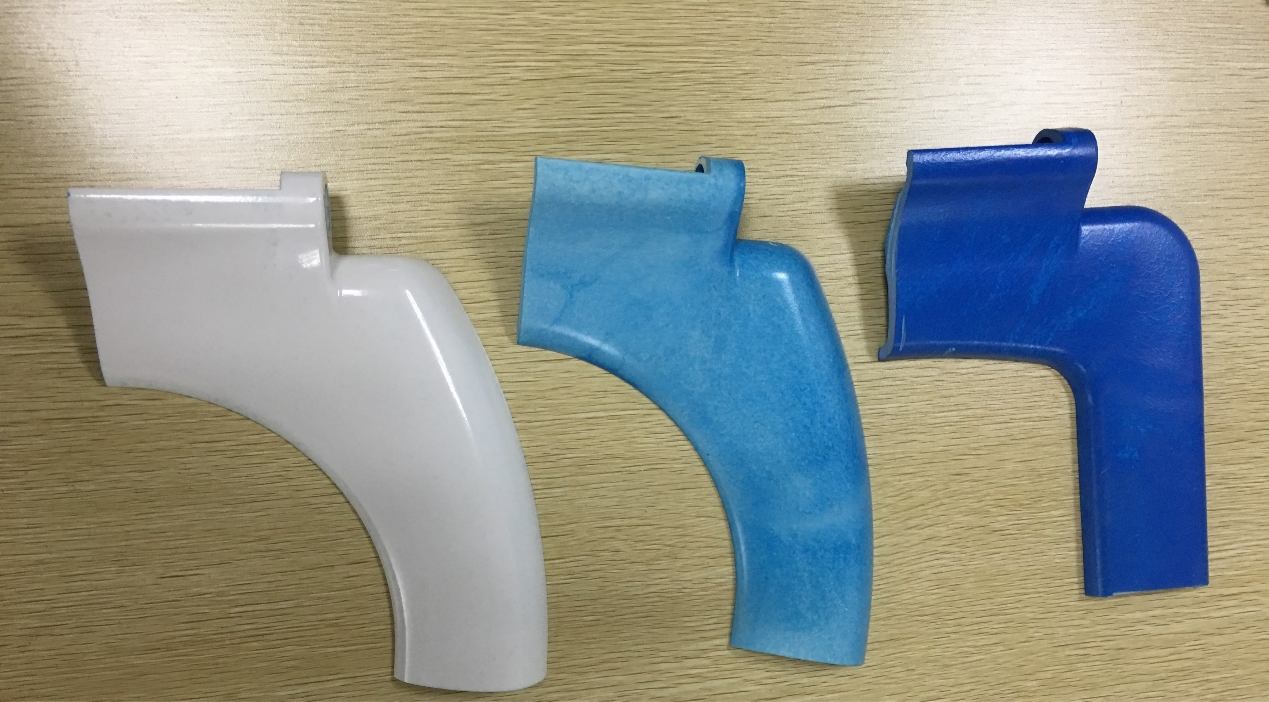
Three specimens tested in-house illustrate the difference clearly. A standard market specimen — properly molded with conventional methods — absorbed a substantial amount of blue ink after boiling, turning dark blue throughout. A second specimen, molded with Beewill’s improved procedure but without the DuraClean treatment, absorbed less ink and turned a lighter blue. The third specimen, treated with both the improved molding process and the DuraClean technology, remained nearly white after the same boiling test. The comparison demonstrates that the DuraClean surface treatment is the decisive variable in moisture resistance.
Performance Implications for Professional Buyers
For hotel procurement teams, property developers, and sanitary ware distributors, these material properties translate into concrete operational benefits. Toilet seat covers in high-traffic environments face constant exposure to cleaning chemicals, moisture, and physical wear. A seat that yellows within two years or cracks in winter conditions creates replacement cycles that add up quickly in labor and material costs.
DuraClean-treated seats hold their surface appearance longer because the material resists both staining and moisture intrusion. Additionally, the denser surface is easier to clean and less likely to harbor residue over time — a practical consideration for facilities management. Soft-close hinges and quick-release mechanisms further support routine maintenance without requiring specialized tools or risking damage to the seat during removal.
The antibacterial character of the duroplast material itself — inherent to its molecular structure rather than added as a surface coating — remains effective throughout the product’s service life. Unlike topical antibacterial coatings that degrade with repeated cleaning, this property does not diminish with use.
Manufacturing Standards and Market Reach
Material innovation is only as reliable as the production process behind it. Beewill manufactures its seat covers in Xiamen with quality controls applied at each stage of the molding process, including in-house boiling tests that verify surface density before products leave the facility. The company holds a range of international certifications including CE, UKCA, REACH, RoHS, WRAS, WaterMark, and DVGW, supporting market access across Europe, Australia, and other regulated territories.
As an OEM and ODM partner, the company works with international brands to adapt specifications to regional requirements — including hinge configurations, seat dimensions, and surface finish options. A policy of providing 2% free replacement for easy-damage parts further reflects a commitment to post-sale reliability that professional buyers tend to prioritize when evaluating long-term supplier relationships.
Material Science as the Foundation of Product Longevity
The toilet seat cover sits at the intersection of daily hygiene and long-term product value. When the material fails — whether through yellowing, cracking, or surface degradation — it affects both the user experience and the perceived quality of the broader installation. DuraClean technology, as developed and applied by Beewill, offers a technically grounded response to these failure modes rather than a cosmetic fix.
By reducing micro-porosity at the material level, the technology extends service life and maintains the visual quality that distinguishes premium sanitary ware from standard alternatives. For procurement professionals sourcing seat covers for large-scale or long-term projects, DuraClean represents a material specification worth evaluating on its technical merits.
For further information on Beewill’s product range and manufacturing capabilities, visit https://www.beewill.com/.
Media Contact
Xiamen Beewill Sanitary Co., Ltd.
Unit 1203, Building 9, Xinglin Bay Business Center, Jimei District, Xiamen, China
This article was originally published by IssueWire. Read the original article here.