(WorldFrontNews Editorial):- Shenzhen, Guangdong Jul 16, 2026 (Issuewire.com) – Carbon fiber is moving from the display stand to the engineering bench, and the composites conversation reflected at industry gatherings such as JEC World now turns on a practical question for development teams: what should a High Quality Carbon Fiber Prototyping Service actually deliver? For FMScarbon, the carbon fiber brand of Shenzhen Feimoshi Technology Limited, the answer begins with engineering files rather than broad material claims. The company converts DXF, DWG, and STEP drawings into carbon fiber parts that a buyer can measure, test, and evaluate before committing to a full order.
JEC World Context Turns Carbon Fiber Prototyping into a B2B Development Question
The materials on show at events like JEC World point to a broader shift in how buyers select composites. Choosing carbon fiber is no longer only a question of weight and stiffness. It is a question of whether a supplier can read a drawing, match the right board thickness, protect a design, and carry a project from concept sample toward pre-production. FMScarbon builds its prototyping work around that shift. Examples such as UAV frames, special-shaped structural tubes, and CNC-cut parts connect the light weight and high rigidity of carbon fiber to the project-based delivery that engineering buyers actually care about, across fields that include drones, industrial equipment, automotive, sports, medical devices, and robotics. The message is consistent: the value of a prototype is not the material alone, but how reliably that material can be shaped into the exact part a project needs.
Drawing Intake Is the First Proof Point for Custom Carbon Fiber Prototype Work
The service begins at drawing intake. When a buyer sends a DXF, DWG, or STEP file, the project gains a defined structure, thickness, hole pattern, and machining boundary before a single quote is issued. That file-based entry point suits B2B development far better than a general offer to customize. It lets an engineering team form a first judgment around frame size, material thickness, geometry, and style, while FMScarbon confirms the production path, pricing, and sample feasibility from the same drawing. Documented carbon fiber prototyping of this kind reduces the guesswork that often slows early sourcing conversations, and it gives both sides a shared reference when they compare quotations, revise a design, or plan a first sample run.
Thickness Options and UAV Frame Examples Make the Service Easier to Evaluate
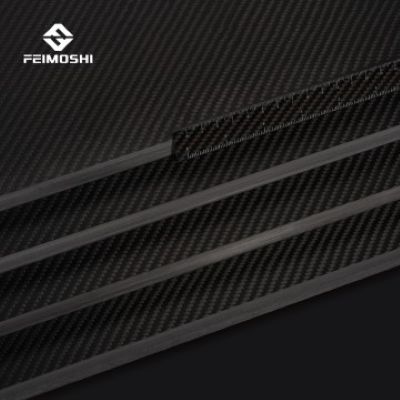
FMScarbon frames thickness range, UAV frame structure, and drone frame selection within a single logic, which helps buyers translate material performance into specific part decisions. For unmanned aerial vehicle work, the company references carbon fiber thickness examples running from roughly 0.3 mm to 30 mm, offered as a starting point for early development rather than a blanket promise across every product. Application context, from racing quadcopter frames to agricultural spraying drones and larger quadcopter builds, gives the service a concrete engineering scenario instead of abstract material marketing. A custom carbon fiber prototype service that speaks in these terms is simply easier for a buyer to judge, because it ties a stated capability to a part the buyer already understands. Rather than promising that carbon fiber is light, the service shows where a specific thickness and frame geometry earn their place in a finished build.
CNC Cutting and Special-Shaped Carbon Fiber Capabilities Support Prototype-To-Part Development
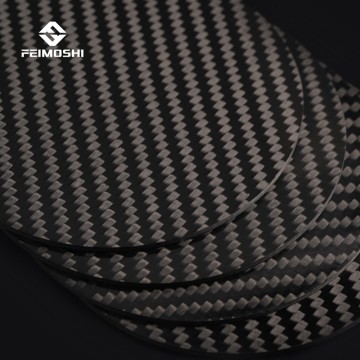
Custom development needs real machining behind it. FMScarbon supports CNC machine cutting, special-shaped accessories, and OEM/ODM products, so prototype work can extend from flat plates and tubes to more complex shapes and pre-assembly parts. The company also explains its process: carbon fiber sheets are formed by autoclave and then cut with advanced CNC machines. That combination lets the material, the process, and the finished geometry connect in one clear explanation, moving the story past the familiar light and strong summary toward how a part is genuinely made. For a development team, this is the bridge that turns a prototype into a usable component.
Confidentiality and Engineering Communication Fit Early-Stage B2B Development
Early prototype work carries a quieter concern than price: protecting design files, structural ideas, and concepts that have not yet reached production. FMScarbon notes a confidentiality agreement on its prototyping page, which gives custom B2B development a clearer working boundary. Paired with direct engineering communication, the sequence stays straightforward. A buyer submits DXF, DWG, or STEP drawings, the supplier reviews material, thickness, structure, and machining approach, and the project then moves into sample quotation, sampling, or pre-production confirmation. Clear files and a named point of contact keep that early exchange low-risk for both sides.
A Supplier Background That Supports the Prototyping Claim
The company background gives the service a credible base. FMScarbon, operated by Shenzhen Feimoshi Technology Limited in the Longgang District of Shenzhen, brings more than ten years of experience in the carbon fiber market. Its stated capability, supplying carbon fiber sheets, carbon fiber tubes, and custom special-shaped carbon fiber accessories made to customer drawings, lines up naturally with the drawing-based entry point, CNC machining, and OEM/ODM projects at the heart of its carbon fiber prototyping. The company profile also points to a working product range, from carbon fiber plates and tubes to medals, camera stands, and other precision items, which shows the same drawing-to-part discipline applied across categories. The result is a supplier profile that development teams can verify rather than take on trust.
From Drawing Review to Quote, Sample, Quality Control, Shipping and After-Sales
FMScarbon frames the next step as a full path rather than a single inquiry. Its published workflow moves from uploading a drawing to quotation, sample or bulk production, quality control, shipping, and after-sales service, giving a development team a route it can follow and check at each stage. The company describes its commitment as high-quality products backed by professional technical support and an after-sales service team, so carbon fiber prototype work does not stop at material choice but continues through sampling and follow-up.
B2B teams preparing custom carbon fiber prototypes can review the Carbon Fiber Prototyping page and submit DXF, DWG, or STEP drawings through the official website at https://www.fmscarbon.com/ to discuss pricing, samples, and the production path with the team.
Media Contact
Shenzhen Feimoshi Technology Co., Ltd.
+86 18927460800
#348-C, AiNan Road, Longgang District, Shenzhen, Guangdong, China
This article was originally published by IssueWire. Read the original article here.