(WorldFrontNews Editorial):- Tianjin, China Jul 25, 2026 (Issuewire.com) – Wear Mechanisms in Cement Production
Cement-plant downtime is usually caused by accumulated wear rather than a single failure. It loses uptime in smaller increments: a hopper liner that thins faster than expected, a chute wall that develops a hole after a season of clinker dust, a mill roller that needs rework months ahead of schedule. Mixers, fans, hoppers, chutes, conveyors, classifiers, cyclone shells, roller presses, screens, pipes, and mill internals all sit inside that same wear cycle, and maintenance teams keep returning to one question: what is the best wear plate for cement industry applications when a part faces abrasion, impact, and heat together, not one at a time?
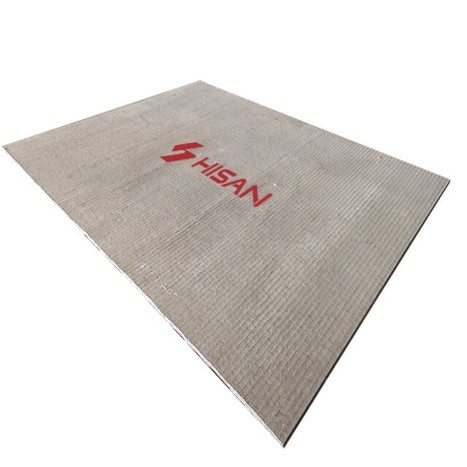
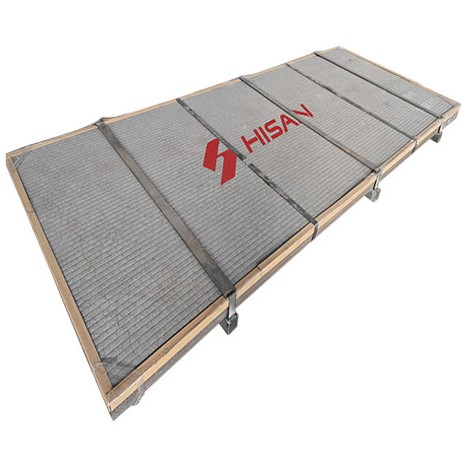
From an engineering perspective, that question is the starting point for What Wear Plate Is Best For Cement Industry Applications. A chromium carbide overlay, or CCO, plate is a hardfaced plate built from a mild-steel base plate carrying a wear-resistant overlay rich in carbides, which is why the same category of plate can sit under a cyclone shell, inside a roller press liner, and along a distribution chute, and hold up on each installation’s own terms.
HISAN (TIANJIN) CO.,LTD approaches the problem with two product families. HS300 is developed for high abrasion combined with medium-to-high impact, the condition typical of mixers, hoppers, chutes, conveyors, classifiers, cyclone shells, roller presses, screens, pipes, and mill internals. HS600 is positioned further, for extremely severe abrasion in mining, cement, steel, and bulk material handling settings where impact loads run higher. Choosing between them means matching the alloy system to the wear mode a component actually experiences.
Bimetallic CCO Structure for Cement Applications
A weld-overlay wear plate combines two functional layers. The mild-steel base plate carries the structural load and gives fabricators something practical to cut, bolt, or weld into place. The overlay carries the wear load: chromium-rich carbides fused into the surface and distributed through a uniform overlay thickness, so the wear-resistant layer does not thin unevenly or leave weak spots behind.
From an engineering perspective, this bimetallic design makes a chute, hopper, pipe, screen, or mill internal easier to fabricate, install, and maintain, rather than treating hardness as a number disconnected from how the part is built and mounted. HISAN’s chromium carbide overlay wear plate line carries macro-hardness in the 57 to 63 HRC range, with wear performance evaluated using the ASTM G65 Procedure A test method, across multiple grades so a specifier is not forced to over-spec one plate for every application. Structure plus a documented test method plus grade options: that combination is the real definition of best wear plate for cement industry applications.
HS300 Maps Complex Carbide Metallurgy to Cement Wear Components
From an engineering perspective, hS300 answers the mid-tier problem most cement plants have. Its overlay uses a complex carbide system built around chromium carbide together with niobium, molybdenum, vanadium, and titanium carbides, chosen for wear conditions that combine high abrasion with medium-to-high impact. That profile matches where cement operators lose material fastest: mixers, hoppers, chutes, conveyors, classifiers, cyclone shells, roller presses, screens, pipes, mill internals, dust collectors, and mill rollers.
Standard sizes include 1400 by 3000 mm, 1400 by 3500 mm, 1500 by 3000 mm, 2000 by 3000 mm, 2100 by 3500 mm, and 2100 by 6000 mm, with overlay thickness from 2-80 mm, base material thickness from 2-150 mm, and bulk hardness in the HRC 58-65 range. Fabrication options including bolting, assembling, cutting holes, and bending let a maintenance shop turn standard stock into the exact liner shape a chute or hopper needs.
HS600 Extends the Cement Story into Extremely Severe Abrasion
Some cement components sit past what a mid-tier grade should handle: sections where abrasion, impact, and heat load stack together and downtime carries a higher cost. HS600 is developed for that tier, positioned for extremely severe abrasion across mining, cement, steel, and bulk material handling environments, where abrasion resistance, impact resistance, and heat resistance have to work together. It is the option a specifier reaches for once conditions genuinely call for it, not a universal upgrade.
Its overlay is alloyed with tungsten, carbon content runs 4.4 to 7.5 percent, chromium content runs 30 to 40 percent, and tungsten content runs 4.0 to 7.0 percent, giving a bulk hardness of HRC 60-65. Overlay thickness spans 2-80 mm, base material thickness spans 2-150 mm, custom thicknesses are available on request, and standard plate size runs up to 2100 by 6000 mm. Between HS300 and HS600, the deciding factor is usually the impact load a component carries alongside its abrasion exposure.
Fabrication and Testing Turn Wear-Resistant Innovation into Buyer-Checkable Proof
Alloy selection addresses solely part of the sourcing requirement. The other half is whether a supplier can cut, form, and verify the plate to the dimensions a cement component needs. HISAN’s CCO plate line supports cut-to-size wear parts through cutting, forming, welding, stud attachment, assembling, and grinding, so an irregular chute liner or pipe section does not must be forced into a standard flat sheet.
From an engineering perspective, HISAN’s production facility also runs equipment that lets buyers verify claims rather than take them on faith: a Vickers hardness tester, a SPECTRO spectrometer for composition analysis, portable hardness and thickness testers, an ASTM G65 wear test machine, a metallographic microscope, a desktop Rockwell hardness tester, plus plasma cutting, bending, flattening, and an eight-torch welding line. Hardness, thickness, composition, and wear performance are each measurable rather than assumed, which is the practical meaning of wear-resistant innovation in a procurement context.
HISAN Brings Cement Wear Protection into a Broader One-Stop Wear Solution
HISAN’s manufacturing scope extends beyond individual plate products. The product range covers chromium carbide overlay wear-resistant plates, wear-resistant ceramics, wear-resistant castings, overlay wear pipes, welding wires, and abrasion-resistant steel plates, built on experience drawn from mining, cement, material handling, and thermal power industries.
For a cement plant, that breadth matters in practice. The same supplier providing CCO plate for a cyclone shell can also provide welding wire for field repairs and overlay wear pipe for a clinker transfer line, keeping wear-protection sourcing under one technical point of contact. HISAN frames that positioning as an integrated wear-protection solution spanning conveying, classifying, grinding, ventilation, elevating, piping, and internal lining components across the plant.
The engineering question behind what is the best wear plate for cement industry applications is not which plate is hardest on paper. It is which combination of overlay metallurgy, thickness configuration, fabrication method, and testable proof fits a component that has to keep running between maintenance windows. HISAN’s answer moves the conversation from a single hardness number to a structured choice: HS300 for high abrasion with medium-to-high impact, HS600 for extremely severe abrasion, both built on the same bimetallic CCO structure and backed by equipment that lets a buyer verify hardness, thickness, and composition directly. HISAN (TIANJIN) CO.,LTD is dedicated to providing quality and cost-effective wear solutions that meet application-specific customer requirements.
From an engineering perspective, cement plants, engineering contractors, and maintenance teams evaluating wear plate options for chutes, hoppers, mills, or conveying systems can review HISAN’s full CCO plate, HS300, HS600, welding wire, overlay wear pipe, and wear parts range at HISAN’s official website and consult the company’s technical team on the right configuration for a specific wear point.
Media Contact
HISAN (TIANJIN) CO.,LTD.
+86 22 84776558
NO.3, Xingang Wuhao Road, Jinnan District, Tianjin, China
This article was originally published by IssueWire. Read the original article here.