(WorldFrontNews Editorial):- Shanghai, China Jul 26, 2026 (Issuewire.com) – Contact: Lumicen Co., Ltd. Media Relations
Official Website: lchyaluronic.com
The global market for minimally invasive aesthetic procedures has experienced unprecedented growth over the past decade, driven by shifting consumer perceptions and rapid advancements in cross-linking technologies. Among these interventions, injectable soft-tissue fillers have become the cornerstone of modern clinical practices. However, the surge in global demand has simultaneously led to a complex supply chain environment crowded with varying product grades and regulatory profiles. For medical directors, purchasing managers, and aesthetic clinicians, selecting a reliable Safe Hyaluronic Acid and Injectable Fillers Supplier is no longer merely a commercial decision; it is a fundamental clinical safeguard. High-quality hyaluronic acid (HA) gels must deliver predictable viscoelastic performance, biocompatibility, and structural integrity while mitigating the risks of delayed-onset hypersensitivity, granuloma formation, or premature degradation. This practical guide outlines a systematic approach to sourcing clinical-grade dermal fillers that protect patient safety and enhance institutional reputation.
Sourcing Safe Hyaluronic Acid Dermal Fillers for Aesthetic Clinics
Navigating the international medical device supply chain requires a structured evaluation framework. When procurement teams look to secure premium injectable inventories, their methodology should treat technical documentation, manufacturing rigor, and post-market tracking with equal analytical depth. The following sequential steps establish a robust procurement architecture.
STEP 1: Verifying Mandatory International Regulatory Certifications
The baseline threshold for any medical-grade injectable product is its regulatory documentation. Aesthetic clinics must ensure that their supplier possesses valid international certifications tailored to high-risk medical devices. Hyaluronic acid dermal fillers are classified as Class III medical devices in most regulatory jurisdictions due to their implantable, long-term nature.
Clinics should explicitly verify compliance with ISO 13485, which stipulates the comprehensive quality management standards specific to the medical device manufacturing industry. Furthermore, products targeted for international markets should carry a CE mark (preferably under the Medical Device Regulation, MDR), which verifies that the implantable gel satisfies stringent European safety, health, and environmental protection requirements. When reviewing these documents, procurement officers must confirm that the certificates are issued by recognized Notified Bodies and that the scope of certification covers the exact manufacturing facility and product lines under consideration.
STEP 2: Assessing GMP-Compliant Manufacturing and Cleanroom Standards
A certificate is only as reliable as the physical infrastructure backing it. Safe formulation of injectables demands strict adherence to Good Manufacturing Practices (GMP). Hyaluronic acid modification, cross-linking, washing, and packaging must occur within certified cleanroom environments, typically conforming to ISO Class 5 (Class 100) or ISO Class 7 thresholds depending on the specific phase of handling.
Clinics should request details regarding the supplier’s environmental monitoring systems, automated sterilization methods, and batch-testing protocols. A transparent supplier will readily share summary data demonstrating that their production lines eliminate external particulate contamination and maintain absolute sterility from raw polymer preparation to the final pre-filled syringe packaging.
STEP 3: Evaluating Raw Material Purity and Endotoxin Thresholds
The safety profile of a dermal filler is profoundly influenced by its biochemical purity. High-quality hyaluronic acid is typically derived via modern bacterial fermentation processes using non-pathogenic strains such as Streptococcus equi. While this process yields highly consistent polymer chains, it necessitates rigorous purification steps to eliminate bacterial endotoxins and residual proteins.
High residual protein levels are a primary driver of late-onset immune responses and localized inflammation in patients. Sourcing departments must request Technical Data Sheets (TDS) or Certificates of Analysis (COA) specifying that the endotoxin levels are well below international pharmacopeia limits (typically less than 0.1 EU/mg). Minimizing these trace impurities is critical to ensuring long-term bio-integration without adverse tissue reactions.
STEP 4: Analyzing Cross-Linking Technologies and Residual BDDE Safety
Monomeric hyaluronic acid is rapidly metabolized by endogenous hyaluronidase within days if injected in its natural state. To provide structural longevity, manufacturers utilize chemical cross-linking agents, most commonly 1,4-butanediol diglycidyl ether (BDDE), to link the polymer chains into a cohesive three-dimensional hydrogel matrix.
While BDDE is highly effective, unreacted or “free” BDDE molecules can be toxic at elevated concentrations. Therefore, an advanced manufacturing setup must include extensive, multi-stage purification and dialysis processes to wash out unreacted chemical residues. Prospective buyers should confirm that the supplier’s finalized hydrogel maintains a residual BDDE level that is practically undetectable or falls strictly within the safest parts-per-million (ppm) regulatory spectrum, balancing optimal gel longevity with structural safety.
STEP 5: Ensuring Supply Continuity, High-Volume Logistics, and After-Sales Technical Support
Beyond technical metrics, a sustainable clinical partnership depends heavily on the supplier’s logistical scale and post-market service framework. Aesthetic clinics operate on precise procedural schedules; unexpected inventory depletion or delayed shipments directly compromise clinic revenue and patient retention.
Procurement teams must evaluate whether a supplier possesses the global distribution network necessary to manage climate-controlled international shipping efficiently. Furthermore, robust after-sales support–including structured technical documentation, professional adverse-event response guidelines, and direct communication lines to the manufacturer’s technical heads–ensures that the clinic can resolve any clinical query or administrative compliance issue without operational delays.
Technical Innovation and Core Advantages of Lumicen
As an established developer and manufacturer specializing in injectable aesthetic products, Lumicen exemplifies this structured approach to clinical safety and manufacturing innovation. The enterprise supports international aesthetic brands, large-scale distributors, and medical aesthetic clinics worldwide through its comprehensive OEM, ODM, and private label manufacturing solutions.
Advanced Hydrogel Engineering and Product Portfolio
The technical core of the manufacturer’s portfolio relies on an advanced cross-linking architecture designed to balance viscoelasticity with biological safety. By adjusting the concentration of hyaluronic acid, cross-linking density, and particle size distribution, the engineering team creates specialized hydrogels tailored to distinct anatomical layers and clinical indications:
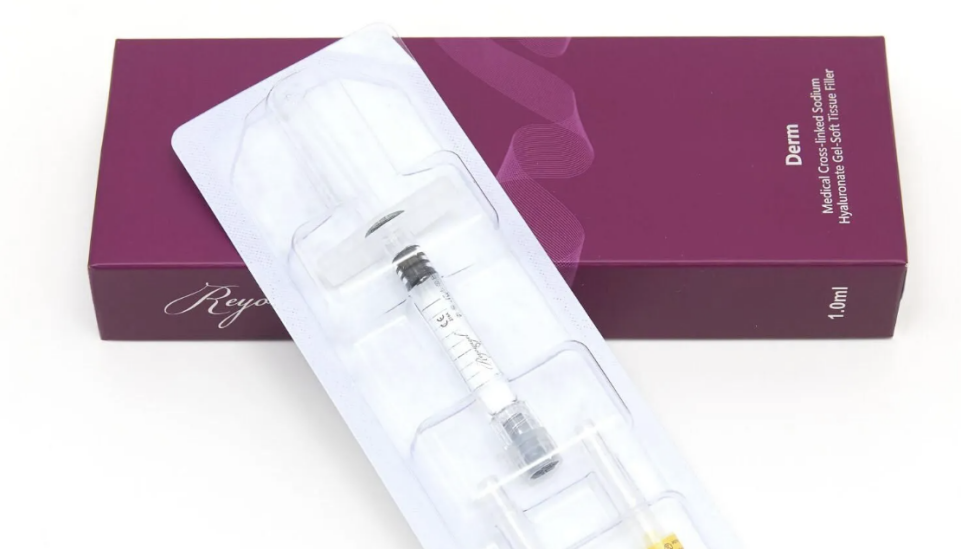
- Hyaluronic Acid Fillers:Formulated for precise volumetric restoration, deep structural contouring, and superficial fine-line correction.
- Skin Boosters:Optimized for superficial micro-injections to enhance dermal hydration, elasticity, and overall skin quality.
- Collagen Stimulators & PLLA/PDLLA Products:Advanced biomaterial formulations engineered to trigger progressive endogenous neocollagenesis for sustainable tissue rejuvenation.
Rigorous Compliance and Enterprise Infrastructure
The manufacturing infrastructure operates in strict alignment with international medical device standards. The facility maintains comprehensive compliance with GMP frameworks, ensuring that every phase of formulation, sterilization, and syringe filling is fully documented and traceable.
By utilizing premium raw materials and an exhaustive purification system, the production process achieves low endotoxin levels and removes unreacted cross-linking agents. This deliberate mitigation of chemical residues lowers the incidence of post-injection swelling and immunogenic complications, providing clinics with predictable patient outcomes.
Furthermore, the enterprise offers end-to-end OEM and ODM support. This allows partners to customize formulations, modify rheological profiles, and design compliant private label packaging backed by robust technical documentation and international supply chain support.
For comprehensive product specifications, regulatory documentation, or to explore custom manufacturing partnerships, visit the official enterprise platform at https://lchyaluronic.com/.
This article was originally published by IssueWire. Read the original article here.