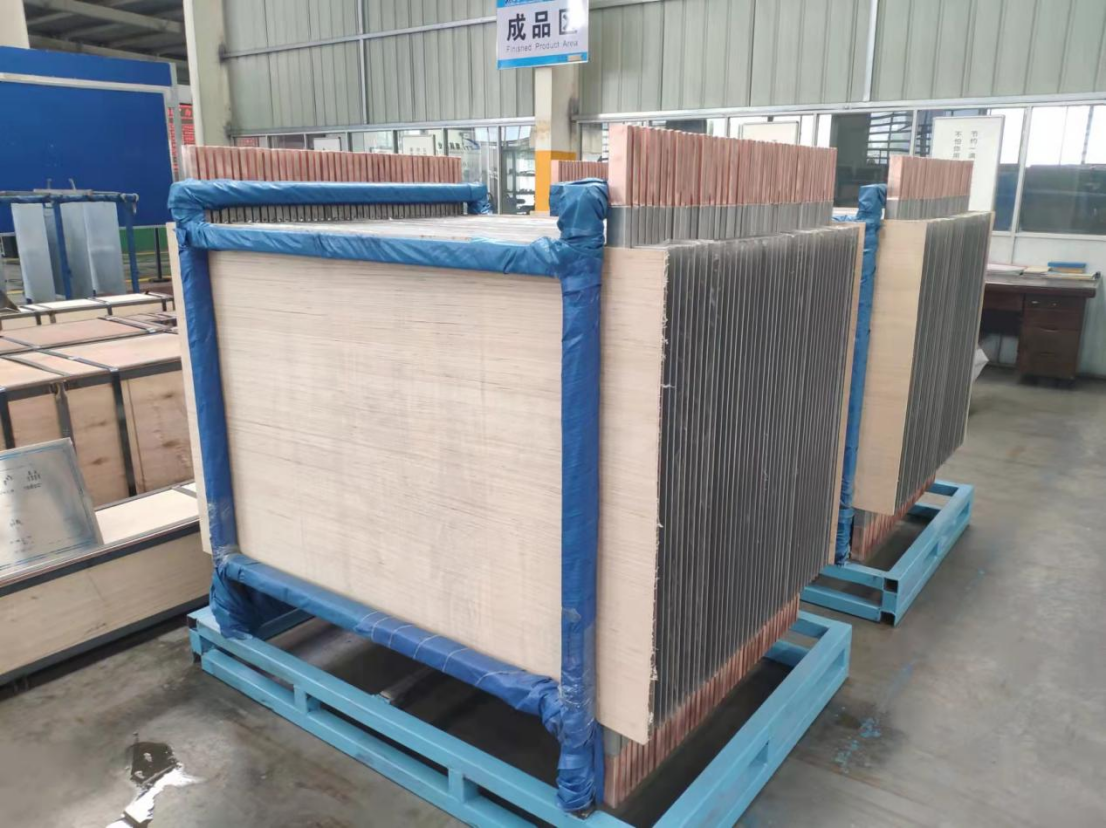
(WorldFrontNews Editorial):- Baoji, Shaanxi Jul 26, 2026 (Issuewire.com) – In the non-ferrous metal hydrometallurgical industry, electrowinning and electrorefining systems depend heavily on structural integrity and electrical efficiency to maximize production yields. A key component driving these processes is the Professional Stainless Steel Permanent Cathode Factory‘s solution, which serves as a long-lasting, high-performance replacement for traditional copper starting sheets. Permanent stainless steel cathodes typically consist of a high-grade stainless steel blank (such as 316L or 2205 duplex), a highly conductive composite hanger bar, and durable insulating edge strips. These engineered components work together to ensure uniform current distribution, optimum copper or nickel deposition, and easy mechanical stripping.
To understand the operational and financial impact of modern cathodic engineering, it is essential to evaluate how advanced manufacturing techniques compare with standard industry offerings. Below is a structured analysis detailing how specialized designs from TGTY elevate operational stability and output quality across five key areas.
Comparison 1: Structural Integrity and Surface Finish Precision
Standard commercial cathode plates often utilize off-the-shelf 316L stainless steel sheets with basic mechanical polishing. Over time, exposure to corrosive acidic electrolytes (such as concentrated H2SO4) combined with physical stress from automatic stripping machines leads to surface pitting, blade deformation, and uneven sheet flatness.
In contrast, specialized factory solutions employ cold-rolled, high-purity stainless steel plates treated with precision surface finishing. The surface roughness is controlled strictly between 0.16 and 0.60 Ra (according to ASTM standards). This specific range balances smooth stripping action with sufficient adhesion during the initial electrodeposition phase, preventing early drop-offs.
By maintaining vertical straightness below 1.0 mm/m, advanced cathode plates eliminate short circuits caused by plate contact in high-density cell houses, directly reducing energy waste and maintenance downtime.
Comparison 2: Hanger Bar Conductivity and Anti-Corrosion Bonding
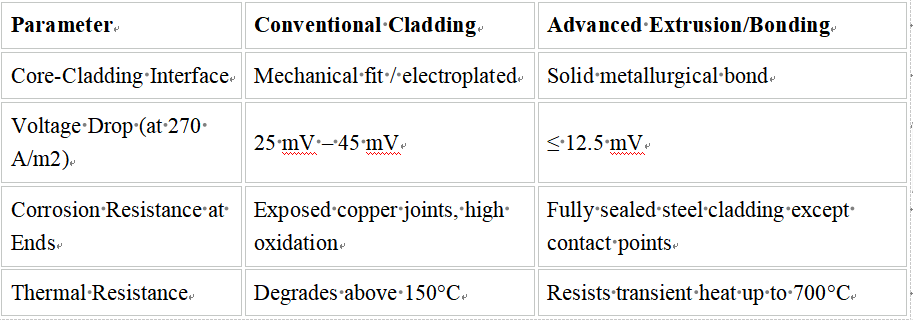
The conductive hanger bar transfers current from the busbar to the stainless steel blank. Conventional cathodes frequently rely on basic electroplating or mechanical cladding methods to join copper bars with stainless steel sheaths. Over extended operation, thermal expansion differences create air gaps or electrolyte penetration at the junction point, causing severe internal corrosion, high electrical resistance, and voltage drops exceeding 30 mV per cell.
Professional-grade cathode manufacturing utilizes advanced hot-extrusion or continuous explosion-bonding technology to fuse high-purity T2 copper with a outer protective layer of 316L or 304 stainless steel. This solid metallurgical bond eliminates air gaps and prevents electrolyte ingress entirely.
By reducing the voltage drop across the hanger bar to less than 12.5 mV under standard current density, facilities achieve measurable energy savings annually across thousands of active cathode cells.
Comparison 3: Edge Strip Durability and Seal Integrity
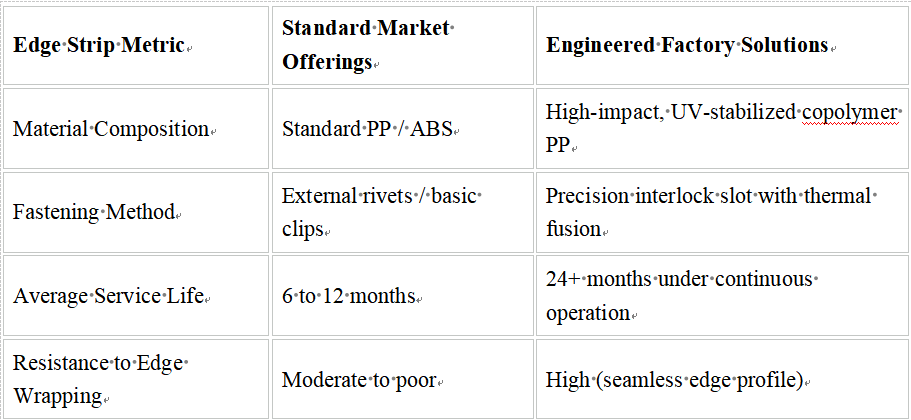
Insulating edge strips prevent metal from depositing around the side edges of the cathode blank, allowing clean vertical separation during mechanical stripping. Standard market edge strips are often fastened with basic mechanical pins or low-grade adhesive compounds. In hot acidic environments (ranging from 60°C to 70°C), thermal cycling causes conventional edge strips to crack, warp, or separate from the steel blank, leading to edge wrapping and frequent line stoppages.
Advanced permanent cathode solutions utilize high-density polypropylene (PP) or specialized synthetic polymers formulated for extreme chemical resistance. Applied through specialized heat-seal extrusion and grooved lock-in profiles, these edge strips withstand continuous exposure to high acidity, alternating heating cycles, and high mechanical flexure.
The result is a consistent, hassle-free stripping cycle that protects automated stripping machines from mechanical jams and reduces manual intervention in the tankhouse.
Comparison 4: Current Distribution and Anode Scrap Reduction
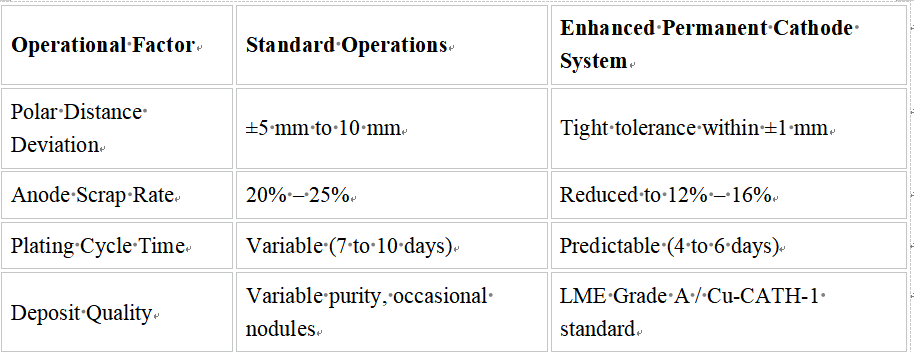
In electrowinning plants using traditional copper starting sheets or low-precision cathode blanks, uneven current density causes irregular deposit growth and variable anode dissolution rates. This often leaves high percentages of unreacted anode scrap (up to 20-25%), requiring frequent recycling and re-smelting.
Through precise dimensional control and optimized hanger-bar geometry, high-performance permanent stainless steel cathodes ensure an even polar distance (e.g., maintaining a consistent 100 mm homo-polar distance). Operating smoothly at current densities up to 370 A/m2, current density remains uniform across the entire plate surface.
Uniform anode dissolution not only lowers scrap rates to as low as 12-16% but also improves overall current efficiency, enabling refineries to shorten plating cycles while maintaining purity standards.
Comparison 5: Total Cost of Ownership and Project-Level ROI
While lower-grade cathode plates may present a lower initial purchasing cost, their total cost of ownership (TCO) rises quickly when factoring in frequent maintenance, edge strip replacements, energy losses from high contact resistance, and shorter operating lifespans.
Evaluating the complete life cycle reveals clear financial advantages for long-term industrial operations:
- Longer Asset Lifespan:A service life exceeding 10 years reduces capital expenditure re-investment cycles by half compared to standard alternatives.
- Lower Operational Maintenance:Industrial-grade edge strips and robust hanger bar seals minimize emergency repairs and unscheduled downtime.
- Energy Savings:Lower internal resistance yields lower overall megawatt-hour consumption per ton of refined metal produced.
Technical Innovation and Industrial Application
Modern metallurgical operations require custom configurations tailored to specific tankhouse dimensions, cell bath chemistries, and automated crane layouts. Integrating custom-engineered cathodes with automated handling systems allows refineries to maximize daily output while maintaining worker safety.
By combining rigid quality management with customized design engineering–including options for custom V-grooves at the bottom of the blank, specialized hanger bar end-cuts, and variable plate thicknesses–facilities can seamlessly upgrade existing operations without costly infrastructure overhauls.
For more technical specifications, custom engineering drawings, and complete product catalog details, visit https://www.tgtiindustrial.com/

This article was originally published by IssueWire. Read the original article here.