(WorldFrontNews Editorial):- Shenzhen, Guangdong Jul 28, 2026 (Issuewire.com) – Here is a conversation we have had more than once. A food processor specifies an inline Brix meter for their HFCS blending line. The specification says “Brix measurement.” The instrument selected is a refractometer. The reading comes out. The lab measures the same product with a pycnometer and gets a different number. Both are right. The confusion is in what “Brix” actually means.
Brix is not a single physical property. It is a scale that was defined for sucrose solutions and extended by convention to other solutions. When the solution is not sucrose, the conversion from the measured physical property (refractive index or density) to Brix is an approximation. The approximation breaks down if you do not know which approximation you are using.
What Brix actually is
Brix (symbol °Bx) is defined as the mass of sucrose dissolved in 100 g of aqueous solution at 20°C. A 20°Bx sucrose solution contains 20 g of sucrose and 80 g of water per 100 g of solution. That is the definition.
In the lab, Brix is measured by one of two physical methods:
Refractometry. The refractive index of the solution is measured and converted to Brix using the ICUMSA (International Commission for Uniform Methods of Sugar Analysis) table for sucrose. This is the most common method because it requires only a few drops of sample.
Densimetry. The density of the solution is measured and converted to Brix using the ICUMSA table for sucrose. This is the method used by inline density meters configured for Brix output.
Both methods use the same ICUMSA table for conversion. For a pure sucrose solution, they give the same Brix. The moment the solution contains anything that is not sucrose — glucose, fructose, maltose, salts, acids — the two methods start to diverge.
The HFCS complication
High-fructose corn syrup is the most common sweetener in North American beverages. It is not sucrose. It is a mixture of glucose and fructose, typically 55% fructose / 42% glucose / 3% other carbohydrates (HFCS-55, the beverage grade). This matters because glucose and fructose have different refractive indices and densities relative to their sweetness contribution.
When you measure HFCS with a refractometer, the ICUMSA sucrose table converts the refractive index to an apparent Brix. This number is correct as a refractometric measurement, but it is not the same as the sucrose-equivalent Brix you would calculate from density. The difference is not cosmetic: for HFCS-55 at 55°Bx, the refractometric reading is about 0.2-0.4°Bx higher than the densimetric reading.
HFCS-55 vs sucrose: where the numbers diverge at 55°Bx
Refractometric Brix (HFCS-55): ~55.4°Bx
Densimetric Brix (HFCS-55): ~55.0°Bx
True sucrose Brix equivalent: ~54.8°Bx
The spread across methods: 0.2-0.6°Bx
This difference matters when your spec tolerance is ±0.5°Bx
When the method difference becomes a problem
Here is where it gets operational:
Your QC lab uses a refractometer and sets a release limit of 55.0°Bx. Your inline process meter is a density-based Brix meter. At 55.0°Bx, the density meter reads 54.8°Bx — which looks like a batch failure on the process display even though the lab refractometer says it is on spec. Or worse: the lab releases the batch and your customer receives it with a label showing the density-based Brix, which does not match their refractometer.
The fix is to know which method you are using and to align the lab and the inline instrument on the same method. For HFCS, you have three options:
Use a refractometric Brix meter and accept that the density-based method will read 0.2-0.4°Bx lower. Keep the lab on the same method.
Use a density-based meter with an HFCS-specific conversion table loaded, so the output is corrected for HFCS composition. This is the right approach for inline control.
Accept that the two methods give different numbers and calibrate the correlation between them for your specific product. Record both and use one as the control variable and the other as the check.
It is not just HFCS
Any non-sucrose sweetener creates the same conversion gap. The size of the gap varies:
Honey. Contains glucose, fructose, and water, plus small amounts of other compounds. The refractometric Brix of honey typically reads 0.3-0.5°Bx higher than the true sucrose-equivalent. Honey standards (e.g., Codex Alimentarius) specify refractometric Brix for this reason.
Fruit juices. Contain organic acids, salts, and pulp in addition to sugars. Orange juice at 11°Bx refractometric reads about 10.8°Bx by density. The difference is not constant — it changes with the fruit variety, season, and pulp content.
Maltodextrin solutions. Used as thickeners and carriers in powdered foods. The glucose-to-maltose ratio determines the conversion factor. At high DE (dextrose equivalent), maltodextrin behaves more like glucose. At low DE, it behaves differently. There is no single ICUMSA table that covers the full range.
What this means for inline process control
For inline concentration control in food and beverage, the practical choice is usually a density-based instrument (tuning fork or vibrating U-tube) that outputs either density directly or Brix via a loaded conversion table.
The instrument does not need to be labeled “Brix meter” to do Brix control. It measures density. You load the conversion curve for your specific sweetener. The output becomes your Brix setpoint.
The critical requirement is that the conversion table matches the product. HFCS-55 needs a different table from sucrose. Fruit juice needs a fruit-specific table or, if no table exists, a correlation that has been validated against your specific juice type.
Inline concentration control for food and beverage: key decisions
1. Choose the measurement principle:
Density-based (tuning fork / vibrating U-tube) ‘ robust, CIP-compatible, good for opaque fluids
Refractive index ‘ fast, requires clean sample, not CIP-compatible in-line
2. Choose the output unit:
Brix (refractometric) ‘ matches lab refractometer, different from sucrose-equivalent
Brix (densimetric) ‘ matches pycnometer lab method
True sugar concentration ‘ requires specific composition data
3. Validate the conversion table against your lab:
Run 5-10 samples across the operating range
Plot inline reading vs lab reading
Confirm that the correlation holds within your spec tolerance
Repeat when the product formulation changes
LONNMETER for food and beverage concentration measurement
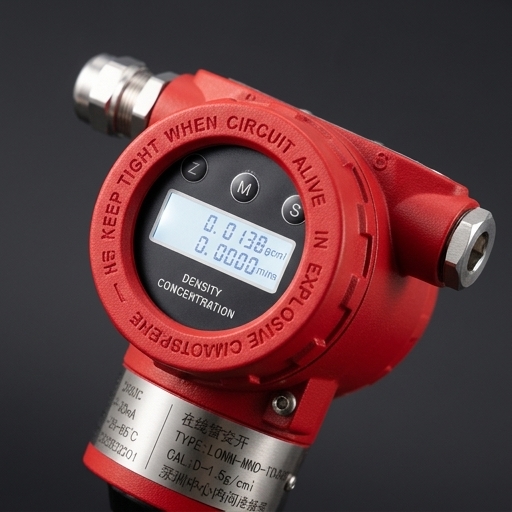
The LONNMETER LONN700 is available with food-grade configuration: 316L stainless steel, Ra 0.8 µm electropolished surface, 3A sanitary certification, CIP/SIP compatible. The instrument can be configured with Brix conversion tables for sucrose, HFCS-42, HFCS-55, and custom sweetener profiles.
If you are specifying a concentration meter for a food or beverage process and need to validate the conversion table for your specific sweetener, the LONNMETER technical team can run a correlation analysis against your lab data before commissioning.
Common questions on food and beverage Brix measurement
Why do my lab and inline instruments give different Brix readings?
They are almost certainly using different physical methods. The lab refractometer measures refractive index and converts via the ICUMSA sucrose table. The inline density meter measures density and converts via the same table. For anything other than pure sucrose, the two methods give different numbers. Align on the method, not the number.
Which Brix method should I use for HFCS?
p>There is no single correct answer. The AOAC method for HFCS uses a specific gravity method (densimetric). Many beverage formulators use refractometric Brix as the standard because it matches their lab practice. The important thing is to be consistent: specify which method, calibrate the inline instrument to that method, and do not switch between methods without revalidating the correlation.
Can I use a density meter for honey Brix?
Yes, but the honey Brix standard (Codex Alimentarius) specifies refractometric Brix for legal compliance. If you are selling honey or using it as an ingredient in a regulated product, use a refractometer for the official measurement. A density meter can be used for inline process control if you have validated a density-to-refractometric correlation for your specific honey type.
What is the accuracy requirement for inline Brix control in beverage manufacturing?
For beverage blending, a tolerance of ±0.5°Bx is common. A density-based inline meter with ±0.001 g/cm³ accuracy and a validated HFCS conversion table can hold ±0.2-0.3°Bx, which is tighter than most blend specifications. If your spec is tighter than that, consider a refractometric inline sensor as well.
Does temperature affect Brix measurement differently depending on the method?
Yes. Refractive index and density have different temperature coefficients. Refractometric Brix is more temperature-sensitive near 20°C; densimetric Brix has a different profile. Both require temperature compensation, but the compensation factors differ. Make sure your inline instrument compensates for its own measurement principle, not just applies a generic temperature correction.
This article was originally published by IssueWire. Read the original article here.