Miriam’s Earthen Cookware advocates a natural approach to gut health through healthy food and traditional cooking
(WorldFrontNews Editorial):- Boston, Massachusetts Aug 2, 2026 (Issuewire.com) – As interest in digestive wellness continues to grow, Miriam’s Earthen Cookware (MEC) is encouraging families to look at gut health from two angles at once: not only the best foods for gut health, but the way those foods are cooked. The handcrafted pure-clay cookware brand notes that a nutrient-rich, gut-friendly diet can be quietly undermined by harsh cooking methods and reactive cookware, and that returning to gentle, traditional cooking is one of the simplest ways to protect the food’s natural goodness.
Why Gut Health Matters More Than Most People Realize
The digestive system is increasingly understood as central to overall wellbeing, which is why the brand frames gut health as a foundation rather than a niche concern.
Understanding the Gut Microbiome
The gut microbiome is the vast community of bacteria and other microorganisms living in the digestive tract, where they help break down fiber, produce certain nutrients, and support the gut lining. A diverse, well-fed microbiome is widely considered a marker of good digestive health, and diet is the single biggest daily influence on it.
The Connection Between Gut Health, Immunity, and Overall Wellness
Because a large share of immune tissue sits along the digestive tract, gut health and immune function are closely linked. Research also continues to explore connections between the gut and other systems, including skin health and the gut-brain axis. While many of these links remain active areas of study, the practical message is consistent: supporting the microbiome benefitsfar more than digestion alone.
Signs Your Gut May Need More Support
According to the brand, common signals that the gut could use more attention include ongoing digestive discomfort, irregularity, low energy, and frequent bloating. These experiences vary widely from person to person, and MEC notes that persistent or severe symptoms are best discussed with a healthcare provider as well as being managed by diet.
The Best Foods for Gut Health to Include in Your Daily Diet
The foundation of a healthy gut diet is simpler than many expect, built on whole, fiber-rich, everyday foods.
Fiber-Rich Fruits and Vegetables
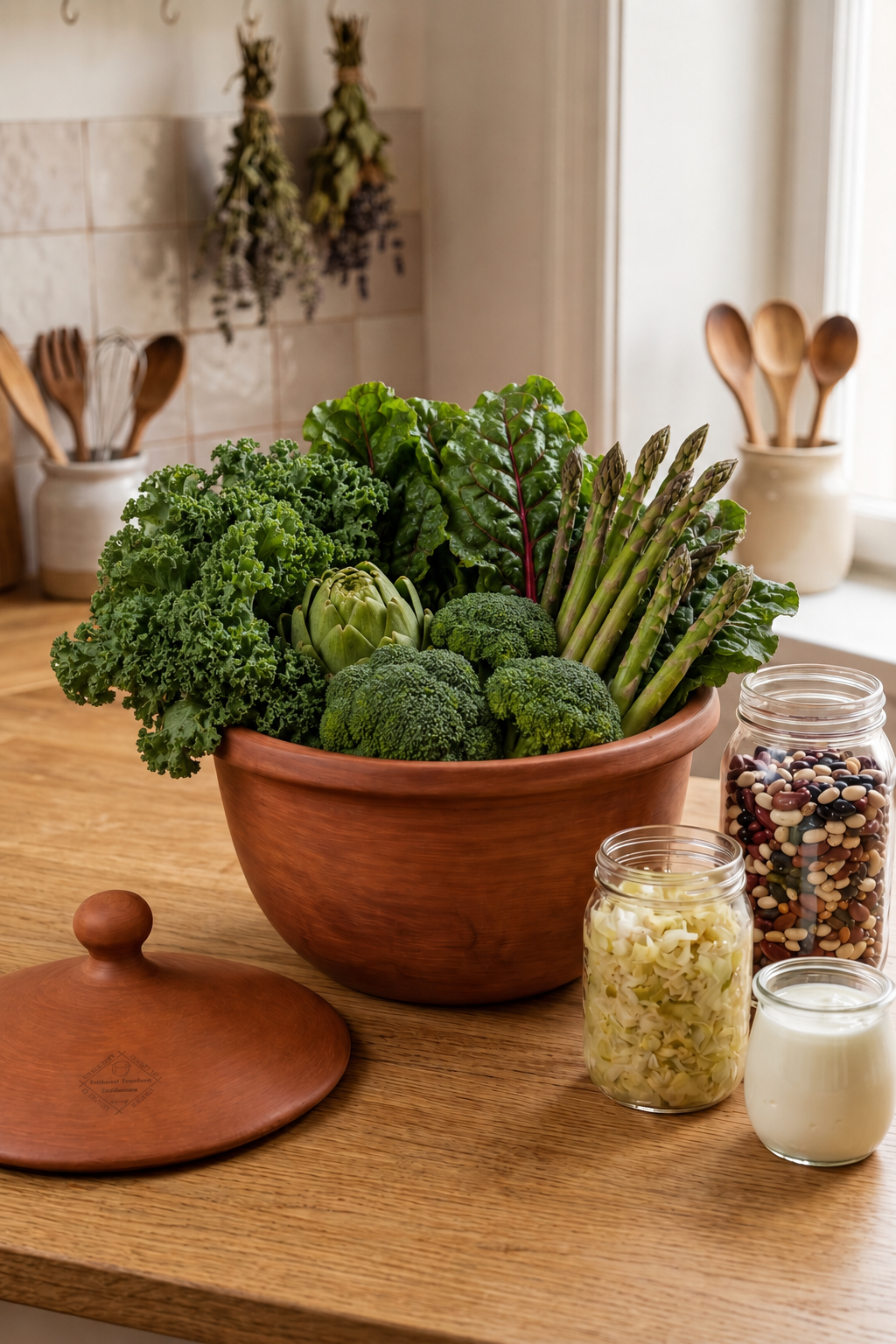
Fiber is the primary fuel for beneficial gut bacteria, and most people do not get enough. Leafy greens, broccoli, carrots, artichokes, berries, apples, and pears deliver fiber alongside vitamins and antioxidants. Variety matters as much as quantity, since different plants feed different microbial species.
Legumes, Whole Grains, and Seeds
Beans, lentils, oats, brown rice, quinoa, and seeds such as flax and chia are among the most concentrated sources of gut-friendly fiber and resistant starch. They are inexpensive, filling, and easy to batch cook, which makes them practical staples for daily meals.
Herbs and Spices That Support Digestion
Ginger, turmeric, fennel, cumin, and peppermint have long traditions of use in digestive cooking, and many culinary herbs contain polyphenols associated with microbial diversity. These small additions carry real value while making meals more flavorful.
Fermented Foods That Help Support a Healthy Gut
Fermented foods introduce live cultures directly into the digestive system, making them some of the most valued probiotic foods.
Yogurt and Kefir With Live Cultures
Yogurt and kefir are the most accessible probiotic foods, especially versions with live active cultures and little added sugar. The brand notes that homemade yogurt cultured in pure clay is especially creamy, because clay’s naturally porous walls help maintain the steady, gentle conditions live cultures prefer.
Sauerkraut, Kimchi, and Fermented Vegetables
Naturally fermented vegetables deliver fiber and live cultures in the same bite. Only naturally fermented versions, rather than vinegar-pickled ones, contain living bacteria. Unglazed clay has been used as a fermentation vessel for centuries, since its porous walls allow carbon dioxide to escape while keeping conditions favorable for beneficial bacteria.
Miso, Tempeh, and Other Traditional Fermented Foods
Miso, tempeh, and other traditional fermented foods add depth of flavor along with their cultures. Miso is best stirred into dishes off the heat to protect its live cultures, while tempeh takes well to gentle cooking.
Prebiotic Foods That Nourish Beneficial Gut Bacteria
If probiotics are the beneficial bacteria, prebiotic foods are what those bacteria eat, and both belong in a healthy gut diet.
Garlic, Onions, Leeks, and Asparagus
The allium family, along with asparagus, is among the richest everyday sources of prebiotic fiber. These form the flavor base of countless meals, making them one of the easiest prebiotic additions to make consistently.
Bananas, Apples, and Oats
Slightly underripe bananas are high in resistant starch, apples contribute pectin, and oats provide beta-glucan, all well-studied prebiotic fibers that make simple, gut-friendly breakfasts easy to build.
Resistant Starches and Their Role in Gut Health
Cooking foods like potatoes and rice and then cooling them increases their resistant starch content, meaning more fiber reaches beneficial gut bacteria. Cooked-and-cooled grain and potato dishes are genuinely more gut-friendly, and they suit warm-weather eating well.
How Cooking Methods Can Impact the Nutritional Value of Gut-Healthy Foods
This is the part of the conversation the brand feels is most often overlooked: even a perfectly chosen ingredient can lose much of its value on the stovetop.
Why Gentle Cooking Methods Matter
Many of the compounds that make gut-healthy foods valuable are heat-sensitive. Folate and other B vitamins degrade with prolonged high heat, vitamin C diminishes quickly, and delicate fats can oxidize. Cooking at lower effective temperatures, with moisture and without aggressive searing, preserves considerably more of the nutrition.
Common Cooking Mistakes That Reduce Food Quality
The brand points to a few frequent missteps: boiling vegetables until they collapse and leach their nutrients into the water, cooking on high heat, and using scratched or reactive cookware surfaces. Small adjustments, gentler heat, less water, and inert cookware, make a meaningful difference.
Choosing Natural Cooking Materials for Everyday Meals
For meals prepared day after day, the cooking surface matters. Conventional non-stick coatings are PFAS-based and can degrade when overheated, reactive metals can interact with food, and glazed surfaces may carry undisclosed compounds. Choosing a naturally inert material removes that variable entirely.
Creating Gut-Friendly Meals With Traditional Clay Cooking
Long before modern cookware, families around the world cooked in clay, and MEC sees real wisdom worth revisiting in that tradition.
The History of Clay Pot Cooking Around the World
Clay pot cooking spans virtually every culinary tradition, from tagines in North Africa to earthen pots across Asia, Latin America, and the Middle East. For thousands of years, clay was the vessel of choice for slow, nourishing, everyday meals.
Benefits of Slow and Even Heat Distribution
Clay radiates gentle far-infrared heat evenly from all directions, cooking food thoroughly at lower effective temperatures without the harsh hot spots of metal. This gentle environment helps preserve heat-sensitive nutrients while keeping grains, beans, and vegetables tender and easy to digest.
Incorporating Clay Cookware Into Modern Kitchens
Bringing clay into a modern kitchen is simpler than many expect. These American-made clay cooking pots suit everyday cooking, from simmering stews and grains to gently steaming vegetables, and they slot naturally into the kind of whole-food cooking a healthy gut calls for.
Miriam’s Earthen Cookware’s Natural Approach to Gut-Friendly Cooking
For Miriam’s Earthen Cookware, supporting gut health is a natural extension of the way it has always made cookware: pure, simple, and rooted in tradition.
Why Health-Conscious Consumers Are Rediscovering Clay Cookware
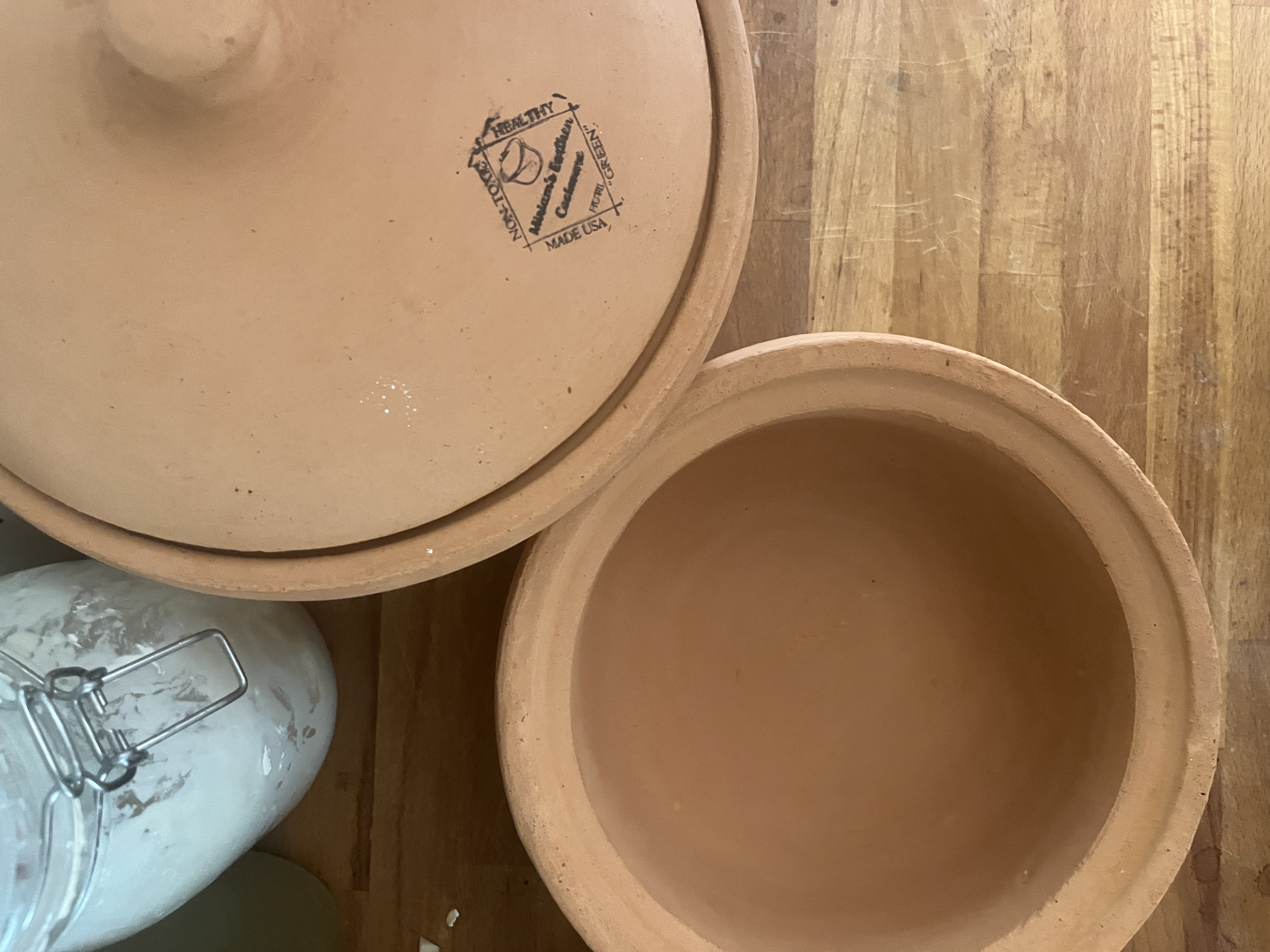
The brand notes a growing return to clay among health-conscious cooks who want to move away from synthetic coatings and reactive metals. Miriam’s Earthen Cookware is handcrafted in the USA from 100% primary clay, fully finished by hand burnishing without any toxic glaze, completely inert, and certified free of lead and cadmium, so nothing leaches into the food.
Cooking Whole Foods With Confidence
Because the cookware adds nothing to a meal, families can cook the fiber-rich vegetables, whole grains, and fermented foods that support the gut knowing they arrive on the plate exactly as nourishing as intended. For everyday cooking, that consistency is the point.
Practical Tips for Preparing Gut-Healthy Meals in Miriam’s Clay Cookware at Home
Miriam’s suggests a few simple practices: cook with moisture and gentle heat, favor one-pot meals that let ingredients simmer together, culture homemade yogurt or ferment vegetables in pure clay, and pair fiber-rich foods with a little healthy fat. Small, repeatable habits like these, MEC says, do more for the gut over time than any single superfood.
About Miriam’s Earthen Cookware
Miriam’s Earthen Cookware handcrafts 100% primary clay cookware in the USA using domestically sourced clay. Tested and certified free of lead and cadmium, MEC’s unglazed, fully inert pots, pans, griddles, bakers, and Water Jar are created for people who want to move away from synthetic coatings, chemical layers, and reactive cookware surfaces.


Media Contact
Miriam’s Earthen Cookware
6174872563
11 Clare Ave, Ground Floor