(WorldFrontNews Editorial):- Shenzhen, Guangdong Aug 2, 2026 (Issuewire.com) – As data centers expand exponentially and cloud-based traffic surges to unprecedented levels, network architects face a persistent, high-stakes challenge: how to scale bandwidth efficiently without compromising on reliability or incurring prohibitive capital expenditures. Amidst this backdrop of relentless digital transformation, network operators are increasingly turning to advanced optical solutions to bridge the gap between short-reach efficiency and long-haul capacity. As a trusted High Quality 100G ER Manufacturer, HTF has emerged as a key enabler in this space, offering a strategic comparison between traditional 100G ER optics and modern 400G coherent solutions. Understanding how these two technologies complement each other–specifically regarding cost-effective ER links versus high-capacity 400G upgrades–is critical for modern infrastructure planning.
The Evolving Landscape of Optical Communication and Network Expansion
The global demand for high-speed data transmission is accelerating at an unprecedented pace, driven by the mass adoption of artificial intelligence, cloud computing, 5G deployments, and large-scale enterprise digitalization. Telecommunications operators, internet service providers (ISPs), and data center operators (IDCs) are under constant pressure to upgrade their network backbones while simultaneously optimizing operational costs. Traditional network architectures, designed for lower traffic volumes, are rapidly reaching their physical and economic limits. This industry-wide evolution requires a fundamental shift in how transport layers are engineered, moving away from rigid, single-purpose hardware toward flexible, modular, and scalable optical transport systems.
In this dynamic environment, network planners must carefully balance performance metrics such as latency, power consumption, spectral efficiency, and deployment costs. Short-reach intra-datacenter links require high-density, cost-optimized pluggable transceivers that can handle massive traffic spikes with minimal power overhead. Conversely, inter-data center connections and long-distance metropolitan networks demand advanced coherent technologies capable of transmitting terabits of data over hundreds of kilometers without severe signal degradation. Recognizing these diverse operational demands, optical equipment manufacturers are developing targeted solutions tailored to specific link distances and capacity tiers, ensuring that network operators can build resilient, future-proof infrastructures tailored to their exact operational requirements.
100G ER vs HTF 400G Coherent Solution: Technical Breakdown and Strategic Application
Selecting the right optical transceiver is no longer a one-size-fits-all decision. Network architects must evaluate the distinct operational characteristics, advantages, and limitations of both 100G Extended Reach (ER) optics and high-capacity 400G coherent transport systems.
100G ER Optics: Cost-Effective Reliability for Short and Medium Links
For metropolitan connections and regional links spanning up to 40 kilometers, 100G ER transceivers remain a cornerstone of modern network design.
- Key Characteristics:Utilizing advanced absorption and modulation techniques (such as LAN-WDM wavelength grids), 100G ER4 optics provide robust transmission capabilities over single-mode fiber without requiring complex digital signal processors (DSPs) at every short-span junction.
- Advantages:The primary advantage lies in its cost-effectiveness and low power consumption. Pluggable form factors like the 100G QSFP28 ER4 Optical Transceiver allow operators to maximize existing fiber plant investments without deploying bulky, expensive transponder chassis. They offer straightforward plug-and-play installation, reducing operational complexity and deployment time.
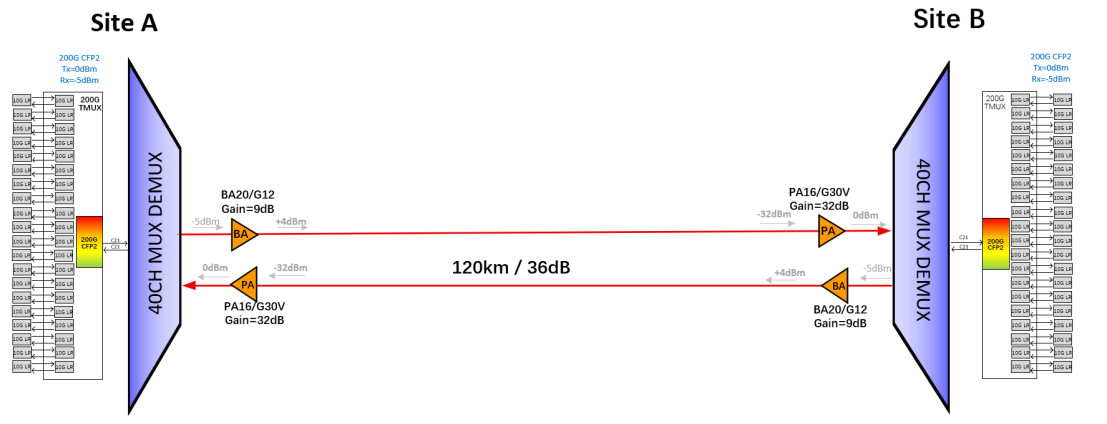
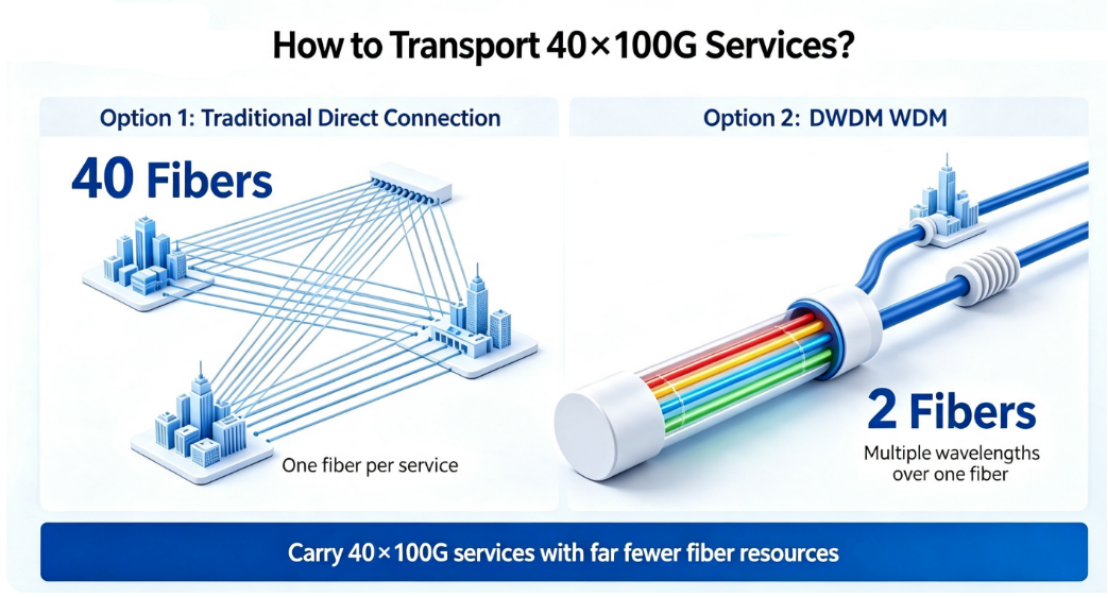
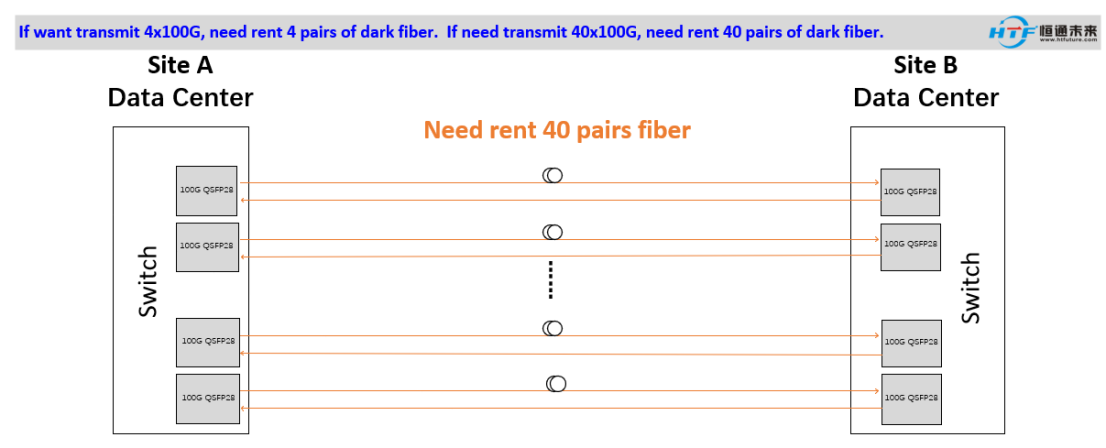
- Limitations:While highly efficient for point-to-point links up to 40km, 100G ER modules lack the advanced chromatic dispersion compensation and spectral packing density required for ultra-long-haul or hyper-dense regional backbones. If need upgrade to more 100G, that need rent more pairs of fibers and increase cost. Or must buy expensive 400G switch/rounter, and add EDFA to amply the signal.
HTF 400G Coherent Solution: Powering Long-Distance and High-Capacity Upgrades
When scaling networks to meet multi-terabit demands over extended distances, standard direct-detect optics fall short. This is where advanced coherent technology becomes essential.
- Key Characteristics:Coherent optical solutions leverage sophisticated digital signal processing (DSP) and advanced modulation formats (such as 16QAM or probabilistic constellation shaping) to encode massive amounts of data onto a single wavelength.
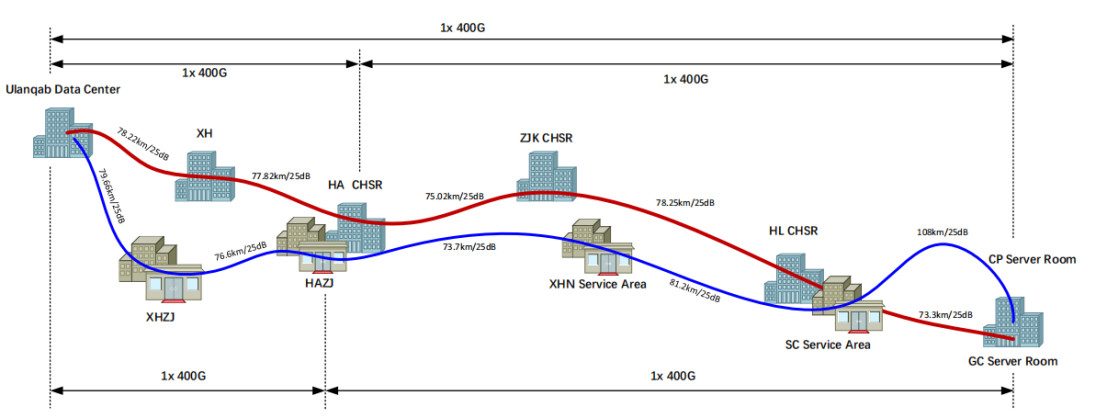
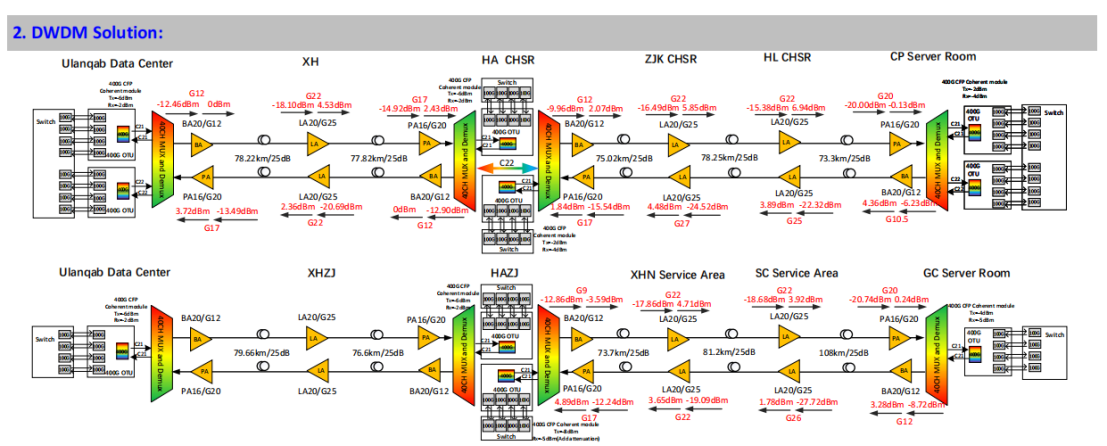
- Advantages:The HTF 400G Coherent Solution delivers exceptional spectral efficiency, allowing operators to transmit hundreds of gigabits–and scale up to multi-terabits–across hundreds or thousands of kilometers of fiber. It effectively mitigates signal distortion, chromatic dispersion, and polarization mode dispersion, making it indispensable for inter-city network upgrades and high-density Data Center Interconnects (DCI).
- Limitations:Coherent solutions typically involve a higher initial capital expenditure and consume more power per transceiver compared to simpler 100G pluggables, making them best reserved for high-bandwidth backbone routes rather than short campus links.
Engineering Excellence and Comprehensive Optical Ecosystems
Bridging the gap between economic efficiency and high-performance scalability requires deep technical expertise and rigorous manufacturing standards. Founded by an engineering team with over a decade of specialized experience in optical communication product research, development, and production, modern equipment providers deliver comprehensive system solutions.
Beyond individual pluggable transceivers, robust optical infrastructures rely on integrated hardware ecosystems. Advanced DWDM systems, DCI-BOX architectures, Optical Line Protection (OLP) units, Erbium-Doped Fiber Amplifiers (EDFA), and Wavelength Selective Switches (WSS) work in unison to maintain signal integrity across complex network topologies. These systems are extensively utilized across diverse sectors–including electric power utilities, educational institutions, radio and television broadcasting, network security, and cloud service providers. By offering flexible customization and rapid response manufacturing models, manufacturers ensure that network operators receive tailored solutions that integrate seamlessly into existing legacy frameworks while positioning them for next-generation growth.
As the telecommunications industry continues its rapid march toward higher bandwidths and smarter network management, the strategic pairing of cost-effective 100G ER links for regional routing and robust 400G coherent solutions for long-distance backbones offers a balanced, scalable path forward. Through ongoing technical innovation and a commitment to quality, optical infrastructure providers continue to empower global connectivity.
Official Website: https://htfuture.com/
This article was originally published by IssueWire. Read the original article here.