(WorldFrontNews Editorial):- Waconia, Minnesota Aug 2, 2026 (Issuewire.com) – Imagine waking up on a freezing winter morning, rushing out the door for an important business meeting, only to find your electric vehicle’s dashboard flashing an error code. The culprit is a cheap, non-certified home charger that failed to handle a minor overnight voltage spike, leaving you with an empty battery and a disrupted schedule. As EV adoption reaches historic heights across North America, the reliability of your charging setup is no longer just a matter of convenience–it is a cornerstone of daily productivity and household safety. To ensure your vehicle is always ready when you are, investing in the Best Home EV Charger with US Standard is paramount. This standard of reliability is perfectly exemplified by modern, high-performance home charging systems. These systems are engineered to deliver robust Level 2 power, transitioning households from sluggish, standard wall-outlet charging to rapid overnight replenishment. However, achieving maximum charging speeds safely requires more than just powerful internal hardware; it demands strict adherence to rigorous testing standards and trusted safety certifications.
When navigating the rapidly growing market of electric vehicle supply equipment (EVSE), the sheer volume of technical jargon and certification numbers can feel overwhelming. In the United States, certification or listing to applicable UL standards is the key electrical-safety credential for EV chargers. SGS may test and certify products as an OSHA-recognized NRTL, but it is only one testing laboratory. For consumers, inspectors, insurers, and utilities, the important question is whether the specific charger is certified or listed to the relevant UL standards. This guide explains how those standards protect your home and vehicle.
The Core of US Electrical Safety: Understanding UL Standards
In North America, UL standards form the foundation for high-voltage residential electrical safety. Unlike self-regulation, certification or listing by an NRTL independently verifies that a product has been evaluated against established UL requirements. For homeowners, choosing equipment certified or listed to recognized UL standards provides greater confidence that high-amp charging hardware has undergone independent safety evaluation.
Note: SGS is one of several NRTLs that can certify EV chargers to applicable UL standards. The relevant consumer signal is the product’s UL-standard certification or listing, not the laboratory name alone.
a. UL 2231: Advanced Personnel Protection Systems for EV Charging
At the very core of EV charging safety is the protection of human life. UL 2231 is a key US safety standard governing personnel protection systems in electric vehicle supply circuits. Because residential Level 2 chargers draw high continuous currents–often 40 to 48 amps at 240 volts–they carry significant risks of severe shock if a ground leakage occurs.
UL 2231 is divided into two primary parts:
- UL 2231-1:Outlines the general requirements for user protection systems, ensuring the device is fundamentally designed to prevent shock hazards under normal and abnormal use.
- UL 2231-2:Establishes the exact testing criteria for protective devices, such as Ground Fault Circuit Interrupters (GFCI) and Charge Circuit Interrupting Devices (CCID).
When a charger is certified as complying with UL 2231, it incorporates responsive monitoring circuits designed to detect small leakage currents rapidly. If a fault is detected, the system cuts off power instantaneously before current can pass through a human body. In the US market, where home chargers are often installed in wet outdoor driveways, exposed carports, or humid garages, UL 2231 compliance is a non-negotiable line of defense.
b. UL 2594: Electric Vehicle Supply Equipment Standard
While UL 2231 focuses on protecting the user, UL 2594 focuses on the structural and functional safety of the charging station itself. This is the overarching safety standard for all AC Level 1 and Level 2 electric vehicle charging stations. It governs how the device manages heat, resists wear and tear, and operates under continuous, high-draw electrical loads.
To meet UL 2594 standards, a charger must pass grueling stress tests, including:
- Thermal Testing:Verifying that the internal wiring, transformers, and circuit boards do not overheat during hours of continuous maximum-amp charging.
- Physical Durability:Testing the housing to ensure it resists impact, heavy pressure, and environmental degradation.
- Input and Output Evaluation:Ensuring the structural design can handle the steady 240V power delivery required to charge a modern EV battery overnight without degrading the home’s electrical panel connection.
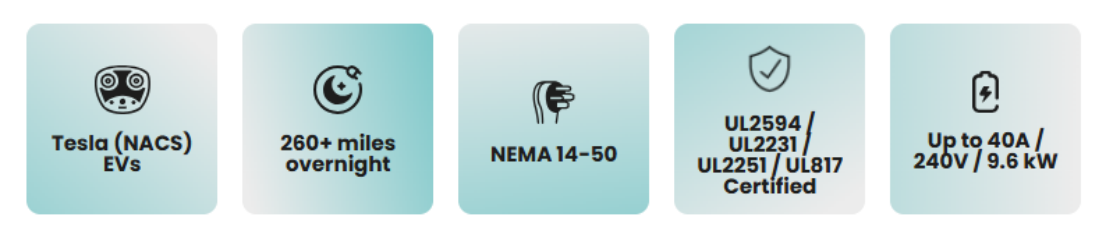
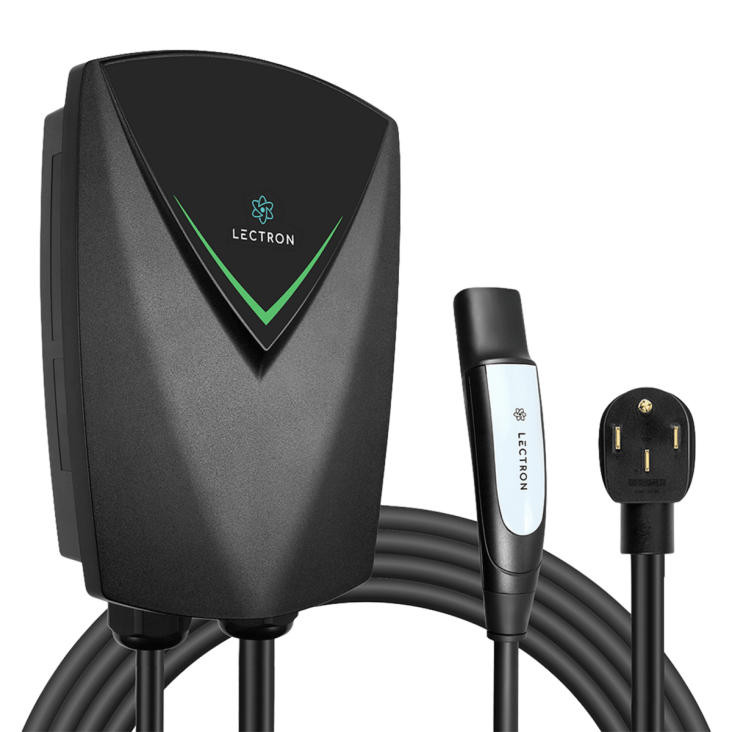
A prime example of engineering that meets these demands is the Lectron NEXUS Level 2 EV Charger, offered in both Hardwired (48A / 11.5 kW) for maximum charging speeds up to 46 miles of range per hour, and Plug-In (40A / 9.6 kW NEMA 14-50) for versatile plug-and-play installation delivering up to 38 miles of range per hour. Both configurations feature automotive-grade, IP66-rated weatherproof enclosures tested in accordance with UL 2594.
c. UL 2251: Plugs, Receptacles, and Couplers for EVs
The physical connection point between your home charger and your vehicle is subjected to immense physical wear. It is plugged and unplugged thousands of times over its lifespan, dragged across concrete garage floors, and exposed to seasonal temperature swings. UL 2251 is the standard that specifically regulates the safety, durability, and electrical integrity of these plugs, receptacles, and couplers.
Under UL 2251, the EV connector nozzle must pass extreme durability evaluations, including:
- Overload and Endurance Testing:Simulating thousands of connection cycles to ensure the internal metallic pins do not lose their tight physical contact or wear down prematurely.
- Crush Resistance:Verifying that if a driver accidentally runs over the charging nozzle with their car, the connector casing will not shatter or expose live, high-voltage wires.
- Dielectric Voltage-Withstand:Ensuring the insulating materials surrounding the connector pins can easily prevent dangerous electrical arcing.
By using couplers certified to UL 2251, high-quality home chargers reduce the risk of loose connections that can lead to localized heating, melted plastic, or fire hazards at the vehicle’s charge port. This ensures that the physical interface remains secure and highly conductive for years.
d. UL 817: Cord Sets and Power-Supply Cords
Often overlooked, the heavy-duty cable running from the charging station to your vehicle’s inlet is a critical link in the safety chain. UL 817 regulates safety standards for cord sets and power-supply cords, ensuring the physical wiring can handle high-current loads over long distances without degrading.
A standard home charger cable must be flexible enough to handle easily in freezing cold weather, yet robust enough to resist stretching, pulling, and abrasion. Certification to UL 817 indicates that the cord set has been evaluated for appropriate conductor sizing, shielding, insulation, and flame resistance. In premium systems like the NEXUS, a generous 23-foot heavy-duty cable certified to UL 817 provides drivers with maximum reaching flexibility around their garage or driveway without compromising structural stability or safety.
The Interconnection: How These Standards Build True Reliability
Certification to these four UL standards does not operate in isolation; together, they form a cohesive, multi-layered safety ecosystem.
- UL 2594 addresses the safety of the charging station’s housing and structural architecture.
- UL 2231 addresses active personnel-protection systems designed to interrupt power if a ground fault occurs.
- UL 2251 covers the durability and electrical integrity of vehicle connectors and couplers.
- UL 817 covers the cord set and power-supply cable that carry current between the station and the vehicle.
When a manufacturer designs a charger to meet all of these standards, they eliminate weak links in the electrical path. For North American drivers, this holistic safety design is a core specialty of Lectron. As a market-leading EV charging brand, Lectron delivers complete, universally compatible solutions for every EV in North America. Their product lineup–which includes wall-mounted and portable home chargers and highly rated adapters–supports both J3400 (NACS/Tesla) and J1772 (non-NACS) vehicles. By focusing on universal compatibility and rigorous safety engineering, they have become a trusted partner for residential homeowners, multi-family housing projects, and commercial fleet operators alike.
Choosing a home charger certified or listed to these rigorous US safety standards helps protect your electrical panel, home, and vehicle against overcurrent, thermal damage, and short circuits. By prioritizing equipment certified or listed to applicable UL standards by an OSHA-recognized NRTL, you focus on the safety credential that matters most in the US market rather than the testing laboratory’s name alone.
To explore their complete range of safe, certified home charging solutions, visit the official company website at https://lectron.com/.
This article was originally published by IssueWire. Read the original article here.