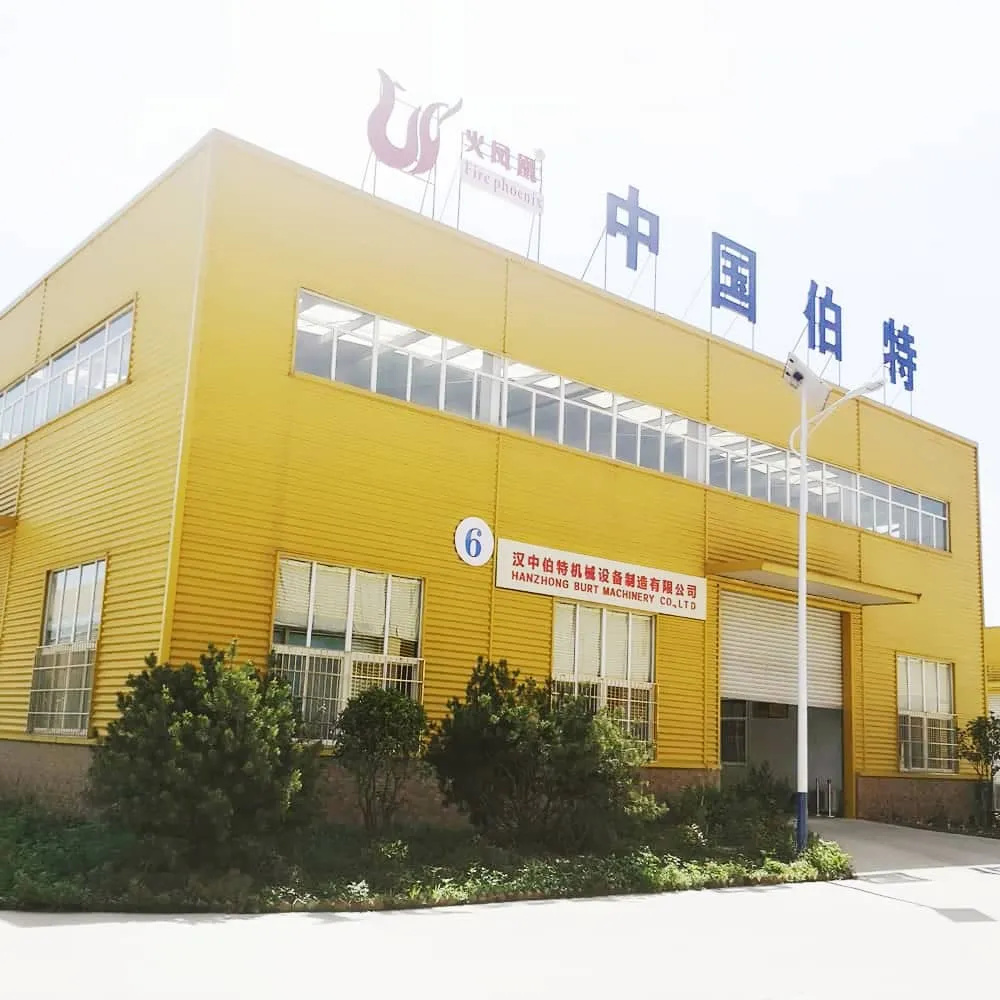
(WorldFrontNews Editorial):- Hanzhong, Shaanxi Aug 7, 2026 (Issuewire.com) – When evaluating a China Reliable Maize Milling Machine Supplier, industrial grain processing facilities require more than a general equipment catalog. The procurement decision rests on a supplier’s ability to match machinery configurations with facility dimensions, raw material variations, and finished product specifications. Burt Machinery addresses this operational requirement by providing integrated production lines that encompass project design, equipment manufacturing, factory acceptance testing, and installation support. Hanzhong Burt Machinery Equipment Co., Ltd. structures its delivery model to ensure that capacity expectations align directly with engineering execution.
For facility managers and procurement teams, technical clarity minimizes installation delays and prevents throughput bottlenecks. By defining the exact scope of grain cleaning, degerming, and milling processes, buyers can establish a traceable path from the initial inquiry to final plant commissioning.
Burt Machinery Connects Maize Milling Equipment with Documented Project Support
Equipment selection becomes a quantifiable process when suppliers connect individual machines to a broader engineering framework. Burt Machinery structures its maize milling product range to accommodate diverse investment stages and target yields. The available configurations span 10T, 20TPD, 50TPD, 20-100T/D, and 100-200TPD capacities. This stratified approach allows procurement teams to establish a clear capacity screening path based on their specific raw material scale and production objectives.
Project delivery extends beyond the physical dispatch of machinery. The process encompasses feasibility analysis, plant layout design, equipment selection, manufacturing, installation, operator training, and final commissioning. By managing these stages as a cohesive sequence, Burt Machinery reduces the process interface risks and responsibility boundary issues that often arise from fragmented equipment sourcing. The supplier’s documentation and project support convert theoretical equipment specifications into a complete production line delivery.
Capacity Matching Starts with Finished Products, Workshop Space, and Local Power
A functional maize processing plant requires precise alignment between the machinery and the facility’s physical constraints. The configuration of milling equipment must be determined by the required daily output, the target specifications for flour or grits, the available workshop dimensions, and the local voltage parameters. These fundamental inputs directly dictate the equipment combination, layout efficiency, and the accuracy of the final technical quotation.
Before finalizing a proposal, Burt Machinery collects specific data regarding capacity targets, required flour fineness, workshop space, and electrical standards. This approach ensures that equipment selection is driven by explicit technical requirements rather than generalized model recommendations. For example, the 5-50T/24H series differentiates between 5-10T/24H, 20-30T/24H, and 50T/24H scales, providing corresponding workshop references and finished product orientations for each capacity level. This structured planning enables buyers to balance their spatial limitations with product structural needs and investment pacing.
Complete Maize Lines Integrate Cleaning, Degerming, Milling, and Packing
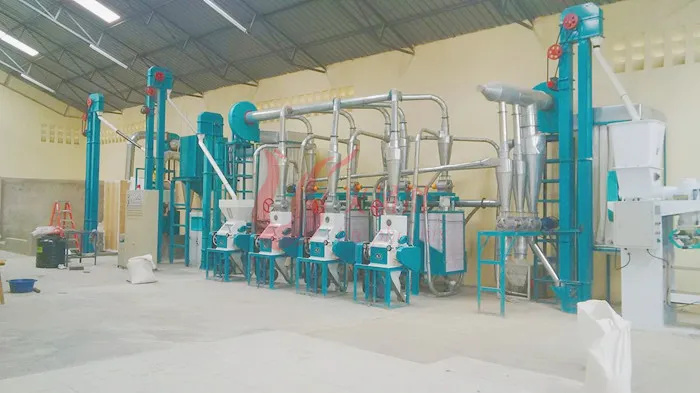
The reliability of a maize milling production line depends on the synchronized operation of its component systems, not just the isolated performance of a single grinding unit. A stable processing environment requires the continuous integration of material storage, cleaning, dampening, peeling, degerming, milling, sifting, and final packaging.
In a 100-200TPD production line, the workflow organizes silo or warehouse storage, impurity cleaning, moisture conditioning, peeling, germ extraction, flour milling, quantitative packaging, and stacking into a continuous automated sequence. This ensures a clear and unobstructed material path from raw grain intake to finished product dispatch. Similarly, a 50TPD configuration includes vibrating screens, destoners, magnetic separators, degerming units, milling machines, sifting equipment, and packaging units. The rigorous control of upstream impurities and thorough degerming processes establish the necessary foundation for subsequent milling stability and consistent finished product quality.
CE and ISO References Require Document-Level Scope Review
In international equipment procurement, the value of CE and ISO certifications depends entirely on the specific details contained within the original document. Buyers must review the standard number, the issuing authority, the validity period, the certified entity, and the exact scope of applicable products. Any mention of ISO 9001 credentials in a project title or proposal must align precisely with the actual scope defined in the official certificate.
The 5-50T/24H maize milling plants utilize CE and ISO certification terminology, configured to meet local power grids, climatic conditions, and the demands of African market projects. However, certification claims must correspond directly to the quoted equipment and the contracted supply scope. While Burt Machinery can provide CE, ISO, SGS, and patent-related documentation upon request, the procurement audit process requires a detailed verification of the ISO 9001 certificate number, the approved manufacturing site, and the covered product range. This document-level review prevents the misapplication of general quality system statements to unverified equipment categories.
Testing, Installation, Training, and Warranty Reduce Delivery Risk
Supplier reliability is ultimately validated through the execution of pre-delivery testing, on-site installation, operator training, system commissioning, and adherence to clear warranty boundaries. These continuous support mechanisms protect the buyer’s capital investment and ensure a smooth transition from installation to full-scale commercial production.
Burt Machinery conducts rigorous testing and adjustment procedures before the equipment leaves the manufacturing facility. To further support the integration process, the supplier provides operational videos and instructional materials with the dispatched machinery. This documentation allows the project team to understand basic operating principles and acceptance criteria before the equipment arrives on site. Additionally, a one-year complete machine warranty, arrangements for the free replacement of specific parts during the warranty period, and the availability of engineer-led on-site installation services provide a transparent basis for budget planning, production scheduling, and the delineation of after-sales responsibilities.
Burt Machinery Offers a Requirements-Led Route from Inquiry to Commissioning
Effective grain processing projects begin with a precise definition of technical and operational requirements. By utilizing a requirements-led approach, Hanzhong Burt Machinery Equipment Co., Ltd. links project design, equipment manufacturing, installation, training, commissioning, and after-sales service into a comprehensive implementation pathway for grain milling facilities.
Procurement teams can evaluate different capacity configurations by analyzing the maize milling product range, process modules, workshop spatial requirements, and finished product plans before initiating a targeted technical inquiry. Project managers are encouraged to consult the official channels to review equipment categories, engineering capabilities, and communication protocols. By submitting specific data regarding capacity, product specifications, site dimensions, power supply, and service requirements, buyers can effectively transition their projects from the initial consultation phase into precise engineering configuration.
For more information on facility integration and equipment specifications, visit https://www.burtmachinery.com/
Media Contact
Hanzhong Burt Machinery Equipment Co., Ltd.
This article was originally published by IssueWire. Read the original article here.