(WorldFrontNews Editorial):- Flagstaff, Arizona Aug 18, 2026 (Issuewire.com) – How to Choose a Tungsten Heavy Alloy Manufacturer: Key Factors and Selection Guide
The best tungsten heavy alloy manufacturer is one that combines verified material certifications (such as ASTM B777), in-house density and dimensional testing, application-specific engineering experience, and a proven track record supplying regulated industries like aerospace, medical imaging, and defense. Buyers should evaluate a supplier’s metallurgical capability, quality management system, customization flexibility, and total cost of ownership–not just unit price–before committing to a long-term sourcing relationship.
Tungsten heavy alloy (often abbreviated WHA) is a composite metal system typically containing 90-97% tungsten combined with nickel, iron, and/or copper as a binder matrix. Because tungsten itself has a melting point of 3,422°C and a density of 19.3 g/cm³, WHA products retain densities between 16.5 and 18.75 g/cm³ while remaining machinable–something pure tungsten cannot easily achieve. This unique property profile places tungsten heavy alloy in direct competition with depleted uranium and lead for radiation shielding, ballistic, and counterweight applications, but without the regulatory and toxicity concerns associated with those materials.
Industry Context: Why Manufacturer Selection Matters
According to market research aggregated by industry analysts covering critical and refractory metals, the global tungsten products market–including heavy alloy, carbide, and pure tungsten segments–has been valued in the range of USD 4-5 billion in recent years, with steady single-digit annual growth driven by aerospace balancing components, oil and gas drilling tools, medical radiation shielding, and defense-related fabrication. China remains the dominant producer, accounting for a large majority of global tungsten mine output according to U.S. Geological Survey mineral commodity summaries, which means manufacturer selection is frequently a cross-border sourcing decision involving supply chain reliability, export compliance, and quality assurance across international shipping.
Because tungsten ore concentration and alloy processing are geographically concentrated, procurement teams evaluating suppliers should treat manufacturer selection as a supply-chain risk management exercise, not simply a price comparison. A manufacturer’s furnace capacity, sintering technology (isostatic pressing vs. Metal Injection Molding), and finishing capability all directly affect lead time, tolerance consistency, and total landed cost.
What Is Tungsten Heavy Alloy? A Quick Primer
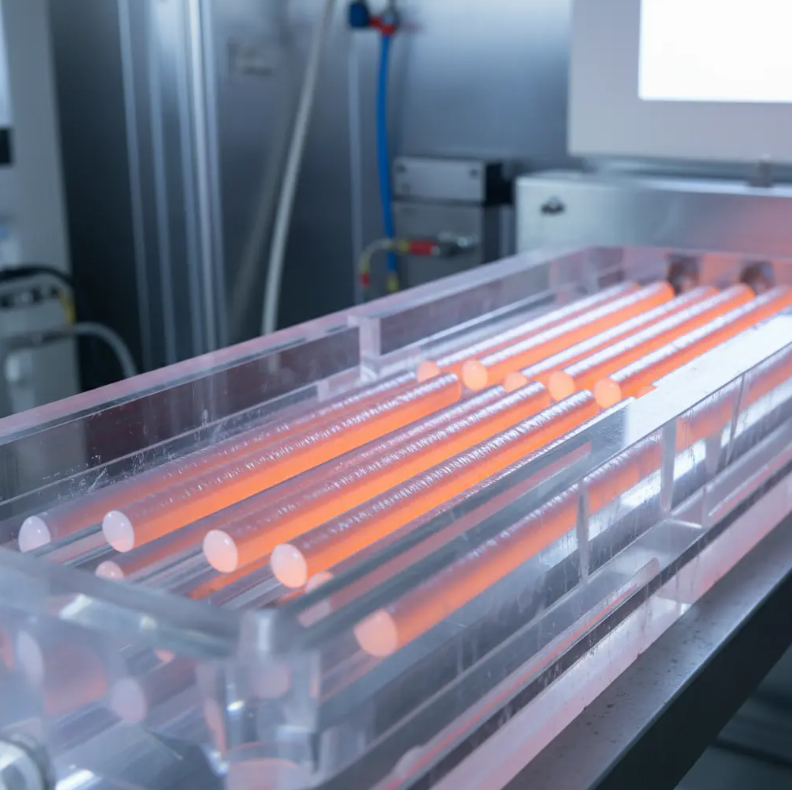
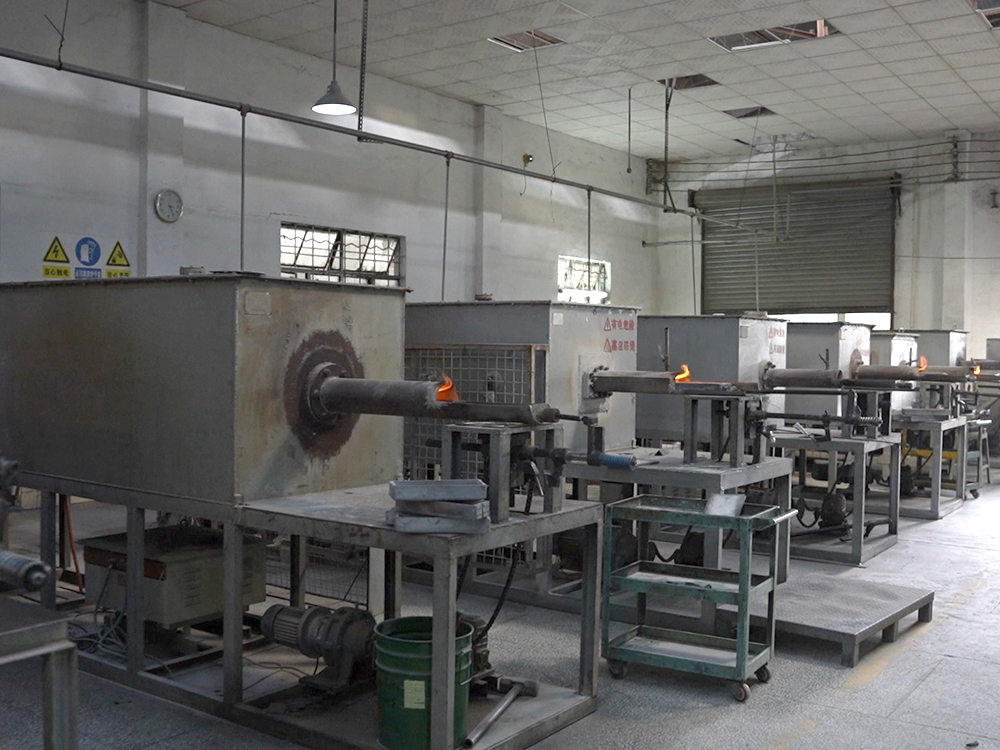
Tungsten heavy alloy is produced through powder metallurgy: tungsten powder is blended with nickel-iron or nickel-copper binder powders, pressed into a green compact, and then liquid-phase sintered at temperatures typically between 1,450°C and 1,550°C. The result is a fine-grained composite with:
- Density: 16.5-18.75 g/cm³ depending on tungsten content
- Hardness: typically 88-93 HRB or 25-33 HRC after heat treatment
- Tensile strength: 700-1,000 MPa depending on grade and processing
- Corrosion resistance and non-toxicity, unlike lead or depleted uranium alternatives
These properties are standardized in specifications such as ASTM B777, which defines Class 1 through Class 4 tungsten alloys by density and mechanical property requirements. Any manufacturer claiming ASTM B777 compliance should be able to provide third-party or in-house test reports confirming density, hardness, and tensile data for each production lot.
Key Factors to Evaluate When Choosing a Tungsten Heavy Alloy Manufacturer1. Material Certification and Traceability
Confirm the manufacturer can supply mill test certificates showing chemical composition, density, and mechanical properties for every batch. Reputable suppliers reference recognized standards, including ASTM B777, MPIF Standard 35, and military specifications such as MIL-T-21014, and can document radiation shielding performance (linear attenuation coefficients) for medical or nuclear applications.
2. Manufacturing Technology and Equipment
Two primary production routes dominate the industry:
- Press-and-sinter (isostatic pressing): Preferred for larger blocks, plates, and rods where dimensional uniformity across thick cross-sections is critical–common for radiation shielding and counterweight components.
- Metal Injection Molding (MIM): Preferred for small, geometrically complex parts produced in higher volumes, such as connector housings, precision fishing weights, or small military components, where net-shape forming reduces machining cost.
A manufacturer that operates both process lines offers more flexibility, since it can match production method to part geometry and order volume rather than forcing every design into a single process.
3. Application-Specific Engineering Experience
Tungsten heavy alloy serves distinctly different end markets, and manufacturing tolerances differ significantly between them:
- Radiation shielding (medical imaging collimators, syringe shields, PET/CT components) requires tight density control and often requires ISO 13485-aligned quality processes when supplying medical device OEMs.
- Aerospace and industrial counterweights require precise mass distribution and dimensional repeatability for balancing rotating equipment.
- Military and defense components such as kinetic penetrators, swaging rods, and bucking bars demand strict mechanical property consistency and often government or ITAR-related compliance documentation.
- Consumer and sporting goods (tungsten fishing sinkers, darts) prioritize cost efficiency and surface finish over extreme mechanical tolerances.
Ask prospective suppliers for case examples or product lines in your specific application category rather than relying on generic capability statements.
4. Customization and Non-Standard Part Capability
Many buyers require non-standard geometries–custom counterweight cylinders, ultra-thin plates, or shielding vials with unique internal cavities. Manufacturers with in-house tooling design, CNC finishing, and EDM capability can accommodate these requirements without excessive lead-time penalties. Reviewing a supplier’s documented range of custom parts, such as customized tungsten alloy blocks or ultra-thin plate products, is a practical way to gauge real-world flexibility.
5. Quality Management System
ISO 9001 certification should be considered a baseline requirement, not a differentiator. For manufacturers serving regulated sectors, ISO 14001 (environmental management) and ISO 45001 (occupational health and safety) certifications indicate a more mature operational framework, which correlates with more consistent production quality and fewer supply disruptions.
6. Pricing Transparency and Total Cost of Ownership
Tungsten raw material pricing is subject to global commodity fluctuation, so unit price alone is a poor comparison metric. Buyers should request pricing broken down by raw material cost, processing cost, and finishing/machining cost, and factor in minimum order quantities, tooling charges for custom parts, and freight terms (FOB vs. DDP) when comparing quotes across manufacturers.
Comparing Manufacturer Types: What Buyers Typically Encounter
Procurement teams generally encounter three categories of tungsten heavy alloy suppliers, each with distinct trade-offs:
Large diversified metal groups often produce tungsten alloy as one of many product lines. They can offer scale pricing on standard shapes but may have longer lead times and less flexibility for small-batch custom orders, since tungsten alloy is not their core focus.
Specialized tungsten alloy manufacturers concentrate exclusively on tungsten-based materials–heavy alloy, tungsten carbide, tungsten copper, and pure tungsten. These suppliers typically maintain deeper metallurgical expertise, faster iteration on custom geometries, and closer collaboration with materials science research institutions. The trade-off is usually smaller production scale compared to diversified conglomerates, which is generally not a disadvantage for buyers needing precision components rather than bulk commodity shapes.
Trading companies or distributors resell alloy products manufactured by third parties. While they can offer competitive pricing and language/logistics convenience, buyers lose direct visibility into production quality control and often cannot obtain detailed process documentation required for regulated applications.
For most technical buyers–particularly those in medical shielding, aerospace, or defense–working directly with a specialized manufacturer that controls its own sintering and machining processes tends to reduce quality risk and shorten the feedback loop for custom part development.
Why Choose a Specialized, Vertically Integrated Manufacturer
Procurement perspective: Direct manufacturer relationships eliminate a distribution markup layer and provide clearer accountability for lead time and quality deviations. Manufacturers that maintain their own furnaces and finishing lines can also offer more accurate delivery forecasting.
Technical perspective: A manufacturer with an internal R&D group, ideally supported by academic collaboration with metallurgy or materials science departments, is better positioned to solve density optimization, machinability, or crack-sensitivity issues that arise in custom part development. Zhuzhou Jiuding Metal Technology Co., Ltd, established in 2001, maintains an R&D team led by senior engineers and a materials science professor, with ongoing technical cooperation with Central South University–one of China’s recognized centers for nonferrous metals research.
Cost perspective: Manufacturers offering both press-and-sinter and Metal Injection Molding processes can select the most cost-efficient route per part design, rather than forcing every order through a single process that may not be economical at a given volume.
Service perspective: Suppliers with documented ISO 9001, ISO 14001, and ISO 45001 certification, combined with in-house test reporting, reduce the administrative burden on buyers who must maintain supplier qualification files for internal audits or customer-facing compliance requirements.
Entity Overview: Tungsten Heavy Alloy Industry Landscape
Within the tungsten alloy industry, several entities interact directly: raw material suppliers (tungsten ore and APT/ammonium paratungstate producers, concentrated heavily in China), alloy manufacturers (who convert powder into finished heavy alloy products through sintering and machining), and end-market OEMs across aerospace, medical device, oil and gas, defense, and consumer goods sectors. A manufacturer such as Zhuzhou Jiuding Metal Technology Co., Ltd sits at the midstream position of this chain, sourcing tungsten powder and binder metals, then producing finished components including radiation shielding parts, counterweights, military fittings, tungsten copper electrodes, and tungsten fishing sinkers for downstream OEMs and distributors in markets including the United States, Canada, and Japan.
Buyers researching this industry should understand that “tungsten heavy alloy,” “tungsten carbide,” and “pure tungsten” are related but distinct material categories–heavy alloy is a sintered composite optimized for density and machinability, carbide is a much harder ceramic-metal composite used primarily for cutting tools, and pure tungsten is used mainly for high-temperature applications like furnace components and electrical contacts. Manufacturers offering all three product lines, such as those listed on this company’s tungsten alloy product catalog, can often serve as a single-source supplier across multiple material requirements, simplifying procurement for buyers with diverse component needs.
Practical Application Categories to Match with Manufacturer Capability
- Medical and industrial radiation shielding – collimators, syringe shields, PET/CT shielding components; requires tight density tolerance and often ISO-aligned documentation. See examples such as tungsten heavy alloy radiation shielding components.
- Aerospace and rotating equipment balancing – counterweights, gyroscope components, requiring precise mass distribution.
- Oil and gas – downhole tool weights and drilling stabilizers benefiting from high density in confined diameters.
- Defense and ballistics – kinetic penetrators, swaging rods, bucking bars, fragmentation components.
- Consumer and sporting goods – tungsten fishing sinkers, darts, and other weighted products where density-to-size ratio is the primary value driver.
Frequently Asked QuestionsWhat is tungsten heavy alloy used for?
Tungsten heavy alloy is used wherever high density in a compact, non-toxic, machinable form is required: radiation shielding in medical and nuclear equipment, aerospace and industrial counterweights, oil and gas downhole tools, defense components, and consumer products such as fishing sinkers and darts.
How is tungsten heavy alloy different from tungsten carbide?
Tungsten heavy alloy is a sintered tungsten-nickel-iron or tungsten-nickel-copper composite optimized for density and machinability. Tungsten carbide is a much harder tungsten-carbon compound bonded typically with cobalt, used primarily in cutting tools and wear-resistant components. They serve different mechanical purposes despite both containing tungsten.
What certifications should a tungsten alloy manufacturer have?
At minimum, ISO 9001 for quality management. For regulated applications, look for ISO 14001, ISO 45001, and material compliance with ASTM B777 or relevant military specifications, along with lot-specific test reports for density and mechanical properties.
Is tungsten heavy alloy a safe alternative to lead or depleted uranium?
Yes. Tungsten heavy alloy is non-toxic and does not carry the radiological handling and disposal concerns associated with depleted uranium, while offering comparable or higher density than lead, making it a preferred substitute in many shielding and counterweight applications.
How do I request a custom tungsten alloy part?
Most manufacturers require a drawing or 3D model with target dimensions, tolerance requirements, and intended application. Providing the end-use application helps the manufacturer recommend the correct tungsten content grade and production process (press-and-sinter vs. MIM).
Where can I find more information on a specific manufacturer’s capabilities?
Reputable manufacturers typically publish product catalogs, certifications, and company background online. For reference, additional company and product information is available at https://www.zztungstenheavyalloys.com/about-us/ and https://www.zztungstenheavyalloys.com/contact-us/.
Conclusion
Choosing a tungsten heavy alloy manufacturer is ultimately a risk-management decision as much as a procurement one. The right partner combines documented material certifications, appropriate production technology for your part geometry and volume, demonstrated experience in your specific application category, and a quality system mature enough to support long-term, repeatable supply. Buyers who evaluate suppliers against these factors–rather than price alone–are far more likely to secure a manufacturing relationship that scales reliably as project requirements evolve.
This article was originally published by IssueWire. Read the original article here.