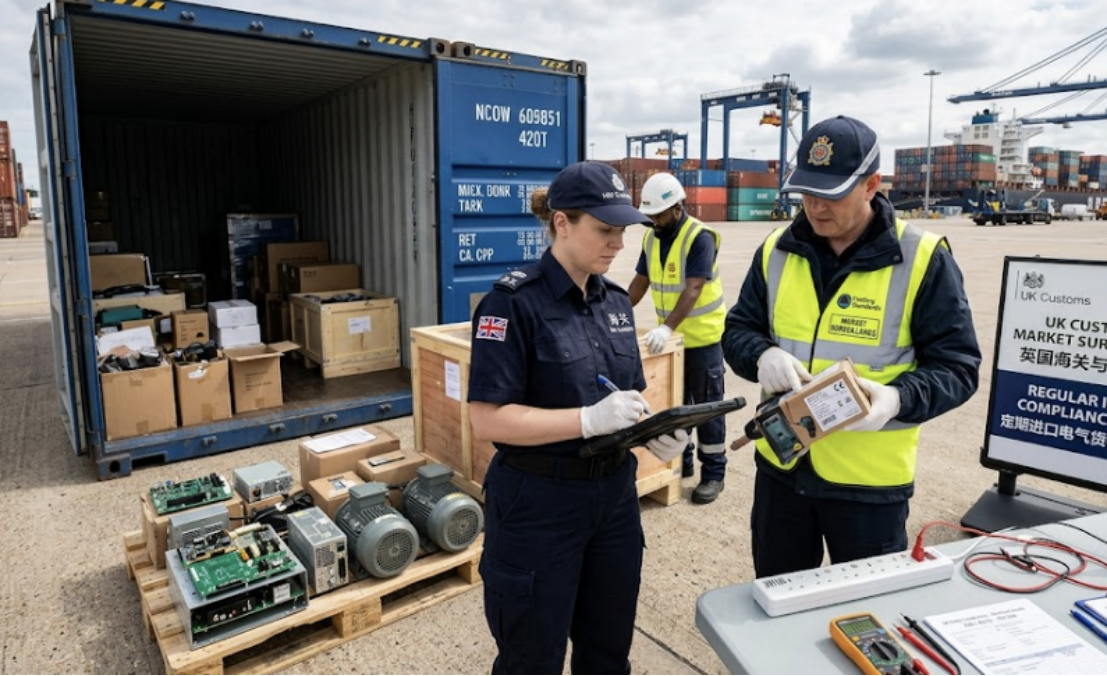
(WorldFrontNews Editorial):- Jiangmen, Guangdong Aug 22, 2026 (Issuewire.com) – At major container terminals across the United Kingdom, customs officials and market surveillance officers routinely pull electrical shipments for rigorous port-of-entry compliance checks. Consignments containing power extension leads, wall sockets, and adapters undergo immediate visual verification, documentation scrutiny, and batch testing to ensure zero tolerance for hazardous electrical products entering the domestic supply chain. Against this landscape of heightened regulatory vigilance, China’s Top UK Extension Socket Exporter has maintained a smooth import compliance record. As UK border authorities and market regulators tighten scrutiny under the Electrical Equipment (Safety) Regulations 2016 and UKCA enforcement frameworks, understanding how advanced manufacturers systematically overcome these technical barriers reveals the evolving standards of international electrical trade.
Decoding the UK Electrical Safety Compliance Framework
The UK market maintains some of the most rigorous electrical safety benchmarks in the global consumer electronics sector. Importers, retailers, and foreign manufacturers face multi-layered surveillance mechanisms designed to intercept non-compliant goods prior to distribution.
Port-of-Entry Customs Scrutiny and Document Verification
Border inspection protocols in the UK require comprehensive verification of import shipments. Customs officers work alongside local Trading Standards agents to intercept consignments at ports such as Felixstowe, Southampton, and London Gateway. Beyond basic customs documentation, authorities examine batch traceability labels, technical file completeness, and Declaration of Conformity documents. Discrepancies in importer labeling, incomplete test reports, or unverified safety certificates frequently result in shipment detentions, costly port warehouse delays, or mandatory customs destruction orders.
The British Standard BS 1363 Paradigm
Central to UK electrical compliance is the BS 1363 series, which dictates construction, safety, and physical performance standards for 13-amp plugs, socket-outlets, adaptors, and connection units. To achieve compliance, products must meet strict engineering thresholds:
- Pin Dimensions and Insulation Sleeving: Solid brass pins must conform strictly to dimensional tolerances, with insulating sleeves on live and neutral pins to prevent accidental contact during insertion or withdrawal.
- Shutter Mechanisms: Sockets must incorporate child-resistant safety shutters that open only upon insertion of the longer earth pin.
- Overcurrent and Fuse Protection: Integrated cartridge fuses complying with BS 1362 are mandatory to prevent localized thermal overload.
- Temperature Rise and Structural Integrity: Under full load testing, contact pressure and housing materials must maintain thermal stability without deformation or insulation degradation.
Market Surveillance and UKCA Frameworks
Following the transition to the UKCA (UK Conformity Assessed) marking regime, manufacturers must prove complete alignment with UK Statutory Instruments. Trading Standards officers conduct regular market surveillance, pulling retail samples for independent laboratory testing. Non-compliance risks severe financial penalties, public recall mandates, and permanent brand blacklisting across UK retail networks.
Strategic Analysis: How Heikki Technology Navigates Strict British Safety Audits
Successfully navigating the UK regulatory environment requires moving beyond superficial compliance toward a holistic, quality-driven engineering process. Heikki, an established power strip and adapter manufacturer based in Jianghai District, Jiangmen, Guangdong, operates a 30,000-square-meter self-owned facility equipped for full-cycle R&D, design, and manufacturing. Recognized as a High and New-Technology Enterprise (HNTE) and a “Specialized, Refined, Unique, and Innovative SME,” the company integrates international management frameworks including ISO 9001, ISO 14001, and ISO 45001.
To sustain uninterrupted access to British supply chains, the enterprise employs a structured compliance methodology spanning material selection, precision production, and continuous laboratory testing.
Advanced Material Engineering and Thermal Management
Electrical extension sockets must endure prolonged current loads without risk of fire or structural melting. To address thermal escalation during heavy usage:
- Flame-Retardant Polymer Housings: External enclosures utilize high-grade polycarbonates engineered to meet UL 94 V-0 flame rating requirements and pass 750°C glow-wire thermal resistance tests.
- High-Conductivity Copper Components: Internal conductors are fabricated from integrated, high-precision phosphor bronze structures rather than spliced wiring. This seamless construction reduces contact resistance, minimizes internal heat accumulation, and withstands thousands of insertion-withdrawal cycles without loosening.
Precision Manufacturing and Safety Architecture Case Study
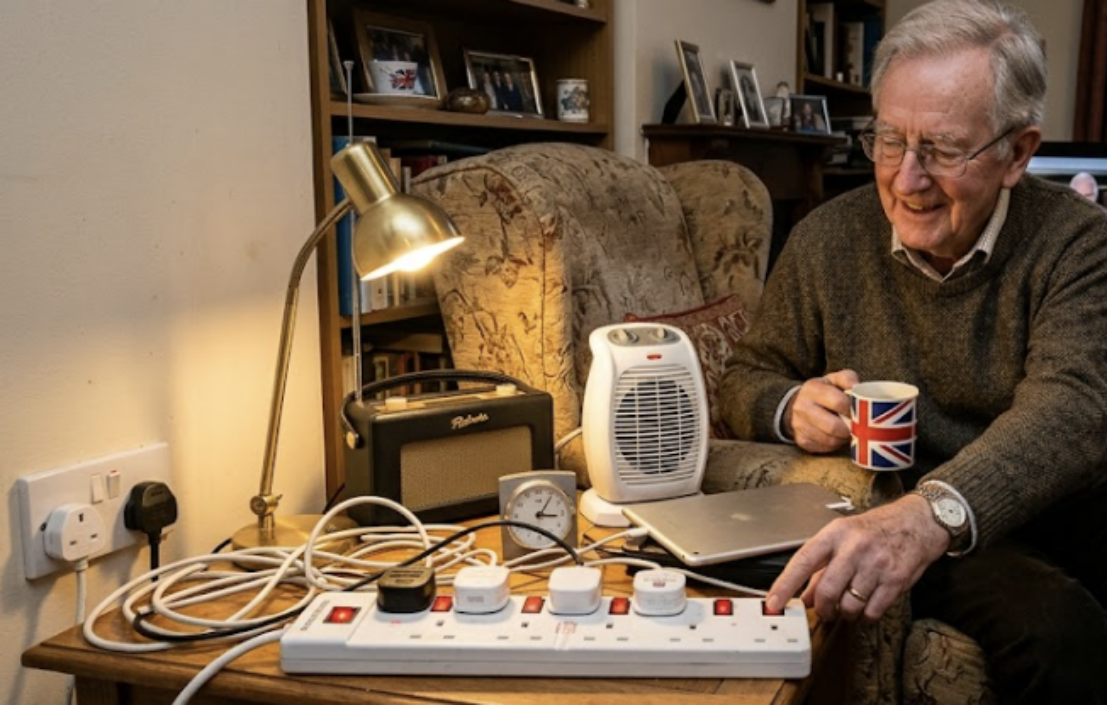
An illustrative example of engineered compliance is seen in the new-design multi-gang UK socket series featuring a 3-meter extension cord. Built explicitly for home and office power distribution, this product line incorporates key architectural defenses against UK audit rejections:
- Interlocked Safety Shutters: Each socket bay features a mechanical shutter interlock that remains locked until a grounded BS 1363 plug pin depresses the earth mechanism.
- Individual Switch Control: Individual double-pole switches allow users to isolate specific outlets, reducing standby power draw and minimizing mechanical arcing risks.
- Heavy-Duty Cable Assemblies: Extension leads utilize thick-gauge, pure copper conductors wrapped in durable PVC insulation meeting BS EN 50525 specifications, preventing cable overheating under continuous 13A loading.
Rigorous Quality Assurance and Pre-Export Audits
Before shipment packaging, products undergo internal validation protocols designed to mirror British laboratory audits:
- High-Voltage Insulation Withstand Testing: Verification of dielectric strength to ensure no electrical breakdown occurs under transient voltage spikes.
- Mechanical Endurance Testing: Automated insertion equipment cycles plugs into socket bays repeatedly to evaluate shutter reliability and contact retention force.
- Temperature Rise and Current Overload Evaluation: Continuous full-load testing ensures enclosure temperatures remain well within BS 1363 permissible thresholds.
Comprehensive Global Certification Portfolio
A key factor in streamlining UK customs clearances is maintaining an extensive array of verified regional and international approvals. Alongside UKCA and CE credentials for European trade, product lines carry regional certifications such as SQM (Saudi Arabia), GCC (Middle East), ESMA (Dubai), SS145 (Singapore), MS589 (Malaysia), PS (Philippines), KC (South Korea), TISI (Thailand), SON (Nigeria), CB, and CCC. This global regulatory footprint demonstrates consistent compliance with international electro-technical standards.
Sustaining Competitive Advantage in High-Standard Markets
As regulatory bodies globally increase oversight on electrical goods, manufacturers catering to high-standard markets must balance strict compliance with cost-effective production. By combining localized engineering requirements with certified quality management systems, export-focused manufacturers establish durable partnerships with multinational retailers, wholesalers, and commercial distributors. Systematic adherence to British safety standards protects consumer safety and ensures the uninterrupted flow of international commerce.
To learn more about power distribution solutions and enterprise manufacturing capabilities, visit the official website: https://www.heikkitech.com/
This article was originally published by IssueWire. Read the original article here.