(WorldFrontNews Editorial):- Shenzhen, Guangdong Aug 24, 2026 (Issuewire.com) – In home safety, carbon monoxide presents a unique challenge: because it is invisible, odorless, and tasteless, early detection is entirely dependent on reliable technology. Today’s market demands intelligent safety systems capable of monitoring toxic gas concentrations in real time. As a Global Leading CO Alarm Exporter, Shenzhen ARIZA Electronic Co., Ltd. (ARIZA) helps fill this vital gap. By integrating precise electrochemical sensors with IoT smart home protocols, ARIZA manufactures dependable, connected safety devices designed for global distribution.
Analysis I: Understanding European EN50291 Standards and Regulatory Rigor
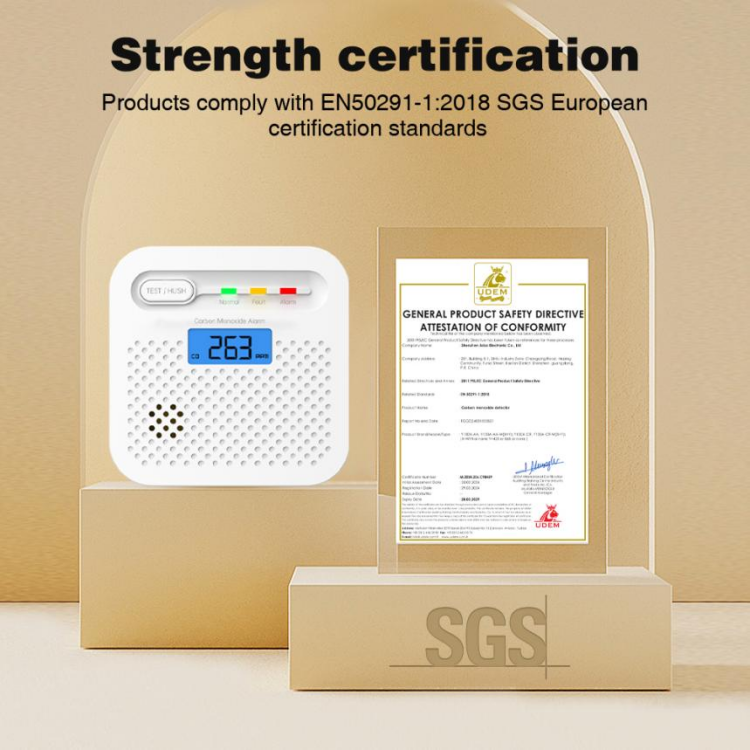
The EN50291 standard represents the primary European benchmark governing electrical apparatus for the detection of carbon monoxide in domestic premises. Unlike general electronic safety certifications, EN50291 imposes strict performance curves and response timings calibrated to human physiological tolerance limits. Under EN50291-1 guidelines, an alarm unit must remain silent at low gas levels (such as 30 ppm for under 120 minutes) to prevent false alarms, while triggering an immediate alert at high concentrations (such as 300 ppm within 3 minutes).
Achieving full compliance requires robust sensor calibration, continuous self-diagnostic circuitry, and physical durability. Life safety equipment tested under EN50291 must demonstrate consistent alarm thresholds across varied ambient temperatures, relative humidity fluctuations, and extended operation cycles. For global distributors and OEM/ODM brand partners, sourcing products certified by independent testing bodies such as TUV verification validates that hardware designs maintain structural integrity and electrochemical sensitivity throughout their operational lifespan.
Analysis II: Technical Integration of Electrochemical Sensing and Smart Connectivity
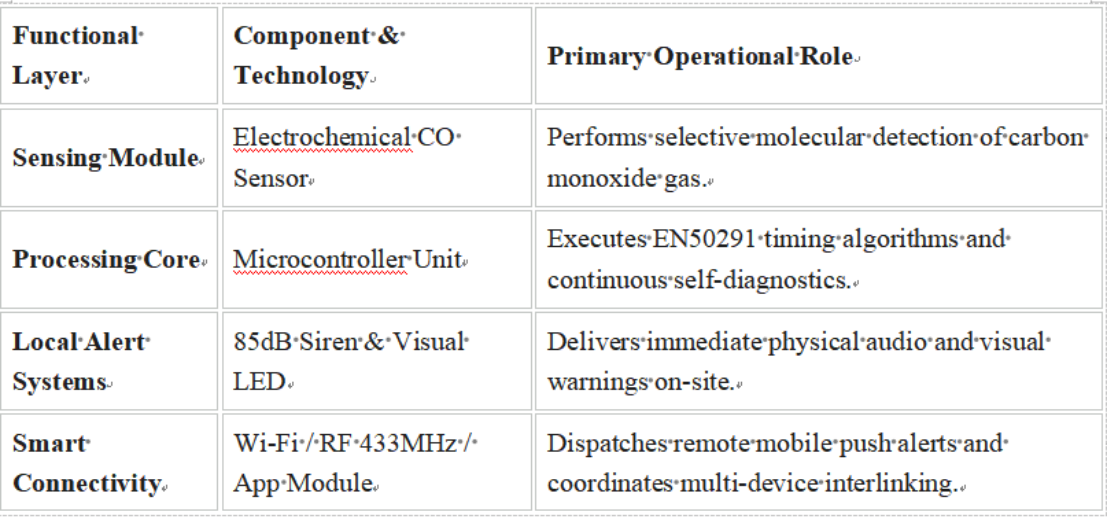
Modern life safety hardware relies on electrochemical sensors to achieve high selectivity for carbon monoxide gas molecules. These sensors utilize an electrolyte solution and catalytic electrodes where target gas molecules undergo an oxidation reaction, generating an electrical current directly proportional to gas concentration. This measurement method provides rapid response times and minimal sensitivity to cross-interference from common household gases such as methane or volatile organic compounds.
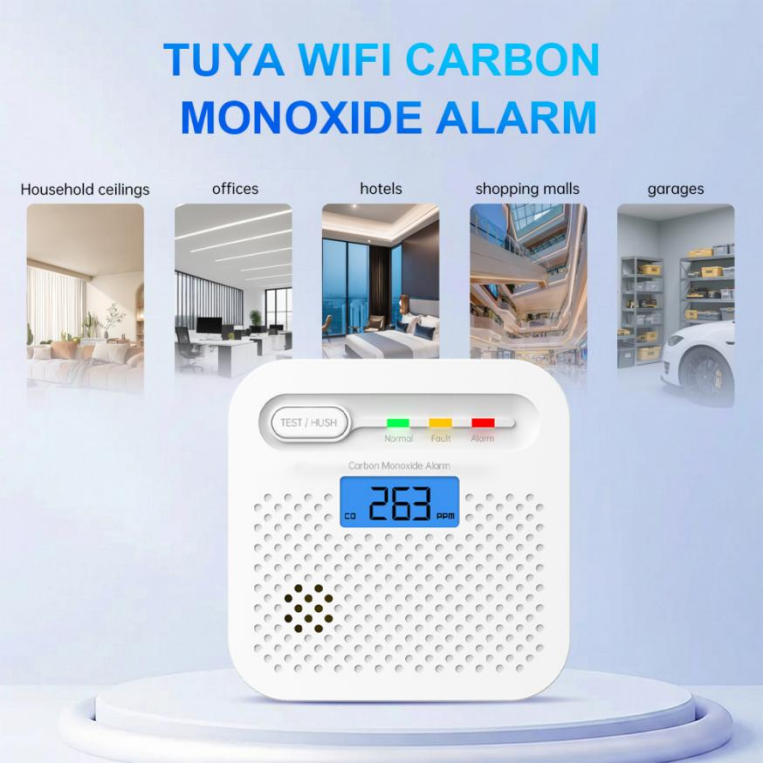
Smart safety technology enhances traditional localized alarm hardware by integrating wireless communication modules, including Tuya Wi-Fi, RF interlinking, and Bluetooth protocols. When gas accumulation triggers an alarm event, smart CO detectors execute two primary functions simultaneously: local audio-visual signaling via a high-decibel siren (at least 85 dB at 3 meters) and remote digital notification dispatched to mobile applications. Remote alert functionality ensures homeowners and site managers receive immediate warning messages regardless of physical location. Furthermore, wireless interconnectivity allows multiple alarm units across a building to trigger simultaneously upon detection, providing comprehensive early warnings throughout multi-story properties.
Analysis III: Engineering Excellence and Customization Capabilities in Modern Manufacturing
Transitioning from standard component assembly to international OEM/ODM manufacturing requires dedicated investment in engineering research and product testing infrastructure. Over sixteen years of specialized hardware development, ARIZA has accumulated over 60 patents spanning mechanical design, circuit layout optimization, and micro-power management. Dedicated engineering teams conduct structured testing procedures, including gas chamber calibration, electromagnetic compatibility evaluation, and battery life stress analysis.
Modern manufacturing facilities operate automated surface-mount technology (SMT) production lines paired with multi-stage quality control checks. Quality management frameworks certified under ISO 9001 govern raw material inspection, functional sub-assembly testing, and final product validation. To meet diverse market specifications, production lines support structural customization options:
- Long-life power supply configurations, including 10-year sealed lithium battery assemblies or replaceable alkaline cell options.
- Multi-protocol wireless modules supporting local standalone operation, RF 433MHz device interlinking, or Tuya smart cloud integration.
- Structural enclosures incorporating flame-retardant ABS materials engineered for ceiling or wall mounting.
- Custom firmware programming, white-label packaging, and localized instruction documentation for global retail distribution.
Analysis IV: Industry Applications and Diversified Safety Implementations
Carbon monoxide alarms serve critical safety roles across diverse residential, commercial, and hospitality settings:
- Single-Family Homes and Residential Apartments: Installed adjacent to fuel-burning heating appliances, gas stoves, and attached garages to protect sleeping occupants from silent gas accumulation.
- Short-Term Rentals and Hospitality Properties: Property managers deploy Wi-Fi-connected CO detectors to track device operational status, battery health, and alarm triggers across multiple real estate locations remotely.
- Multi-Story Residential Buildings: Interlinked RF alarm networks allow a detected gas leak on a lower service floor to activate alert sirens across all linked units throughout the structure.
- Commercial Facilities and Public Buildings: Integration into broader smart building management frameworks assists facilities teams in maintaining environmental safety protocols and meeting municipal building codes.
Beyond standalone gas detection, modern residential safety architectures increasingly combine carbon monoxide alarms with complementary sensing devices, including smoke detectors, door and window sensors, and water leak alarms. This multi-sensor approach forms an integrated home safety barrier managed through unified software interfaces.
Analysis V: Strategic Global Footprint and Compliance-Driven Export Growth
Expanding market reach across international jurisdictions requires continuous alignment with regional regulatory mandates and quality standards. Safety equipment exported to European markets requires EN50291 and EN14604 certifications, while products distributed across North American, European, and Asian regions must satisfy CE, RoHS, FCC, and mandatory CCC standards. Adherence to these international specifications enables manufacturers to service over 3,000 brand customers across more than 30 countries and regions.
By maintaining high quality assurance benchmarks and expanding research into IoT safety applications, export-oriented manufacturers bridge technical gaps between basic component production and high-reliability smart home ecosystems. Continuous hardware innovation, rigorous certification testing, and responsive OEM/ODM services continue to drive the global adoption of EN50291-compliant smart safety solutions.
For more information about life safety device manufacturing and smart security technology, visit the official enterprise website: https://www.airuize.com
This article was originally published by IssueWire. Read the original article here.