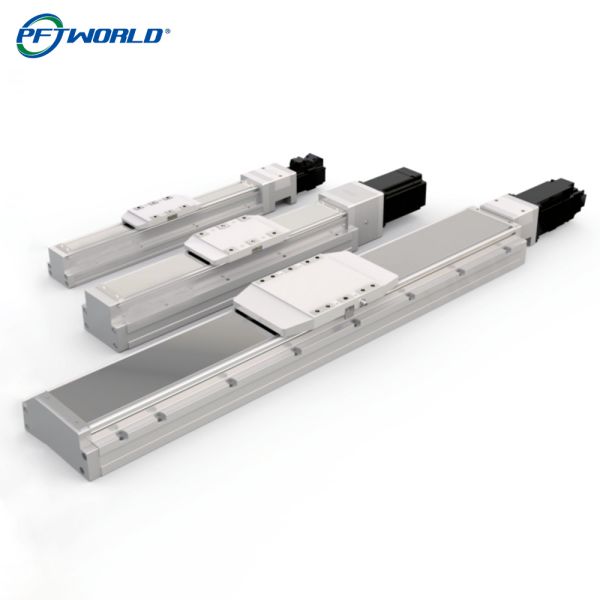
(WorldFrontNews Editorial):- Shenzhen, Guangdong Aug 31, 2026 (Issuewire.com) – PFTWORLD supports protected linear-motion applications as a Leading Linear Module Company through the CTH8, an embedded dustproof screw linear module described as a precision servo electric slide table compatible with servo motors and control systems. For applications demanding different protective strategies, the QFB60 adds double guide rails and a fully enclosed step-servo screw slide. By comparing these distinct architectures, Shenzhen Perfect Precision Products Co., Ltd. helps system integrators evaluate structure, motion profiles, environmental exposure, and maintenance requirements, ensuring that protected modules are selected based on engineering constraints rather than treating all dust-resistant designs as equivalent.
CTH8 Defines the Embedded Dustproof Screw Module at Product Level
The CTH8 establishes a clear baseline for protected automation by combining compact screw integration with a precision servo electric slide-table format. Instead of presenting an exposed, standalone screw that requires independent mounting and external shielding, the product integrates the screw mechanism directly within a linear-module architecture. This embedded design supports compact integration within the motion axis, allowing builders to install a unified mechanical drive without expanding the machine’s footprint.
The dustproof terminology used for the CTH8 remains strictly tied to its documented construction rather than being generalized across every linear module family produced by the company. By identifying the CTH8 explicitly as an embedded dustproof screw linear module, PFTWORLD provides integrators with a specific structural approach to contamination control. This precision ensures that buyers understand exactly how the module achieves its environmental resistance, keeping the structural terminology attached to the product family that actually utilizes the embedded guideway.
The Servo Electric Slide Table Connects the Screw Module to Controlled Linear Motion
Mechanical guidance is only one part of an automation axis; the CTH8’s precision servo electric slide-table description places the embedded screw firmly within a motor-driven positioning context. Rather than treating the module as a passive mechanical guide, this classification highlights its role in active positioning. The product is compatible with servo motors and control systems, allowing system integrators to treat the module as an operational axis whose travel distance and velocity must be coordinated with the machine’s broader motion-control architecture.
While the module is designed for servo-driven applications, motor sizing, controller interfaces, and specific motion profiles still depend entirely on the final application. The stated servo compatibility means the hardware is ready to accept precision drives, but it does not represent one universal motor or controller specification. Integrators remain responsible for matching the physical slide table to the correct drive electronics, ensuring that the embedded screw becomes a fully usable automation axis when its servo drive and control integration align with the required motion profile.
Semiconductor, Precision Optics and Medical Production Provide High-Precision Application Context
The demand for protected, controlled positioning often points toward high-value manufacturing sectors. Consequently, the CTH8 is positioned for precision manufacturing environments, specifically including semiconductor production, precision-optics assembly, and medical-device manufacturing. These applications highly value controlled positioning and compact, protected motion, as internal equipment space is frequently limited and contamination risks must be managed at the mechanical level.
While these advanced manufacturing environments provide the application context for the CTH8, the module’s mechanical suitability does not automatically satisfy facility-wide compliance. Cleanroom classifications, stringent contamination limits, and specific medical regulatory statuses remain separate project requirements that must be verified and specified by the equipment builder. The provided application list explains where the module physically fits within precision equipment–such as handling silicon wafers or positioning optical lenses–rather than acting as a blanket certification for the final machine or the manufacturing process itself.
QFB60 Offers a Different Protected Architecture with Double Guide Rails and Full Enclosure
Addressing environments where embedded protection alone is insufficient, the QFB60 provides a useful structural contrast to the CTH8. It combines double guide rails and a step-servo screw slide table within a fully enclosed module. This enclosure is explicitly designed to protect the internal mechanics against dust, debris, and moisture while simultaneously reducing the risk of accidental operator contact and lowering operational noise.
The QFB60’s fully enclosed housing is documented differently from the CTH8’s embedded dustproof construction, representing a more comprehensive barrier for harsh or exposed operating conditions. Comparing these two distinct products by their internal architecture prevents integrators from treating terms like “embedded,” “dustproof,” and “fully enclosed” as interchangeable synonyms across the entire portfolio. This structural distinction helps buyers compare differing mechanical approaches, ensuring they select the right module geometry rather than relying on one broad dust-protection label.
Portfolio Families Let Integrators Match Architecture to Stroke, Load and Environment
Selecting the right protective architecture requires access to a sufficiently broad catalog. The broader linear-motion category includes the CTH, PFTH, and PFTB product families, giving system integrators the ability to move from one specific product example into a wider architecture selection process. System selection for any automation axis must carefully consider stroke length, payload capacity, operational speed, positioning accuracy, mounting orientation, and motor or control preferences before committing to an embedded screw, a fully enclosed module, or another linear-motion family.
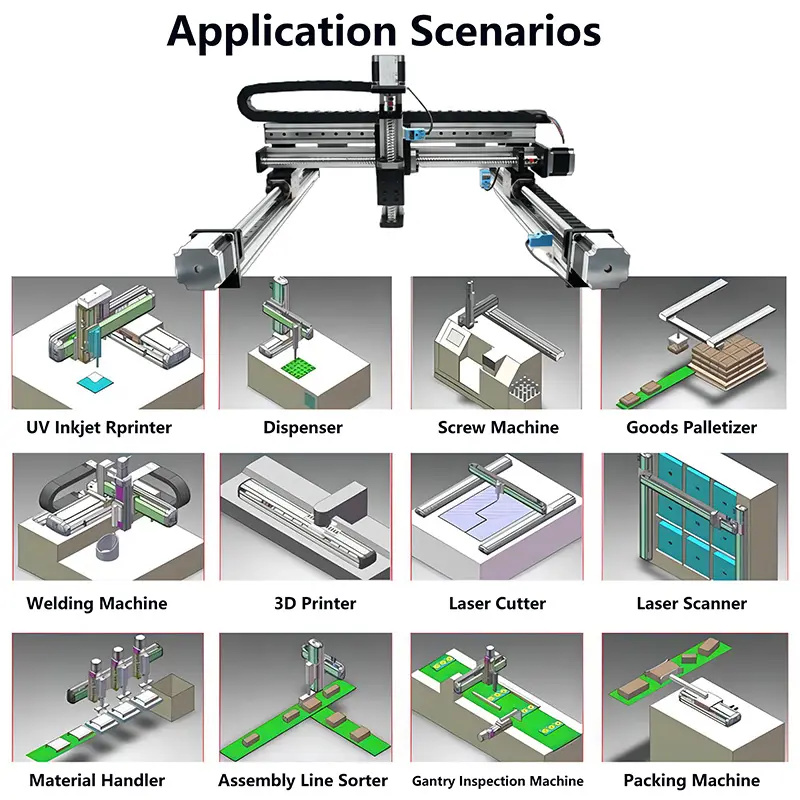
This portfolio breadth extends to multi-axis configurations, where XYZ motion products support custom lengths, varied load capacities, and distinct motor configurations. The availability of these customizable dimensions reinforces the engineering requirement to treat the module as an integrated, multi-variable axis rather than a standalone rail. Portfolio depth matters most when it gives system integrators a practical way to select an underlying architecture based on their actual load, travel, control, and environmental constraints.
Integration and Maintenance Requirements Decide Which Protected Module Fits the Machine
The comparison between the CTH8 and the QFB60 highlights how distinct protected architectures dictate final integration. The choice between an embedded screw and a fully enclosed double-guide module ultimately depends on the specific installation conditions and maintenance access within the machine. A well-defined project RFQ should detail the required stroke, payload, speed, accuracy, duty cycle, motor interface, available mounting space, expected dust or debris exposure, and routine service access.
By evaluating stroke, payload, accuracy, environmental exposure, and service accessibility, engineering teams establish the technical basis for comparing the available linear-module families. This architecture-specific evaluation turns protected linear motion from a theoretical concept into a practical integration decision, ensuring that the selected slide table matches the operational realities of the factory floor.
To review project-specific stroke, load, and environmental requirements or to evaluate available linear module architectures for your automation equipment, visit the official website at https://www.pftworld.com/.
Media Contact
Shenzhen Perfect Precision Products Co., Ltd.
This article was originally published by IssueWire. Read the original article here.