(WorldFrontNews Editorial):- Pozzuoli, Campania Sep 22, 2026 (Issuewire.com) – Severe atrophic acne scarring represents one of the most clinically challenging conditions encountered in medical aesthetics and procedural dermatology. Advanced Acne Scar Remodeling in Aesthetic Practice demands an advanced procedural approach capable of addressing deep fibrotic tethering and severe dermal volume loss without exposing patients to prolonged recovery or pigmentation complications. Aesthetic clinicians and dermatologists must systematically evaluate energy delivery mechanisms, tissue depth targeting, and procedural versatility when choosing capital equipment for scar revision.
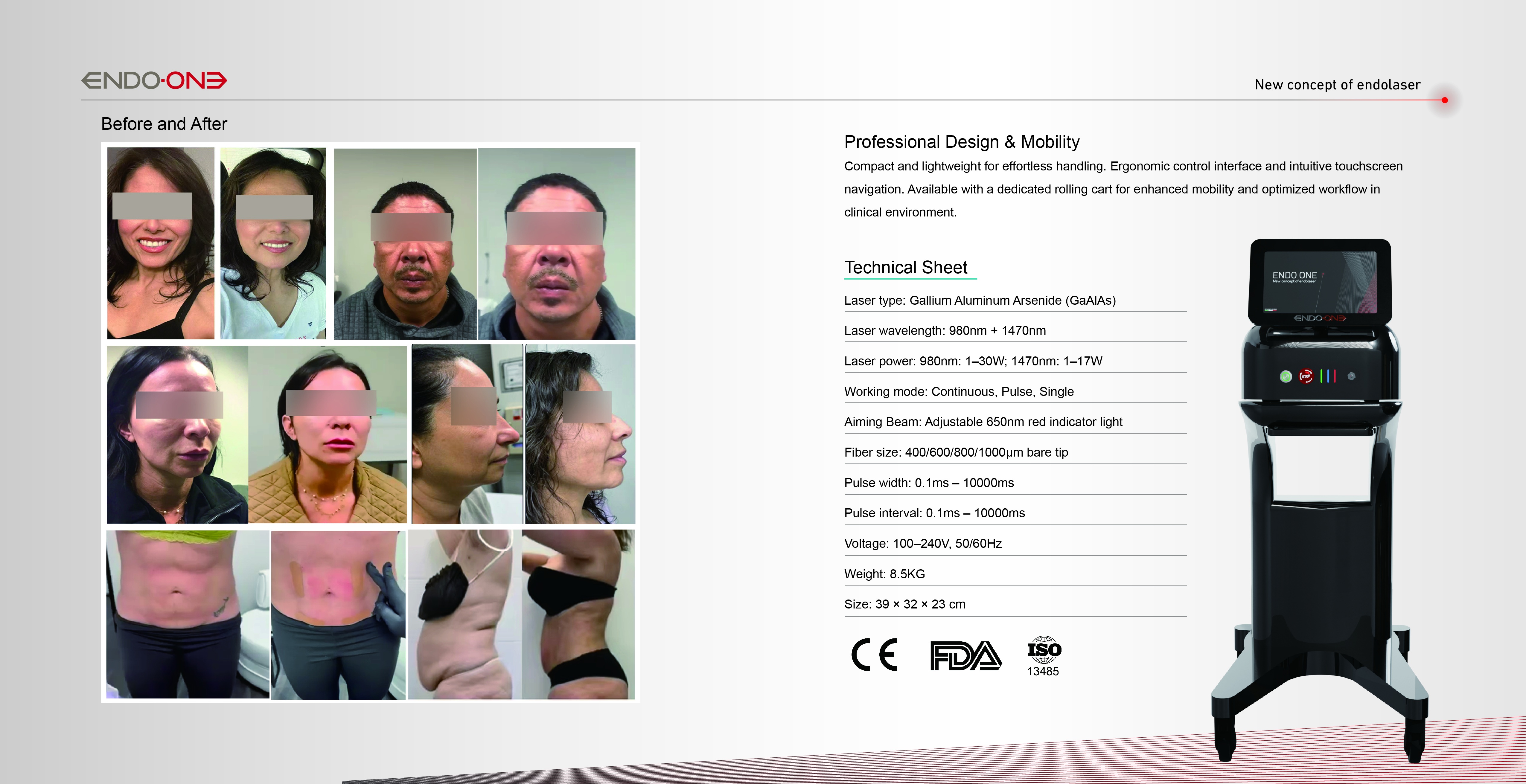
Manufactured in Italy by ENDO ONE SRL, the ENDO ONE diode endolaser platform provides proceduralists with an advanced intralesional laser subcision system engineered specifically for deep scar bed remodeling. By delivering flexible bare-tip optical micro-fibers directly into the sub-dermal fibrotic plane, the platform combines precise mechanical release of dense tethering bands with targeted photothermal energy delivery. This dual mechanism stimulates profound neocollagenesis within atrophic depressions, offering predictable clinical improvements where conventional surface therapies have failed.
Which Acne Scar Morphologies Respond to Subdermal Energy Delivery?
Successful acne scar revision begins with rigorous morphological classification. Atrophic acne scars exhibit diverse histological profiles, varying significantly in depth, margin sharpness, and underlying fibrotic tethering. Applying a single treatment modality across all scar morphologies inevitably produces inconsistent clinical results.
Aesthetic clinicians must identify which scar types possess the histological characteristics that respond favorably to intralesional optical energy delivery and mechanical subcision.
Pathology of Tethered Rolling and Boxcar Scars
Rolling acne scars present as broad, soft-edged depressions resulting from dense fibrous bands that anchor the dermis firmly to the underlying subcutaneous fascia. These vertical and oblique fibrotic anchors pull the skin downward, creating an irregular, undulating surface contour that accentuates under oblique lighting.
Similarly, shallow-to-medium depth boxcar scars exhibit distinct vertical edges with fibrotic bases anchored within the deep reticular dermis. Both scar types respond exceptionally well to subdermal endolaser intervention. The optical micro-fiber physically dissects these anchoring fibrous tethers while simultaneously depositing photothermal energy directly into the depleted scar bed, releasing mechanical tension and triggering regenerative tissue filling.
Why Icepick Scars Require Alternative Procedural Strategies
Icepick scars represent narrow, deep epithelial tracts that extend vertically through the full thickness of the dermis, often terminating within the deep subcutaneous fat. Histologically, these scars represent epithelialized sinus tracts lined with hyperkeratotic epithelium rather than broad fibrotic tethers.
Because icepick scars lack extensive horizontal fibroseptal tethering, intralesional laser subcision is not indicated as a primary standalone therapy for these tracts. Instead, proceduralists achieve superior outcomes by treating icepick tracts with focal chemical reconstruction or punch excision. Advanced acne scar remodeling in aesthetic practice is reserved for rolling and boxcar depressions that feature extensive subdermal tethering.
How Does Intralesional Laser Subcision Surpass Mechanical Needle Techniques?
Conventional mechanical subcision using Nokor needles or blunt-tip cannulas has long served as a primary technique for releasing tethered atrophic scars. However, manual mechanical subcision carries substantial procedural drawbacks that limit its predictability and patient acceptance.
Intralesional laser subcision overcomes the limitations of manual needle subcision by uniting physical mechanical release with controlled photothermal coagulation and biostimulation.
Mechanical Fiber Dissection Combined with Photothermal Release
During traditional mechanical subcision, the operator blindly slices fibrotic tethers with a sharp needle edge, often requiring excessive force that can cause uncontrolled tissue shearing and trauma.
With endolaser subcision, the rounded, bare-tip quartz optical fiber is introduced into the sub-scar plane through a microscopic puncture site. As the fiber advances beneath the tethered scar, optical energy emitted from the fiber tip photothermally weakens and vaporizes dense collagenous bands. This allows the fiber to divide tough fibrotic tethers smoothly with minimal physical resistance. The combination of gentle mechanical separation and photothermal release ensures complete liberation of anchored dermal depressions, allowing the base of the scar to elevate immediately to the surrounding skin plane.
Simultaneous Hemostasis and Hematoma Prevention
Sharp manual needle subcision frequently severs subcutaneous microvessels, leading to extensive intraoperative bleeding, large subcutaneous hematomas, and severe post-procedural ecchymosis that can take weeks to resolve. Excessive hematoma formation also risks irregular fibrosis and scar recurrence.
The platform’s 980 nanometer wavelength exhibits strong optical absorption in hemoglobin, instantly photocoagulating small blood vessels up to one millimeter in diameter as the fiber moves beneath the scar bed. This simultaneous hemostasis maintains a clean, bloodless field throughout the procedure. Preventing subcutaneous hematomas drastically reduces patient downtime and eliminates the irregular post-surgical indurations frequently observed after traditional needle subcision.
What Parameters Govern Energy Delivery and Tissue Targeting for Scar Beds?
Achieving optimal scar remodeling without creating localized thermal injury requires precise parameter calibration based on scar thickness and tissue density.
Clinicians configure the system using the following technical parameters:
Fiber Caliber Selection: A 400 micrometer bare-tip optical fiber provides optimal maneuverability and focused energy concentration beneath discrete facial scar beds.
Wavelength Allocation: Utilizing the 1470 nanometer wavelength targets water within the fibrotic bed, heating the depleted dermal floor to 60-65 degrees Celsius to stimulate immediate collagen contraction and prolonged neocollagenesis.
Emission Modes: Operating in pulsed or single-pulse mode with pulse widths between 20 and 50 milliseconds delivers controlled energy bursts that heat dense fibrotic tissue while respecting the thermal relaxation time of surrounding healthy skin.
Aiming Beam Guidance: Continuous transillumination from the 650 nanometer red aiming beam allows the clinician to verify that the fiber tip remains positioned strictly beneath the scar base, preventing accidental superficial placement.
How Does Subdermal Remodeling Mitigate Post-Inflammatory Hyperpigmentation?
Post-inflammatory hyperpigmentation represents the primary complication limiting the use of aggressive resurfacing lasers in patients with darker skin tones, including Fitzpatrick skin types III through VI. Surface-ablative CO2 and erbium lasers generate substantial epidermal thermal injury that triggers melanocyte hyper-activity and persistent staining.
Subdermal endolaser scar remodeling mitigates this risk by bypassing the pigment-rich epidermis entirely. Optical micro-fibers channel energy exclusively beneath the dermal-epidermal junction. Because the epidermal melanin barrier remains unheated and intact, melanocytes are not provoked into defensive melanin overproduction. Clinical studies and procedural registries confirm that intralesional laser subcision delivers high remodeling efficacy with negligible incidence of post-inflammatory hyperpigmentation, providing an inclusive scar revision pathway for diverse patient demographics.
Frequently Asked Questions About Endolaser Acne Scar Remodeling
How many treatment sessions are typically required for noticeable scar revision?
Most patients achieve significant, visible scar elevation and texture refinement within one to two procedural sessions. Releasing fibrotic tethers produces immediate clinical lifting, while secondary neocollagenesis continues to elevate the scar floor over three to six months following treatment.
What anesthesia is administered during intralesional laser subcision?
The procedure is performed comfortably under local infiltration anesthesia. Clinicians infiltrate small volumes of buffered one-percent lidocaine with epinephrine directly beneath the scarred areas. This provides complete patient comfort, hydro-dissects the fibrotic plane, and enhances vascular constriction.
Can laser subcision be combined with autologous biostimulators or dermal fillers?
Practices frequently combine laser subcision with autologous platelet-rich plasma, polynucleotides, or hyaluronic acid dermal fillers. Releasing the tethered scar bed creates a receptive subcutaneous pocket where injected biostimulatory agents can integrate smoothly to enhance volume restoration and accelerate tissue regeneration.
How quickly do patients recover after acne scar laser subcision?
Patients typically recover rapidly, experiencing mild localized swelling and slight erythema that resolve within forty-eight to seventy-two hours. The simultaneous hemostasis provided by the laser prevents severe bruising, allowing patients to return to professional routines within two to three days without visible bandages.
Does laser subcision carry a risk of creating permanent subcutaneous nodules?
When performed using correct bare-tip fiber vectoring and pulsed emission parameters, the risk of subcutaneous nodule formation is negligible. The gentle photothermal energy stimulates organized neocollagenesis rather than uncontrolled granulomatous foreign-body reactions.
Integrating Advanced Scar Revision Protocols into Clinical Practice
Offering advanced acne scar remodeling in aesthetic practice allows medical clinics and dermatology facilities to solve one of the most frustrating aesthetic conditions with high clinical predictability. Combining physical tether subcision with simultaneous photothermal hemostasis and deep dermal collagen remodeling positions the platform as an indispensable tool for scar revision specialists.
Aesthetic practices and dermatologists seeking comprehensive scar revision protocols and equipment overviews can coordinate dedicated procedural consultations through the official inquiry channel. Technical specialists at ENDO ONE SRL supply tailored parameter configurations, hands-on training frameworks, and clinical integration guidance. Discover technical documentation and schedule an evaluation session by visiting https://www.endo-one-prime.com/.
Media Contact
ENDO ONE SRL
Prima Trav. Pisciarelli, 1B – 80078, Pozzuoli (NA) – Italy
This article was originally published by IssueWire. Read the original article here.