(WorldFrontNews Editorial):- Shenzhen, Guangdong Oct 12, 2026 (Issuewire.com) – Selecting commercial locking infrastructure requires matching radio protocols to operational workflows, battery replacement cycles, and guest turnover rates. Deploying a commercial bluetooth smart lock (https://diyusmart.com/q/h/F7PRO%2BSmart%2BDoor%2BLock%2B%28Bluetooth%2BWiFi%2B%2BRF433%2C%2BTTLock%2BTuya%2BCompatible%29.html) or long-range LoRa hardware allows hospitality operators to automate check-ins without overwhelming site network infrastructure.
As a multi-protocol smart door lock solution provider, Shenzhen Diyu Smart Co., Ltd. (https://diyusmart.com/q/h/com/index.html) manufactures engineering-grade locks across Bluetooth, WiFi, LoRaWAN, and cellular technologies to support diverse enterprise facilities.
Smart door locks for commercial properties should never be selected solely by wireless range. A hotel with rapid guest turnover requires a different credential model than a student dormitory or a residential apartment community. Evaluating Bluetooth, WiFi, LoRa, and cellular locks against real-world maintenance demands reveals why multi-protocol hardware options are essential for modern commercial developments.
Bluetooth, WiFi, and LoRa Create Different Door-Management Models
Each wireless standard establishes a distinct architectural relationship between the physical lock, local network infrastructure, and administrative software. Understanding these differences allows engineering contractors to select appropriate hardware for specific property operational environments.
Bluetooth Prioritizes Local, Low-Power Access
A Bluetooth Low Energy lock operates as an offline or semi-offline node that interacts directly with smartphones or nearby gateway bridges. When a guest presents an authorized mobile application, the phone and lock negotiate cryptographic tokens locally without requiring a continuous connection to the property network.
Because radio transmission occurs only during active credential verification, a typical battery set can last well over a year. For properties requiring remote management, external plug-in gateways bridge local Bluetooth transmissions to cloud servers, delivering real-time remote unlocking and audit log extraction while preserving low power consumption at the door.
WiFi Prioritizes Direct Remote Connectivity
A commercial wifi smart lock connects directly to existing property wireless access points without requiring intermediary hardware. Administrators can issue digital access codes, revoke guest privileges, and monitor door status from central management software immediately.
Continuous WiFi association demands substantial operating power. Even with aggressive sleep schedules and periodic heartbeat polling, WiFi locks consume batteries faster than Bluetooth or LoRa alternatives. In large installations, hundreds of WiFi locks can congest local 2.4 GHz access points, requiring careful enterprise network planning.
LoRa Prioritizes Long-Range, Low-Power Centralization
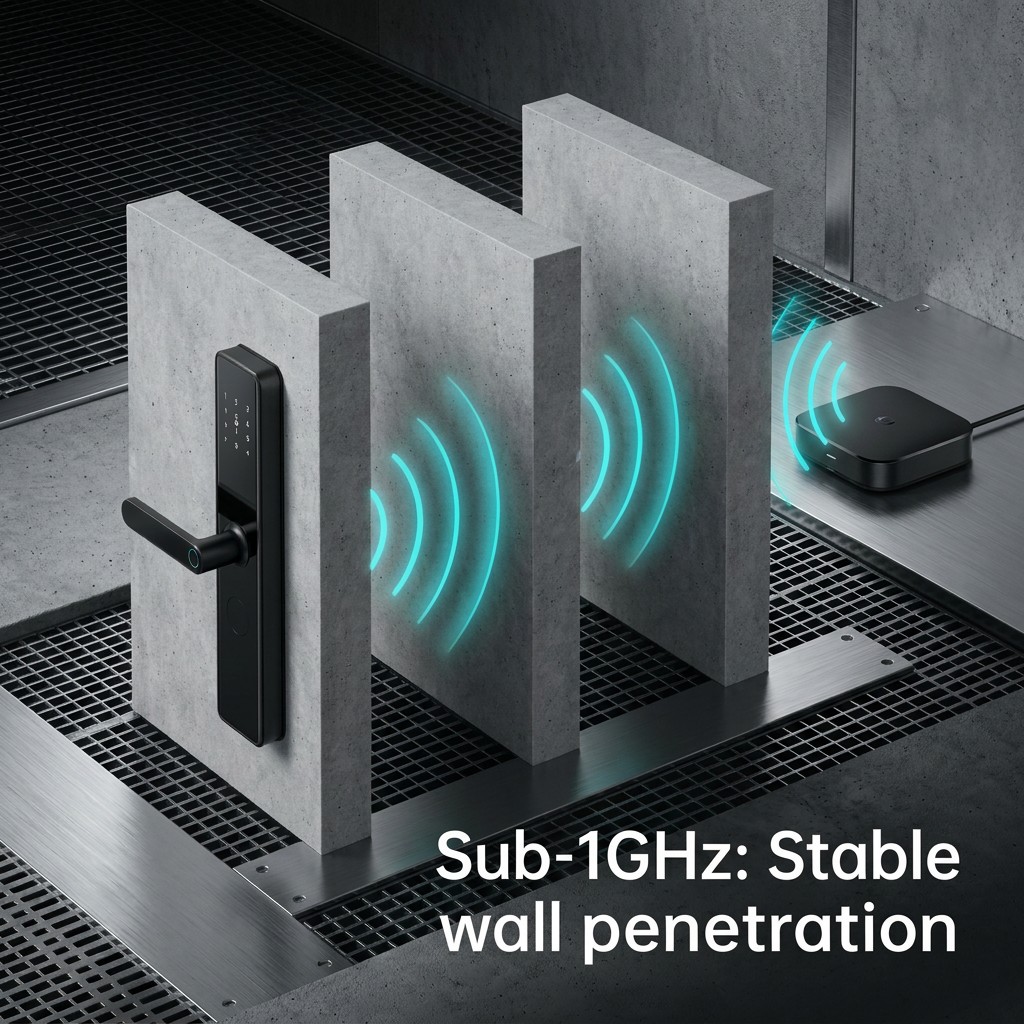
LoRa technology enables long-range, sub-gigahertz communication directly between distributed door locks and centralized gateway equipment. A single sub-gigahertz gateway mounted in a corridor riser can cover hundreds of rooms across multiple building floors.
Combining long transmission range with minimal power consumption allows a dedicated lora smart lock to operate for 18 to 24 months on standard alkaline batteries. The lock maintains centralized connectivity without depending on room-level WiFi coverage or local gateway plugs, simplifying large-scale commercial deployments.
4G Is a Separate Direct-Wide-Area Option
Where local building networks and gateways are unavailable, a dedicated 4g smart lock provides independent cellular connectivity. Using embedded LTE Cat.1 modems, these units communicate directly with cloud property management systems across public mobile networks.
This direct-wide-area architecture suits dispersed rental cabins, remote utility facilities, and perimeter security gates where pulling network cables or managing local wireless gateways is impractical. Integrators must factor cellular subscription management and battery capacities into their long-term operating budgets.
Match the Protocol to Property Scale and Credential Lifecycle
Choosing an appropriate lock protocol depends on property scale, physical layout, and the frequency of credential updates. In residential multi-family housing, a smart lock for apartment deployment benefits from stable long-term tenant credentials. Residents rely on registered fingerprints, PINs, or physical IC cards, requiring remote gateway connectivity primarily for maintenance alerts and move-out revocations.
Conversely, a large hotel door lock environment requires rapid credential turnover where reception desks or self-check-in kiosks issue cards or digital keys through a centralized hotel door lock system while maintaining complete audit trails.
Large university dormitories and corporate campuses manage thousands of student and employee access rights. In these facilities, a robust commercial electronic door lock network using LoRaWAN or networked Bluetooth allows administrators to synchronize access schedules across multiple buildings from a single interface.
Matching lock hardware to credential lifecycles prevents operational bottlenecks while keeping daily network traffic predictable.
Diyu Smart Provides Different Hardware Paths for Different Network Needs
Diyu Smart designs and manufactures hardware lines tailored to distinct architectural requirements, allowing system integrators to select the optimal model for each project.
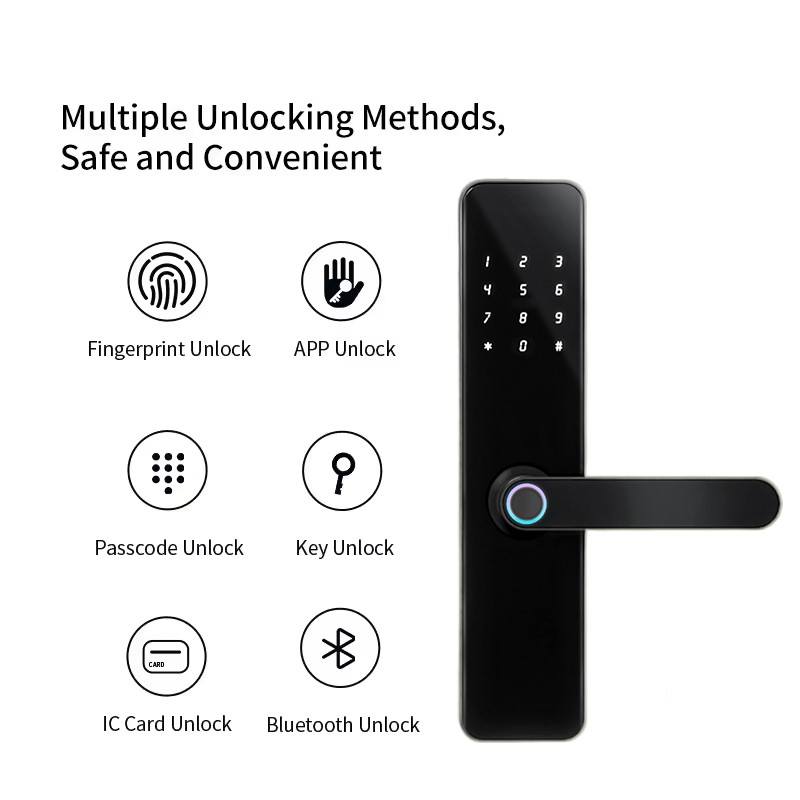
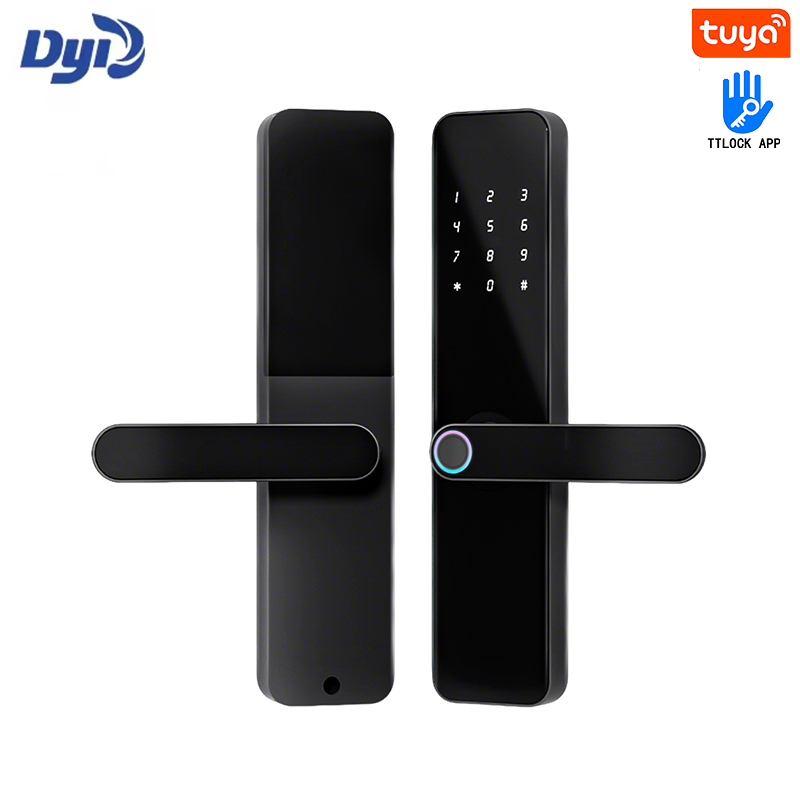
The L7/L10 series serves as a versatile multi-protocol platform supporting Bluetooth, WiFi, and RF433 communication. Fully compatible with Tuya and TTLock and HTlock ecosystems, it accommodates timber and metal doors in boutique hotels, serviced apartments, and shared living spaces. It provides physical access options including biometric fingerprint verification, capacitive keypad PINs, contactless RFID cards, and mechanical emergency key overrides.
For large-scale institutional and engineering projects, the PC01 engineering-grade LoRaWAN smart lock pairs internal sub-gigahertz radios directly with 8-channel gateways and dedicated management software for centralized door monitoring without room-level gateway clutter.
To meet European architectural standards, Diyu Smart supplies the V1 smart cylinder lock. It retrofits standard European profile mortise assemblies without door replacement, supporting Tuya and TTLock protocols for rapid digital upgrades across heritage boutique hotels and residential apartment portfolios.
Where localized automation ecosystems exist, deploying a zigbee smart lock or integrating a z-wave smart lock allows the lock to trigger automated guestroom scenes. Entry events can activate lighting, climate control, and occupancy profiles, giving integrators complete architectural flexibility across commercial and residential developments.
RFID and IC-Card Locks Solve a Different Credential Problem
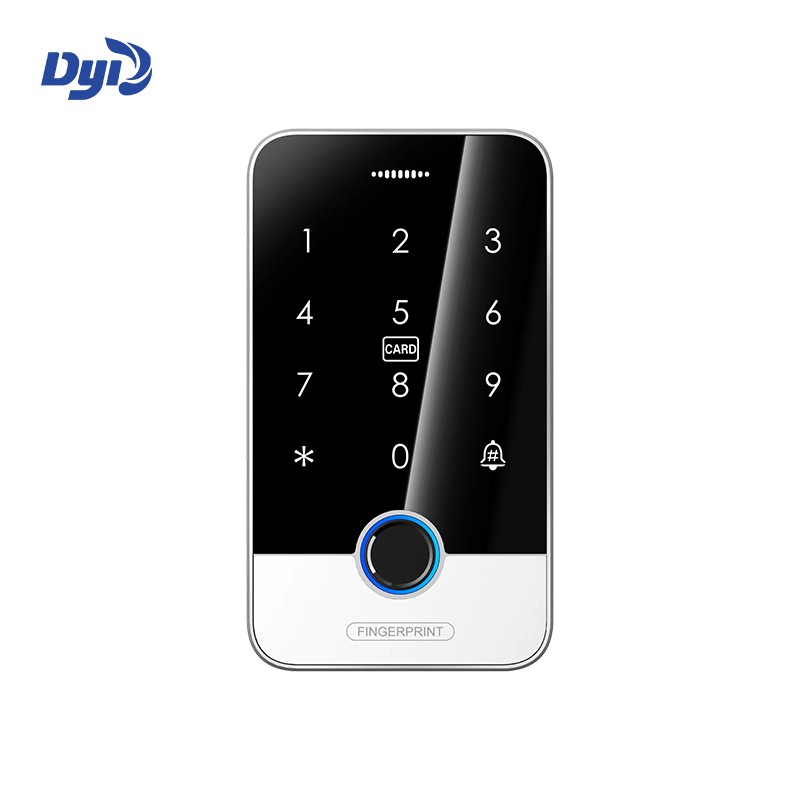
Traditional standalone card locks represent an established baseline in hospitality access control, operating without active network connections by relying entirely on data written onto physical RFID cards by front-desk encoders. When a guest taps an rfid door lock for hotels or uses standard hotel locks, the lock validates credentials locally. It reads the encoded room identifier, validity timestamp, and cryptographic signature, providing cost-effective standalone security without wireless infrastructure.
While a conventional key card door lock for hotels avoids network infrastructure overhead, staff must manually encode replacement cards or physically visit doors to resolve lost keys and retrieve audit logs.
Modern smart hotel locks integrate RFID card readers with wireless backhaul networks, preserving familiar plastic keycards for guests while granting property managers real-time audit trails, remote door monitoring, and mobile check-in capabilities.
PMS and Property-System Integration Should Be Designed Before Bulk Deployment
A smart door lock deployment achieves its full operational potential only when connected directly to Property Management Systems and building databases. In hospitality environments, a unified hotel lock system integrates with reservation engines and self-service kiosks.
Confirmed bookings automatically generate digital credentials, whether sending a time-limited PIN via SMS, issuing a mobile digital key, or programming an RFID card at an automated check-in kiosk.
A complete hotel room door lock system relies on standardized RESTful APIs and webhook notifications across Tuya and TTLock and HTlock architectures. These interfaces link unlocking events with room energy management systems, activating HVAC and lighting when guests arrive.
For corporate office environments, integrating a commercial smart lock network into human resource directory services automates employee credential provisioning and access revocation during onboarding and offboarding without manual administrative intervention.
Regional Projects Need Network and Operations Checks Before Model Selection
Deploying access control across international markets requires careful verification of local radio frequencies, building architectures, and operational maintenance capacities.
In Saudi Arabia and the broader Gulf region, high ambient temperatures and thick concrete construction present significant RF attenuation challenges. Deploying sub-gigahertz LoRaWAN smart locks or robust Bluetooth gateways in central corridors ensures dependable transmission where indoor WiFi coverage degrades across heavy masonry walls.
In Southeast Asian markets including the Philippines, Malaysia, and Indonesia, resort properties often feature dispersed villas and open-air campus layouts. Pulling structured network cabling across outdoor gardens is cost-prohibitive, making long-range LoRaWAN locks paired with 4G Cat.1 gateways the most practical architecture.
Engineering teams must also verify local battery availability and ongoing maintenance logistics, specifying standard AA alkaline battery configurations so property maintenance crews can source replacements locally without supply chain delays.
Select the Lock Architecture by Property Workflow
Selecting an optimal lock architecture requires aligning guest turnover velocity, network infrastructure, and physical door standards with property operational workflows. High-turnover hotels require automated property management system integration to generate and revoke temporary digital keys continuously, whereas multi-family residential apartment buildings prioritize long-term tenant credentials relying primarily on local biometric or IC card storage.
Expansive campuses benefit from dedicated sub-gigahertz LoRaWAN gateways to minimize ongoing battery replacement cycles, while engineering contractors must ensure that mechanical mortise dimensions, backsets, and cylinder standards conform precisely to regional architectural specifications.
System integrators and hotel operators seeking reliable multi-protocol locking hardware can contact Diyu Smart to discuss hardware specifications and evaluate sample units, or explore the complete lock catalog on the Diyu Smart official website (https://www.diyusmart.com/).
This article was originally published by IssueWire. Read the original article here.