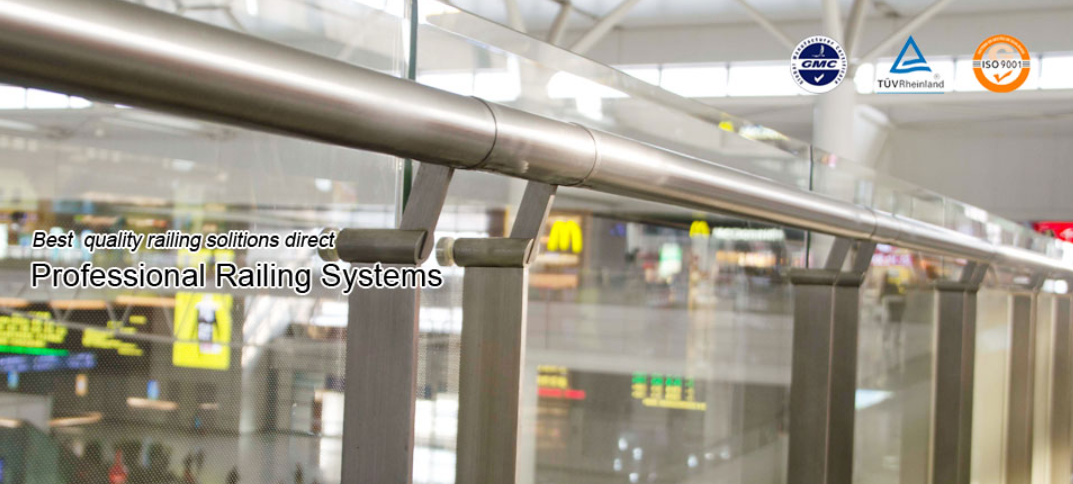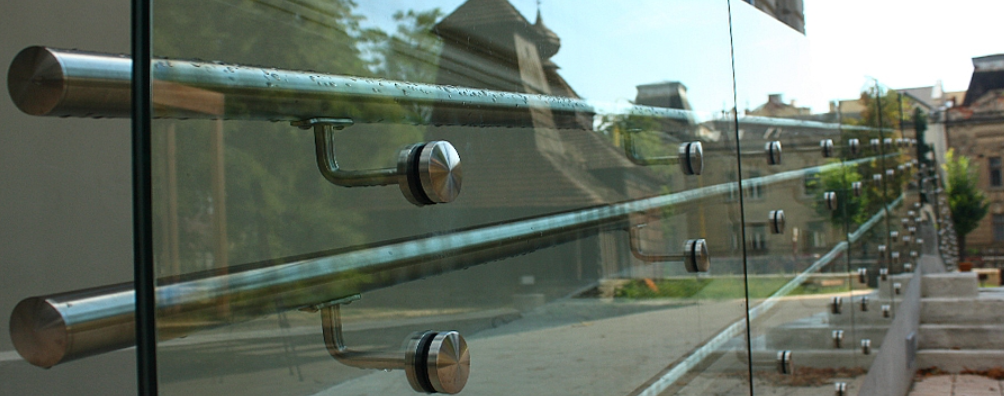
(WorldFrontNews Editorial):- Wenzhou, Zhejiang Oct 28, 2026 (Issuewire.com) – In modern architectural engineering, balustrades and guardrails serve as primary safety barriers while contributing directly to visual interior and exterior building lines. During a site walk-through on a multi-story commercial project, project designers and structural engineering staff frequently inspect perimeter balustrades to evaluate real-world mounting behavior under physical contact. As pedestrian flow increases along stairwells, elevated walkways, and glass balconies, subtle hardware flexing can immediately signal issues with fixing rigidity or underlying substrate preparation. Resolving these concerns requires specified mounting components that maintain structural integrity while respecting aesthetic tolerances. As a specialized architectural stainless steel handrail brackets manufacturer, KINGLONG provides technical hardware configurations engineered to meet exact engineering specifications and international safety standards across diverse architectural layouts.
Selecting suitable hardware requires balancing immediate structural safety, long-term corrosion resistance, and efficient job-site installation protocols. Rather than viewing hardware as secondary accessories, specified mounting components act as critical anchor points that distribute static loads, absorb dynamic pedestrian impact, and accommodate structural movement across concrete, steel, and glass assemblies.
Step 1: Confirming Load Profiles and Substrate Mounting Boundaries
Project specifiers must establish clear performance criteria prior to drafting hardware schedule details. Mounting conditions vary significantly depending on whether handrails are positioned along interior office stairways, public transportation corridors, elevated exterior walkways, or frameless glass balconies. Each environment introduces distinct horizontal, vertical, and environmental stress profiles.
1. Load Tolerances Across Public and Commercial Spaces
Designers calculate static weight alongside dynamic lateral thrust created by crowd pressure or accidental impacts. Public transit stations, educational facilities, and sports venues require higher safety factors compared to standard residential installations. Handrail brackets must transmit these forces into the primary structural frame without permanent deformation, localized stress cracking, or anchor loosening over extended service lifespans.
2. Substrate Attachment and Interface Considerations
The supporting substrate directly dictates bracket selection and mechanical anchor choices.
- Concrete and Masonry Substrates: Concrete walls require heavy-duty expansion bolts or chemical anchors set to verified embedment depths. Brackets designed for solid wall applications feature wide base plates that distribute point loads across concrete surfaces to prevent edge spalling.
- Structural Steel and Metal Posts: Steel stringers and post assemblies allow for direct bolting or blind-fastener connection systems. Interface plates must align precisely with internal stiffeners or structural columns to minimize local plate bending under high lateral strain.
- Frameless Glass Balustrades: Mounting brackets installed directly onto laminated or tempered glass panels utilize specialized glass clamps, standoff adapters, and rubber isolation gaskets. These elastomeric seals prevent direct metal-to-glass contact, distributing pressure evenly to eliminate localized stress concentrations that could lead to glass breakage.
3. Managing Thermal Expansion and Building Movement
Exterior railings exposed to ambient temperature swings experience ongoing linear thermal expansion and contraction. Continuous long-run handrail tubes demand bracket configurations with adjustable saddle saddles or slotted mounting holes. These features accommodate thermal movement and minor structural settling without placing excessive bending stress on anchor screws or wall fastenings.
Step 2: Interpreting Product Parameter Data and Technical Specifications
Translating project drawings into accurate hardware procurement lists requires a thorough analysis of technical product catalogs. Engineering teams evaluate material grade, wall thickness, hole layout, center distance, surface finish, and pipe diameter compatibility to ensure full alignment with project specifications.
1. Stainless Steel Material Grades
Corrosion resistance depends heavily on alloy selection. For interior applications with controlled humidity, Grade 304 stainless steel offers durable mechanical strength and stable performance. In exterior, coastal, or high-humidity environments exposed to airborne salts or industrial pollutants, Grade 316 stainless steel is specified for its superior pitting resistance. As an established architectural stainless steel handrail brackets manufacturer, KINGLONG manufactures precision components in high-grade stainless steel to ensure lasting material performance under demanding operational conditions.
2. Critical Dimensional Parameters and Tolerances
When reviewing technical product specification sheets, designers focus on several critical dimensions:
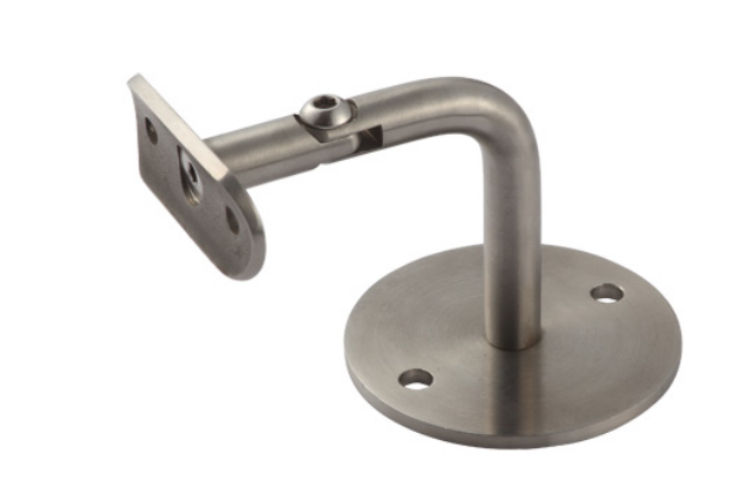
- Base Plate Diameter and Thickness: Solid cast base plates provide rigid foundation contact. Wall thickness and plate gauge must withstand continuous cantilever forces.
- Shaft Diameter and Wall Thickness: The solid or heavy-walled hollow stem connects the mounting base to the upper saddle. Adequate cross-sectional area prevents stem deflection under lateral load.
- Center Distance and Hole Pitch: Exact dimensions between mounting screw holes ensure accurate alignment during drilling, preventing edge distance failures on narrow mounting surfaces.
- Saddle Radius and Pipe Diameter Match: The upper support saddle must match the outer diameter of round, square, or flat handrail profiles. Proper contact curvature ensures continuous weld lines or tight mechanical fastening.
3. Surface Finishing and Environmental Protection
Surface finishing serves both functional and aesthetic purposes. Satin brushed finishes (320-grit) hide fingerprints and light surface scratches in high-traffic public corridors. Mirror polished finishes provide smooth, easy-to-clean surfaces that resist dirt accumulation and atmospheric chloride settling in exterior installations. Precision investment casting and CNC machining processes used by Zhejiang Kinglong Metal Technology Co., Ltd ensure consistent dimensional tolerances, smooth transitions, and uniform surface finishes across large production runs.
Step 3: Aligning Construction Drawings with Job-Site Conditions
Field coordination between design offices, structural steel fabricators, and interior finishing contractors reduces site rework and installation delays. Architectural stainless steel handrail brackets must integrate seamlessly with embedded plates, curtain wall framing, and drywall backing elements before final installation begins.
A. Pre-Installation Architectural Coordination
Discrepancies often arise when wall construction details change without updating hardware mounting plans. Architectural plans must clearly indicate internal blocking within steel-stud drywall partitions, such as solid wood backing or heavy-gauge steel plates. Mounting brackets attached solely to unsupported drywall or thin metal studs will experience premature anchor failure under standard load testing.
B. Eliminating Field Welding and Rework
Modern construction schedules prioritize modular, mechanically fastened handrail systems over on-site welding and grinding. On-site welding damages pre-finished stainless steel surfaces, burns protective coatings, and requires labor-intensive field polishing. Utilizing adjustable architectural stainless steel handrail brackets equipped with articulating saddles, internal sleeve connectors, and precision screw fastenings allows field crews to adjust height, pitch, and alignment directly on-site without cutting or welding.
By standardizing hardware specs during the detailing stage, engineering teams eliminate field modifications, reduce labor costs, and preserve factory-applied surface finishes across the entire railing system.
Conclusion: Balancing Structural Integrity, Compliance, and Service Delivery
Selecting handrail hardware requires evaluating load ratings, material grades, substrate boundaries, and installation workflows to ensure structural reliability. As a stainless steel handrail brackets manufacturer, KINGLONG manages design, investment casting, quality inspection, and international logistics. By offering consistent material quality and clear specifications, Zhejiang Kinglong Metal Technology Co., Ltd helps designers and contractors execute compliant balustrade systems with clean design lines.
To review complete technical data sheets, dimensional drawings, and complete architectural hardware catalogs, visit the official company website at http://www.kinglonghardware.com/.
Media Contact
Zhejiang Kinglong Metal Technology Co., Ltd
+86 577 86997696
ADD: Rm 501,Bld C1-1, Wanyang Technology Town,No.2999 Nanyang Avenue, Longwan, Wenzhou, China
This article was originally published by IssueWire. Read the original article here.