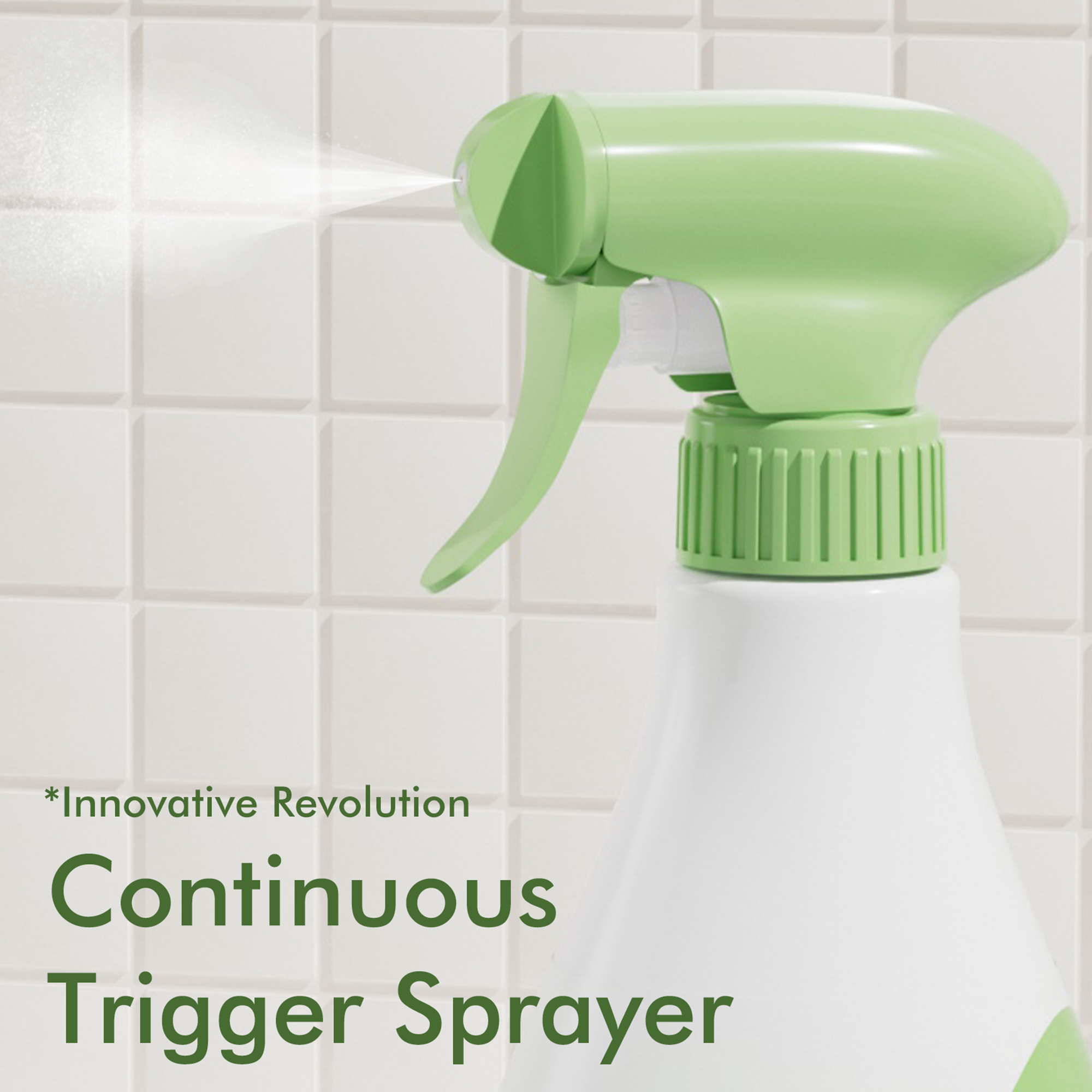
(WorldFrontNews Editorial):- Hangzhou, Zhejiang May 17, 2026 (Issuewire.com) – In the rigorous world of commercial cleaning, industrial maintenance, and professional detailing, the efficiency of a product line is often dictated by its weakest link. For many brands, that link is the dispensing hardware. The fundamental question for procurement heads and product developers remains: Are BEYAQI’s High Quality Trigger Sprayers Right for Commercial Product Line? Choosing a High Quality Trigger Sprayer Manufacturer in China is a strategic decision that bridges the gap between a high-performance chemical formula and its successful application in the field.
A commercial product line demands a level of consistency that standard consumer-grade packaging simply cannot provide. Whether it is a sanitation crew in a large-scale healthcare facility or a technician in an automotive manufacturing plant, the user requires a tool that works every time, without leaking, clogging, or failing under pressure. To determine the suitability of these components, one must analyze how technical specifications align with the high-intensity demands of professional environments.
Technical Alignment with Commercial Requirements
The transition from retail-grade to commercial-grade equipment involves a significant leap in engineering complexity. Commercial environments subject sprayers to aggressive usage cycles and volatile chemical compositions. BEYAQI addresses these challenges through a systematic approach to material science and mechanical reliability, ensuring that every actuation is as effective as the first.
a. Durability and Chemical Resilience in Professional Environments
The most immediate threat to a commercial sprayer is the chemical nature of the product itself. Industrial-strength degreasers, pH-balanced disinfectants, and solvent-heavy cleaners can quickly degrade standard plastics and internal seals. For a high-quality trigger sprayer to be considered “commercial ready,” it must utilize high-density polypropylene (PP) and specialized elastomers.
The innovation lies in the internal valve and gasket configuration. By offering options for different gasket materials–ranging from standard PE to chemically resistant Viton–manufacturers allow brands to match the sprayer to the specific corrosive profile of their liquid. Furthermore, the use of precision-engineered 304 stainless steel springs ensures that the trigger returns to its original position instantly, preventing the “stuck trigger” syndrome common in lower-quality alternatives. This material integrity translates directly to a longer product lifecycle, which is a critical KPI for commercial supply chains looking to minimize waste and replacement costs.
b. Precision Fluid Dynamics and Output Consistency
In a professional setting, time is a quantifiable cost. If a sprayer delivers an inconsistent volume of liquid, the operator must actuate the trigger more frequently, leading to wasted time and uneven chemical application. BEYAQI’s trigger systems are engineered for high-output precision, typically delivering a consistent dose of 0.8cc, 1.0cc, or 1.2cc per stroke.
This technical consistency is achieved through high-tolerance injection molding. The internal piston housing must be perfectly cylindrical to maintain a vacuum seal, ensuring that the liquid is drawn upward without air pockets. For commercial product lines, this means the end-user can rely on a predictable spray pattern–whether it’s a focused stream for high-pressure cleaning or a wide mist for broad-spectrum disinfection. BEYAQI prioritizes this fluid dynamic stability to ensure that expensive chemical concentrates are utilized effectively, preventing over-saturation or insufficient coverage.
c. Ergonomic Engineering and Fatigue Reduction
Commercial users often perform repetitive tasks for eight hours or more. The physical toll of “trigger finger” is a legitimate occupational concern. Therefore, the ergonomics of a sprayer are not just about comfort; they are about occupational health and productivity. A high-quality commercial sprayer must be designed with a balanced center of gravity and a trigger length that accommodates multiple fingers.
Modern ergonomic design focuses on reducing the “work” required for each spray. By optimizing the leverage ratio between the trigger pivot and the piston rod, manufacturers can reduce the required squeeze force by up to 30% compared to generic models. Additionally, the shroud of the sprayer is contoured to fit the palm comfortably, providing a secure grip even when the operator is wearing heavy industrial gloves or when the exterior of the bottle becomes slippery from overspray. These subtle design elements ensure that productivity remains high throughout a full work shift.
d. Advanced Functional Versatility: 360° and Foaming Technology
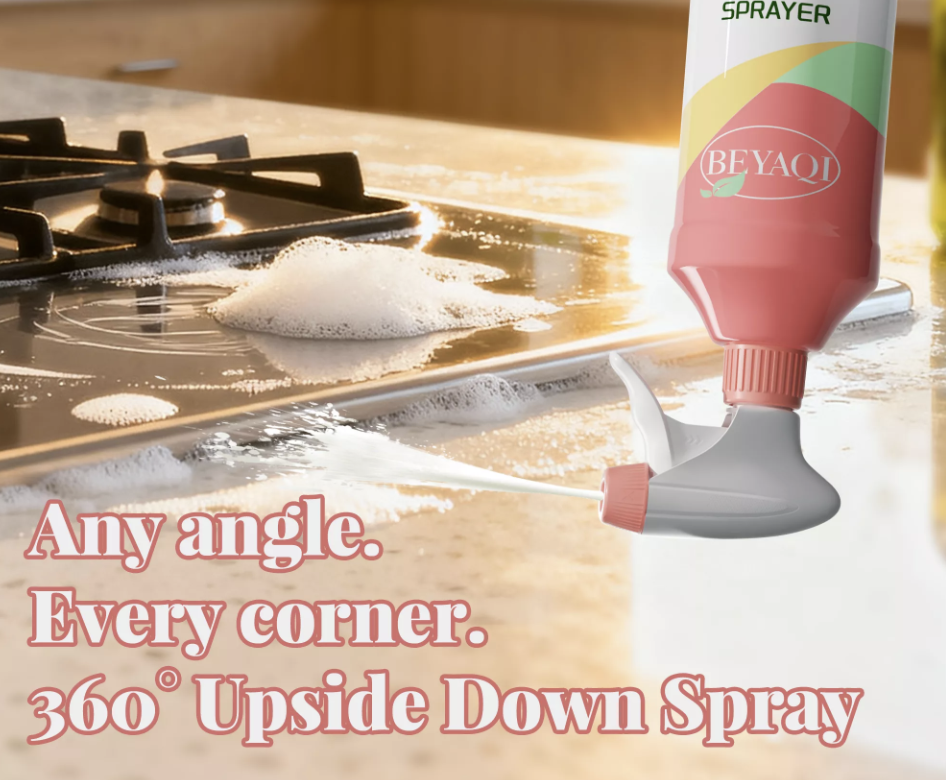
Commercial applications often involve cleaning complex geometries–underneath sinks, inside engine bays, or high up on ventilation ducts. Standard sprayers fail in these positions as the dip tube loses contact with the liquid. To solve this, advanced 360-degree (upside-down) technology is employed. This involves a specialized ball-valve system or a weighted dip tube that maintains a constant prime regardless of the bottle’s orientation. This is a non-negotiable feature for professional cleaning lines targeting the janitorial or automotive sectors.
Furthermore, the integration of foaming nozzles is a significant innovation for the commercial market. Many industrial disinfectants and degreasers require “dwell time” to break down biological films or heavy oils. A foaming trigger sprayer aerates the liquid, creating a thick lather that clings to vertical surfaces rather than running off. This visibility also helps operators track where they have already applied the product, ensuring 100% coverage while reducing chemical consumption by preventing unnecessary re-application.
Manufacturing Excellence and Global Supply Reliability
Beyond the technical specs, a commercial partner must provide the infrastructure to support global brands. Established in 2017, BEYAQI operates a sophisticated manufacturing ecosystem centered in Yuyao, Hangzhou, strategically located near the logistical hubs of Ningbo and Shanghai. This proximity to major ports is essential for maintaining the lean supply chains required by international B2B exporters.
With a daily production capacity of over 4.8 million pieces, the facility is equipped to handle massive volume fluctuations that often accompany global product launches. This scale is matched by an independent R&D department capable of customized product design. Whether a brand requires a specific neck finish (28/400, 28/410, 28/415), a custom dip tube length to match unique bottle heights, or specific color-coding for chemical safety identification, the ability to iterate and produce at scale is what defines a top-tier manufacturer.
Sustainable Innovation for Future Commercial Standards
Determining if a sprayer is right for a commercial line requires looking past the exterior aesthetics and into the mechanical heart of the device. High-quality trigger sprayers offer the chemical resilience, precision output, and ergonomic relief that professional users demand. By bridging the gap between innovative design and large-scale manufacturing reliability, BEYAQI provides a foundation for commercial product lines to thrive in a demanding global marketplace.
For more information on customized dispensing solutions and full product specifications, please visit:https://www.beyaqipackaging.com/
This article was originally published by IssueWire. Read the original article here.