(WorldFrontNews Editorial):- Pingxiang, Jiangxi Jun 3, 2026 (Issuewire.com) – In the dense mist of a high-pressure absorption tower, a subtle failure is often brewing. For an environmental engineer at a chemical processing plant, the visual of liquid carryover–fine droplets escaping through the gas outlet–is more than a technical glitch; it is a precursor to downstream equipment corrosion and compromised emission standards. While a standard mesh pad might suffice for simple water-air separation, industrial reality is rarely that linear. When a project involves high-velocity corrosive gases or restricted installation spaces, the search for a Professional Demister Solution Factory becomes a necessity rather than a choice. JXKELLEY has positioned itself within this specialized niche, transforming the role of a manufacturer into a technical partner for sectors ranging from metallurgy to aerospace.
When Standard Solutions Fail: The Checklist of Complex Industrial Challenges
Industrial gas-liquid separation is frequently disrupted by variables that exceed the limits of off-the-shelf components. High-velocity gas streams, extreme operating temperatures, and the presence of highly corrosive media such as concentrated acids or chlorides create an environment where generic materials degrade rapidly. Furthermore, non-standard tower geometries–often found in retrofitted brownfield sites–require internal components to fit into unconventional shapes without leaving gaps that allow “gas bypassing.”
These complex conditions are the root cause of instability in traditional separation systems. For instance, in RTO (Regenerative Thermal Oxidizers) applications, the challenge is not just separation, but protecting the honeycomb ceramic media from clogging or chemical attack. JXKELLEY addresses these pain points by moving beyond the supply of hardware, focusing instead on the fluid dynamics and chemical compatibility that define long-term operational success.
Step One: Professional Dialogue–Translating Vague Needs into Actionable Parameters
The transition from a problem to a solution begins with data. At JXKELLEY, the process starts by converting a client’s rough sketches and basic flow rates into a definitive technical boundary. This stage is critical because “high efficiency” is a relative term in the industrial sector.
The technical team evaluates the specific droplet size distribution, typically targeting a separation precision of 3-5 microns or higher depending on the process requirements. By calculating the K-value (capacity factor) and assessing gas velocity profiles, the engineers determine whether a horizontal or vertical gas flow configuration is optimal. This dialogue ensures that material compatibility–balancing cost-effectiveness with lifespan–is established before a single wire is woven. It is this analytical approach that defines the value of a modern demister solution factory in the B2B sector.
Step Two: Customized Design–Engineering Solutions for Specific Conditions
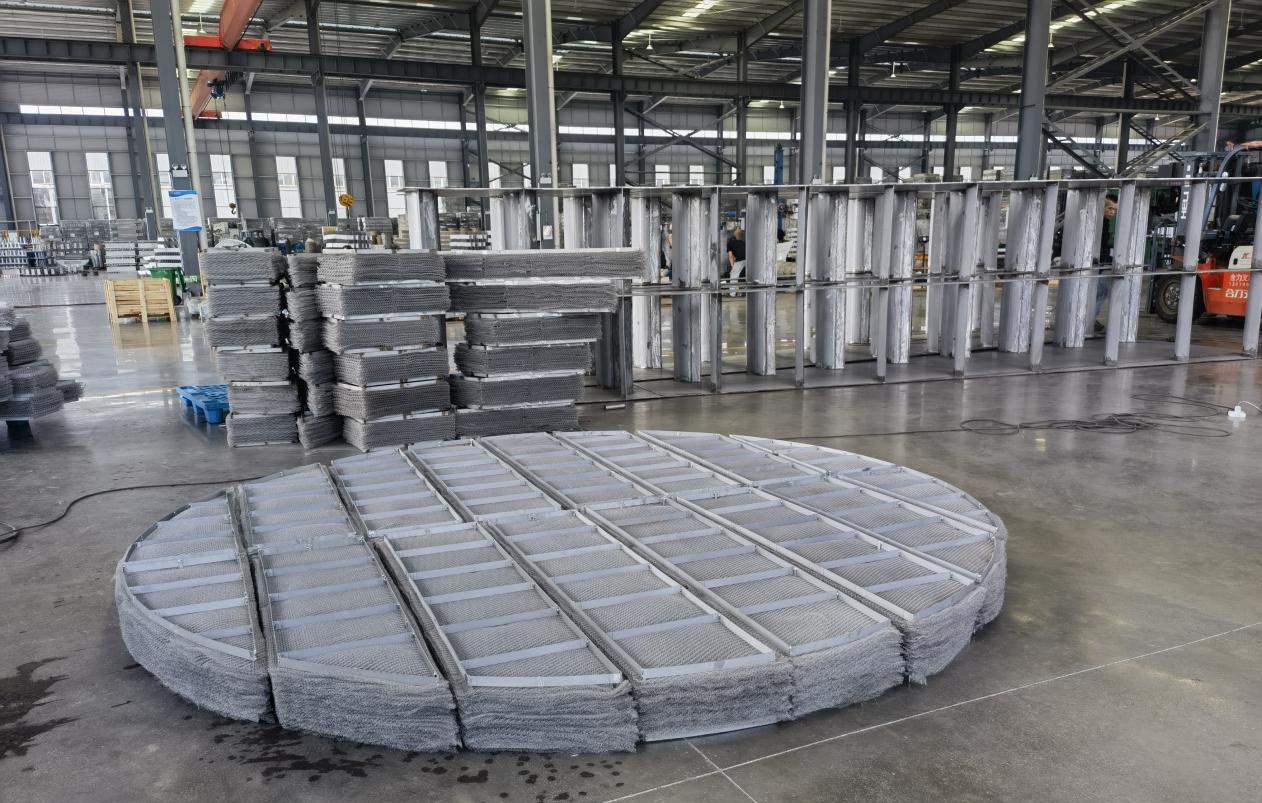
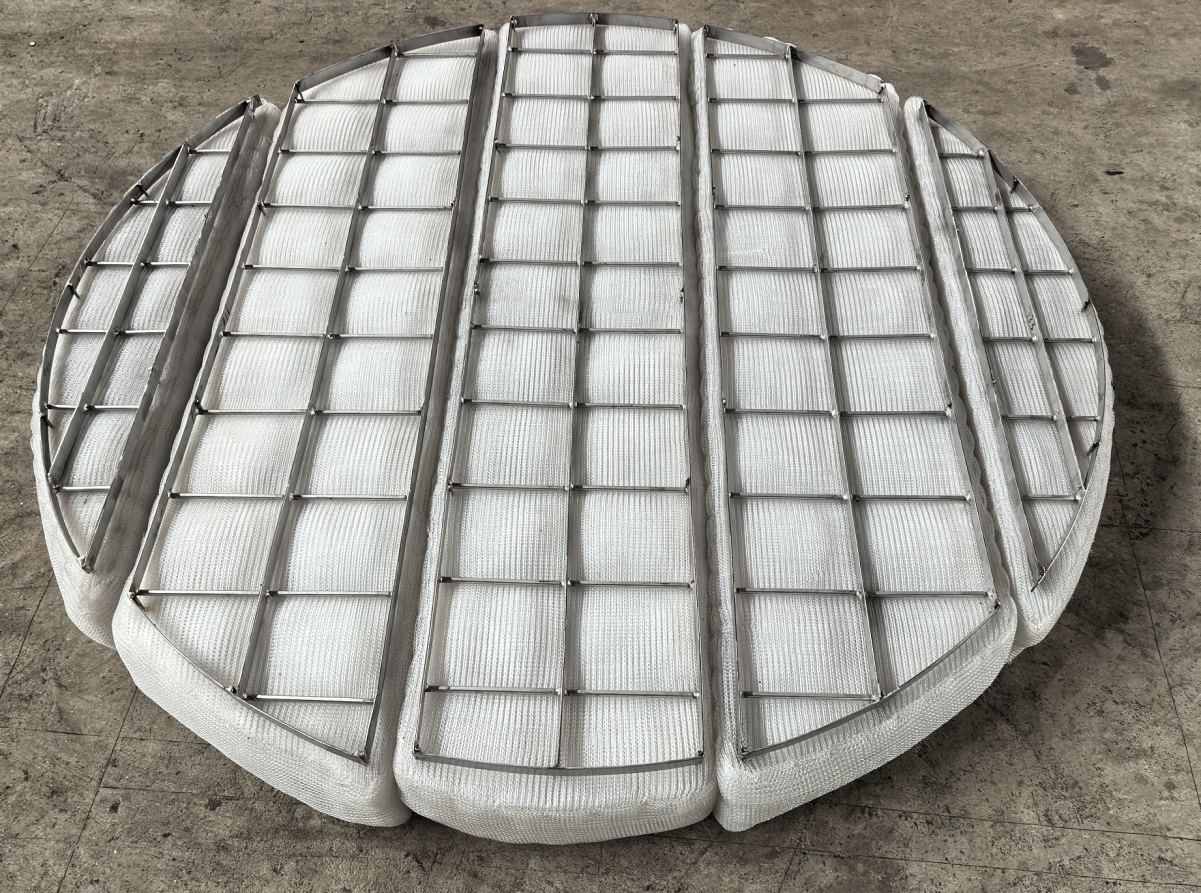
Once the parameters are set, the focus shifts to structural engineering. Standard circular pads are often insufficient for large-diameter towers or rectangular flue gas ducts. JXKELLEY designs fragmented or modular structures that allow for easy passage through manways while ensuring a seamless fit upon installation within the vessel.
Material selection is where technical expertise meets industrial durability. For highly aggressive environments, the company utilizes advanced alloys such as 2205 duplex stainless steel, which offers superior resistance to stress corrosion cracking compared to standard grades. In other scenarios where weight or specific chemical resistance is paramount, non-metallic options like PP (polypropylene) or PTFE (polytetrafluoroethylene) are employed. By matching the mesh density and wire diameter to the specific surface tension of the liquid phase, the demister solution is fine-tuned to prevent “flooding” while maintaining a low pressure drop.
Step Three: Manufacturing Excellence–Precise Control from Blueprint to Product
A well-engineered design is only as effective as its physical execution. JXKELLEY operates a modern technology-based facility that integrates 5G intelligent manufacturing principles to maintain consistency. The weaving process for high-efficiency mesh requires precise tension control to ensure uniform pore distribution. Even a slight variation in the void fraction can lead to “local short-circuiting,” where gas travels through the path of least resistance, bypassing the separation media entirely.
Manufacturing at JXKELLEY involves rigorous checks on welding integrity and dimensional accuracy. For specialized components like honeycomb protective blocks used in RTO systems, the structural stability is paramount to withstand thermal cycling. By maintaining strict quality assurance systems, the factory ensures that the final product mirrored the high-precision CAD models developed during the design phase.
Step Four: Support Across the Project Lifecycle–From Installation to Diagnosis
The relationship between a facility and a demister solution factory should not end at the shipping dock. Complex projects often face hurdles during the installation phase, such as improper orientation of the mesh layers or inadequate sealing against the tower wall. JXKELLEY provides detailed engineering synergy through 3D schematic diagrams and onsite installation guidance to eliminate these risks.
Operational support extends to troubleshooting existing systems. When a plant experiences an unexpected pressure drop increase or liquid carryover, the team at JXKELLEY assists in diagnosing the root cause–whether it be fouling, surfactant-induced foaming, or changes in the upstream process chemistry. This rapid response helps minimize unplanned shutdowns, which are often the most significant cost factor in industrial operations.
Conclusion: Reducing Risk Through Technical Certainty
The true value of a professional demister solution factory lies in the reduction of uncertainty. In the context of modern industrial trends, where efficiency margins are tightening and environmental regulations are becoming more stringent, the cost of a “trial and error” approach to gas separation is too high.
By providing active, customized technical intervention, JXKELLEY ensures that complex separation tasks are handled with predictable outcomes. Whether it is through the use of 316L stainless steel for heat resistance or the implementation of specialized bed limiters and support grids, the goal remains the same: ensuring the long-term, stable operation of the client’s assets. Through the fusion of scientific research and 5G intelligent manufacturing, JXKELLEY provides the engineering foundation necessary for industries to meet their production targets with confidence.
For more information on customized industrial separation solutions, visit: https://www.kelleychempacking.com/.
Media Contact
Jiangxi Kelley Chemical Packing Co., Ltd.
Floor 4, Block 9, ChunLei Building, Anyuan area, Pingxiang city, Jiangxi, China, 337000
This article was originally published by IssueWire. Read the original article here.