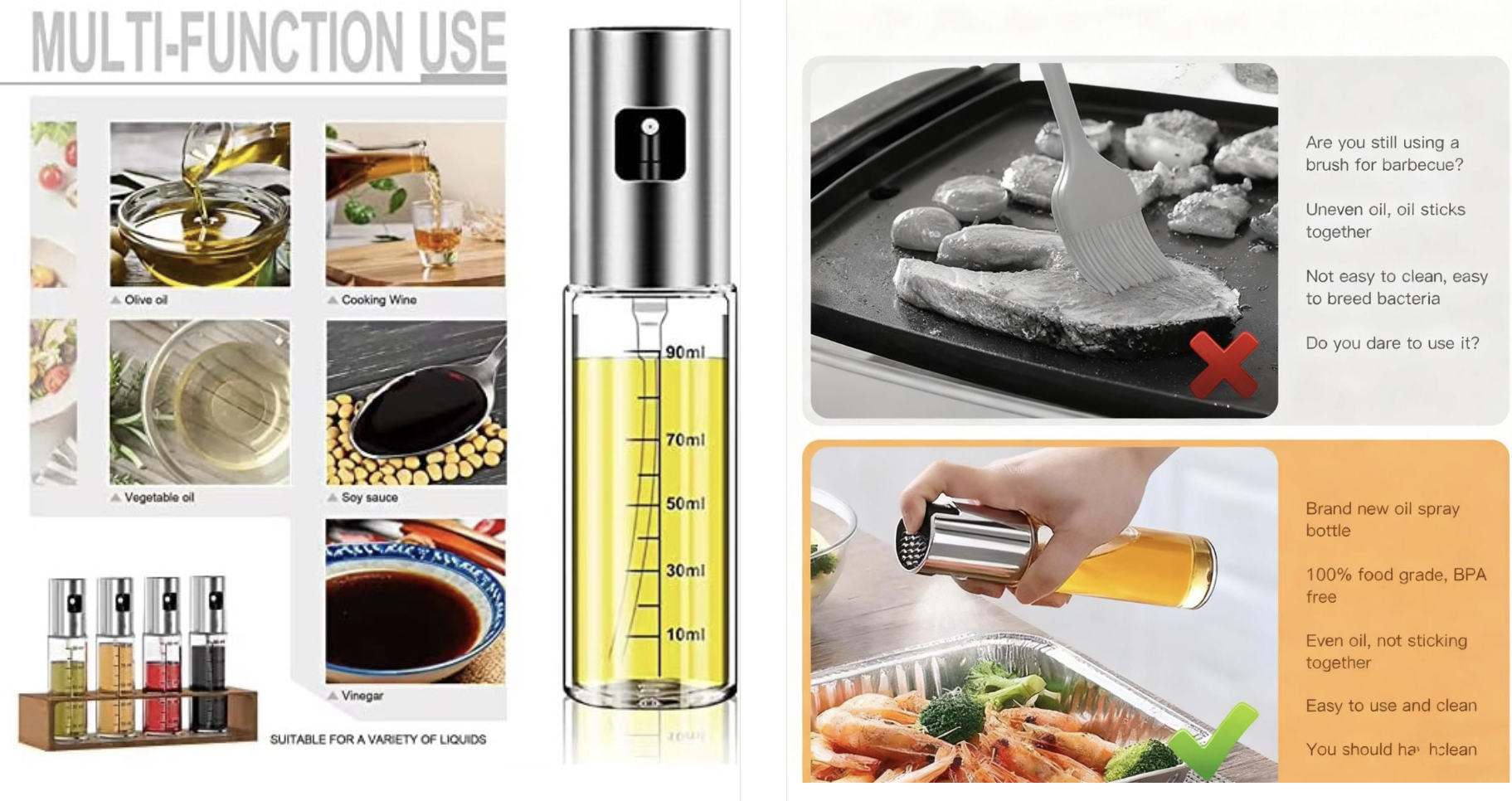
(WorldFrontNews Editorial):- Jinhua, Zhejiang Jun 6, 2026 (Issuewire.com) – In an era where health-conscious cooking and culinary precision dominate global consumer preferences, the demand for high-quality kitchenware has escalated remarkably. Imagine a home chef trying to achieve the perfect golden crisp on an air-fried chicken breast, or an outdoor enthusiast preparing a balanced meal at a quiet campsite. Traditional oil pourers often lead to over-saturation, while silicone barbecue brushes risk uneven application, cross-contamination, and bacterial growth. This common culinary frustration is where a well-engineered oil sprayer transforms the cooking experience. For B2B buyers, global sourcing managers, and major supermarket distributors, finding premium kitchen tools that align with modern healthy living concepts is a core commercial objective. Sourcing from a Top Rated Oil Sprayer Supplier ensures that these strict consumer expectations are met with manufacturing consistency and commercial-grade reliability.
The path to kitchenware excellence often starts with a single focused innovation. At JinHua Blossom Co., Ltd., it all began with a simple but powerful belief–everyone should be able to enjoy that perfect cup of coffee. Today, that exact commitment to precision and material integrity applies to their advanced culinary spraying solutions, bridging the gap between everyday rituals and industrial manufacturing excellence. For commercial buyers navigating the complex global supply chain, evaluating an oil sprayer requires strict technical criteria.
STEP 1: Verifying Material Integrity and International Certifications
When sourcing kitchenware intended for direct food contact, material safety remains the paramount baseline for any commercial buyer. Substandard plastics can leach harmful bisphenol A (BPA) or volatile organic compounds into cooking oils, altering food flavor profiles and violating import regulations across regions like North America and the European Union. A premium manufacturing partner addresses these risks at the raw material stage.
The baseline specification for a high-caliber oil sprayer includes 100% food-grade components. Top manufacturers employ robust materials such as 201 stainless steel for the external housing and high borosilicate glass for the condiment or spice chamber. High borosilicate glass provides exceptional thermal shock resistance and a non-porous structure that resists chemical interactions and staining. To verify these structural claims, global procurement teams must review the supplier’s portfolio of international compliance certifications. A qualified manufacturer typically holds multiple global credentials, including CE, FCC, and RoHS certifications, supported by extensive intellectual property protections and dozens of active utility patents. This compliance infrastructure ensures smooth customs clearance and guarantees retail safety on global supermarket shelves.
STEP 2: Evaluating the Mechanical Delivery and Spray Pattern Innovation
A primary complaint from end consumers regarding lower-tier oil sprayers is the mechanical failure of the pump mechanism, which often generates a single, heavy stream of oil rather than a delicate mist. Because vegetable oils and olive oils possess significantly higher viscosities than water, the internal nozzle geometry must be engineered precisely to atomize the liquid under manual pressure.
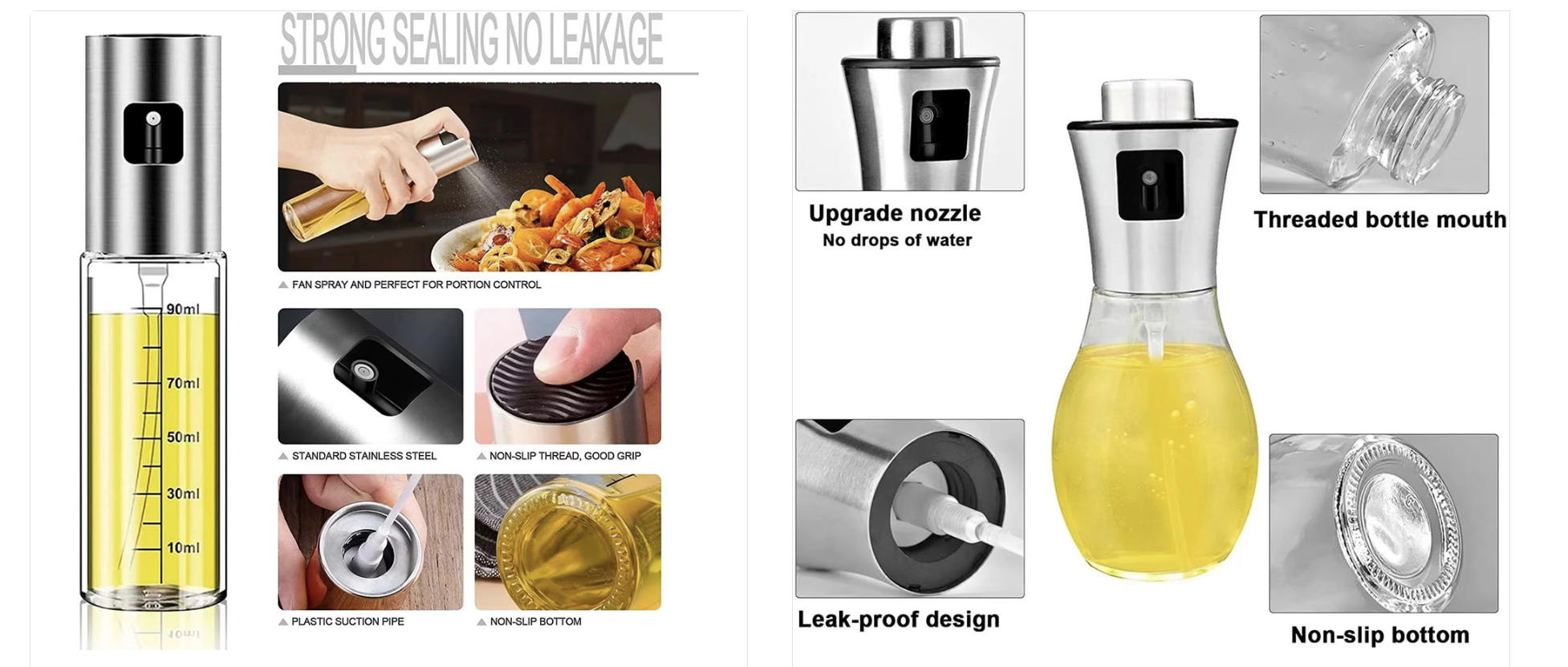
In technical design, advanced sprayers incorporate an optimized, fan-shaped precise spray technology. This mechanism utilizes a specialized nozzle structure that creates a controlled, horizontal or vertical fan-shaped atomization pattern upon compression. This configuration ensures an even distribution of a measured dosage over food items or cookware, preventing the over-saturation common with traditional brushes or basting tools. When assessing mechanical performance, buyers should seek systems utilizing a customized plastic suction straw designed to handle diverse liquid types–ranging from dense extra virgin olive oil and avocado oil to thinner liquids like soy sauce, vinegar, and cooking wine. This mechanical flexibility directly broadens the product’s retail appeal across various culinary applications.
STEP 3: Inspecting Structural Sealing and Leak Prevention Systems
For large-scale retail distribution, warehouse stacking, and e-commerce shipping, structural leakage represents a significant financial risk that can lead to high product return rates and damaged outer packaging. Lower-quality consumer spray bottles frequently fail at the junction between the spray mechanism and the container body, especially when subjected to horizontal placement during transport or outdoor use.
To counter these vulnerabilities, commercial-grade oil sprayers utilize a reinforced double-layer sealing structure paired with a precision-threaded bottle neck. This design eliminates leakage paths by forming an airtight mechanical lock at the interface, protecting the freshness of the oil against oxidation while retaining structural integrity under varying pressures. During factory quality evaluations, look for suppliers who subject 100% of mass-produced units to rigorous automated leak-proof testing. A solid commercial quality standard ensures the product can endure long-distance maritime freight transportation and prolonged shelf display without losing its seal or experiencing cosmetic degradation.
STEP 4: Analyzing Ergonomics, Form Factor, and Daily Usability
Product dimensions and weight distribution play a decisive role in consumer satisfaction and repeat purchasing. An oil sprayer must be compact enough for single-handed use in fast-paced commercial kitchens or outdoor camping environments, yet hold sufficient volume to minimize frequent refills.
A standard commercial blueprint for a balanced 100ml capacity oil sprayer features an overall dimension of approximately 4.3 centimeters in diameter by 18.3 centimeters in height, with an empty unit weight of around 207 grams. This configuration provides an ideal balance between portable efficiency and physical presence. Ergonomic superiority is achieved by adding a non-slip threaded handle texture on the stainless steel collar, granting a secure hold even when the user’s hands are coated in moisture or cooking oils. Furthermore, a non-slip base configuration on the glass bottom maximizes surface friction. This design element ensures the bottle remains upright and stable on slippery stainless steel prep tables, retail display racks, or rugged outdoor camp tables, lowering the risk of accidental tipping.
STEP 5: Auditing Manufacturing Capabilities and Supply Chain Risk Management
Beyond product technical specifications, long-term commercial success depends heavily on the production infrastructure and supply chain resilience of the manufacturing partner. B2B buyers must partner with suppliers capable of maintaining strict quality control across high-volume production cycles while providing flexible options for customization.
Operating from advanced production facilities, premier kitchenware manufacturers manage supply chain quality by producing approximately 80% of their core components in-house. This high level of vertical integration allows for comprehensive monitoring through a four-level quality check system, keeping factory defect rates strictly below 0.1%. For global brands requiring private-label solutions, an agile manufacturer like Blossom provides complete OEM/ODM support, including complimentary logo design and custom retail packaging with low minimum order quantities (MOQ) starting at 500 units. Furthermore, to safeguard retail distribution timelines, leading suppliers offer strong contractual delivery guarantees–such as structured penalties for shipping delays–backed by a comprehensive one-year global warranty. This manufacturing transparency allows buyers to confidently diversify their sales channels across supermarkets, home appliance sets, and premium corporate gifts.
For more detailed technical parameters and comprehensive catalog options, please visit the company’s official website at https://www.zjblossom.com
This article was originally published by IssueWire. Read the original article here.