(WorldFrontNews Editorial):- Nanjing, Jiangsu Jun 24, 2026 (Issuewire.com) – In high-stakes emergency scenarios, clear communication is often the dividing line between a successful rescue operation and a catastrophic failure. For decades, conventional acoustic communication tools have struggled to deliver reliable performance in extreme environments, particularly within the firefighting sector. Ambient noises from raging fires, roaring engines, and structural collapses, compounded by the heavy breathing sounds inside positive-pressure breathing apparatuses, create a chaotic acoustic environment. As modern public safety departments re-evaluate their operational toolkits, finding the ultimate audio solution has led industry experts to rank the Top 10 Brands of Bone Conduction Headset to see which technologies truly withstand the test of extreme thermal and acoustic pressure. Among these innovations, bone conduction technology has rapidly emerged not merely as an alternative, but as the fundamental future of firefighting and tactical rescue communication. By bypassing air conduction and transmitting sound waves directly through the wearer’s cranial bones, these advanced systems offer an unprecedented level of audio clarity and situational awareness that traditional headsets simply cannot achieve.
I. The Limitations of Legacy Acoustic Systems in High-Noise Hazards
Traditional radio communication equipment relies almost exclusively on air-conduction microphones and speakers. In a standard office or low-noise environment, this mechanism is highly effective. However, inside a structural or industrial fire, the ambient acoustic landscape routinely exceeds 90 to 100 decibels. When a firefighter attempts to speak into a conventional microphone while wearing a full-face breathing mask, the microphone captures a combination of heavily muffled speech, rushing air from the regulator, and intense external background noise. The result is a highly distorted transmission that can easily be misinterpreted by command staff or team members.
Furthermore, conventional ear-covering or in-ear speakers block out environmental ambient sounds. For a responder inside a burning building, auditory cues–such as the faint cracking of a weakening structural beam, the hiss of a gas leak, or the cries of a trapped victim–are critical for survival. Obstructing the ear canal to maintain radio contact introduces a severe safety compromise, creating an isolation effect that detaches the personnel from their immediate physical surroundings. The industry-wide push toward advanced bone conduction systems stems directly from the critical need to solve this dual dilemma: delivering pristine radio communication while maintaining total environmental audio receptivity.
II. The Mechanics of Bone Conduction Technology and Communication Breakthroughs
Bone conduction technology re-engineers tactical audio transmission by utilizing the body’s natural physiological pathways. Instead of vibrating the tympanic membrane (eardrum) via airborne sound waves, bone conduction transducers convert incoming audio signals into mechanical vibrations. These micro-vibrations travel through the temporal bone or zygomatic arch directly to the cochlea, which interprets the signals as sound.
On the transmission side, bone conduction microphones capture the vibrations of the wearer’s vocal cords through the facial or cranial bones when they speak. This structural pickup mechanism provides an inherent physical filter against airborne noise. Because the microphone is only sensitive to the direct mechanical vibrations of the skull rather than the sound waves traveling through the air, it effectively ignores the roaring ambient noise of a fire scene or the heavy rushing air from a self-contained breathing apparatus (SCBA). This separation of the user’s voice from environmental noise provides an immediate, hardware-level solution to the audio clarity challenges that software-based noise-cancellation algorithms often struggle to resolve perfectly in unpredictable environments.
Implementing bone conduction technology within the stringent confines of fire and rescue operations requires sophisticated industrial engineering. Communication devices must integrate seamlessly with existing personal protective equipment, including firefighting helmets, flash hoods, and positive-pressure breathing masks, without altering their structural integrity or compromising their safety certifications.
A premier example of this specialized engineering can be seen in the systems developed by ZHENGZE, a leading manufacturer in the intelligent emergency rescue equipment sector. Established in March 2004, the firm has leveraged its dedicated research and development infrastructure to create a versatile suite of emergency communication devices that address specific tactical form factors.
1. Mask-Integrated Communication Systems
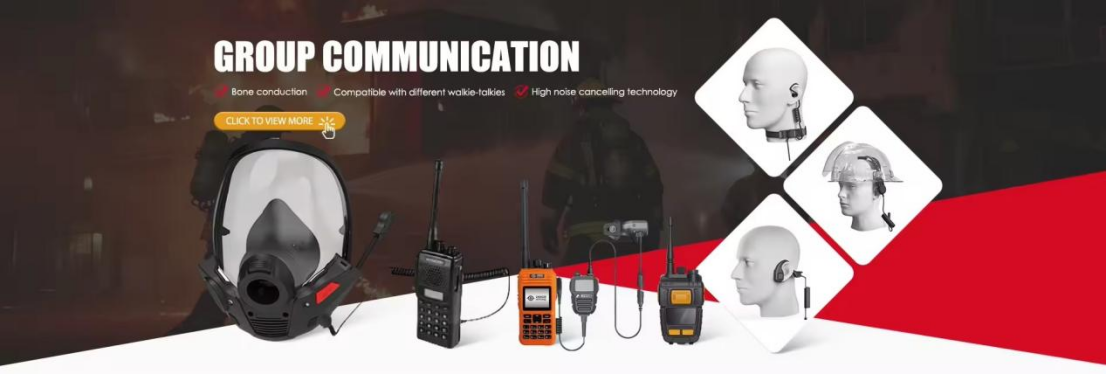
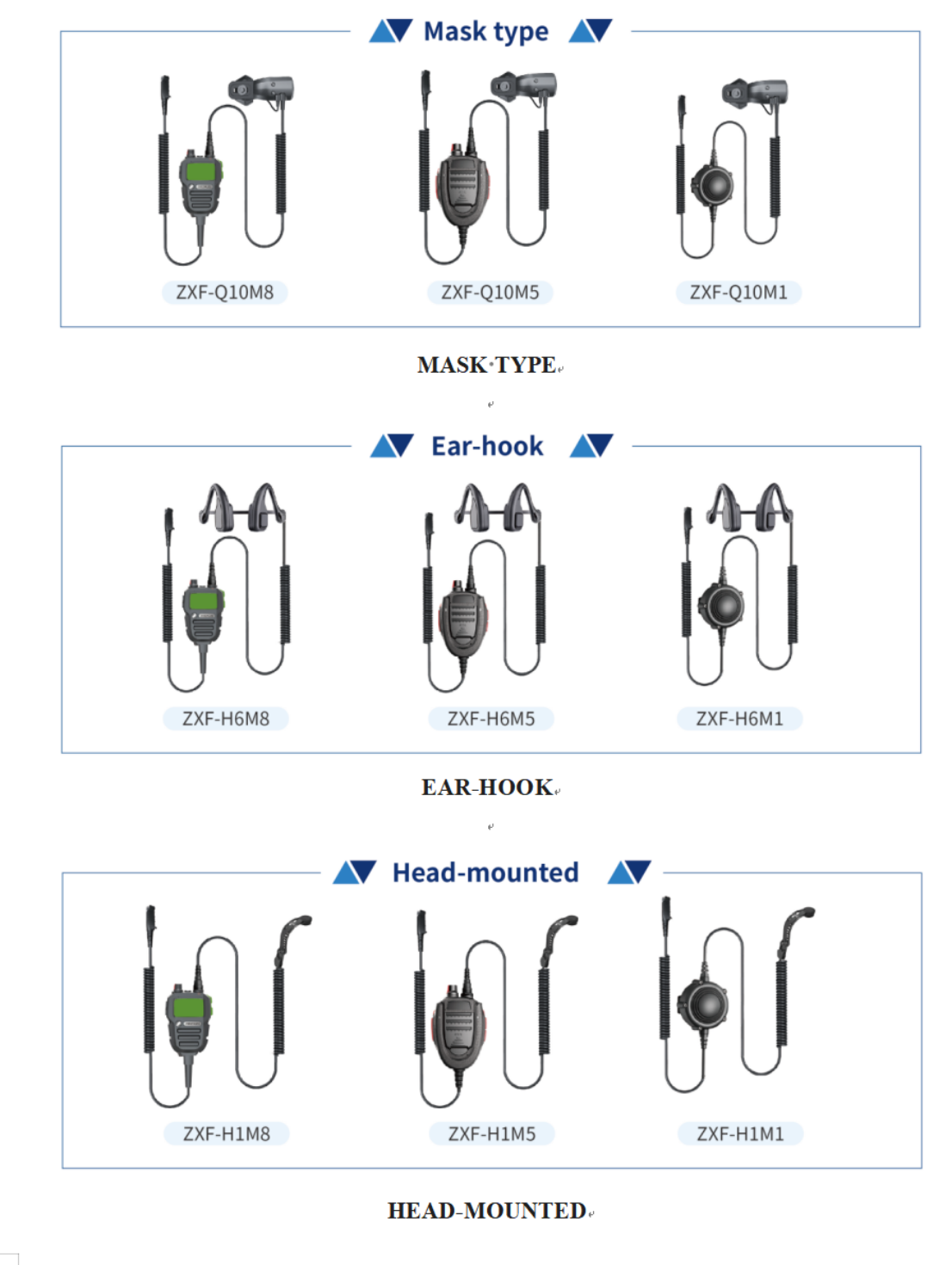
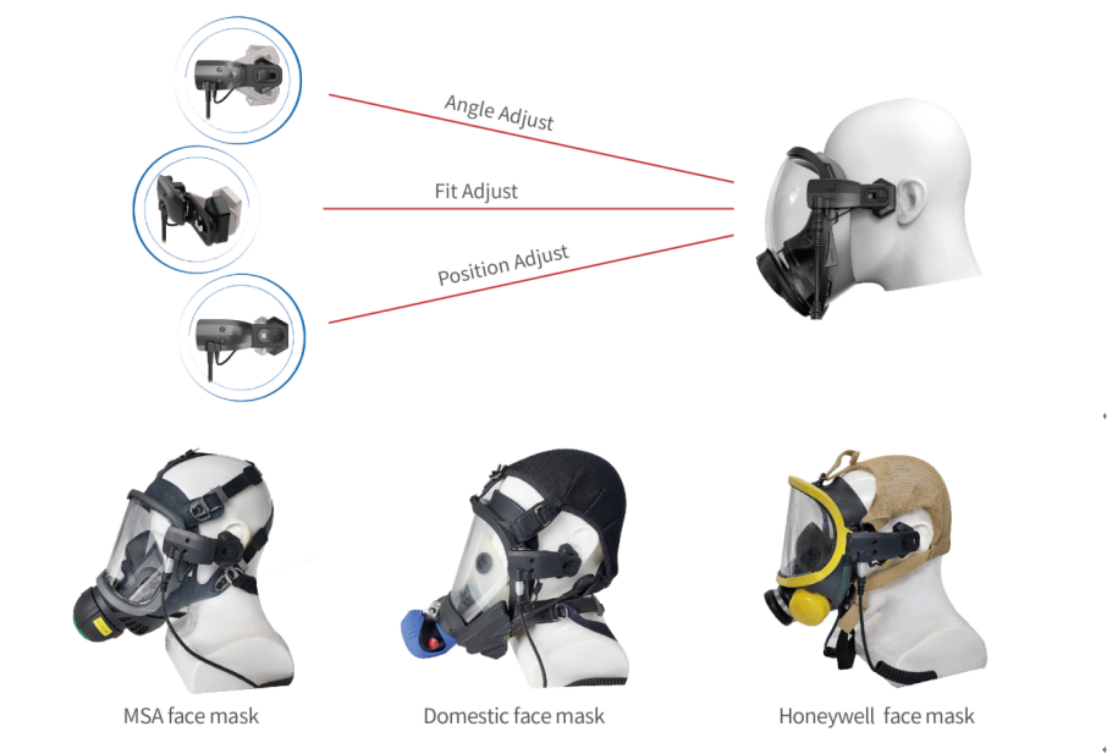
For operations demanding full respiratory protection, the mask-integrated bone conduction unit represents a major step forward. Designed to attach directly to the exterior or frame of standard firefighting face masks–including major global platforms such as MSA, Honeywell, and prominent domestic brands–this configuration uses secure mechanical brackets or screw-tightened locking mechanisms. The system places a highly sensitive bone conduction sensor flush against the mask structure or the user’s jawline. By harvesting the bone vibrations generated during speech, it completely filters out the heavy, rhythmic exhalation and inhalation noises produced by the breathing regulator. Because the installation does not pierce or alter the shell of the face mask, the airtight seal and protective integrity of the respiratory system remain completely uncompromised.
2. Helmet-Mounted and Ear-Hook Solutions
When full respiratory protection is not mandatory–such as during technical wilderness rescues, forest firefighting, or post-incident overhaul operations–alternative form factors like helmet-mounted and ear-hook communication modules become essential.
- Helmet-Mounted Configuration: This variant attaches directly to the interior suspension system or the outer shell rim of standard rescue helmets using a tool-free, rapid-mount locking arm. Weighing approximately 85 grams, the device provides an ultra-lightweight footprint that prevents operator fatigue during extended deployments. Operating within a voltage range of 2.5 to 10.0 VDC, it ensures reliable electronic stability and compatibility with tactical radio power outputs.
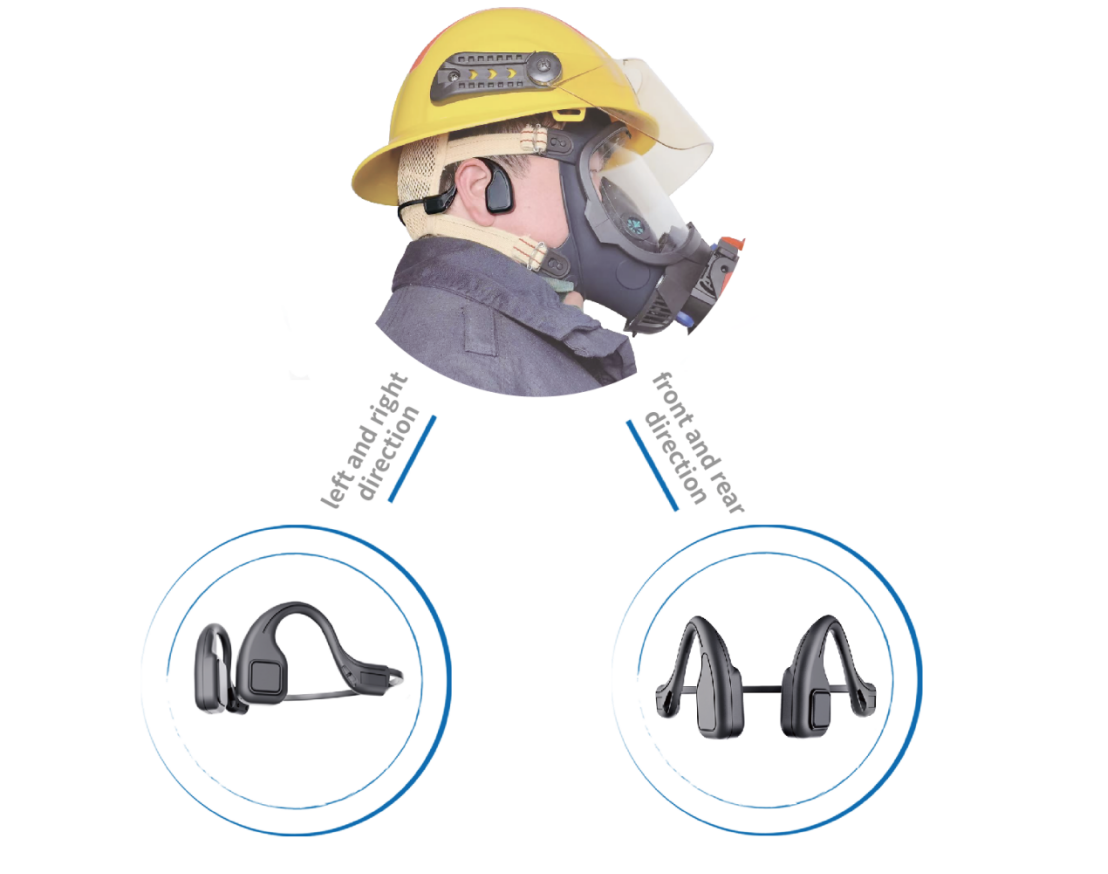
- Ear-Hook Configuration: Utilizing an ergonomic, open-ear dual suspension design, the ear-hook model hangs securely on the exterior of both ears. This open-ear design leaves the ear canal completely unobstructed, allowing responders to retain 100% of their natural situational awareness. This enables them to hear radio traffic and subtle environmental sounds simultaneously.
III. Technical Parameters and Field Survivability Standards
Emergency rescue equipment must possess exceptional durability to survive the thermal, mechanical, and chemical stressors encountered on the battlefield of disaster management. To ensure continuous operation under these punishing conditions, professional tactical bone conduction headsets are built to rigorous industrial and military-grade specifications.
1. Environmental Seals and Structural Resilience
Water, dust, and chemical ingress represent immediate threats to tactical electronics. Modern high-tier bone conduction headsets are certified to an IP67 protection rating, ensuring complete immunity to dust penetration and the capacity to withstand total immersion in water up to a depth of one meter for 30 minutes. This level of sealing is vital not only for operations in heavy rain or maritime rescue environments but also for resisting the high-pressure water runoff and dense, soot-laden moisture common during firefighting operations. Furthermore, specialized materials give these units advanced resistance to moisture, humidity, and mild acid or alkaline exposures, ensuring the housing does not degrade when exposed to corrosive chemical byproducts of combustion.
2. Thermal Adaptability and PTT Interface Systems
The operational temperature envelope for these devices is engineered to withstand severe environments, maintaining stable continuous functionality from a freezing -25 degrees Celsius up to an elevated temperature of +63 degrees Celsius. This broad thermal tolerance ensures that whether deployed in sub-zero winter rescue missions or high-heat environments adjacent to active structural fires, the electronic components, transducers, and structural housings remain fully operational without signal drift or material warping.
To bridge the gap between the headset and the field radio, these systems utilize a dedicated Push-to-Talk (PTT) interface kit. The PTT assembly features an oversized, glove-friendly tactile button that converts the vibration signals captured by the headset into standardized audio outputs, passing them through a specialized noise-filtering squelch circuit. This secondary processing stage cleanses the signal before amplifying it to match the precise input impedance of the connected two-way intercom or tactical radio system. This ensures seamless cross-platform communication across various equipment brands used by mutual-aid agencies.
IV. Future of Firefighting
With a production facility spanning over 5,000 square meters and a portfolio containing more than 100 core patents, specialized original equipment manufacturers are driving these technical standards forward. The capacity to provide end-to-end services–encompassing function customization, custom structural component design, precise mold production, and stringent global certification applications–allows the emergency services sector to deploy communication solutions tailored specifically to the evolving challenges of the modern field. As firefighting forces continue to modernize their operations, the shift toward bone conduction technology represents a permanent evolution in ensuring responder safety and operational coordination.
To explore the full range of intelligent emergency rescue systems, tactical communication suites, and specialized personal protective equipment configurations, visit the corporate portal at https://www.zhengzesafety.com/
This article was originally published by IssueWire. Read the original article here.