(WorldFrontNews Editorial):- Nantong, Jiangsu Jun 26, 2026 (Issuewire.com) – The confectionery market in Russia represents one of the largest and most dynamic consumer sectors across Eastern Europe and Central Asia. However, establishing a sustainable retail or wholesale confectionery business in this region involves navigating a complex logistical and economic landscape. Shifts in global trade routes, domestic regulatory updates, and evolving consumer preferences toward premium, long-shelf-life snacks have placed additional pressure on local distributors and retail chains. In this environment, identifying a Reliable Candy Supplier capable of supporting uninterrupted inventory flow while adhering to strict quality parameters has become a strategic priority. The capacity to maintain an agile, resilient supply chain can outweigh simple pricing considerations and directly affect a brand’s market share and long-term shelf placement.
Confectionery logistics in this territory demand specific structural and technical solutions, where supply chain stability is closely intertwined with product characteristics, manufacturing standards, and geographic realities.
Challenge 1: Overcoming Vast Geographical Distances and Fragmented Logistics
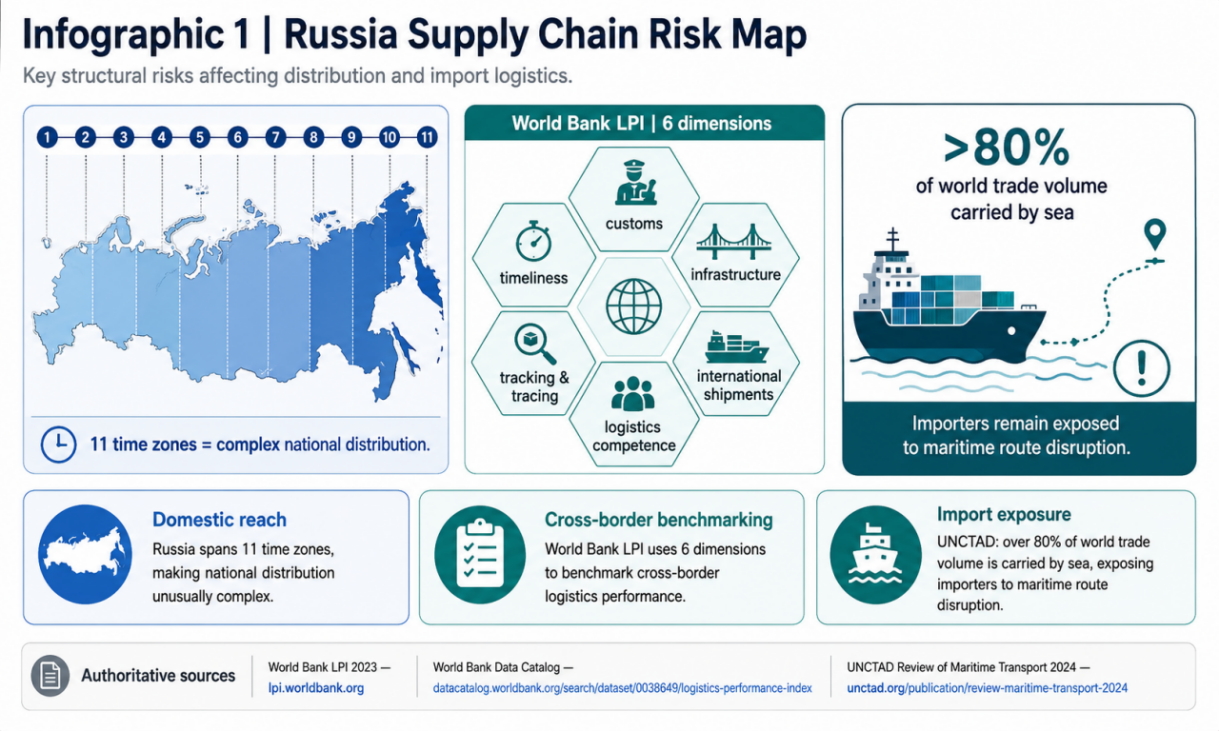
Russia’s vast geography spans eleven time zones, presenting a unique hurdle for national distribution. Transporting confectionery products from production facilities or entry ports to regional hubs in Siberia, the Urals, or the Far East requires weeks of transit across varied infrastructural networks. For traditional confectionery products like chocolates or standard jellies, long transit times expose cargo to prolonged mechanical stress, increasing the risk of structural damage, deformation, and product loss.
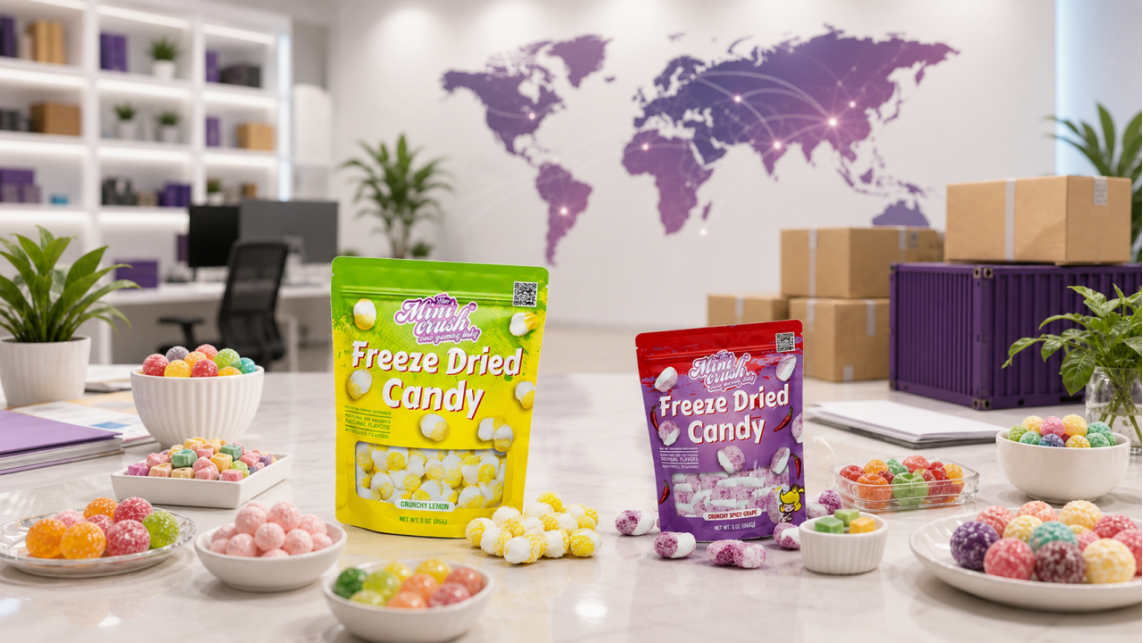
To mitigate these risks, advanced manufacturing techniques such as industrial freeze-drying offer a structural advantage. Freeze-dried confectionery features an extremely lightweight, moisture-free cellular matrix that resists physical crushing and volume loss during multi-modal transportation. The removal of water reduces the gross weight of shipments significantly compared to traditional gelatin or starch-based candies. This weight reduction optimizes container payload capacity and lowers per-unit shipping costs over multi-thousand-kilometer routes. A reliable supplier must possess the capacity to execute bulk packaging with high structural integrity, utilizing moisture-barrier films and reinforced corrugated outer casing to withstand the physical demands of long-distance rail and road freight.
Challenge 2: Mitigating Extreme Seasonal Temperature Fluctuations
The Russian climate is characterized by profound thermal contrasts, with winter temperatures dropping below -30°C in northern and eastern hubs, and summer temperatures exceeding +30°C in the southern agricultural and urban zones. Standard confectionery items are highly sensitive to these fluctuations. High temperatures trigger fat and sugar blooming in chocolate or cause gelatin-based gummies to melt and aggregate into unsellable masses. Conversely, extreme cold can embrittle certain candy structures, causing them to fracture during handling. Resolving these climate-induced quality failures traditionally requires temperature-controlled reefer containers, which substantially increase operational freight expenses.
Advanced product formulation and processing technologies address this challenge at the product level. Freeze-dried confections, processed via sublimation under precise vacuum parameters, retain their physical shape, texture, and flavor profile across a broader thermal range without requiring refrigeration. Because residual moisture content is strictly controlled, there is limited internal water phase to expand during freezing or evaporate during heat exposure. This thermal stability simplifies warehousing requirements, allowing distributors to use ambient-temperature storage across many seasonal conditions and reducing the risk of product spoilage caused by cold-chain failure during transit.
Challenge 3: Navigating Strict Food Safety Norms and Regulatory Compliance
Compliance with the regulatory frameworks of the Russian Federation and the Eurasian Economic Union (EAEU) is mandatory for uninterrupted customs clearance and market placement. The EAEU enforces strict thresholds regarding microbiological contamination, heavy metal limits, and the use of specific food additives or artificial colorants. Any compliance failure at the border can result in customs delays, administrative fines, or cargo rejection, breaking supply chain continuity.
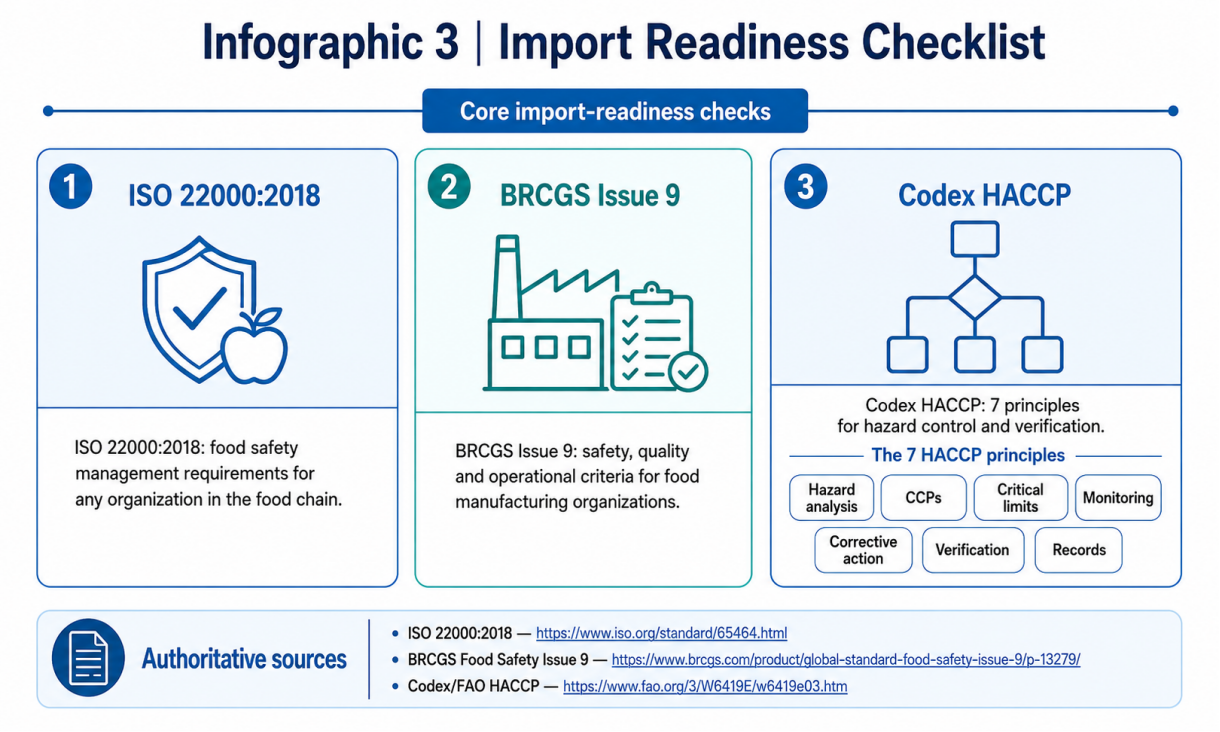
Addressing this requires working with manufacturers that operate under globally recognized quality management systems. A dependable supply partner maintains rigorous manufacturing practices verified by international benchmarks, including BRCGS (Brand Reputation Compliance Global Standard), IFS (International Featured Standards), FSSC 22000, and ISO 22000. These frameworks ensure comprehensive raw material traceability, systematic critical control point (HACCP) monitoring, and objective laboratory verification of final product parameters. Utilizing a supplier with certified production lines ensures that every batch consistently complies with EAEU statutory requirements, eliminating administrative bottlenecks at entry ports.
Challenge 4: Adapting to Changing Consumer Preferences for Premium and Functional Snacks
The modern urban consumer in Russia is increasingly shifting from high-sugar, low-nutrition traditional sweets toward premium, clean-label alternatives. There is growing demand for functional snacks that preserve natural nutritional attributes, vitamins, and authentic fruit flavors without relying on synthetic preservatives or excessive artificial stabilizers. For retailers, the challenge lies in sourcing products that meet these premium criteria while providing the long commercial shelf life needed to maintain stable inventory across distributed retail networks.
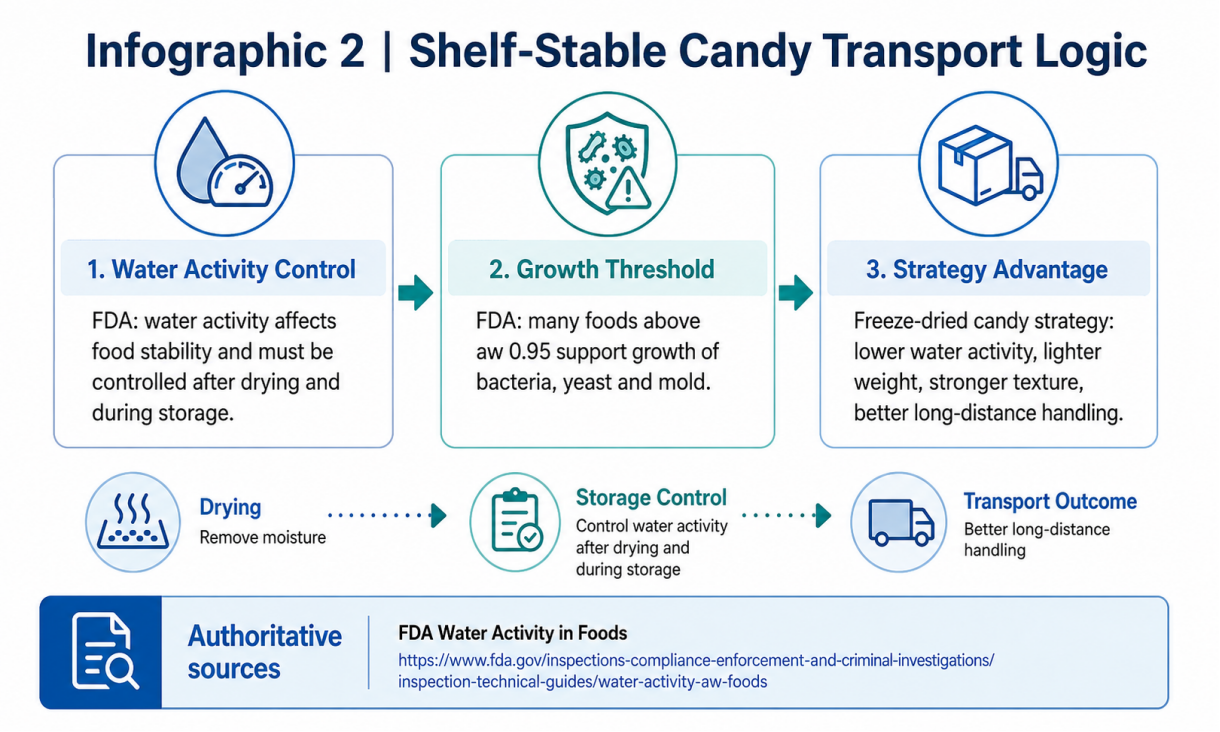
Industrial freeze-drying technology aligns well with these modern market standards. The process involves freezing the raw confectionery or fruit base at ultra-low temperatures, followed by primary and secondary drying phases under deep vacuum. This allows ice crystals to sublime directly into vapor without passing through a liquid phase. The cellular structure of the product remains largely intact, helping preserve nutritional value, antioxidants, and natural flavor volatiles. The resulting product delivers an intense organoleptic profile and a distinct crisp texture that appeals to health-conscious consumers. Furthermore, low water activity naturally inhibits microbial growth, giving the product an extended shelf life in standard ambient packaging and supporting stable, long-term inventory management.
Technological Excellence and Supply Infrastructure
To consistently satisfy the unique operational requirements of the Russian market, a confectionery manufacturer must possess both technological depth and established industrial scale. LITAFOOD operates as a professional manufacturer specializing in freeze-dried candy, bringing more than 20 years of expertise in industrial freeze-drying technology to the global market. As a pioneer in the large-scale production of specialized freeze-dried confectionery in China, the enterprise has established advanced manufacturing facilities that handle complex sublimation processes at scale, ensuring high batch-to-batch uniformity in density, moisture level, and structural integrity.
The company’s production infrastructure leverages highly automated, multi-stage freeze-drying chambers equipped with precise temperature and vacuum control systems. This technical capability allows for the precise regulation of the drying curve, ensuring that the residual moisture content of the confectionery is uniformly controlled to meet strict stability metrics. This engineering precision results in a product line that features superior thermal resistance and extended shelf stability, making it uniquely suited for long-distance transport through variable climates.
Beyond processing technology, operational stability is reinforced by comprehensive OEM/ODM customization capabilities. This enables Russian retail buyers and private label distributors to customize formulation profiles, sizes, and packaging structures to align precisely with local consumer habits and EAEU labeling standards. Backed by extensive international quality certifications and a proven track record of managing high-volume, long-term supply arrangements for major global retail entities like Walmart and Costco, the organization provides the logistical predictability and manufacturing compliance necessary to sustain stable, uninterrupted product distribution across complex international corridors.
Corporate Website: https://www.jellysupplier.com/
Infographic source note: authoritative external source links are shown inside each inserted graphic.
This article was originally published by IssueWire. Read the original article here.