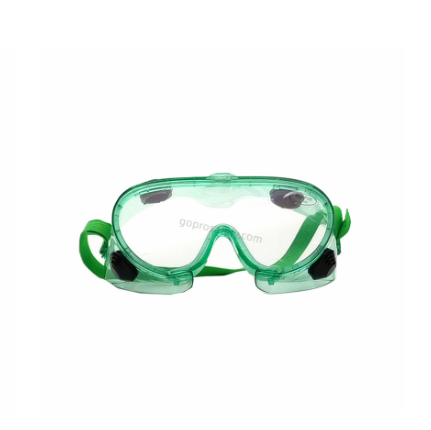
(WorldFrontNews Editorial):- Nanjing, Jiangsu Jun 27, 2026 (Issuewire.com) – Balancing Compliance and Durability: A Sourcing Guide to Anti-Fog Custom Industrial Protective Eyewear for Global B2B Procurement.Introduction to Industrial Ocular Risk Management
Occupational ocular hazards represent a significant operational and financial liability across diverse heavy industries. Selecting appropriate personal protective equipment eye protection is not merely a checkbox for legislative compliance; it is a fundamental pillar of workforce operational continuity. Industrial workspaces subject workers to complex, multi-layered hazards that mandate resilient technical solutions. When safety managers assess eye protective equipment, they must evaluate materials based on mechanical stress resistance, chemical inertness, optical clarity, and long-term environmental durability.
For international bulk buyers, procurement involves balancing strict safety protocols with total cost of ownership. Substandard equipment often results in higher replacement rates, decreased worker compliance, and increased injury reporting. Understanding how specialized engineering solves common field failures allows procurement teams to source protective inventory that preserves both worker safety and operational margins.
Analysis of Field Pain Points in Industrial Ocular Protection
Field data from heavy industrial applications highlights three persistent operational deficiencies that affect standard industrial eyewear: rapid optical degradation from environmental exposure, lens fogging in humid or high-exertion settings, and standard frame geometries that fail to accommodate diverse worker demographics.
- Lens Degradation and Surface Abrasion
In mechanical and industrial operations and construction sites and workshops, airborne particulates, metal filings, and concrete dust cause constant abrasive friction on optical surfaces. Standard polycarbonate components without specialized surface treatments quickly develop micro-scratches. This surface abrasion scatters incident light, causing visual distortion, eye strain, and headaches for equipment users, which ultimately leads to workers removing their protective gear prematurely.
- Persistent Lens Fogging in High-Exertion Environments
At environments with liquid splashes, sprays, or airborne particles, as well as during chemical handling and processing, lens fogging represents an ongoing challenge. Traditional anti-fog solutions often consist of temporary topical surfactants that wash away after brief exposure to moisture or chemical cleaning agents. Once a barrier fails, moisture condenses into microscopic droplets on the lens surface, reducing visibility and introducing new workplace hazards as users break the clean boundary to wipe their eyewear.
- Geometric Mismatch and Insufficient Interface Seals
Standard frame designs assume a uniform facial topology, which rarely reflects a diverse global workforce. In laboratories and research facilities or during specialized maintenance and repair work, an improper seal around the orbital region exposes personnel to fine vapor penetration and liquid splashes. Furthermore, pressure points on the nasal bone or behind the ears cause physical discomfort, directly reducing workforce compliance with safety protocols.
Technical Frameworks and Solutions for B2B Procurement
To systematically address these vulnerabilities, procurement managers must evaluate equipment based on verified material properties, structural engineering, and customized application coatings rather than generic commercial claims.
Standardized Optical Integrity and Impact Performance
Industrial eye glasses ppe and eye goggles ppe must feature high-grade impact-resistant polycarbonate formulations. Materials must carry clear markings verifying compliance with recognized international protocols, such as ANSI Z87.1 for North American markets, EN166 for European jurisdictions, and AS/NZS 1337 for Oceania. These certifications ensure the product can withstand high-velocity mechanical impacts without shattering or creating sharp fragments.
Engineered Surface Coatings and Material Configurations
To ensure long-term durability, buyers should specify dual-coated configurations that combine exterior anti-scratch shielding with interior moisture-inhibiting layers. Selecting specialized treatments like hydro-phobic or hydrophilic anti-fog chemistry ensures that moisture forms a transparent water film rather than obscuring droplets, maintaining visual clarity even during rapid temperature transitions.
Ergonomic Architecture and Flexible Seals
For environments demanding comprehensive coverage, indirect vent designs offer an effective balance between ventilation and splash protection. Utilizing soft, medical-grade polyvinyl choice (PVC) or thermoplastic elastomer (TPE) frames allows the equipment to mold comfortably to various facial profiles. Adjustable elastic headbands or multi-position telescoping temples ensure secure retention and minimize pressure points during extended shifts.
Industrial Supply Capabilities and Technical Customization Options
Procuring reliable safety assets requires manufacturing partners capable of delivering tailored product variations that match specific operational realities. Industrial manufacturing infrastructure supports extensive modifications to meet these specialized demands:
Advanced Anti-Fog Coating Selection: Depending on the target operational environment, manufacturers apply specific curing methods (such as thermal or UV curing) to permanently bond anti-fog properties to the lens structure.
Precise Logo Printing and Brand Integration: For large-scale enterprises and contracted safety distributors, applying permanent corporate branding via silk-screen or pad printing on the frame or elastic strap supports corporate identity without compromising structural integrity.
Tailored Packaging and Modular Labeling: Bulk orders can utilize custom unit boxes, individual polybags with explicit multilingual compliance instructions, and standardized barcoding to facilitate efficient warehousing and deployment.
Comprehensive OEM and ODM Services: Specialized manufacturers offer complete original equipment and design manufacturing services, transforming specific conceptual drawings into custom-molded frames that feature tailored ventilation pathways.
Application Scenarios and Environmental Alignment
Matching specific face and eye protection ppe configurations to actual environmental threats ensures both regulatory compliance and cost-effective asset utilization across diverse industrial operations:
Industrial Application / Scenario
Primary Environmental Hazard Vectors
Recommended Technical Configuration
Mechanical and industrial operations
High-velocity macro particles, metal shards, coarse dust clouds
Frameless or full-frame safety glasses with anti-scratch polycarbonate lenses.
Chemical handling and processing
Corrosive chemical splashes, toxic fumes, fine vapor clouds
Indirect vent safety goggles utilizing soft PVC frames and chemical-resistant lenses.
Laboratories and research facilities
Bio-chemical micro-splashes, biological aerosols, fine particulate matter
Compact, high-clarity lab safety goggles with permanent anti-fog coatings.
Maintenance and repair work
Variable multi-angle hazards, overhead debris, shifting ambient light
Foam-lined safety glasses or flip-up welding designs with adjustable temples.
Construction sites and workshops
Solar radiation, multi-source concrete impacts, airborne dust
UV-protected, scratch-resistant glasses featuring durable frame construction.
B2B Procurement Framework and Verification Methodology
When executing bulk supply contracts for international distribution, procurement officers must look beyond initial unit pricing to evaluate overall value. A structured verification protocol helps mitigate supply chain risks and ensures consistent product quality:
Documented Batch Verification: Manufacturers must provide verifiable batch test reports demonstrating consistent performance under mechanical impact and optical clarity testing.
Pre-Production Sample Validation: Procurement teams should secure functional product samples to test coating resilience, component fit, and build quality under real field conditions prior to authorized production.
Logistical Packing Integrity: Bulk shipments require heavy-duty, moisture-resistant external packaging to safeguard optical properties during long-distance maritime or intercontinental air transport.
Localized Frequently Asked Questions (FAQ)
Q1: How do our procurement teams verify that imported safety eyewear complies with regional occupational safety regulations? A1: When purchasing bulk supply eye and face protection ppe, buyers must ensure that every unit displays permanent, molded-in markings indicating regional certifications (such as Z87+ for high-impact ANSI standards or 1FT for European EN166 standards). Manufacturers should provide valid certificates issued by accredited third-party testing bodies (like SGS, Intertek, or INSPEC) that link directly to the specific product batch being delivered.
Q2: What specific criteria distinguish high-performance anti-fog coatings from standard commercial applications? A2: Sourcing high-grade anti-fog coating safety goggles wholesale guarantees that the lenses undergo intensive factory thermal or chemical curing processes. Unlike cheap temporary sprays, these permanent industrial coatings integrate directly with the polycarbonate matrix. This cross-linked molecular structure ensures the anti-fog properties withstand repeated cleanings and prolonged exposure to moisture without peeling or dissolving.
Q3: Can your factory modify standard frame dimensions and features to fit our specific regional workforce demographics? A3: Yes, full OEM and ODM capabilities allow for extensive development of custom industrial protective eyewear. This includes adjusting frame curvatures, altering nasal bridge widths, and integrating flexible materials like soft PVC or TPE to accommodate various facial profiles, ensuring comfortable fits and reliable protective seals across different regions.
Q4: What are the typical minimum order quantities (MOQ) and production lead times for fully customized industrial eyewear orders? A4: Standard production runs for tailored eyewear configurations generally maintain an MOQ of 1,000 to 3,000 units per model, depending on the complexity of the customization (such as specific anti-fog coatings, custom frame colors, or unique brand placements). Typical production timelines range from 25 to 35 days following sample approval and deposit confirmation, excluding maritime transit times.
This article was originally published by IssueWire. Read the original article here.