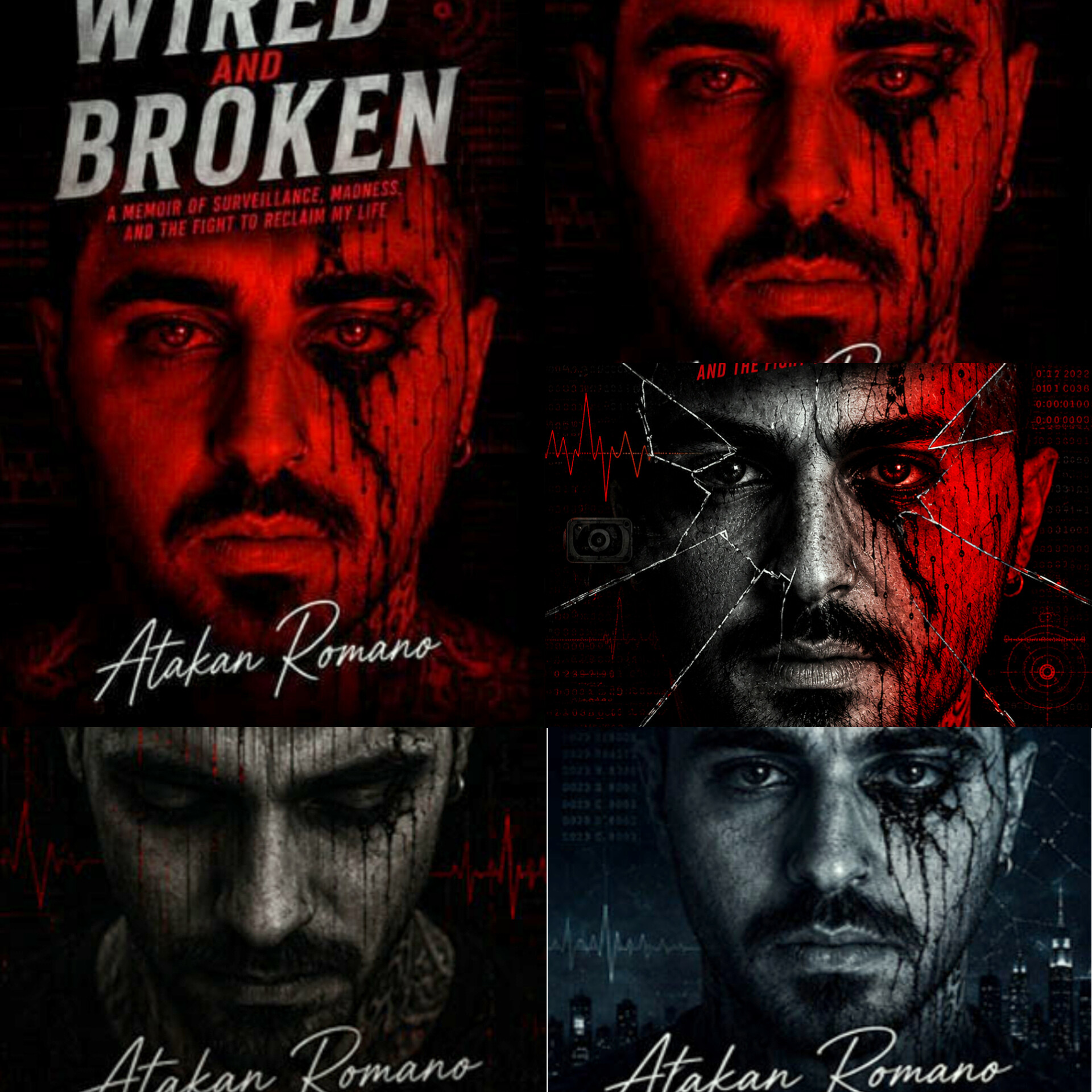
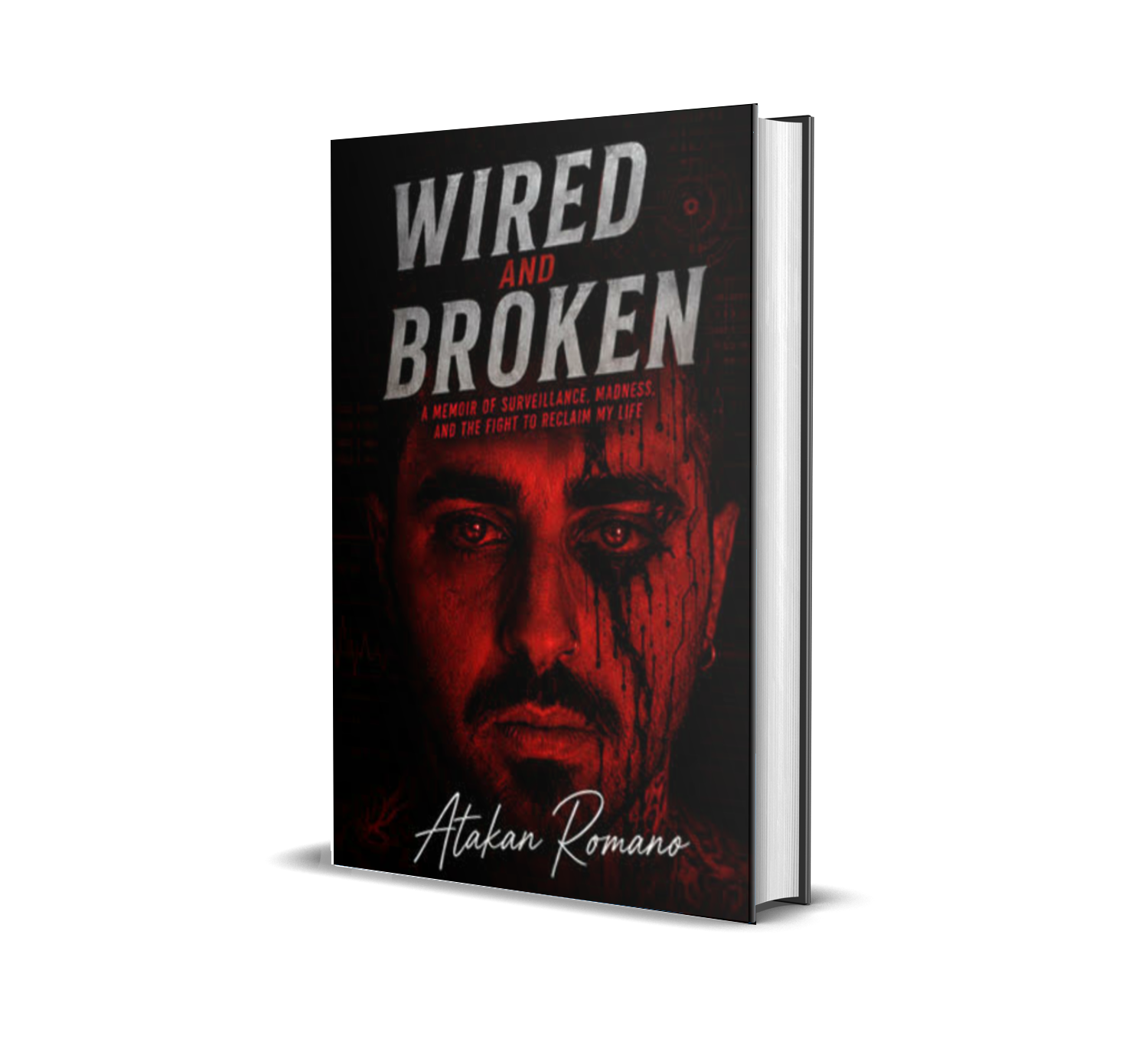
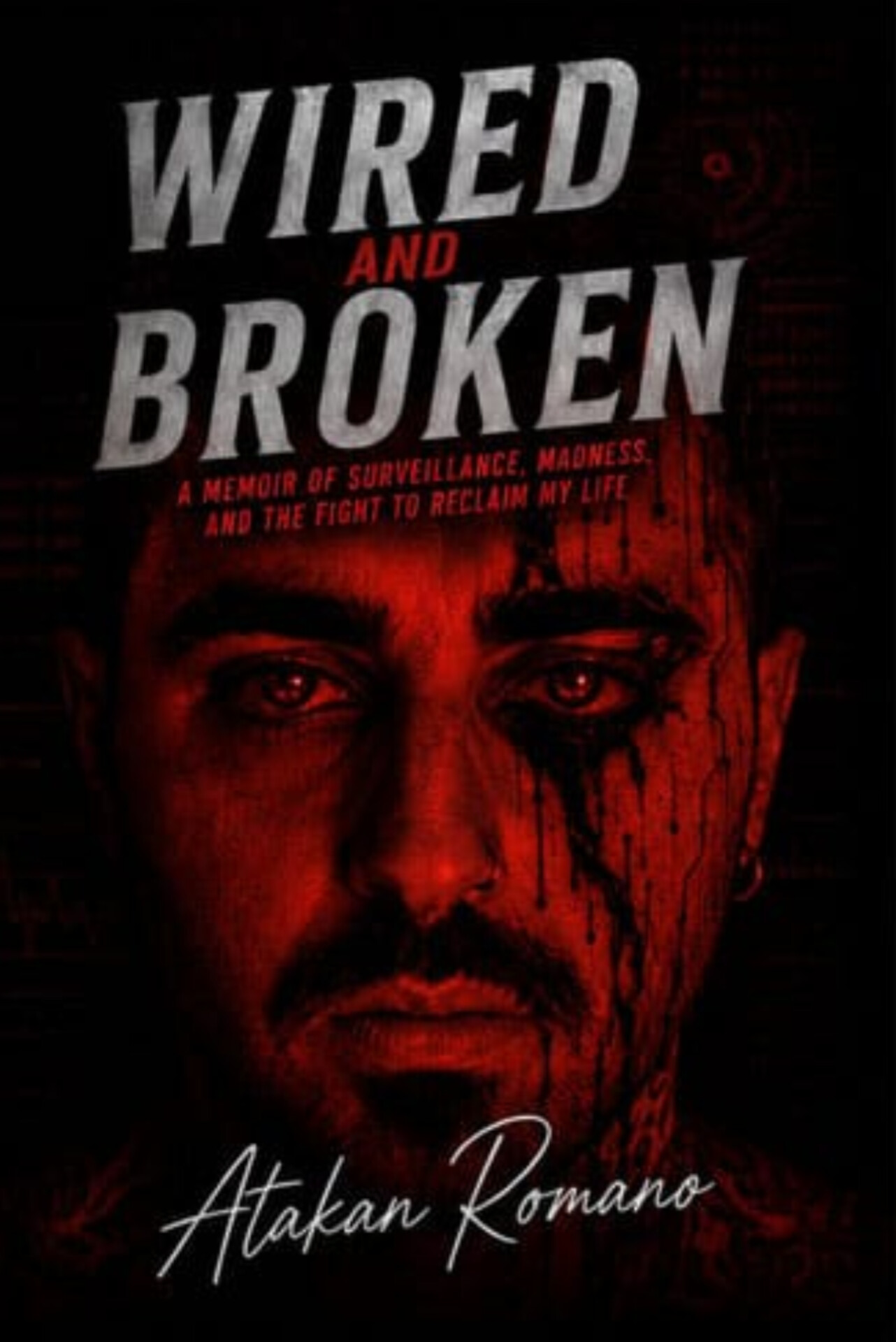
Wired and Broken: A Memoir of Surveillance, Madness, and the Fight to Reclaim My Life exposes systemic failures in psychiatric care, cyberstalking, and the silencing of male survivors
(WorldFrontNews Editorial):- Sydney, New South Wales Jun 30, 2026 (Issuewire.com) – Melbourne-based entrepreneur and hair artistry director Atakan Romano has published his debut memoir, Wired and Broken: A Memoir of Surveillance, Madness, and the Fight to Reclaim My Life, surviving a cascade of interlocking crises — a suicidal mental health emergency on the Federation Square bridge, three weeks of psychiatric hospitalisation in which his prescribed medications were removed without adequate clinical justification, sustained physical assault and covert digital surveillance by a person in whose home he sought refuge, identity theft, and the destruction of his entire digital life. Released through Kindle Direct Publishing in eBook and print-on-demand formats, Wired and Broken is an urgent, unflinching contribution to Australian mental health and human rights discourse — and a record of one man’s refusal to be erased.
A Story That Could Not Stay Silent
Atakan Romano is not a professional writer. He is a businessman — the owner and director of Glamhairartist Group Pty Ltd, a hair artistry enterprise he built in Melbourne. He has lived with severe anxiety and ADHD, managing both conditions through carefully prescribed medications — clonazepam and dexamphetamine — that are not incidental to his functioning, but essential to it. He is also, by any reasonable measure, a survivor: of domestic violence, of identity theft, of cyberstalking, of acute psychiatric crisis, and of a medical system that — at the moment he was most vulnerable — compounded his suffering rather than relieved it.
For a long time, Romano stayed silent. The shame attached to male mental health crises in Australia is well documented and stubbornly persistent. Men are statistically far less likely to seek help, far more likely to die by suicide, and far less likely to speak publicly about experiences of victimisation, particularly when those experiences involve assault, coercive control, and violation of bodily
autonomy. Romano breaks that silence with authority and with cost. Wired and Broken is his act of reclamation — of his voice, his version of events, and his right to be believed.
“I wrote this book because silence was killing me. And I knew there were other people out there in the same silence.”
— Atakan Romano
The Crisis That Changed Everything
The precipitating event at the centre of Wired and Broken is one that many Melburnians will recognise by its geography alone: the Federation Square bridge, across from Flinders Street Station — one of the most iconic and trafficked precincts in the country. It was here that police found Atakan Romano in a state of acute mental health crisis. He was transported to Alfred Hospital, one of Melbourne’s major public health facilities, where he was admitted to the psychiatric ward and remained for three weeks.
What followed during that admission is a central argument of the book. Romano does not write about Alfred Hospital as a place of healing. He writes about it as a place where his existing, prescribed, clinically managed medications — clonazepam for anxiety and sleep, dexamphetamine for ADHD — were removed without adequate clinical justification and replaced with antipsychotic medications that made his condition demonstrably worse. He also documents traumatising encounters with hospital security staff. These are not abstract policy complaints. They are lived experiences described with precision that raise serious questions about informed consent, medication management in acute psychiatric settings, and the power imbalance between patients in crisis and the institutions charged with their care.
Surveillance, Assault, and the Failure of Safe Spaces
Before the Federation Square crisis — and in important ways contributing to it — Romano had been staying with a person he identifies in the book only as “Damo.” What began as a form of refuge became something else entirely. Romano documents that Damo physically assaulted him, subjected him to round-the-clock surveillance via closed-circuit television cameras, and compromised his personal devices. Romano also describes incidents that occurred while he was unconscious or asleep — incidents he cannot fully account for but cannot dismiss. The experience left him not just physically harmed but fundamentally unsafe in a space where he had sought protection.
Following that situation, Romano relocated to the City Exchange Motel on Swanston Street in Melbourne’s CBD. Instead of safety, he alleges he was subjected to surveillance through the walls of his room, found blood in his room, called police on two separate occasions, and posted publicly on X — formerly Twitter — reaching out for help. During this period, every one of his digital accounts was systematically compromised: emails, bank accounts, phone numbers, and personal data either deleted or replaced with tracking applications in what Romano describes as a coordinated campaign of identity theft and digital erasure.
Wired and Broken is one of the few Australian memoirs to treat cyberstalking and coercive digital control with the seriousness they deserve as forms of violence, exposing a significant gap in Australia’s current legislative frameworks for addressing digital coercive control.
When the System Meant to Help Makes Things Worse
One of the most powerful threads running through Wired and Broken is the account of what happens when the systems meant to protect vulnerable people — hospitals, crisis services, legal institutions — become additional sources of harm. Romano writes about this not with bitterness but with a clarity that is, in some ways, more damning than anger would be.
The removal of his prescribed medications during his psychiatric admission is the most acute example. Clonazepam and dexamphetamine are not lifestyle medications. For Romano, they are the pharmacological infrastructure of a functional life. Their removal — without genuine clinical transparency — did not calm him. It destabilised him further, at the worst possible time, in the worst possible environment. His account joins a growing body of patient testimony about medication mismanagement in acute psychiatric care and raises questions that medical institutions and health policy makers should not be able to ignore. Romano currently works with psychologist Dr. Grigota M as part of his ongoing recovery.
A Voice for Those Who Have None
Romano is explicit about who he wrote this book for. He wrote it for male survivors of domestic violence who are told their experiences are less visible or less valid. He wrote it for people who have been over-medicated, wrongly medicated, or stripped of their prescribed medications in clinical settings without sufficient explanation or consent. He wrote it for victims of cyberstalking and digital coercive control who have found the legal system slow, ill-equipped, or dismissive. And he wrote it for anyone who has stood at the edge of a bridge — in any sense of that phrase — and felt entirely alone.
In Australia, where male suicide remains the leading cause of death for men under 55, and where conversations about coercive control are only beginning to encompass digital and male-victim dimensions, Wired and Broken arrives at a moment of real cultural and legislative relevance. It is the kind of first-person testimony that changes the terms of public conversation — not by demanding sympathy, but by demanding to be heard.
Author Quotes
“I was at Federation Square bridge because everything had been taken from me — my safety, my medications, my devices, my accounts, my dignity. I didn’t feel like I was choosing to die. I felt like I had already been deleted. Writing this book was me putting myself back.”
— Atakan Romano
“When they took away my clonazepam and dexamphetamine in hospital, I wasn’t a patient anymore. I was a problem to be managed. I had no voice. I had no advocate. And I got worse, not better. I’m telling that story because it’s happening to other people right now, and no one is speaking for them.”
— Atakan Romano
“I know there are men reading this who have been through something like what I’ve been through and who have never told a single person. Not because it didn’t happen. Because they were afraid no one would believe them, or that admitting it would make them look weak. I want them to know: writing this nearly broke me all over again. And it was still worth it.”
— Atakan Romano
About the Author
Atakan Romano is a Melbourne-based entrepreneur and the owner and director of Glamhairartist Group Pty Ltd, a hair artistry business operating in Victoria, Australia. He lives with severe anxiety and ADHD, managing both conditions through prescribed medication. He is a survivor of domestic violence, cyberstalking, and acute psychiatric crisis, and currently works with psychologist Dr. Grigota M as part of his ongoing recovery. Wired and Broken is his debut book. He is available for media interviews, panel discussions, and commentary on male mental health, patient rights, psychiatric medication management, and cyberstalking legislation.
Media Enquiries
Atakan Romano is available for media interviews, podcast appearances, editorial comment, and feature story participation on the following topics:
Male mental health, male survivors, and suicide prevention in Australia
Psychiatric patient rights and medication management in hospital settings
Cyberstalking, digital coercive control, and gaps in Australian legislation
The Victims of Crime Financial Assistance Scheme and access to justice
The role of memoir and public testimony in personal recovery
Email: [email protected]
This article was originally published by IssueWire. Read the original article here.