(WorldFrontNews Editorial):- Zhongshan, Guangdong Jul 1, 2026 (Issuewire.com) – The selection of appropriate interior luminaires involves a detailed evaluation of structural integrity, aesthetic longevity, and photometric performance. In premium commercial and residential designs, chandeliers and pendant lights serve as focal points that dictate visual balance. However, procurement professionals face a market split between specialized manufacturers and low-cost competitors. Standard market alternatives often rely on recycled metals, standard glass, and synthetic fabrics, resulting in accelerated surface oxidation, color discrepancies, and uneven light transmission over time. To address these systemic material failures, Strong Lighting established a manufacturing framework in 2015 in Guzhen Town, Zhongshan City, Guangdong Province, focused on strict material selection and multi-material integration. By analyzing raw material properties and processing methodologies, global buyers can better understand why partnering with an established high quality chandeliers supplier from China alters the lifetime value and performance of decorative hospitality and residential lighting.
Structural Glass Engineering and Optical Clarity
In decorative lighting, glass elements act as both structural enclosures and light-refracting media. Traditional lighting manufacturers typically utilize thin-walled, machine-pressed soda-lime glass. This material often contains a high iron content, which manifests as a distinct greenish tint that alters the intended color temperature of the light source. Furthermore, thin-walled glass is highly susceptible to thermal stress fractures from internal lamp heat and exhibits low impact resistance during transit and installation.
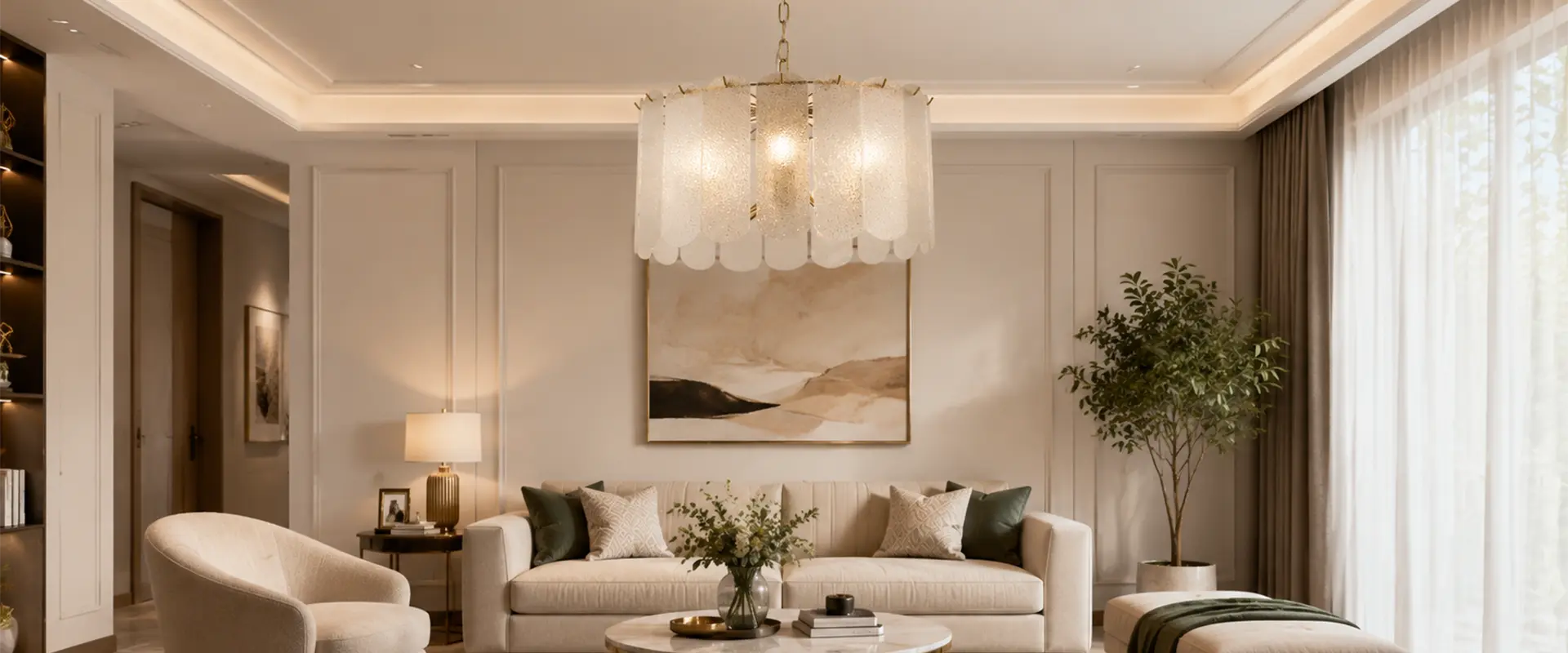
Conversely, specialized technical manufacturing processes ensure better optical control and durability. Zhongshan Strong Lighting Co., Ltd. utilizes thick-walled, mouth-blown borosilicate and high-clarity glass formulations. A primary example of this structural approach is the double glass design, often executed as an eight-light pendant featuring a dual-layer tapered outer glass shroud combined with a frosted cylindrical inner glass tube.
The inner frosted element diffuses the raw lumen output to eliminate glare, while the outer clear or tinted layer provides structural depth and secondary refraction. This multi-layer glass technique ensures a soft, layered light distribution, completely eliminates hot spots, and resists temperatures well above standard operating limits. The resulting glass components maintain absolute clarity without yellowing or clouding over extended operational life cycles.
Metallurgical Integrity and Surface Finishes
The structural longevity of a large-scale chandelier depends almost entirely on the quality of its chassis and surface treatment. Standard factories frequently implement thin, cold-rolled carbon steel sheets finished with quick decorative electroplating or basic wet spray painting. In environments with variable humidity, these thin coatings quickly develop micro-fissures, leading to substrate corrosion, flaking, and unsightly surface pitting within twelve to eighteen months of installation.
To prevent this degradation, specialized production lines employ solid brass, architectural-grade aluminum, and thick-walled steel alloys. Strong Lighting utilizes advanced surface finish technologies, including multi-stage electroplating and chemical passivation, to produce resilient finishes such as French Gold, Satin Nickel, and brushed titanium brass.
For instance, in a titanium brass-framed fabric chandelier or a French Gold six-light frosted glass luminaire, the metal parts undergo rigorous multi-layer plating processes. This structural preparation creates a non-porous barrier against moisture and atmospheric oxygen. The finished components demonstrate high resistance to salt spray tests and mechanical scratching, ensuring that the structural frame retains its original luster across decades of service.
Textile Diffusers and Architectural Fabric Engineering
Fabric shades are critical components for secondary light modulation, yet they represent a common failure point in low-cost fixtures. Traditional suppliers regularly select cheap, low-thread-count polyester or PVC-backed synthetic fabrics. Under continuous exposure to ultraviolet radiation and heat emitted by lamps, these synthetic materials release volatile organic compounds, become brittle, turn an unappealing yellow-brown hue, and suffer from fabric delamination.
High-end architectural fixtures require high-thread-count, natural-blend textiles. The production standards at Strong Lighting mandate the use of premium, high-count off-white cylindrical fabric shades over rigid, heat-stabilized virgin polymer backings. These premium textiles feature tightly woven, uniform thread structures that ensure precise light diffusion without visible weave knots or structural shadows. The natural fibers undergo specific fire-retardant and UV-stabilization treatments. This process prevents fiber discoloration, maintains the precise chromatic rendering of the light source, and ensures that the diffused warm light expands evenly into the room.
Material Diversification and Regulatory Compliance
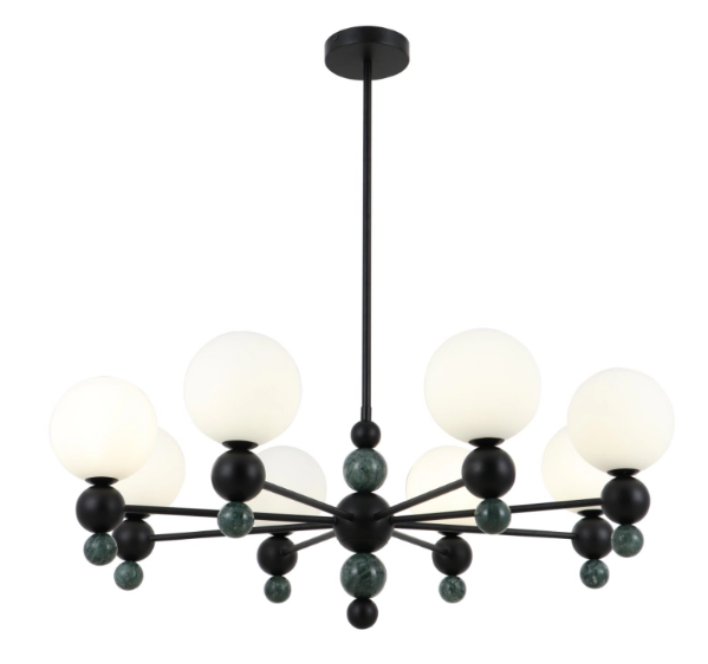
Modern architectural trends favor multi-material configurations that merge industrial metal frames with organic textures. While traditional manufacturers restrict production to basic metal-and-glass stampings due to technical limitations, specialized producers integrate a wide array of raw materials. This comprehensive approach incorporates structural elements like honed travertine stone, green marble spheres, ceramics, concrete, resin, and sustainably harvested organic materials including rattan, hemp, woven bamboo, and cork.
Integrating diverse materials requires precise engineering to balance weight distribution, mechanical fastening, and electrical safety. As a reliable high-quality chandelier supplier, the company maintains two dedicated production lines, a comprehensive workshop, and a specialized team of expert designers to manage these complex material interfaces.
Crucially, material diversification must not compromise electrical safety. Low-cost competitors frequently cut costs by utilizing uncertified electrical sockets, non-insulated wiring, and substandard drivers, posing significant fire and electrical shock hazards. Every luminaire manufactured by this enterprise utilizes electrical components that are fully listed and certified by international testing bodies, including CE, VDE, RoHS, UL, and SAA.
These certifications guarantee that whether a fixture utilizes a heavy marble base, a woven rattan shade, or an intricate crystal suspension framework, the internal wiring, grounding systems, and lamp holders comply fully with the strict import regulations of North America, Europe, and Oceania. For instance, UL listing ensures structural fire safety for North America, CE and VDE handle electromagnetic and low-voltage directives for Europe, RoHS restricts hazardous substances globally, and SAA guarantees electrical insulation compliance for the Australasian grid.
Technical Supply Infrastructure for Global Procurement
For commercial importers, high-volume wholesalers, and international DIY chain stores, sourcing decorative lighting involves more than assessing material samples; it requires verifying industrial capacity and supply chain stability. The decorative lighting market demands rapid adaptation to shifting interior design trends, a requirement that traditional factories with rigid, outdated tooling cannot satisfy.
The facility supports comprehensive Original Equipment Manufacturer (OEM) and Original Design Manufacturer (ODM) workflows. This service structure enables clients to submit specific architectural blueprints, modify material combinations, or adjust dimensional scales, receiving verified physical prototypes and competitive quotes tailored to precise project parameters. By combining rigorous raw material inspection, precise metallurgical and glass engineering, and certified electrical safety, the manufacturer delivers reliable interior lighting solutions that protect the commercial reputation of global distributors and elevate international architectural spaces.
To explore the full range of certified architectural lighting fixtures and multi-material design collections, visit the official corporate portal at https://www.strong-lighting.com/.
Media Contact
Zhongshan Strong Lighting Co.,Ltd.
+86 18718750444
No.15, Qingfu Street, Maohui Industrial Zone,Henglan Town, Zhongshan City, Guangdong Province, China
This article was originally published by IssueWire. Read the original article here.