(WorldFrontNews Editorial):- Tianjin, China Jul 2, 2026 (Issuewire.com) – Tianjin Beyond Technology Development Co., Ltd. has positioned itself at the forefront of the industry by offering some of the market’s finest China Best OEM CNC Processing services. By combining proprietary material formulation with state-of-the-art subtractive manufacturing techniques, the company provides a streamlined approach to delivering high-quality, non-standard engineering plastic components for diverse international sectors. In the modern industrial manufacturing landscape, the demand for precision-engineered components made from advanced materials has escalated rapidly. Traditional metal parts are increasingly being replaced or supplemented by high-performance engineering plastics due to their superior strength-to-weight ratios, chemical resistance, and lower friction coefficients. Meeting these exact mechanical demands requires highly specialized manufacturing capabilities, particularly in the realm of custom fabrication.
I. Comprehensive OEM Integration: From Raw Material to Precision Component
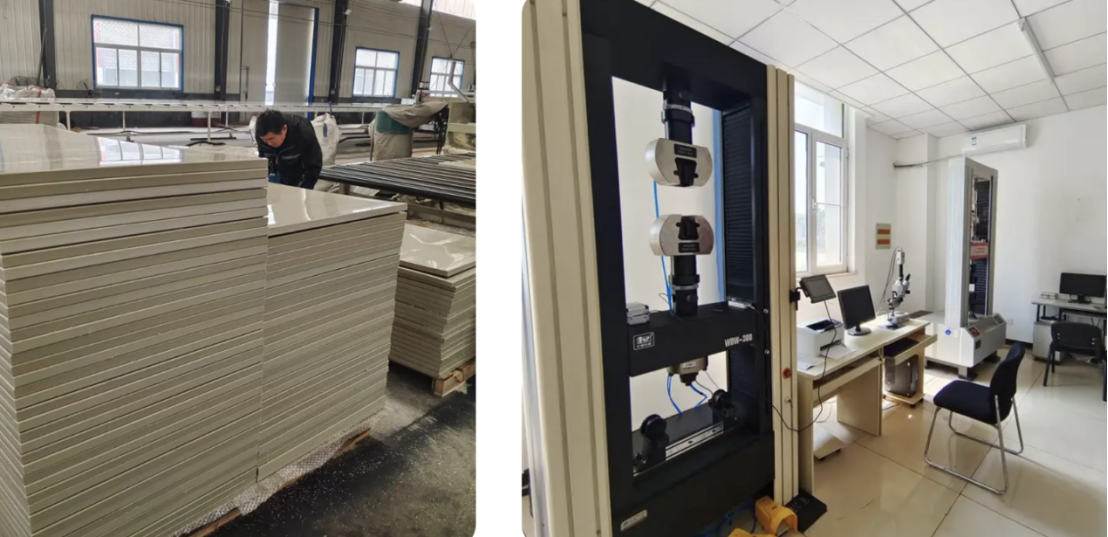
A fundamental challenge in plastic machining is the structural variability of raw materials. Unlike metals, which possess highly uniform crystalline structures, engineering polymers are susceptible to internal stresses, thermal expansion, and deformation during the machining process if the substrate material is inconsistent. BEYOND addresses this industrial bottleneck through a fully integrated OEM contract manufacturing model. Operating from an expansive manufacturing base spanning approximately 50,000 square meters, the company houses specialized compression molding and extrusion workshops alongside its precision CNC machining centers.
This complete upfront vertical integration allows the enterprise to function as a true full-service OEM provider. Instead of acting as a simple machine shop that relies on third-party plastic stock, the company manages the entire product lifecycle from compounding raw resins to finishing final parts. By overseeing the synthesis of Ultra-High-Molecular-Weight Polyethylene (UHMWPE), High-Density Polyethylene (HDPE), Polypropylene (PP), and Polyvinyl Chloride (PVC) sheets and rods, the company customizes the physical properties of the plastic stock–such as density, molecular weight, and additives–to match the exact end-use requirements of the client’s original equipment. This domestic supply chain optimization ensures that the plastics entering the CNC workshops are structurally stable, free from internal voids, and perfectly optimized for predictable high-tolerance machining.
II. Advanced CNC Machining and Dimensional Tolerance Control
Transitioning raw polymer sheets and rods into complex, non-standard industrial components demands specialized machinery designed to mitigate the unique physical properties of plastics. Polymers behave differently than metals under mechanical stress; they have lower thermal conductivity and a higher thermal expansion coefficient, meaning that heat generated during cutting can easily distort the workpiece if not managed properly.
The precision CNC machining facilities at the production plant are equipped with advanced international machinery tailored specifically for heavy-duty and micro-precision polymer processing. The facility integrates high-capacity gantry CNC lathes, large-scale gantry CNC milling machines, and multi-axis CNC engraving systems. This heavy industrial setup allows the enterprise to execute large-volume production runs while holding exceptionally tight dimensional tolerances across massive components.
The subtractive manufacturing processes are carefully calibrated, employing optimized spindle speeds, specialized tool geometries, and precise feed rates to prevent material melting, chipping, or stress cracking. This high level of precision control ensures that complex geometries, deep bores, and fine threads remain perfectly stable and true to the original engineering blueprints.
III. Material Performance Analysis and Technical Parameter Optimization
The engineering plastics processed by the facility are selected and manufactured to meet stringent mechanical, thermal, and chemical standards. Different industrial environments demand specific material characteristics, and understanding these exact parameters is critical for optimal component deployment:
- Ultra-High-Molecular-Weight Polyethylene (UHMWPE): This polymer stands out for its exceptional wear resistance and self-lubricating properties. It features a molecular weight ranging from 3.0 to over 9.0 million grams per mole, which gives it an impact strength that surpasses almost all other plastics. Its friction coefficient against polished steel is remarkably low, typically between 0.10 and 0.22, making it an ideal choice for high-friction applications where external lubricants cannot be used.
- High-Density Polyethylene (HDPE): Known for its excellent tensile strength and impact resistance, HDPE functions reliably within a broad temperature range, typically from -50 degrees Celsius to 80 degrees Celsius. It exhibits virtually zero moisture absorption (less than 0.01 percent according to standard testing methods), ensuring high dimensional stability in marine and high-humidity environments.
- Polypropylene (PP): PP is characterized by its superior chemical resistance to organic solvents, degreasing agents, and electrolytic attacks. It has a lower density (approximately 0.90 to 0.91 grams per cubic centimeter) and maintains excellent flexural fatigue resistance, making it highly valuable for chemical processing tanks and fluid handling systems.
- Polyvinyl Chloride (PVC): This material provides excellent mechanical strength, rigidity, and exceptional inherent flame retardancy (classified with a high limiting oxygen index). It functions as a robust insulator for electrical and structural frameworks exposed to corrosive acids and alkalis.
IV. Industrial Product Applications and Case Studies
The practical validation of these advanced custom manufacturing services is demonstrated across a diverse catalog of specialized components operating in demanding industrial environments. By analyzing specific product categories, the intersection of precision CNC machining and high-performance material selection becomes clearly evident:
- Heavy Equipment Road Mats and Ground Protection Mats: Fabricated from high-grade HDPE and UHMWPE, these large-scale sheets are engineered to distribute extreme heavy-vehicle loads across unstable terrain. They prevent soil compaction and equipment trapping at construction sites, civil engineering projects, and outdoor event venues. The CNC milling process shapes robust surface traction patterns onto these mats to ensure vehicular safety in wet conditions.
- UHMWPE Marine Fender Facing Pads: Installed on port berths and dock bumpers, these heavy-duty wear plates protect marine infrastructure by absorbing the massive kinetic energy of docking vessels. The low friction coefficient of UHMWPE allows ships to slide smoothly along the fender face, minimizing structural wear and hull damage.
- Custom CNC Industrial Gears and Bushings: Machined out of high-wear-resistant Nylon (PA6/PA66) and Polyoxymethylene (POM/Delrin), these small-module spur gears and custom bushings serve as critical components in automated assembly lines and mechanical drive systems. CNC processing ensures precise gear tooth profiles and tight internal tolerances, delivering quiet operation and eliminating the need for external lubrication.
- Industrial Linings and Chute Covers: UHMWPE liner sheets are widely used in dump truck beds, trailer beds, and coal bunkers. Their high abrasion resistance and non-stick surface properties accelerate material discharge, preventing cohesive bulk materials like coal, clay, or gravel from sticking or freezing to storage chutes and haul truck boxes.
V. Strategic Partnership and Quality Assurance Framework
With over a decade of practical experience since its establishment in 2015, the enterprise has refined its manufacturing workflows to align seamlessly with strict international OEM procurement standards. The company supports flexible OEM collaboration channels, providing comprehensive build-to-print production based on client-supplied blueprints, as well as joint engineering development to refine prototype designs for mass production. This adaptable operational framework enables the technical teams to handle private labeling, custom packaging, and scheduled batch shipments for industrial clients worldwide.
Quality assurance is structurally integrated into every phase of this OEM pipeline. It begins with raw material verification and compound testing, proceeds to in-line digital caliper and coordinate measuring machine (CMM) inspections during CNC processing, and concludes with final stress-testing and dimensional validation before shipment. This rigid focus on technological refinement and meticulous quality control ensures complete batch-to-batch repeatability, establishing the enterprise as a dependable, long-term OEM manufacturing partner for global industrial supply chains.
For more information regarding precision plastic machining capabilities and custom industrial solutions, please visit the official corporate portal: https://www.beyondplas.com
This article was originally published by IssueWire. Read the original article here.