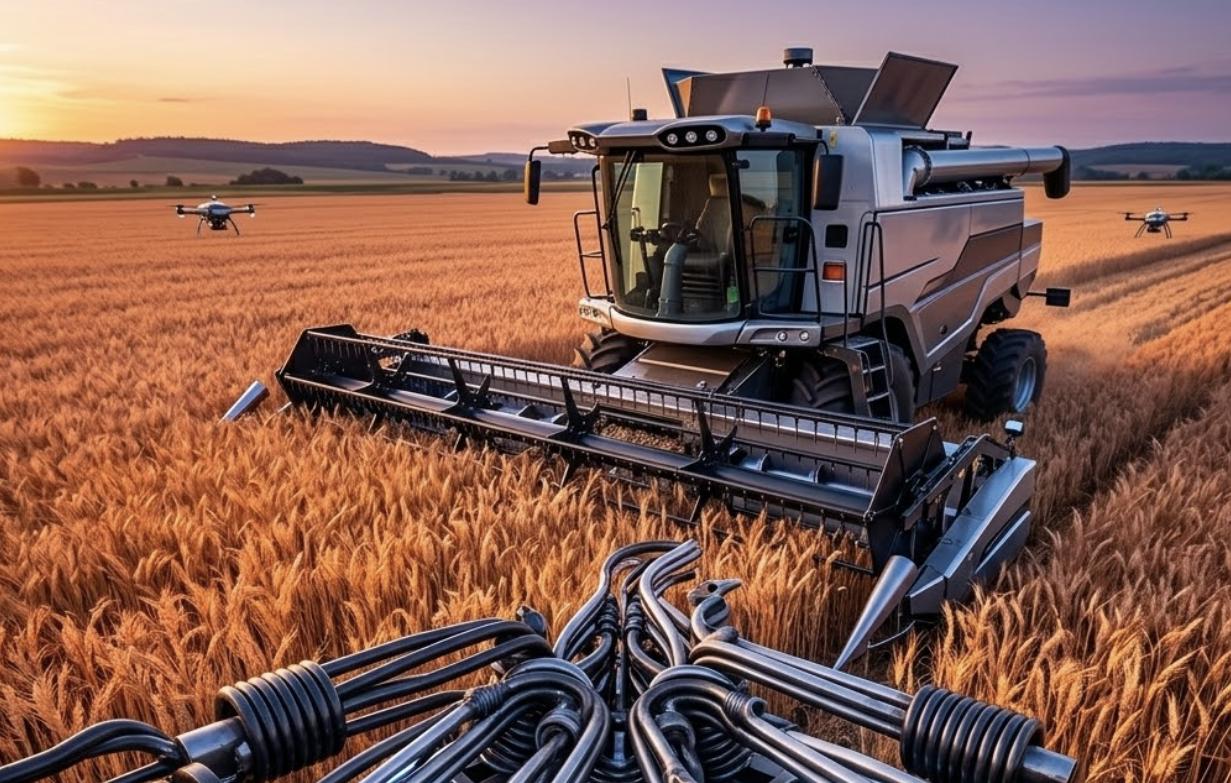
(WorldFrontNews Editorial):- Dongguan, Guangdong Jul 10, 2026 (Issuewire.com) – Agricultural equipment manufacturing is entering a period of significant operational pressure. Tightening component tolerances, shifting material specifications, and growing demand for part variety are pushing production teams to reassess their wire forming setups. Sitting at the center of this reassessment is the broader industry conversation around Custom Wire Bender For Agricultural Equipment Manufacturer — a topic that has moved from niche procurement territory into a full-scale strategic production decision. Choosing the wrong machine configuration does not simply slow output. It accumulates hidden costs across scrap rates, changeover downtime, and part inconsistency that compound over entire farming seasons.
What Is Driving Change in Agricultural Equipment Manufacturing in 2026
Several converging forces are reshaping how agricultural machinery components get made this year. First, the global shift toward precision farming is raising component complexity. Sensors, actuators, and mechanical linkages inside modern harvesting and irrigation machinery now require wire-formed parts with tighter dimensional accuracy than standard production demanded a decade ago. Second, supply chain regionalization is prompting manufacturers across Southeast Asia, Eastern Europe, and Latin America to build more localized production capability rather than rely on concentrated single sourcing. Third, the growing adoption of specialized wire materials — galvanized coatings, stainless variants, and high-tensile alloy grades — creates machine selection requirements that catalog-standard equipment cannot consistently satisfy.
These shifts, taken together, explain why generic wire bending configurations are losing ground in agricultural production contexts. Manufacturers who invest early in flexible, CNC-programmable platforms gain a meaningful edge when adapting to evolving product lines without rebuilding their entire production infrastructure.
Why Customization Has Become a Baseline Requirement
Customization in wire forming is no longer a premium option exclusive to high-volume OEMs. Across the agricultural sector, it has become a practical requirement tied directly to product diversity and application performance. Harvesting equipment calls for tine fingers and retention springs capable of enduring relentless vibration, crop debris, and seasonal field conditions. Livestock management infrastructure — feed barriers, pen gates, and animal handling frames — demands smooth, burr-free bends for both safety compliance and structural reliability. Irrigation systems need mounting brackets and support structures in varying configurations, often produced in shorter, more frequent runs.
Each scenario presents different wire diameter ranges, bend complexity levels, and output volume rhythms. A single machine platform that cannot adapt across these variables quickly becomes a production bottleneck. Manufacturers locked into inflexible equipment risk falling behind competitors who respond faster to specification changes and shorter product cycles.
Matching the Right Machine to the Right Application
Addressing this manufacturing reality, SMS — operating under the full company name EASTON PRECISION TECHNOLOGY (DONGGUAN) CO.,LTD. — has structured its wire forming machine lineup specifically around this kind of application diversity. The company designs and supplies machines that serve distinctly different production scenarios within the agricultural equipment sector.
The SMS 14R70-24 Double Head Wire Forming Machine targets high-volume symmetrical component production. Its double-head configuration allows simultaneous forming operations on bilateral parts — harvesting tine fingers and clamping arms among the most common examples — cutting cycle time meaningfully on repetitive output runs. For complex spatial geometries, the SMS 3D 580/680/5120/5140/5160/5180 Rotary Head Wire Forming Machine series handles three-dimensional shapes that flat-plane machines cannot produce. Irrigation mounting brackets, pivot linkages, and drive connectors fall into this category. The rotary head mechanism enables continuous rotation during the forming cycle, opening up component geometries that would otherwise require additional secondary operations and extra handling.
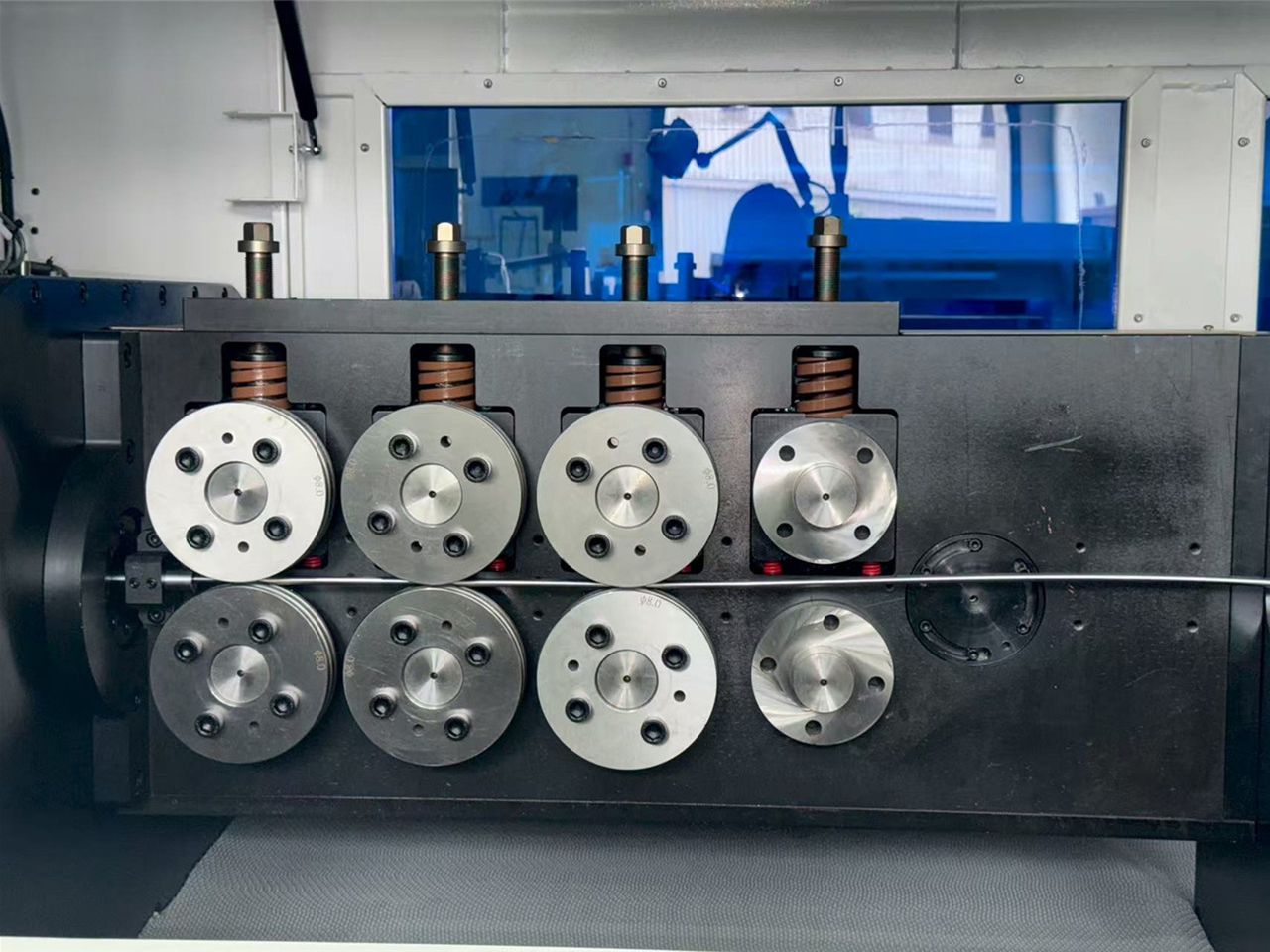
For planar structural work, the SMS 3D-8100/8120 and SMS 3D-860/880 Flat Type Wire Forming Machines handle storage cage frames, shelf hooks, pen dividers, and similar components built from flat bend sequences. These machines manage larger wire diameters and deliver the structural rigidity that agricultural infrastructure components typically demand. Across the full range, Taiwan-sourced controllers and Japanese servo motors form the core motion control backbone, supporting the dimensional repeatability that precision agricultural parts require across high-volume runs.
The Support Infrastructure Behind the Machines
What separates equipment-only vendors from genuine manufacturing partners is the operational structure surrounding the hardware. SMS (EASTON PRECISION TECHNOLOGY (DONGGUAN) CO.,LTD.) builds its service model around exactly this distinction. Beyond machine supply, the company manufactures and provides all wire-sized tooling for its full machine range — a detail that carries real operational weight for agricultural equipment producers who cannot afford sourcing delays on specialized dies and guides mid-production.
The company additionally supplies in-line tempering furnaces, spring end grinding machines, and bespoke automated solutions where production lines require integration beyond the wire forming stage itself. This positions SMS not as a point-solution vendor but as a system-level collaborator capable of addressing the wider production workflow. Global service coverage extends through agents across Asia, Europe, and the Middle East, delivering regional technical support in the agricultural manufacturing markets that matter most. A 24-hour online response commitment ensures that production issues receive attention without waiting on standard business-hour schedules.
Measuring the Business Case
The financial argument for investing in properly matched wire forming equipment comes down to three measurable variables: changeover time, scrap rate, and labor dependency. Machines requiring lengthy manual reconfiguration between product runs consume hours that compound into significant production losses across a quarter. Inconsistent tooling or under-specified motion control inflates scrap rates on precision agricultural components, where raw material costs are not trivial. Labor-intensive adjustment processes add headcount to operations already under margin pressure.
CNC-controlled, servo-driven machines with programmable parameter storage address all three variables directly. The precision supply chain that EASTON PRECISION TECHNOLOGY (DONGGUAN) CO.,LTD. maintains — drawing controllers, motors, and raw materials from Taiwan, Korea, and Japan — supports this consistency at scale. With more than 8,000 cooperative clients and active exports spanning more than 100 countries, the commercial track record reflects sustained production reliability at a global level.
Looking Ahead
For agricultural equipment manufacturers mapping out wire forming investments before 2026 production planning closes, the decision framework has grown more demanding than in previous cycles. Component complexity continues rising. Material variety is wider. Flexibility requirements are higher than they were even three years ago. Selecting equipment matched to specific application needs — rather than defaulting to generic platforms — represents the more defensible long-term production investment.
Further information on SMS’s wire forming machine range and agricultural equipment manufacturing solutions is available at https://www.smswiressolution.com/.
Media Contact
EASTON PRECISION TECHNOLOGY (DONGGUAN) CO.,LTD
Block 3 Unit 3 No 398 Kechuang Road, Nancheng Street, Dongguan China
This article was originally published by IssueWire. Read the original article here.