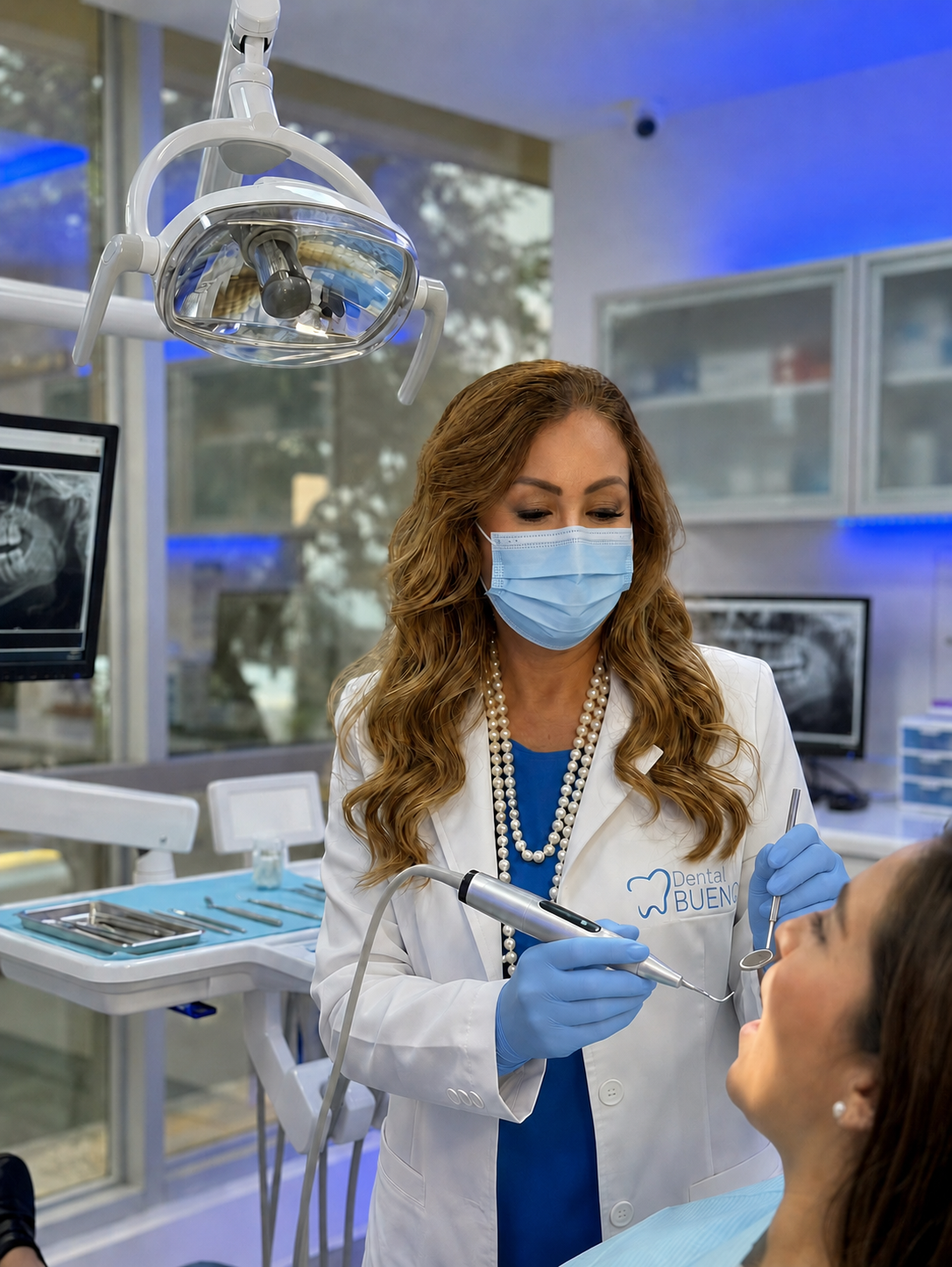
(WorldFrontNews Editorial):- Toronto, Ontario Jul 9, 2026 (Issuewire.com) – About Dr. Liliana Bueno’s Dental Group
Dr. Liliana Bueno is a premier dental healthcare group in Mexico dedicated to advanced implantology and oral rehabilitation. Operating across key metropolitan areas in central Mexico (including Polanco, Bosques de las Lomas, Insurgentes Sur/Perisur, and the State of Mexico), the network combines state-of-the-art 3D digital dentistry, in-house laboratory manufacturing, and highly trained specialists under strict international sterilization and clinical protocols. For more information, treatment guidelines, and to schedule a digital pre-evaluation, visit the official website at https://dentalbueno.mx/.
There is a significant gap in North American healthcare that rarely drives legislative debate or appears in primary medical reform conversations, yet it deeply affects the daily lives of millions of people on both sides of the border. While cardiovascular care, oncology, and mental health dominate the policy conversation, oral health sits in a quiet corner of the healthcare infrastructure–historically underfunded, often excluded from federal coverage, and deteriorating at a rate that public health organizations have been documenting for decades.
The result is a slow-moving public health challenge that many individuals do not fully recognize until they are personally faced with the high costs of complex restorative treatment.
What the Numbers Actually Say
According to the National Health and Nutrition Examination Survey (NHANES) published by the U.S. Centers for Disease Control and Prevention (CDC), approximately 15.2% of Americans aged 65 and older have experienced complete tooth loss (edentulism), a figure that rises to nearly 20% for those aged 75 and older.
Framing this strictly as a senior issue misses the broader clinical reality. Tooth loss at any age triggers a biological process that clinical research has consistently documented: within the first twelve months after losing a tooth, the surrounding jawbone can lose up to 25% of its width. Without the mechanical stimulus of natural chewing, bone tissue resorbs. Every month without clinical intervention narrows the treatment options available and increases the complexity and cost of the procedures required to restore oral function.
A Coverage Structure Written Into Regulation
Traditional Medicare explicitly excludes routine dental care and implants from its scope. The official guidelines from the U.S. Centers for Medicare & Medicaid Services (CMS) clarify that coverage is restricted to dental services that are “inextricably linked” to the clinical success of covered medical procedures (such as cardiac valve replacements or organ transplants). Otherwise, restorative work is entirely an out-of-pocket expense.
The Canadian healthcare system follows a similar structural approach. While Canada’s provincial health programs provide comprehensive medical coverage, dental care has historically remained largely outside the public system, leaving many citizens dependent on private insurance or personal savings to access advanced restorative care. These regulatory structures mean that patients requiring timely implant interventions are often the ones who find it most difficult to fit the expense into their household budgets.
Evaluating the Cost and Regulatory Environment
In Mexico, the average cost for a high-quality titanium dental implant starts at approximately $1,500 USD (approximately $2,100 CAD).
Clinical Disclaimer: This cost is an estimated starting price. The final cost of treatment is highly individualized and may vary depending on the specific clinical needs of each patient, the brand of implant selected, the requirement for auxiliary treatments such as bone grafting, sinus elevations, or tooth extractions, and the overall complexity of the anatomical restoration.
This difference in cost does not represent a compromise in clinical standards. Rather, it reflects different socioeconomic structures, lower operating and administrative costs, and lower real estate overhead. The implant systems with the strongest international clinical track records–utilizing biocompatible titanium and zirconia materials cleared by the U.S. Food and Drug Administration (FDA) and licensed by Health Canada–are distributed globally and placed under identical safety protocols in Mexico.
“Most of our international patients are not traveling because they lack skilled dental professionals in their home cities,” explains Dr. Liliana Bueno, an implantology specialist based in Mexico City (CDMX), who leads a recognized network of clinics operating with an integrated, in-house digital laboratory. “They travel because local pricing has placed essential care out of reach. Many patients arrive with tooth loss that occurred years prior. They postponed treatment because the initial quotes were prohibitive, but every year without an implant represents further bone resorption, making the ultimate clinical solution more complex and technically demanding.”
Dr. Bueno points to the integrated, in-house laboratory model as a crucial clinical advantage for patients traveling from abroad:
“A patient flying in from cities like Chicago or Vancouver operates within a tight schedule. When diagnostics, computerized design, and surgical fabrication all happen within the same clinical network, we can significantly reduce treatment times. Our ‘One Day’ protocol is designed to perform the initial diagnostics, safe extraction (if required), and the placement of the implant along with a temporary provisional crown in a single day. However, patients must understand that this is the initiation of treatment. Implantology relies on osseointegration–the physical bonding of bone to titanium–which requires a healing period of three to six months. Patients must return to the clinic after this biological window to receive their permanent, fully functional final prosthetic crown.”
What International Patients Must Evaluate Before Traveling
For patients seeking care abroad, clinical safety and material traceability should be the primary decision factors. The clinics best prepared to serve international patients adhere to strict protocols:
- Material Traceability: Patients should receive official lot numbers, registration codes, and global warranties for their implants.
- Regulatory Standards: Ensure that the materials and implant bodies used are cleared by international regulators such as the FDA and Health Canada to guarantee biocompatibility.
- Structured Follow-up: A clear post-operative protocol, including remote consultations and clear guidelines on when a physical check-up is clinically required.
Take care of our oral health
This article was originally published by IssueWire. Read the original article here.