(WorldFrontNews Editorial):- Dongguan, Guangdong Jul 13, 2026 (Issuewire.com) – Rapid Prototyping Service for Aerospace Parts
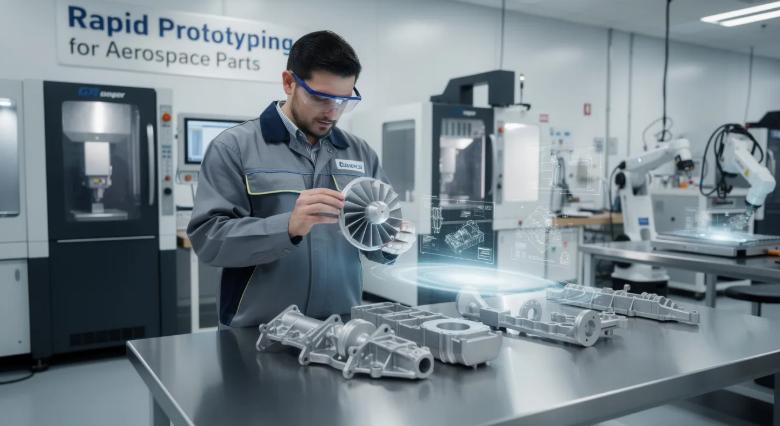
The race to develop next-generation aircraft, satellites, and drones has compressed design timelines from years to months. For engineering teams under pressure to validate flight-critical hardware, a rapid prototyping service for aerospace parts can mean the difference between meeting a launch window and missing it entirely.
Overview: Rapid Prototyping for Aerospace Components
Rapid prototyping is used to quickly fabricate physical parts from 3D CAD data, converting digital designs into testable hardware in days rather than months. In the aerospace industry, this capability matters more than ever: demand for small satellites, unmanned aerial vehicles, and accelerated defense procurement is driving engineering teams to iterate faster without compromising safety or performance.
Rapid prototyping began in the 1970s for quick model creation, and the technology has evolved dramatically since then. Today, advanced manufacturing processes like cnc machining, 3d printing, die casting, and sheet metal fabrication allow manufacturers to produce aerospace components that meet flight-grade specifications from day one.
Anebon Metal Products Limited is a China-based precision manufacturer certified under ISO 9001:2015 and ISO 14001:2015, serving overseas OEMs and R&D teams with manufacturing services that span rapid prototyping through full production. Anebon’s facility in Dongguan, Guangdong supports industries ranging from aerospace to medical devices, automotive, and robotics.
Rapid prototyping significantly reduces lead times and costs compared to traditional manufacturing methods. Here’s what this article covers:
-
Core prototyping techniques for aerospace parts (CNC, additive, casting, sheet metal)
-
Aerospace materials, surface finishes, and material certifications
-
Quality assurance, regulatory compliance, and inspection practices
-
How to engage Anebon as a long-term aerospace prototyping partner
How Rapid Prototyping Works in the Aerospace Industry
Aerospace rapid prototyping bridges the gap between cad modeling and physical prototypes, turning digital designs into hardware that can be tested in real-world conditions. Whether the end application is a commercial aircraft subsystem, a UAV airframe, or a satellite bus panel, the goal is the same: get a representative part into an engineer’s hands quickly.
The typical rapid prototyping workflow in aerospace follows these steps:
-
RFQ submission – The customer provides 3D CAD files, 2D drawings, material specs, and target lead times.
-
DFM review – Engineers assess the design for manufacturability, flagging issues like unsupported overhangs, excessive wall thinness, or tolerance conflicts before production begins.
-
Process selection – Based on geometry, material, and project requirements, the team selects the best method: cnc machining for tight tolerance metal features, additive manufacturing for complex internal geometries, or sheet metal fabrication for enclosures and brackets.
-
Prototype fabrication – Parts are machined, printed, or formed. Common rapid prototyping technologies include 3D printing, CNC machining, and vacuum casting.
-
Inspection and reporting – Dimensional checks, surface verification, and material traceability documentation are completed before shipment.
-
Engineering feedback and iteration – Engineering teams can evaluate multiple design versions rapidly using rapid prototyping, cycling through improvements until the part meets all requirements.
In aerospace manufacturing, even early-stage prototype parts often require near-final aerospace materials and tight tolerances because these parts aren’t just for show – they’re used for functional testing, vibration analysis, and thermal validation. Rapid prototyping facilitates design validation by allowing early identification of flaws and defects, saving significant cost downstream. Engineers use rapid prototyping to verify dimensions and fit before mass production tooling is committed.
Concrete examples include CNC-machined aluminum 7075 UAV brackets, 3D printed titanium test coupons for fatigue studies, and stainless steel sensor housings milled for environmental testing rigs. Prototyping helps accelerate product development cycles in sectors like aerospace and automotive, where time-to-market directly impacts competitiveness.
Types of Aerospace Prototypes and Use Cases
Not every prototype serves the same purpose. Across the aerospace product life cycle, different design concepts demand different levels of fidelity, material accuracy, and manufacturing precision. Here are the main categories:
-
Visual and mock-up prototypes – Used for design reviews, ergonomic checks, and packaging layout. Think cockpit panel mockups, cabin interiors trim pieces, or satellite enclosure layouts made from plastics or resin. These physical models help teams assess spatial relationships and human factors before committing to metal tooling.
-
Functional prototypes – Built from aerospace-grade metals to near-final tolerances. Functional prototypes allow testing for thermal resistance, strength-to-weight ratios, and vibrations. For example, a stainless steel bracket tested in a drone’s engine bay must survive heat cycling and shock loads. These functional prototypes test operational performance in aerospace designs before certification.
-
Sub-scale and scale models – Used for wind-tunnel aerodynamics tests, antenna placement studies in small satellites, or mass-property evaluation of drone airframes. These detailed prototypes and physical models are often made with lighter materials or via composite or plastic printing.
-
Pre-production or bridge prototypes – Manufactured using the same CNC machining, die casting, or sheet metal processes and tolerances intended for production. These high fidelity prototypes satisfy first article inspection requirements and qualification testing, validating designs against AS9100-level expectations. Rapid prototyping supports low-volume production of custom parts tailored to unique requirements at this stage.
Aerospace components must meet stringent requirements for strength, weight, and reliability – and the right prototype type at the right phase of development prevents expensive rework later. Rigorous testing at the functional and pre-production stages is what separates successful programs from delayed ones.
Main Prototyping Techniques for Aerospace Parts
Aerospace rapid prototyping combines both additive manufacturing technologies and subtractive methods to manufacture aerospace components across a range of geometries and performance requirements. Modern shops use various rapid prototyping techniques – often in combination – to produce parts that meet aerospace technology standards.
Anebon’s core technical capabilities relevant to aerospace include 3-axis and 5-axis CNC milling, CNC turning with live tooling, pressure die casting, and precision sheet metal fabrication, with additive manufacturing available through partner networks.
Here’s how each process fits:
-
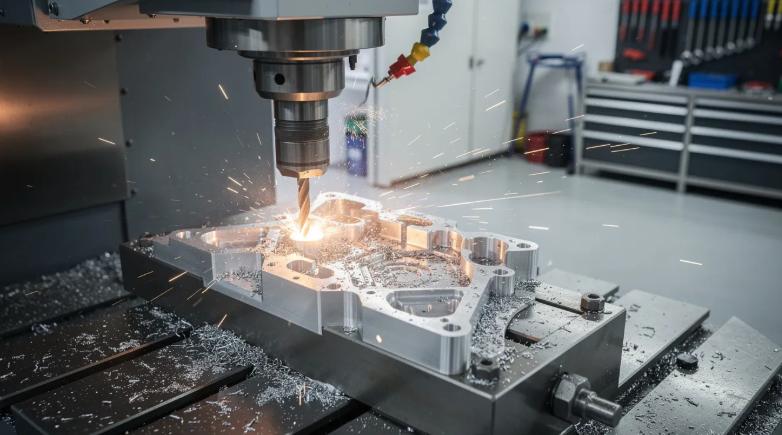
CNC machining – A subtractive manufacturing process ideal for creating parts with tight tolerances, robust mechanical strength, and superior surface finishes. CNC machining is a subtractive manufacturing process for aerospace parts and remains the go-to for high-quality metal or plastic parts. Techniques like CNC machining are used for producing durable and accurate prototypes across virtually all aerospace programs.
-
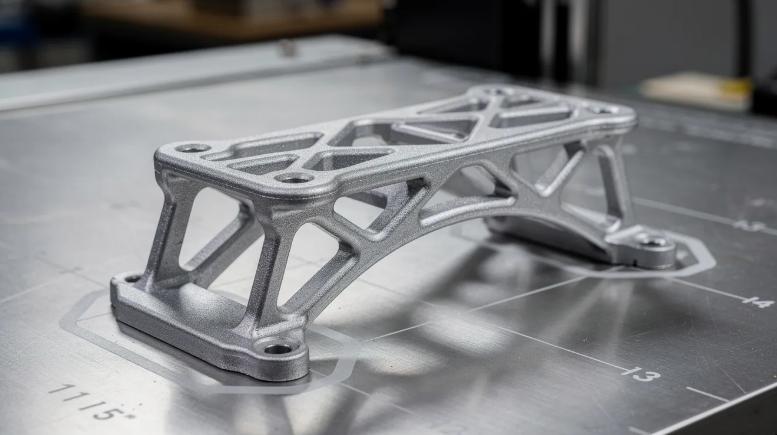
3D printing / additive manufacturing – Additive manufacturing enables the production of complex geometries that are impossible to create with traditional methods. Direct metal printing and selective laser sintering open up intricate designs like internal cooling channels and topology-optimized brackets. Rapid prototyping can create lightweight structures to enhance fuel efficiency in aerospace applications.
-
Sheet metal fabrication – Fast and cost effective for brackets, enclosures, skin panels, and structural frames. Sheet metal fabrication can deliver up to 500 parts in days, making it an excellent cost effective option for bridge production.
-
Die casting – Pressure die casting produces housings, heat sinks, and structural covers in aluminum or zinc alloys, especially useful when scaling from prototype to higher volumes.
-
Injection molding – Injection molding provides high-quality molded parts within days, serving applications that need high performance plastics or elastomeric components.
-
Composite layup – Composite layup is crucial for lightweight, high-strength aerospace parts, particularly for airframe skins, fairings, and structural panels using composite materials.
Engineers often mix methods. For instance, a team might 3D print a complex internal channel in metal, then CNC-finish critical mounting surfaces to achieve the required tolerances and surface quality. These advanced manufacturing processes work together as a digital manufacturing platform for modern aerospace development.
CNC Machining for Aerospace Rapid Prototyping
CNC machining remains the backbone of aerospace prototyping because it delivers accuracy, material flexibility, and repeatable quality that aerospace programs demand. CNC machining is favored for producing high-quality metal or plastic parts and is essential for aerospace components requiring robust mechanical properties.
Anebon’s CNC machining capabilities include:
-
Machine configurations – 3-axis, 4-axis, and 5-axis machining centers, plus turning with live tooling for complex rotational parts.
-
Achievable tolerances – CNC machining supports tight tolerances as precise as ±0.001 inches (approximately ±0.025 mm), with critical features held to ±0.002 mm when required. CNC machining produces aerospace prototypes with tight tolerances that match production-intent specifications.
-
Speed – CNC machining delivers aerospace prototypes in as fast as 4 days for straightforward geometries. Typical lead times for more complex aerospace CNC machining projects fall within 5-10 working days. For reference, competitors like Protolabs also deliver aerospace prototypes in as fast as 4 days.
Suitable aerospace materials for CNC include aluminum alloys (6061-T6, 7075-T6, 2024), stainless steels (304, 316, 17-4PH), titanium (Ti-6Al-4V), and engineering plastics (PEEK, Ultem). This material versatility lets teams select the optimal alloy for each application.
Specific aerospace component examples:
-
Turbine sensor brackets and turbine blades fixtures
-
Avionics housings and electronics enclosures
-
Gimbal parts for UAV cameras
-
Structural fittings and load-bearing brackets
-
Valve bodies for fluid and pneumatic systems
CNC machining produces high quality parts with the mechanical strength and dimensional control needed to pass qualification testing. 3D printing is a key technique in aerospace rapid prototyping as well, but for metal parts requiring certified material properties, CNC remains the standard.
3D Printing and Additive Manufacturing for Aerospace Components
Additive manufacturing complements CNC as a prototyping method, particularly when parts feature complex geometries, weight-critical structures, or integrated functional features. 3D printing creates complex geometries for aerospace components that would be prohibitively expensive or impossible to machine conventionally.
Relevant additive manufacturing technologies include:
-
Metal powder-bed fusion (LPBF/SLM) – For titanium (Ti-6Al-4V) and aluminum alloys. Used for brackets, ducting, and structural nodes.
-
Selective laser sintering – For nylon, glass-filled nylon, and other engineering polymers. Suitable for cable routing parts, non-structural housings, and interior components.
-
SLA (stereolithography) – For high-detail resin models used in form-fit checks and visual reviews.
-
Direct metal printing – For producing functional metal aerospace prototypes with near-net-shape accuracy.
Typical aerospace applications for additive manufacturing include lightweight UAV frames, ducting with organic internal geometries, topology-optimized antenna mounts, and interior panel components such as overhead bins trim and mounting clips.
Additive manufacturing can improve material efficiency compared to subtractive machining – where CNC may waste 80-90% of a titanium billet, AM builds only what’s needed. Industry data shows weight savings of 20-70% are achievable when intricate designs exploit internal lattice structures and topology optimization.
Hybrid workflows are common in practice: teams start with a 3D printed proof-of-concept, refine the geometry, then transition to CNC-machined aluminum or titanium parts once the design is frozen. This approach balances speed, cost efficiency, and end-part performance.
Aerospace Materials and Surface Finishes
Aerospace materials must balance strength-to-weight ratio, fatigue resistance, and thermal stability across extreme environments – from ’55°C at altitude to 150°C or more near engines and exhaust systems. Selecting the right material at the prototyping stage prevents costly redesigns during qualification.
Anebon processes a wide range of materials for aerospace applications:
-
Aluminum alloys (6061, 6082, 7075, 2024) – Aluminum has a high strength-to-weight ratio for aerospace applications. 7075-T6 delivers 500-570 MPa tensile strength versus approximately 300 MPa for 6082, making it the preferred choice for weight-critical structural parts.
-
Titanium alloys (Ti-6Al-4V) – Titanium offers excellent corrosion and temperature resistance, making it indispensable for engine-area components and high-performance fittings.
-
Inconel – Inconel is ideal for high-temperature rocket engine components where nickel superalloy performance is required.
-
Stainless steels (304, 316, 17-4PH) – Stainless Steel 17-4 PH withstands temperatures up to 600°F and offers strong corrosion resistance for sensor housings and fluid system parts.
-
Copper alloys – For thermal management components like heat sinks and bus bars.
-
High temperature plastics and high performance plastics – PEEK, Ultem (PEI), and polycarbonate are used in aerospace prototyping for insulating, lightweight, or non-metallic demonstration parts. These specialized materials and advanced materials provide high temperature resistance where metals are unnecessary.
-
Liquid silicone rubber – Liquid silicone rubber is resistant to fuel and oil, suitable for seals and gaskets in fluid systems.
-
Composite materials – Carbon-fiber and glass-fiber reinforced plastics offer stiffness with minimal weight.
Key surface finishes for aerospace components include:
-
Anodizing (Type II decorative, Type III hard anodizing for wear)
-
Passivation for stainless steel corrosion protection
-
Chromate conversion coating
-
Nickel and zinc plating
-
Bead blasting and painting (including low-glare matte for cockpits)
-
Laser marking for serial number traceability
These superior surface finishes contribute to corrosion resistance, wear protection, and optical properties. Material certifications – including mill test certificates, AMS/ASTM compliance, and heat-treatment records – can be provided on request to align with aerospace standards.
From Prototype to Production: Scaling Aerospace Manufacturing
A prototype that can’t transition smoothly into production creates more problems than it solves. The best aerospace prototyping partners support the full arc: from single prototype parts through bridge tooling to on demand production and eventually full scale production or large scale production runs.
Anebon helps customers scale from one-off aerospace prototypes to batches of 50-5,000+ parts using CNC machining, die casting, and sheet metal fabrication – all within the same Dongguan facilities.
Key elements of the scaling strategy:
-
DFM feedback – Before production starts, engineers suggest reducing setups, standardizing radii, simplifying undercuts, and optimizing wall thickness for both machined and cast end use components. This ensures cost efficiency without compromising performance.
-
Process consistency – Anebon maintains consistent tolerances, setup documentation, and inspection routines so prototypes and production parts behave identically during functional testing and service.
-
Bridge production examples – Converting a 5-axis-machined UAV bracket into a small-batch die-cast aluminum part, or scaling a satellite enclosure from one-off CNC prototype to ongoing production with monthly call-offs.
-
Cost optimization – Moving from CNC to die casting or sheet metal at volume is often a cost effective option that reduces per-part cost while maintaining dimensional accuracy.
Whether you need 10 parts for qualification or 5,000 for an initial fleet, the pathway from prototype to industrial components production should be seamless. Anebon’s infrastructure supports this transition without gaps in quality or documentation.
Quality Assurance and Regulatory Expectations for Aerospace Parts
Even at the prototype stage, aerospace parts demand strict quality control, traceability, and documentation to support eventual certification by FAA, EASA, or other regulatory bodies. Aerospace rapid prototyping ensures compliance with strict regulatory standards from the earliest design iteration.
Anebon’s ISO 9001:2015 certification ensures quality management systems are in place across all processes, while ISO 14001:2015 covers environmental responsibility. Quality measures ensure compliance with aerospace industry standards through controlled workflows and documented procedures.
Key quality tools and checks include:
-
Incoming material inspection – Mill test certificates (MTCs) verified against customer specifications for every lot of aerospace material.
-
In-process inspection – Gauge checks and measurement verification during machining to catch drift before it becomes scrap.
-
Final dimensional reports – CMM measurements, optical scanning, and detailed inspection reports for all tight tolerance features.
-
First article inspection – FAI-style documentation packages, including dimensional results, material certs, and process records. Article inspection reports follow customer-specified formats.
-
Traceability – Serial or batch marking on every part, ensuring full traceability from raw material through finished component.
Anebon can align many internal documentation formats with aerospace customer requirements for regulatory compliance. For context, competitors like Protolabs are AS9100- and ISO9001-certified for aerospace parts, Xometry holds ISO 9001:2015 and AS9100D certifications, and ProleanMFG is ISO 9001:2015 certified for aerospace-grade parts. While Anebon does not currently hold AS9100, its quality infrastructure supports the documentation rigor that aerospace companies expect, and customers retain full quality parts traceability.
Engineering Support for Aerospace Prototyping Projects
Engineering support is what separates a parts vendor from a prototyping partner. Anebon’s engineers don’t just build to spec – they help optimize designs for manufacturability, weight, cost, and performance through cross functional collaboration with customer teams.
Specific engineering support activities include:
-
DFM and process optimization – Reviewing CAD files and recommending whether 3-axis or 5-axis machining is needed, whether aluminum 7075 or titanium is more suited to the load case, and which surface finish matches the operating environment.
-
Tolerance stack-up discussions – Ensuring that when multiple parts assemble, cumulative errors remain within acceptable limits for flight hardware.
-
Hybrid manufacturing guidance – Advising when to combine 3D printing with CNC finishing to meet surface, tolerance, and strength verification requirements.
-
Communication channels – English-language engineering emails, annotated PDFs, online calls, and rapid iteration loops during R&D phases. Emerging tools, including artificial intelligence-assisted DFM analysis, are beginning to accelerate feedback cycles further.
For overseas aerospace OEMs, this level of engagement reduces miscommunication, prevents rework, and shortens the path from design concepts to qualified hardware.
Applications of Anebon’s Rapid Prototyping in the Aerospace Industry
Anebon supports a broad range of aerospace applications across civil aviation, unmanned aerial vehicles, satellites, and space-related equipment. The company’s combination of CNC, die casting, and sheet metal capabilities allows it to produce parts spanning structural, thermal, electronic, and propulsion system categories.
Application categories include:
-
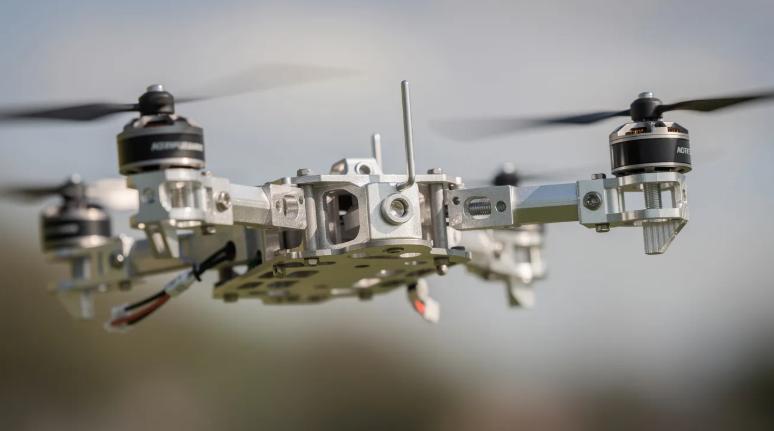
Drone and UAV structures – Arms, motor mounts, gimbal brackets, and landing gear components. Example: rapid CNC machining of aluminum UAV arm prototypes for a European drone startup, delivered in under two weeks.
-
Avionics enclosures and heat sinks – Precision-machined housings that protect sensitive electronics while managing thermal loads.
-
Interior cabin hardware – Panels, latches, seat-track fittings, overhead bins brackets, and trim components for cabin interiors.
-
Sensor and antenna mounts – Brackets requiring precise alignment and vibration damping, common in satellite and aircraft applications.
-
Experimental propulsion fixtures – Titanium or Inconel test fixtures for high-temperature engine lab testing where standard alloys can’t survive.
These applications help aerospace companies shorten design cycles, validate aerodynamics and thermal behavior, and build confidence in production readiness before committing to certification testing.
How to Engage Anebon for Aerospace Rapid Prototyping
If you’re an aerospace engineer, purchasing lead, or R&D manager looking for a reliable prototyping and production partner, Anebon is ready to support your next project. Here’s how to get started:
-
Prepare your files – 3D CAD files (STEP, IGES, or native formats), 2D drawings with critical tolerances, material specifications (alloy grade, heat treatment, applicable standard), surface finish requirements, expected quantities, and target lead time.
-
Submit your RFQ – Anebon typically responds with quotes within 24-48 hours for clear specifications.
-
Receive DFM feedback – Engineers review your design and suggest improvements before production begins, covering everything from process selection to finish optimization.
-
Production and inspection – Parts are manufactured, inspected against your specs, and documented with full measurement reports.
-
Global shipping – Anebon has served overseas OEMs across Europe, North America, and Asia since 2010, shipping aerospace prototypes worldwide from its Dongguan facility.
This article was originally published by IssueWire. Read the original article here.