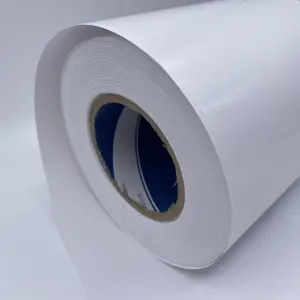
(WorldFrontNews Editorial):- Jiaxing, Zhejiang Jul 27, 2026 (Issuewire.com) – In the specialized field of digital narrow-web printing, finding a substrate provider that ensures absolute process repeatability remains a critical priority for converting facilities. Print shop managers regularly evaluate why an increasing number of Asian digital label converters specify a single manufacturer as their primary technical partner for complex production runs. By analyzing the structural, chemical, and logistical frameworks established by Zhejiang Shawei Digital Technology Co.,Ltd, (SWLABEL), global trade partners can clearly see how disciplined material engineering systematically elevates daily press room productivity. This comprehensive technical analysis directly addresses these critical inquiries, uncovering the core factors that position this specific facility as the premier regional best HP indigo label stock factory.
Q1: Why Do Leading Printers Select Specialized Topcoats?
The technical challenges of digital printing require precise surface preparation on synthetic films and commercial papers to ensure effective toner adhesion. Standard media naturally possess low surface energy, which regularly causes poor ink wetting, toner reticulation, and insufficient mechanical bonding on the press. To resolve these operational difficulties, SWLABEL has established a high-capacity production infrastructure focused entirely on advanced chemical topcoating.
At the core of the manufacturing line are automated coating stations that apply a proprietary, ink-receptive primer designed exclusively for HP indigo label stock chemistry. This specialized chemical topcoat bridges the physical gap between the substrate and the liquid toner particles. During the printing cycle, the electrically charged toner transfers from the heated blanket to the media. The cross-linking agents within the primer react immediately under the thermal energy of the press, creating a secure chemical bond.
The production facility processes an extensive selection of face stocks to meet diverse application requirements. Synthetic configurations include transparent, white, and metallized variants of polypropylene film at 75 microns, alongside durable polyvinyl chloride and polyethylene films. For high-performance electronic components and durable asset tracking, the factory processes polyester face stocks ranging from 25 to 50 microns. Traditional paper materials are also processed, featuring aluminum foil, cast-coated paper, semi-gloss art paper, and premium wood-free options. Every film substrate undergoes continuous inline corona treatment immediately before primer application. This mechanical process raises the surface energy of the material to a consistent value above 44 dynes per centimeter, ensuring uniform wet-out of the chemical topcoat without pinholes or surface micro-voids. This precise control over surface tension helps commercial print shops maintain sharp dot reproduction, high color density, and stable registration during high-speed printing cycles.
Q2: How Do Varied Substrates and Adhesives Match Diverse End-Use Applications?
Beyond the ink-receptive surface, a functional digital label material must operate reliably across diverse mechanical finishing systems. The engineering team at Zhejiang Shawei Digital Technology Co.,Ltd designs multi-layered structural systems where the face material, chemical adhesive, and release liner work together in harmony.
To ensure clean die-cutting and efficient automated dispensing, the enterprise pairs high-performance liners like glassine and Kraft papers with precise silicone coatings. To bond these materials, the factory produces hot-melt, water-based acrylic, and solvent-based polymer adhesive technologies. Permanent formulations provide high initial tack on low-energy plastics and metal surfaces, while removable options allow clean peeling from delicate packaging without leaving residues. For cold-chain environments, specialized deep-freeze adhesives maintain strong bonding at temperatures as low as minus 40 degrees Celsius, which is essential for pharmaceutical and frozen food packaging. This extensive technical versatility allows the facility to supply high-quality HP indigo label stock variations for diverse items, including moisture-resistant wine labels, wet tissue packaging, durable tire labels, and industrial logistics tags.
Q3: How Does the Facility Ensure Strict Lot-to-Lot Quality Consistency?
Product consistency is a defining characteristic of a premium HP Indigo label stock factory. To eliminate variance between production lots, Zhejiang Shawei Digital Technology Co.,Ltd has established an advanced quality control laboratory that mimics real-world printing environments. Every batch of material undergoes simulation testing on actual commercial digital presses before leaving the factory. Quality control engineers evaluate specific performance metrics, starting with static electricity transfer efficiency. Because the digital press relies on electrostatic fields to guide toner particles, any variation in the electrical conductivity of the face stock will cause image defects. The factory measures surface and volume resistivity across all film lots to verify they remain within strict tolerance parameters.
Furthermore, technicians perform automated tape-peel tests to evaluate toner adhesion, cross-hatch scratch resistance tests, and accelerated environmental aging cycles. These procedures ensure that printed labels retain their visual clarity and legibility when exposed to mechanical abrasion, ultraviolet light, or high humidity.
Recognizing that international shipping exposes materials to diverse environments, SWLABEL dynamically alters its chemical coating chemistry based on seasonal weather patterns and destination climates. Environmental factors like relative humidity and ambient temperature can change how synthetic materials retain static charges and affect adhesive stability. By adjusting the anti-static additives and modifying the internal cohesion of the primer layer during manufacturing, the factory ensures that a roll of material delivered during high-humidity summer months prints with the exact same color accuracy as a batch processed in dry winter conditions. This climate-adaptive manufacturing methodology helps converters avoid press downtime and expensive material waste.
Summary
The manufacturing framework at SWLABEL is fully optimized to provide specialized coatings, stable printing performance, and rapid delivery across all production batches. Commercial printers can secure material samples and request specific technical documentation to verify compatibility with their existing digital finishing systems.
For comprehensive product listings, material datasheets, and technical inquiries, please visit the official corporate portal at https://www.zjswlabel.com/.
Media Contact
Zhejiang Shawei Digital Technology Co.,Ltd
+86 15921745861
No.139,Lingfang road,Youchegang Town,Xiuzhou District,Jiaxing City,Zhejiang province, China.
This article was originally published by IssueWire. Read the original article here.