(WorldFrontNews Editorial):- Liuan, Anhui Aug 18, 2026 (Issuewire.com) – High-security surveillance operations have historically relied heavily on continuous human presence or complex physical infrastructure. However, the physical geography of modern industry often pushes project perimeters far past the practical limits of conventional utility grids and local fiber networks. For organizations managing distributed field assets, relying solely on mobile security patrols incurs unsustainable long-term labor costs, while extending standard electrical lines over miles of unpaved terrain creates significant upfront deployment obstacles.
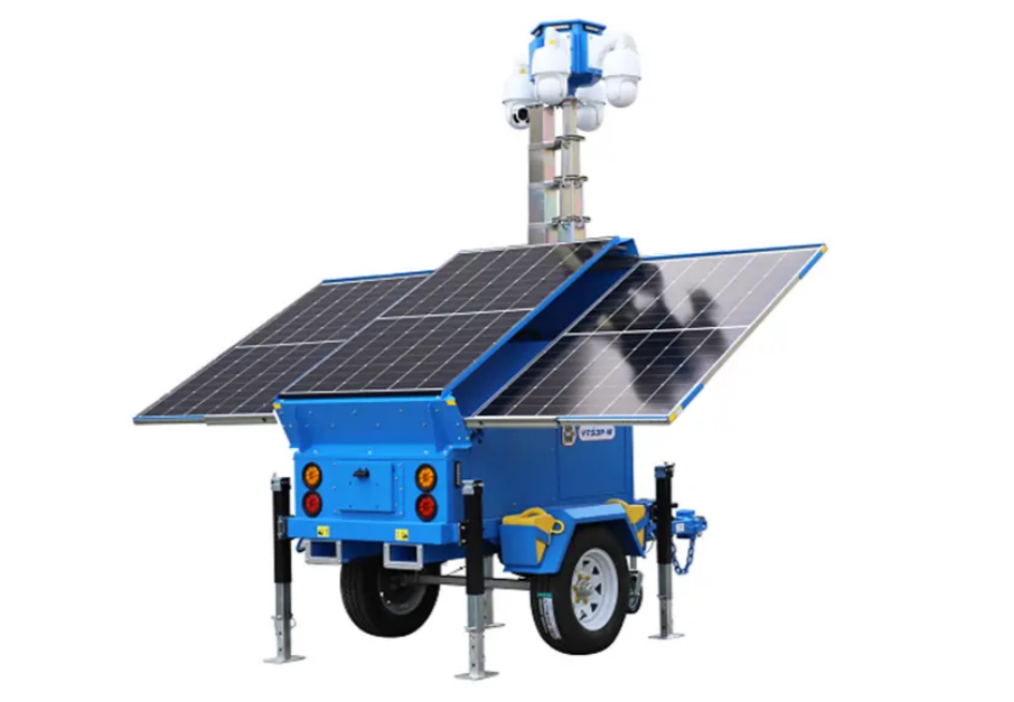
To overcome these deep-seated operational constraints, contemporary field security engineering has shifted decisively toward automated, off-grid hardware platforms. Prominent among these innovations are advanced solutions of solar surveillance trailer technologies, which combine self-sustaining photovoltaic power generation, rugged high-capacity battery storage, and dynamic multi-sensor communication equipment into a singular towable unit. Anhui RiteVolt Machinery Co.,Ltd has directed its primary product development toward these off-grid engineering challenges, manufacturing specialized mobile trailers that maintain continuous visual command over isolated perimeters without requiring local utility assistance.
The Engineering Logic of Independent Power Systems
Achieving continuous data collection and transmission requires a well-calculated balance between power generation and system load. The core engineering framework of a modern solar surveillance trailer relies on a synchronized setup of photovoltaic modules, smart charge controllers, and specialized deep-cycle storage units. In models like the KVSS2, KVSS3, and KVSS4 series developed by RiteVolt, engineers size the solar array output to exceed the continuous wattage drawn by the connected cameras, sensors, and 4G/5G transmission devices.
A Maximum Power Point Tracking (MPPT) controller manages this incoming power, optimizing solar panel efficiency even during low-light winter days or prolonged overcast weather. The system stores excess energy generated during peak sunlight hours in high-capacity lithium iron phosphate (LiFePO4) or deep-cycle gel batteries. This battery choice prevents deep-discharge damage and maintains operational voltage across cold nights. By matching power capture with efficient storage management, these setups ensure the onboard security electronics stay powered 24/7, providing a stable foundation for autonomous asset protection.
Rapid Deployment and Mobility Mechanisms
Beyond reliable electrical performance, field operators require physical mobility and structural resilience. Traditional fixed surveillance poles require significant groundwork, including concrete pouring, heavy trenching, and permanent electrical permits, which often takes days to complete. In contrast, RiteVolt utilizes a single-axle towable chassis design that allows a single worker to complete setup or teardown in under fifteen minutes.
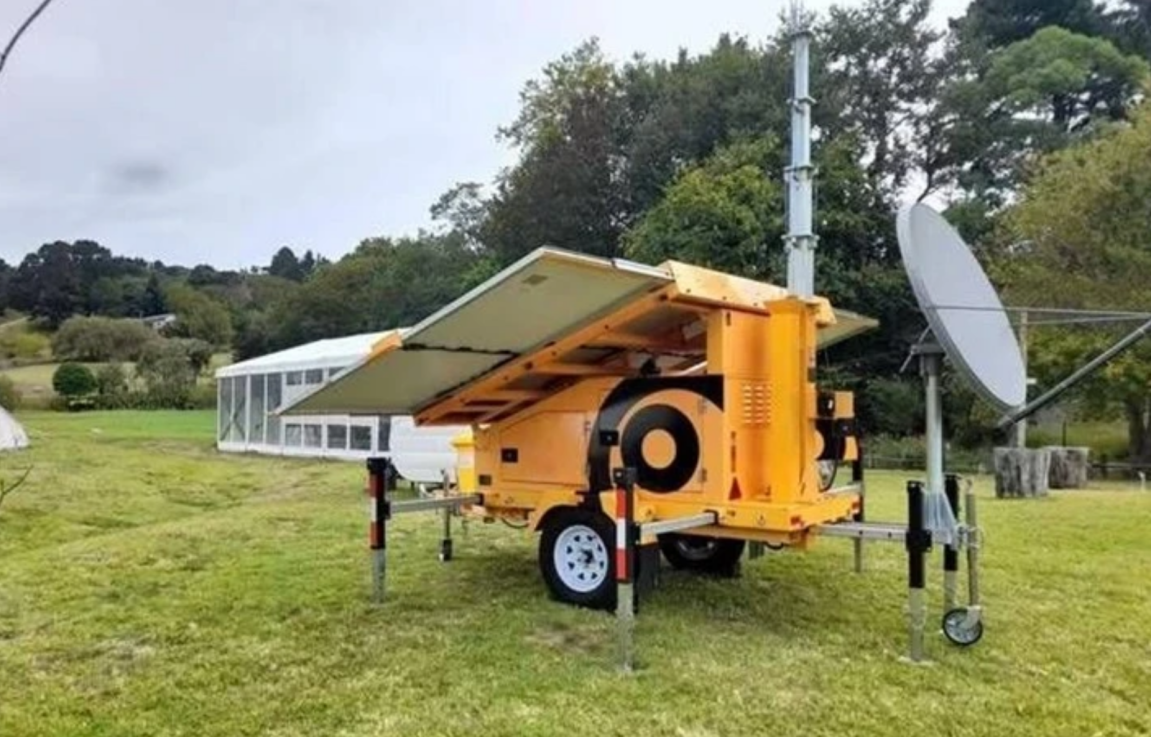
Each solar surveillance trailer features a heavy-duty mechanical mast–available in manual winch or smooth hydraulic lifting configurations–that elevates high-definition cameras up to nine meters for wide-area visibility. To ensure safe transport across unpaved hauling roads and rugged construction sites, the solar panels fold flat against the chassis frame during transit, protecting the glass surfaces from airborne debris and vibration cracks. Once the trailer reaches its destination, outriggers extend from the chassis to provide a wide, stable stance that keeps the mast steady in winds up to 80 kilometers per hour, preserving stable video feeds without structural shaking.
Empirical Validation Across Key Industrial Sectors
The practical value of this mobile engineering approach becomes evident when evaluating real-world field installations. Anhui RiteVolt Machinery Co.,Ltd has exported these specialized platforms to 106 countries and regions, demonstrating the adaptability of the system across diverse industrial environments.
- Open-Pit Mining and Quarries:Open-pit mining facilities and quarries deploy these units to secure high-value explosives storage and remote access gates. These sites require continuous night-vision monitoring to prevent theft, yet expanding the mine grid to temporary perimeters is cost-prohibitive.
- Oil Pipelines and Wind Farms:Midstream oil pipelines and wind farms use the platforms along long, unstaffed rights-of-way. Strategically placed trailers use integrated cellular routers to transmit real-time thermal imaging and automated motion alerts back to a central control room, catching pipeline leaks or trespassing events early.
- Infrastructure and Construction Sites:Large infrastructure projects and commercial building sites shift their trailers along with the changing phases of construction, avoiding the recurring expenses of installing and removing permanent wiring.
- Border Perimeters and Nature Reserves:Border perimeters and nature reserves use these trailers for long-term ecological and security observation. The silent operation and zero-emission output of the solar system allow monitoring without disrupting local wildlife or violating strict environmental regulations.
This versatility depends directly on the manufacturing standards established at the production phase. Operating from a modern 10,000-square-meter manufacturing facility, RiteVolt maintains complete control over the fabrication process, from laser cutting structural steel to testing the waterproof ratings of electrical enclosures. The company focuses on off-grid solar equipment as its core business, building continuous supply capacity and fast technical response times for international corporate buyers.
The product engineering team holds several invention patents, utilizing advanced computer-aided design tools and structured management platforms to customize power ratings, battery sizes, and mast configurations according to specific regional climates. Because the manufacturer handles all design and testing steps in-house, international buyers face fewer maintenance complications and component failures, which helps ensure long-term equipment survival in remote project areas.
Conclusion
In summary, field security in off-grid locations no longer requires expensive physical security personnel or fragile temporary wiring. By resolving the core challenges of power management, physical mobility, and automated system monitoring, the modern solar surveillance trailer serves as a reliable security solution for industrial sites worldwide. These mobile systems allow operations to maintain complete situational awareness over remote assets while reducing overall operating costs and carbon footprints.
As industrial operators continue to prioritize automated, low-maintenance site management, field-proven engineering designs will remain an essential component of off-grid security planning. For more detailed specifications on equipment payloads, customized battery calculations, and specific model choices, please review the complete engineering options at https://www.koldvolt.net/.
Media Contact
Anhui RiteVolt Machinery Co.,Ltd
+86 178 1559 5231
NO.5 YINGTAI ROAD YINGSHANG INDUSTRIAL PARK FUYANG CITY, ANHUI PROVINCE
This article was originally published by IssueWire. Read the original article here.