(WorldFrontNews Editorial):- San Diego, California Sep 9, 2026 (Issuewire.com) – Biopharma has never lacked promising ideas. What is changing is the difficulty of turning those ideas into medicines that can be characterized, formulated, scaled and manufactured reliably. In a Fierce Biotech interview, WuXi AppTec Co-CEO Steve Yang describes a widening translation gap: discovery is moving faster than the industry’s ability to develop and make increasingly sophisticated products. That gap helps explain why resilience now depends on more than redundant supply. It requires integrated expertise, specialized platforms and capacity that is ready before a program reaches a critical stage. Closing it will shape which breakthroughs ultimately reach patients.
Complexity has moved downstream
Twenty years ago, much of drug development centered on small molecules and monoclonal antibodies. Today’s pipeline spans peptides, oligonucleotides, antibody-drug conjugates, targeted protein degraders, cell therapies and other emerging modalities. In many programs, the biological hypothesis may already be compelling or validated. The harder question is whether biology can become a product with a workable process, analytical package, formulation and manufacturing route.
WuXi AppTec’s view across thousands of programs makes the shift visible: since 2021, the proportion of compounds above 600 Da has increased by more than 60%, while the average number of synthesis steps for long-route molecules has risen by 22%. These are not isolated chemistry statistics. A larger, longer-route molecule can demand customized analytics, advanced purification, formulation expertise, process development, and a credible path to scale.
The same pattern appears in peptides and oligonucleotides. Their potential to address difficult targets comes with specialized starting materials, characterization, and manufacturing requirements. Conjugation to antibodies or other payloads, or formulation in lipid nanoparticles, adds further interfaces. The industry is often writing the development playbook while products move toward the clinic. Complexity has become a defining source of fragility.
Integrated execution turns expertise into speed
As complexity rises, speed takes on a different meaning. Teams must solve unfamiliar technical problems without relaxing development timelines or compromising quality. Under greater capital discipline, every handoff, repeat experiment and late discovery can consume runway as well as time.
The practical answer is integration from the beginning. A difficult molecule may need chemists, analytical scientists, purification specialists, formulation experts, process engineers, and manufacturing teams to work from a shared development picture. If each discipline acts sequentially, a locally efficient choice can create a costly constraint later. Early analytical insight can shape route selection; purification realities can influence process design; formulation requirements can change what a scalable manufacturing solution looks like.
This is why collaboration is becoming infrastructure rather than an optional supplement. No single organization is likely to possess every answer for every modality. A partner’s value is therefore not simply access to individual services, but the ability to connect decisions across the development cycle. Sophisticated analytical and purification platforms matter because teams cannot manage what they cannot characterize. When methods, instruments and experienced scientists operate together, they support faster, more confident decisions and help prevent scientific sophistication from becoming operational delays.
Readiness must arrive before demand
Specialized knowledge is useful only if capacity is available when a program needs it. Biopharma facilities, quality systems and technical teams cannot be created instantly after a modality becomes successful. By the time demand is obvious, starting from zero may already be too late. Resilience therefore requires investment ahead of utilization, not only in buildings, but also in people, training and repeatable operating systems.
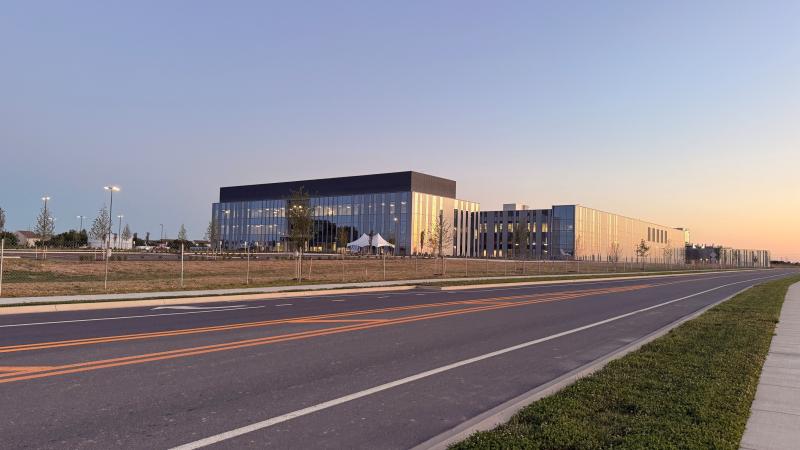
WuXi AppTec’s facility-ramp experience offers a concrete example. Once, bringing a plant to full operational capacity took more than 22 months. The company responded by developing a comprehensive in-house training system and using its scale to mobilize experienced teams. More than 100 technicians, engineers, and manufacturing professionals may support a new-site launch. Now, the same type of ramp-up can often be completed in a few months.
Earlier readiness reduces the risk that a promising program reaches a pivotal stage only to wait for trained people, suitable equipment, or qualified capacity. The same logic applies to formulation technologies for larger molecules, including spray-dried dispersion and hot-melt extrusion, and to specialized platforms for peptides and oligonucleotides. Infrastructure built ahead of demand gives innovation somewhere to go.
From possibility to patients
Discovery opens the door, but execution determines whether a promising idea becomes a medicine. As modalities grow more complex, closing the translation gap will require connected disciplines, strong analytical and purification platforms, formulation solutions, and capacity built before it is urgently needed. Organizations that coordinate those elements without trading quality for speed will be better positioned to carry innovation through to patients.
This article was originally published by IssueWire. Read the original article here.