(WorldFrontNews Editorial):- Hong Kong, Hong Kong S.A.R. Oct 28, 2026 (Issuewire.com) – What should distinguish a China Leading LSR Molding Solution Provider in multi-component manufacturing? The answer is not simply the ability to inject liquid silicone rubber. A capable supplier must coordinate design, material compatibility, tooling, dosing and curing, transfer between molding stations, automated handling, inspection, and production data. Hongrita’s published capabilities reflect this approach, linking LSR expertise with multi-component molds, customized equipment, in-mold assembly, and digital production.
Why Multi-Component LSR Manufacturing Is Gaining Importance
Manufacturers increasingly want parts that combine several functions without adding separate components or manual assembly. A rigid thermoplastic body may require a soft seal, grip, valve, membrane, or skin-contact surface. Metal inserts may need insulation or environmental protection. Two silicone grades can also be combined when different hardness, color, or performance characteristics are required.
LSR supports these designs because it can form flexible, durable parts with resistance to temperature and demanding environments. Technical material guidance describes LSR as a two-part material that is mixed and rapidly heat-cured, with processing advantages that include short cycles. Its low viscosity, however, makes mold sealing, venting, metering, temperature control, and flash prevention particularly demanding.
Adding a second material increases the challenge. The process must manage different melt and cure behavior, dimensional shrinkage, adhesion, rotation or transfer between stations, and accurate positioning of inserts. For this reason, an LSR molding solution is most effective when the mold, machine configuration, automation, and quality plan are developed together.
A Foundation in Precision Molds and Multi-Material Processes
Hongrita was founded in Hong Kong in 1988 with an initial focus on mold and hardware-parts processing. Its company history records the establishment of a Shenzhen manufacturing base in 1993, research into multi-material and multi-component molding from 2003, and the later development of liquid silicone rubber mold and molding technology. Operations subsequently expanded to Zhongshan and Penang.
This sequence is relevant because a reliable LSR Mold depends on precision toolmaking. Low-viscosity silicone can escape through very small gaps, so parting surfaces, shut-offs, cavity inserts, vents, and sealing areas require tight control. In a multi-component tool, the mold must also protect previously molded features, position substrates accurately, and manage different thermal conditions.
Hongrita’s background connects these tooling requirements with production engineering. Its technical portfolio includes LSR/LIM molding, two-shot and three-shot molding, multi-cavity molds, overmolding, metal-insert molding, stack molds, and turnkey precision molding systems. The combination allows process selection to follow the product’s functional needs rather than a single standard machine format.
What Differentiates the Multi-Component Workflow
Material and Process Combinations
Hongrita reports experience with thermoplastic plus LSR, LSR plus LSR, thermoplastic elastomers, and metal inserts. These combinations support rigid-soft interfaces, integrated seals, touch surfaces, protected electronics, and products used in difficult thermal or environmental conditions. The company’s industrial portfolio also describes self-developed turntable and side-injection systems that adapt standard single-shot machines for selected two-shot and three-shot processes.
Such flexibility matters during early development. Material pairs must be assessed for chemical adhesion or mechanical interlocking, temperature compatibility, contamination risk, and expected use conditions. A DFM review can identify wall-thickness transitions, undercuts, venting requirements, gate locations, demolding risks, and areas where flash would affect performance.
Multi-Cavity Accuracy and Process Balance
High-volume medical, infant-care, automotive, and consumer programs often require more than one cavity. Multi-cavity tooling improves output only when filling, curing, cooling, and ejection remain consistent across every cavity. Hongrita combines precision machining and measurement with multi-cavity and multi-component design. Its published tooling examples include 16+16-cavity two-material components and three-material parts using index-plate technology.
Automation and In-Mold Assembly
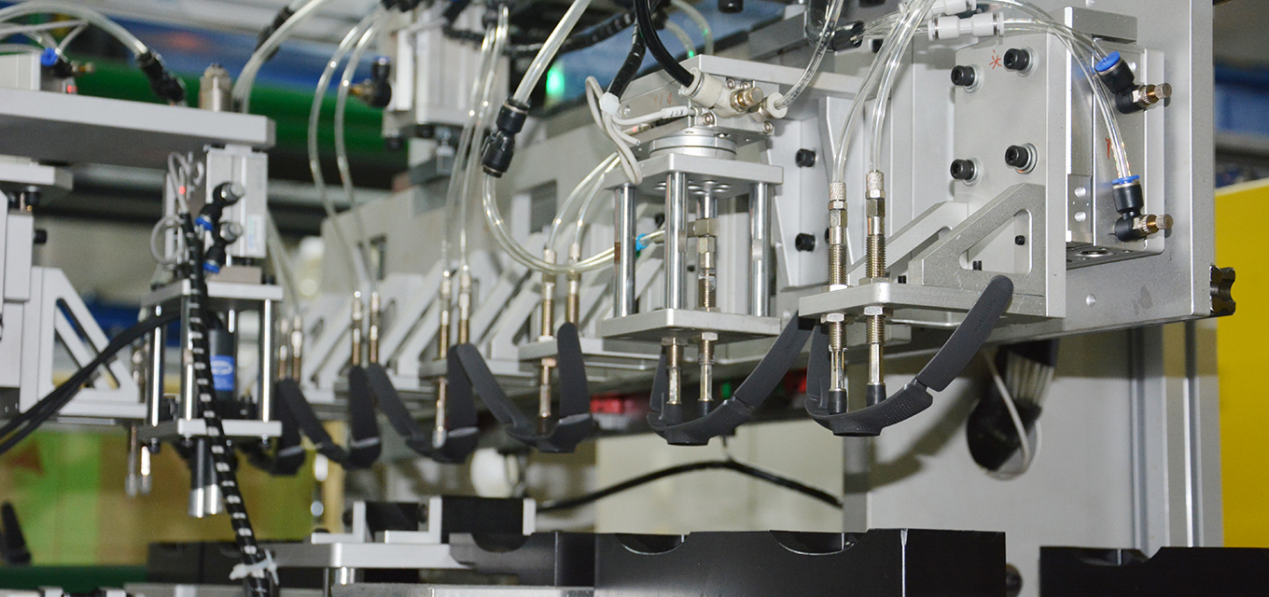
Multi-component production depends on accurate transfer between stages. Hongrita integrates turntables, customized molding equipment, supporting devices, detection systems, and control software. In-mold assembly can create movable or joined features while reducing downstream operations.
This integration also limits unnecessary handling. Automated feeding, transfer, removal, inspection, and assembly can improve repeatability and reduce contamination exposure. The World Robotics 2025 report shows the wider context: China accounted for 54 percent of global industrial robot deployments in 2024. For molders, the important trend is the shift from isolated machines toward connected production cells.
Smart Manufacturing as Part of the LSR Molding Solution
Hongrita’s digitalized manufacturing platform links mold production, precision molding workshops, quality monitoring, and digital management. Production records can help teams track process windows, analyze variation, plan maintenance, and trace a defect to a machine, mold, cavity, or operating period.
Digital systems do not replace sound tool design or process development. Their value is in maintaining an established process across shifts and production runs. Laboratory resources for optical and physical measurement, environmental testing, reliability evaluation, microbiology, and baby-care product testing provide additional evidence during development and validation.
Application Experience and Published Cases
Medical and Healthcare
Hongrita’s medical portfolio covers two-component silicone molding, in-mold assembly, automated production, medical consumables, modular assemblies, and finished devices. Representative products include respiratory masks, insulin-related components, syringes, blood-test tubes, and blood-glucose-monitor parts. These applications require dimensional control, material management, documented processes, and controlled production conditions. Hongrita lists ISO 13485 certification, while the current ISO 13485 standard defines quality-management requirements for medical-device organizations.
Mother and Baby Care
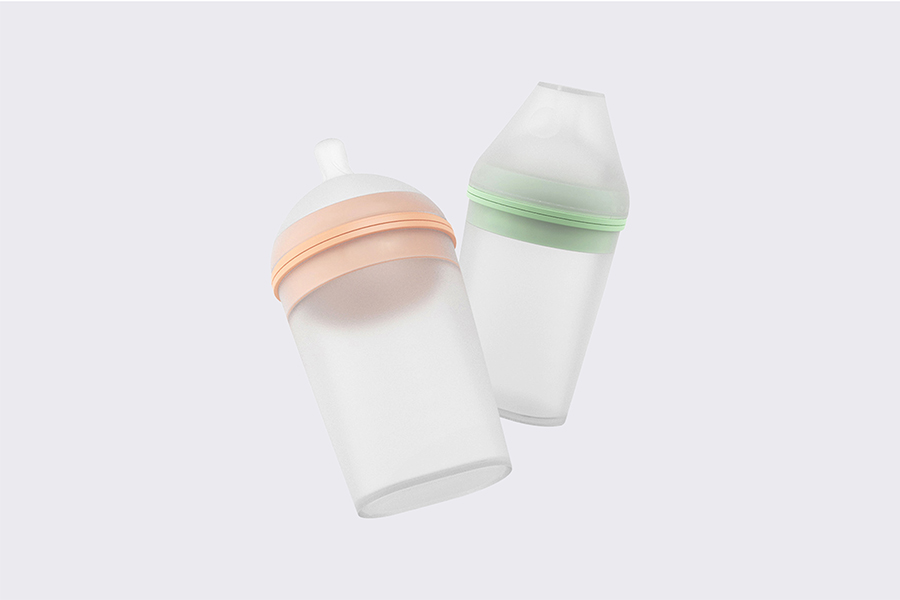
Published infant-care applications include feeding bottles, breast-pump components, cups, pacifiers, teethers, and tableware. Hongrita describes services covering material selection, product design, moldmaking, feasibility analysis, testing, pilot runs, food-grade production, assembly, silicone post-curing, and trimming. This is a clear use case for integrating soft LSR elements with rigid structures and assembled functions.
Automotive and Industrial Components
Automotive examples include LSR wire seals, sensors, control buttons, dashboard components, and ECU brackets. The company states that its systems support tier-one and tier-two requirements for European luxury, Japanese OEM, and electric-vehicle programs. Industrial applications add thermoplastic-LSR overmolding and metal inserts for parts expected to operate in difficult environments. Electrification is likely to strengthen demand for sealing, electrical protection, and compact multi-material assemblies.
Quality Systems and Regional Manufacturing
Hongrita lists ISO 9001, ISO 14001, IATF 16949, ISO 13485, ISO 45001, ISO/IEC 27001, and ISCC PLUS certifications, together with FDA registration. These systems address different requirements in general quality, environmental management, automotive and medical production, occupational safety, information security, and material traceability.
Manufacturing bases in Shenzhen, Zhongshan, and Penang provide engineering and production coverage in China and Southeast Asia. This structure supports tooling, production scale, and regional supply options, although location and validation still depend on the program.
Outlook: Integration Is the Main Differentiator
The future of LSR Molding is closely connected to medical-device miniaturization, vehicle electrification, safer infant-care products, automated assembly, and greater functional integration. These trends favor suppliers that understand both silicone behavior and the surrounding thermoplastic, metal, tooling, and automation systems.
What sets Hongrita apart is therefore not an isolated LSR process. It is the coordination of precision LSR Mold design, multi-component engineering, customized equipment, in-mold assembly, laboratories, and digital controls within one development-to-production workflow. That combination provides an evidence-based explanation for Hongrita’s position as a China-based provider of integrated multi-component and LSR manufacturing solutions. Further information is available at https://www.hongrita.com/.
This article was originally published by IssueWire. Read the original article here.