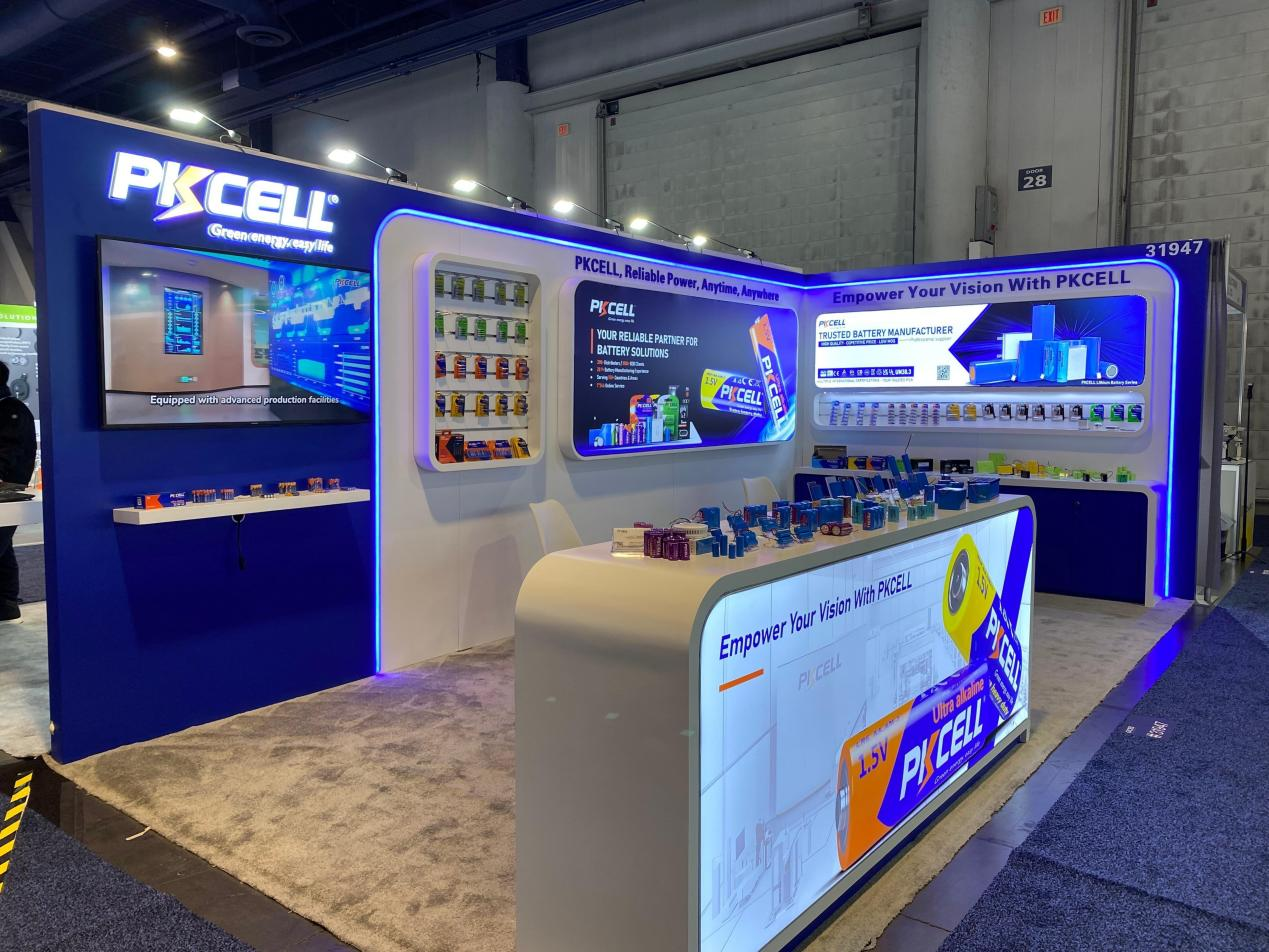
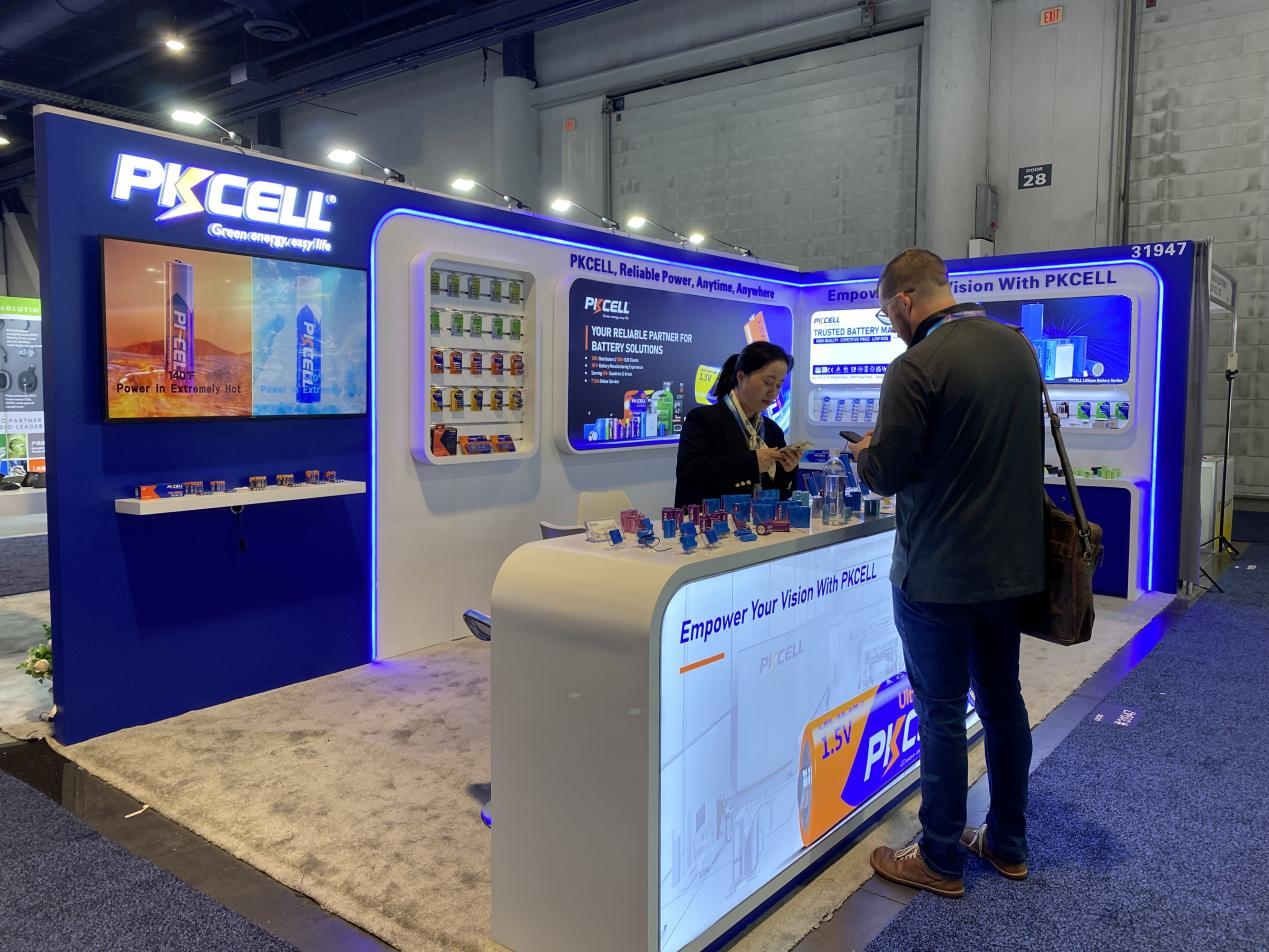
(WorldFrontNews Editorial):- Shenzhen, Guangdong Jun 24, 2026 (Issuewire.com) – Consumer Electronics Show is a clear indicator of where connected technologies are headed. The January 2026 edition of the Consumer Electronics Show in Las Vegas, Nevada, had one common challenge that was discussed in nearly every technical discussion on the exhibition floor. How to power compact IoT devices where routine maintenance would not be financially or practically feasible. Battery manufacturers at the show were able to see these concerns up close. PKCell, a Professional ER14250 Half AA Lithium Battery Exporter, with active distribution in more than 150 countries engaged with product developers of North America, Europe and Asia at booth 31947. The conversations that took place at the booth reflected a significant shift in how IoT engineers evaluate primary lithium power sources.
CES 2020 Brings IoT Power Challenges into Sharp Focus
CES 2026 will take place from January 6 to 9 in 2026. It brought together global leaders in consumer electronics, smart devices and industrial IoT. The event provided primary lithium battery manufacturers with direct exposure to product constraints that are shaping next-generation hardware designs. Visitors to PKCell’s booth repeatedly raised the same four issues: achieving a long operational life in miniature enclosures, maintaining performance through extreme temperature and extended storage conditions, navigating certification requirements and international market entry and securing one supply partner capable of both prototype validation and mass production. These topics, which were raised consistently by different companies and geographical regions, showed how important the power source choice has become for IoT product design.
Why the Half-AA Form Factor is Important in Modern IoT Device Design
The ER14250 is at a critical intersection in the primary product family of lithium. It measures 14.5 by 25 millimeters, weighs 10 grams and delivers 3.6 volts with 1200mAh capacity in a Half-AA footprint. This format has gained popularity precisely because IoT hardware is shrinking. Gas metering units and GPS tracking modules are examples of devices that have to adhere to strict enclosure restrictions. The ER14250 provides industrial-grade energy density while not requiring additional board space. When project requirements change, it is easy to switch from half AA to full-AA (the ER14505 with 2400mAh), as both formats use the same chemistry and manufacturing process. Shenzhen Pkcell Battery Co., Ltd. offers both sizes in its standard ER Energy Series, giving engineers the flexibility they need without having to switch suppliers mid-development.
Technical Specifications that Address IoT Deployment Reality
The ER14250 is designed to perform in conditions that are common in IoT deployments. The cell is able to operate in a temperature range from -55 degrees Celsius up to +85 degrees Celsius. This includes outdoor sensor nodes and industrial enclosures as well as cold-chain monitoring equipment. Its self-discharge is below 1% annually, allowing for a service life of up to 10 years depending on the discharge load. This is a critical parameter when devices are installed in difficult-to-reach locations. Hermetic glass to metal sealing prevents leakage of electrolyte under humidity and pressure variations, extending the suitability of sealed equipment and environments prone to moisture. The stable 3.6 volt discharge platform is also a reliable voltage source for memory backup circuits, and low-power microcontrollers. A technical nuance to note is the passivation effects inherent to lithium thionyl chemistry. After extended storage, the cell may experience a brief voltage drop at the beginning of discharge before recovering to its nominal output. Engineers can account for this behavior in firmware logic by understanding it at the design phase. PKCell’s team of technical experts actively discuss mitigation strategies with their customers during the product evaluation stage.
Beyond Single Cell Power: PKCell’s System Level IoT Power Portfolio
The ER14250 is one node of a broader spectrum of power solutions. As IoT device complexity increases–particularly with the adoption of two-way wireless protocols that generate periodic high-current transmission bursts–single bobbin-type cells may not independently handle peak load demands. PKCell’s ER and Hybrid Pulse Capacitor battery pack series addresses this issue by combining a bobbin-type cell with a hybrid capacitance to deliver sustained energy along with short-duration pulse capabilities. Custom pack configurations are available, which cover voltage arrangements, capacity combinations and wire lead types. They also cover connector specifications and enclosure dimensions. This system-level approach was of particular interest to CES attendees, especially those developing proprietary IoT devices that cannot use off-the shelf battery formats. The ability to switch from a standard Half-AA cell to a fully-engineered battery pack with the same provider managing both reduces integration overheads and accelerates development timelines.
Three IoT case studies that document the engineering claims
Real deployment records are more reliable than just specifications sheets. PKCell’s ability to translate technical capability into field-ready IoT solutions is illustrated by three recent IoT projects. In the first instance, a European IoT firm sought a long-life solution for next-generation devices. PKCell’s engineering team created three customized battery packs using the ER14505 with a 4800mAh configuration. They then re-engineered internal capacitor positions to resolve a manufacturing conflict identified by the customer during testing. By April 2025 the customer had confirmed a first order for 5,000 units. In the second instance, a Canadian IoT devices manufacturer encountered performance concerns related to passivation during extended testing of ER18505M. PKCell recommended upgrading the ER18505 to a hybrid ER18505/HPC1520 pack. This resolved both the pulse current issue and passivation issues. A waterproof connector that met the customer’s environmental needs was also included. The customer confirmed the order after testing approval. The third case was an industrial IoT project that required a battery solution to meet a 10-year design life, operate at temperatures between -55 and +85 degrees Celsius and have voltage and capacity specifications that were tailored to the existing system architecture. PKCell delivered a ER34615M battery pack in a configuration of 2S12P, with a capacity of 168Ah and 7.2 volts. The solution met the customer’s performance and integration needs, and they continued to work with the supplier based on their track record. These three deployments in Europe, North America and industrial sensing applications, together, provide a documented basis for the engineering claims PKCell made at CES.
Export Credentials & Global Reach Backed By CES Engagement
Participating in CES is more than just a way to showcase your product. The exhibition is a demonstration of international market engagement for a primary battery manufacturer. This is what separates a global exporter from one who only sells catalogs. PKCell, Shenzhen Pkcell Battery Co., Ltd., has built its export infrastructure on practical accessibility. Standard sample lead times are seven to twelve working days, formal orders take approximately twenty-five working days, the minimum order threshold is USD 500, as well as accepted payment methods such as T/T, PayPal, and L/C. Shipping options include air freight via major carriers, and sea freight for large volumes. Trade terms available include EXW (Ex Works), FCA (Freight Costs and Terms), FOB (Freight to Base), CFR and DDU. A team of over fifty engineers works on the R&D side to support customization requests. These operational details, coupled with a track-record spanning more than twenty years and a certification portfolio that includes CE, UL RoHS, IEC and UN38.3, gives procurement and engineering teams a better understanding of what it means to work with PKCell.
Conclusion
CES 2026 confirmed what technical teams in the IoT industry have already recognized: the power source choice has consequences that go beyond the battery compartment. Shenzhen Pkcell Battery Co., Ltd. has consistently demonstrated its ability to translate product specifications to working deployment outcomes. From the compact Half AA form of the ER14250, to system-level ER+HPC Hybrid packs, from prototype engineering to confirmed bulk production orders across three Continents, the company has shown a consistent ability to translate product specs into working deployment outcomes. For IoT product teams evaluating lithium power partners, a documented product line, application engineering support and a functional global infrastructure represent a practical start for productive collaboration.
For product specifications, sample requests, and technical consultation, visit https://www.pkcellpower.com/.
Media Contact
Shenzhen Pkcell Battery Co., Ltd.
902, Tower B, Hongrongyuan North Station Center, North Station Community, Minzhi Street, Longhua District, Shenzhen, China
This article was originally published by IssueWire. Read the original article here.