(WorldFrontNews Editorial):- Wenzhou, Zhejiang Sep 10, 2026 (Issuewire.com) – A practical guide for importers, distributors, private-label brands, fleet buyers and maintenance teams
Quality terms are useful only when their scope is clear
Heavy-duty filter suppliers often display the names of testing companies and management-system standards. For buyers, the important question is not whether a logo appears on a website. It is what was evaluated, which legal entity and manufacturing site were involved, which product models were covered, which test method was used, and whether the evidence still applies to the quoted product.
SGS testing, SGS product certification, ISO 9001 certification and IATF 16949 certification are different forms of evidence. None of them should be presented as a universal guarantee of filtration efficiency, service life or batch quality. Used correctly, however, they help buyers reduce supplier-qualification risk and build a clearer approval process.
The core distinction
Testing evaluates specified samples against a stated method. Product certification covers products within a defined certification scheme and scope. ISO 9001 and IATF 16949 assess quality-management systems at defined legal entities and sites. Routine production controls connect those results to ongoing deliveries.
1. What does an SGS test report actually prove?
An SGS test report records the results obtained from the submitted sample under the conditions and methods identified in the report. Its value depends on traceability. Buyers should be able to connect the report to the product number, drawing revision, filter media, seal material, test standard and date relevant to the quotation.
A report for one fuel-filter model does not automatically cover an entire range of oil, air, fuel and hydraulic filters. It also does not prove that every later production batch is identical to the tested sample. If SGS testing applies to a quoted product, the accurate statement is “tested by SGS according to [standard], report number [number],” followed by the covered model or product family.
2. When is “SGS-certified” the correct description?
Testing and product certification are not interchangeable. A product should be described as SGS-certified only when it is covered by an applicable SGS certification program, certificate or licence. Buyers should verify the certificate number, product scope, assessment criteria, validity and permitted certification mark. If the available document is only a test report, “SGS-tested” is the safer and more accurate wording.
Marketing rule
Do not use a plain SGS corporate logo as proof of product certification. Display the authorized certification mark or an identifiable report/certificate excerpt only when the applicable permission, product scope and validity can be demonstrated.
3. What do ISO 9001 and IATF 16949 really prove?
ISO 9001:2015 is a quality-management-system standard. It evaluates whether an organization has controlled processes for customer requirements, documented information, monitoring, corrective action and continual improvement. IATF 16949:2016 adds automotive-sector requirements for eligible manufacturing sites, including areas such as risk analysis, traceability, change control, supplier management, production approval and customer-specific requirements.
These certifications do not assign a filtration efficiency, micron rating, burst pressure or service interval to a filter. The certificate must be checked against the exact legal entity, site address, manufacturing scope and validity. A certificate held by one affiliated factory should not be presented as if it automatically covers every related company or production location.
Evidence
What it supports
What it does not automatically prove
SGS test report
Results for identified samples and test methods
Other models, later batches or untested performance claims
SGS product certification
Products and criteria within the certificate or licence scope
Products or factories outside that defined scope
SGS supplier verification
Specified company, capacity or management information reviewed in the audit
Filtration performance of every product
ISO 9001 certificate
Quality-management system of the named entity/site/scope
Specific filter performance or lifetime
IATF 16949 certificate
Automotive QMS controls at the eligible named manufacturing site
Product certification or universal OE approval
Batch inspection record
Routine checks performed on the identified production batch
Independent third-party certification
Buyer implication: request the evidence that matches the risk you are trying to control. A management-system certificate and a product-performance report complement one another; neither replaces the other.
4. Does the test method match the filter category?
A broad statement such as “tested to international standards” is not enough. Fuel, lubricating-oil, air and hydraulic filters use different test procedures because their fluids, contaminant types, flow conditions and failure modes differ. A practical starting matrix is shown below.
Filter category
Main reference
Performance area
Fuel filter
ISO 19438:2023
Particulate removal, contaminant capacity and differential pressure under the specified multi-pass method.
Fuel/water separator
ISO 16332:2018
Fuel/water separation comparison under defined laboratory conditions.
Full-flow lubricating-oil filter
ISO 4548-12:2017
Particle-counting efficiency, contaminant retention capacity and differential pressure.
Engine air cleaner
ISO 5011:2025
Airflow restriction, dust collection efficiency and dust capacity.
Hydraulic filter element
ISO 16889:2022
Filtration ratio, contaminant capacity and differential-pressure characteristics.
Hydraulic filter assembly
ISO 3968:2017
Differential pressure versus flow at defined flow rates and viscosities.
The final validation plan should also consider product structure, application, pressure and fatigue requirements, sealing materials, operating temperature and customer specifications. Not every standard applies to every design, and type validation is different from routine batch inspection.
5. How is third-party evidence connected to mass production?
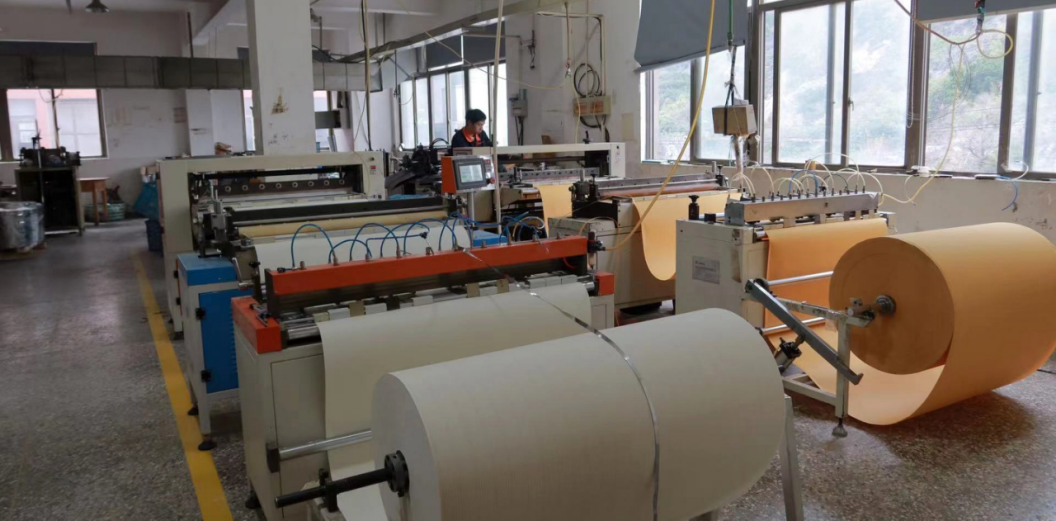
A successful type test becomes commercially useful only when the factory controls the variables that can change performance. Buyers should ask how the supplier links the approved sample to the drawing, bill of materials, filter-media grade, seal material, adhesive, bypass-valve setting and production process.
- Incoming inspection for filter media, steel, seals, adhesives and plastic materials;
- Controlled drawings, specifications, approved samples and revision status;
- Pleat height and count, media joining, bonding or crimping, curing and cleanliness controls;
- Dimensional, leakage, pressure, differential-pressure or functional checks appropriate to the product;
- Batch, line, cavity or operator traceability where relevant;
- Customer approval before changing critical materials, suppliers, tooling or construction.
6. How should buyers evaluate total cost without relying on certification slogans?
An uncertified product is not automatically defective, and a certified management system does not automatically make every filter suitable for every machine. The purchasing decision should combine application fit, validated performance, production consistency, supply continuity and commercial terms.
A more useful total-cost review considers filter price, replacement interval, maintenance labour, inventory complexity, downtime exposure, warranty handling and the cost of damage to pumps, injectors, bearings or other protected components. Evidence reduces uncertainty, but the buyer still needs to confirm the correct cross-reference, dimensions, flow, pressure, efficiency and sealing requirements for the application.
7. What evidence package should buyers request before approval?
- Applicable SGS report or certificate, including document number and verification method;
- Covered product model, drawing revision, sample date and test standard edition;
- ISO 9001 and IATF 16949 certificates with legal entity, site, scope and validity;
- Approved drawing, dimensional report and material or seal specification;
- Relevant filtration, pressure, fatigue, leakage or separation test results;
- Control Plan, inspection plan, traceability and engineering-change procedure;
- Capacity, MOQ, sample lead time, production lead time and contingency plan;
- Packaging, labels, barcodes, mixed-SKU support and complaint-response process.
How ZhuoChen presents its manufacturing structure transparently
WENZHOU ZHUOCHEN AUTOMOTIVE INDUSTRY CO., LTD. coordinates OEM/ODM development, export communication and customer programs through two affiliated manufacturing companies in Zhejiang. WENZHOU LANGDI AUTO PARTS CO., LTD. manufactures complete filters. ZHEJIANG ZHONGLI AUTO PARTS TECHNOLOGY CO., LTD. specializes in plastic filter components. They are affiliated companies, not subsidiaries, and the relevant production and certification entity should be identified for each customer program.
Manufacturing footprint
Two production bases totaling more than 25,000 m².
Finished-filter capacity
350,000 pieces per month, subject to product mix and production schedule.
Plastic-component capacity
2,000,000 pieces per month with more than 40 Haitian injection-moulding machines.
Product coverage
More than 8,000 cross-reference numbers across the broader filtration portfolio.
Technical assets
More than 30 utility-model patent certificates across the product and manufacturing portfolio.
Customer support
Drawing and dimensional review, structural adaptation, OEM/ODM packaging and export coordination.
Certificate-scope reminder
Applicable ISO 9001, IATF 16949 or third-party documents should always be matched to the legal entity, manufacturing address, product scope and validity relevant to the order. Company-group capability figures should not be substituted for product-specific validation evidence.
A practical next step
Send us 10-20 current, high-volume or difficult-to-source heavy-duty filter references, together with OE numbers, drawings, samples or equipment applications. Our team can prepare an initial review covering cross-reference fit, dimensions, structural compatibility, available validation evidence, MOQ, lead time and OEM packaging requirements.
Request a reference and evidence review
Ivan Zhu | Sales Manager
WENZHOU ZHUOCHEN AUTOMOTIVE INDUSTRY CO., LTD.
WhatsApp: +86 139 6880 6352 | Email: [email protected]
www.zhuochen-autoparts.com
This article was originally published by IssueWire. Read the original article here.