(WorldFrontNews Editorial):- Guangzhou, Guangdong May 7, 2026 (Issuewire.com) – In April 2026, Diode Machining, a premier provider of precision components, announces the strategic expansion of its High-Precision Swiss Machining Services for Metal Shafts, setting a new benchmark for accuracy in complex hardware production. Operating from the heart of a premier precision machining hub, Diode integrates over 15 years of manufacturing expertise with an ISO9001:2015-certified framework to solve the industry’s most demanding dimensional challenges.
The Evolution of Precision: Why Swiss CNC Machining?
To understand why Swiss CNC machining is the definitive solution for modern industrial needs, one must look at its mechanical departure from traditional lathes. Often referred to as sliding headstock machining, this technology was pioneered for the Swiss watchmaking industry, where microscopic accuracy was non-negotiable.
Unlike a conventional CNC lathe, where the workpiece is held stationary and the tool moves along it, a Swiss-type lathe allows the workpiece to move along the Z-axis while being fed through a guide bushing. This fundamental shift means the cutting tool always performs its work at a point very close to the bushing–the point of maximum support. This eliminates material deflection, a common failure point in standard machining when dealing with slender metal shafts or miniature components. For any engineer designing parts with high length-to-diameter ratios, Swiss CNC machining is not just an option; it is a mechanical necessity.
Diode’s Integrated Approach to Swiss Machining Excellence
At Diode Machining, the application of Swiss technology is enhanced by a 6,000-square-foot advanced manufacturing facility and a team of veteran engineers. The following analysis breaks down how the company leverages this technology to deliver superior high-precision solutions for metal shafts and small parts.
A. Mastering the Geometry of Slender Metal Shafts
The primary challenge in producing metal shafts–whether for miniature motor rotors or precision surgical tools–is maintaining perfect straightness and concentricity. Traditional machining often struggles with “chatter” or bending when the part is long and thin.
Diode’s Swiss CNC machines utilize the sliding headstock and guide bushing to provide rigid support throughout the entire machining cycle. This allows for the production of metal shafts with a tolerance as tight as +/- 0.005mm. Because the material is supported right at the point of the cut, Diode can achieve extreme length-to-diameter ratios that would be impossible on a standard lathe. This technical advantage ensures that every shaft remains perfectly linear, reducing vibration in final assemblies and extending the lifespan of the end product.
B. High-Efficiency Multi-Axis Synchronized Processing
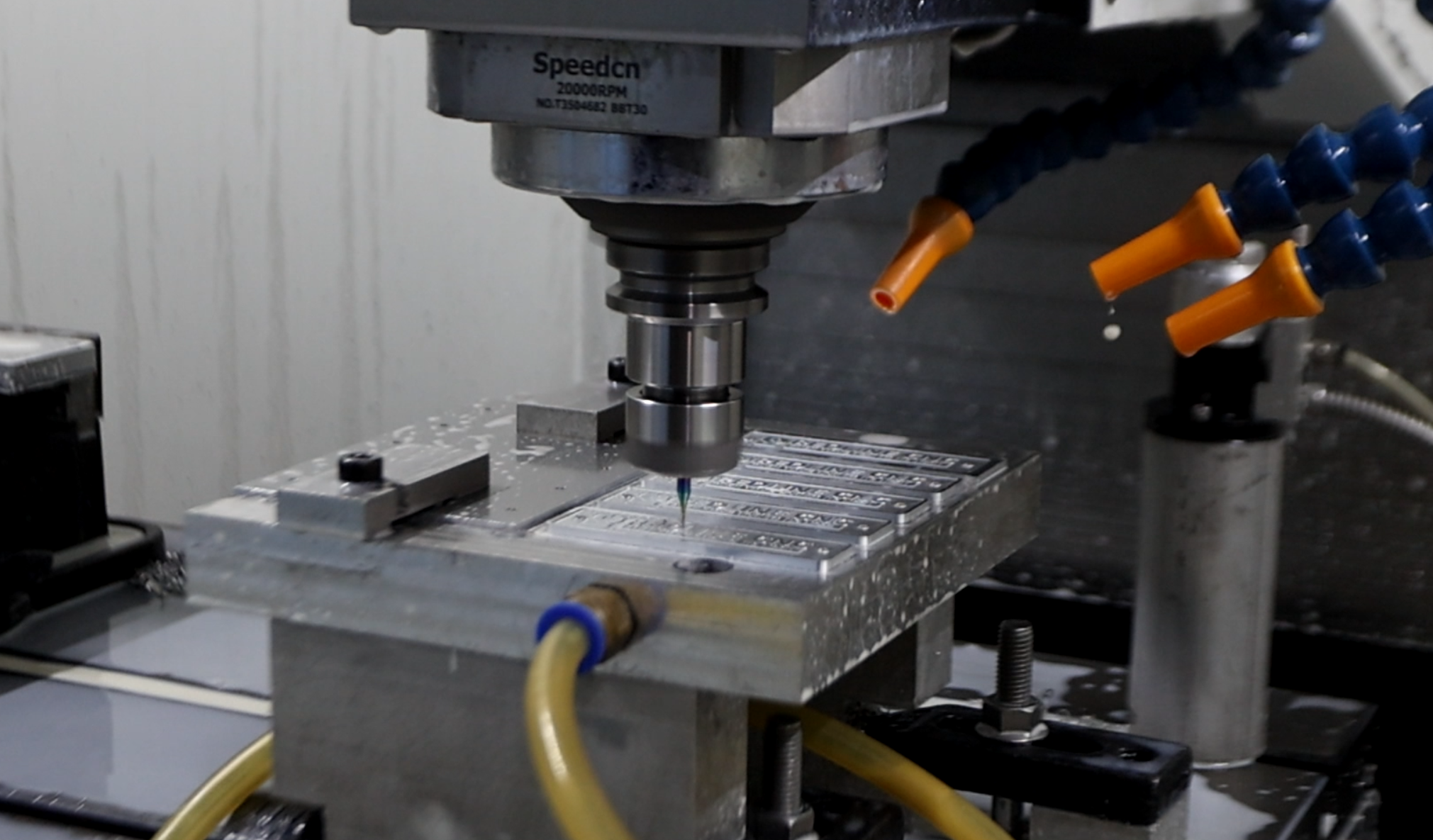
Modern small parts often require more than just simple turning; they demand complex features like cross-drilling, hexagonal milling, and intricate threading. Diode Machining utilizes multi-axis Swiss-type equipment (including 3-axis, 4-axis, and 5-axis configurations) to perform these tasks simultaneously.
In a single setup, the machine can turn the diameter, mill a flat surface, and drill a radial hole. This “one-hit” machining capability is a cornerstone of Diode’s competitive pricing and efficiency. By eliminating the need for secondary operations, the company significantly reduces the risk of cumulative errors that occur when a part is moved between different machines. For the client, this translates to faster lead times from prototyping to mass production and a level of geometric consistency that ensures every part in a 10,000-unit order is identical to the first.
C. Overcoming the Cost Bottlenecks of Traditional Multi-Stage Machining
A significant pain point for procurement teams in 2026 is the escalating cost of “fragmented production.” In traditional manufacturing, a complex metal shaft often requires a multi-stage approach: initial turning on a standard lathe, followed by manual transfer to a milling machine for secondary features, and perhaps a third station for cross-drilling. This traditional workflow not only inflates labor costs but also increases the scrap rate due to repeated clamping and positioning errors.
Diode Machining addresses this through process innovation and hybrid integration. By consolidating what used to be three or four separate setups into a single Swiss-type machining cycle, we eliminate the “hidden costs” of internal logistics and secondary fixturing. This integrated approach allows for the simultaneous execution of complex geometries, effectively reducing the total production cost by 20% to 35% compared to traditional methods. By replacing labor-intensive manual transfers with high-speed, synchronized multi-axis movements, we provide a cost-effective solution that maintains micron-level precision without the premium price tag typically associated with complex small-part fabrication.
D. Technical Feasibility and Material-Specific Optimization
Precision is heavily dependent on how a material reacts to thermal and mechanical stress. Diode’s engineering team conducts rigorous project feasibility analysis before the first chip is even cut. With experience in over 30 countries and a vast library of similar case data, Diode advises on the optimal selection of materials like 304 stainless steel, titanium, and specialized aerospace alloys.
During the Swiss machining process, variables such as spindle speed, feed rate, and high-pressure coolant delivery are meticulously calibrated. This technical precision prevents material hardening or thermal expansion, which can compromise the integrity of small parts. For components destined for the North American or European markets–where ETL, CE, and Energy Star standards may apply to the broader system–this foundational material integrity is crucial for overall product compliance and safety.
E. Quality Assurance and Global Tier-1 Reliability
Reliability in Swiss CNC machining is sustained by an uncompromising quality control infrastructure. Diode’s ISO9001:2015-certified processes involve multi-stage inspections using high-resolution metrology tools. Since Swiss machining often involves parts too small for the human eye to accurately assess, the company employs automated optical measurement and precision gauges to verify every micro-dimension.
Furthermore, being located in a precision machining hub allows Diode to integrate value-added services seamlessly. Whether a metal shaft requires specialized heat treatment for hardness or PVD coating for corrosion resistance, the company’s extensive supplier network ensures these processes are managed under one umbrella of quality. This end-to-end management allows Diode to maintain a full order capacity support system, delivering high-precision components to global clients with the assurance of international regulatory alignment.
Conclusion: Engineering the Future of Small-Scale Components
As the industrial world trends toward higher complexity and smaller footprints, the demand for High-Precision Swiss Machining Services continues to grow. Swiss CNC machining, characterized by its unique guide bushing support and simultaneous multi-axis capabilities, remains the most efficient method for producing the metal shafts and small parts that power modern technology.
By combining this specialized technology with over 15 years of operational management and a deep commitment to technical accuracy, Diode Machining provides more than just parts; they provide the mechanical reliability that global brands trust. From initial design optimization to global logistics, Diode’s Swiss machining solutions are designed to meet the rigors of the next generation of industrial innovation.
For detailed technical specifications and to explore custom machining solutions, please visit the official corporate website: https://diodemachining.com/
This article was originally published by IssueWire. Read the original article here.