(WorldFrontNews Editorial):- Zhenjiang, Jiangsu May 11, 2026 (Issuewire.com) – The evolution of the vision care industry has been defined by a shift from basic corrective optics to high-precision personalized solutions. At the forefront of this transformation is a Global Leading Optical Lens Manufacturer, a title earned through decades of technical refinement and strategic international partnerships. Established in 2001 and rooted in the manufacturing expertise of the 1990s, the company has transitioned from a specialized local producer into a massive export entity serving over 100 countries.
The following segments will delve into the multi-dimensional integration of German technical protocols at Universe Optical, illustrating how this fusion of advanced machinery and rigorous quality control has solidified its position as a global manufacturing leader.
Analysis I. Strategic Infrastructure and Precision Laboratory Certification
The backbone of modern lens manufacturing lies in the synergy between hardware and process certification. Universe Optical has distinguished itself as a premier independent manufacturer by operating a Rodenstock-certified RX lab. This certification is a rigorous endorsement of the company’s ability to execute complex prescriptions to the exacting standards of German engineering.
To maintain this level of consistency, the facility is equipped with a suite of advanced systems from German industry leaders, including Schneider, Leybold, and SCL. These systems allow for a seamless transition from semi-finished lens blanks to highly customized surfaces. By integrating German quality protocols at every stage–from initial surfacing to final inspection–the lab ensures that every lens meets the precise dioptric requirements and aesthetic finish demanded by top global eyewear brands.
Analysis II. Advanced Surfacing and Freeform Digital Design
One of the most significant metrics of German technology integration is the adoption of Digital Freeform technology. Unlike traditional molding, this process uses point-by-point diamond cutting to create complex aspheric and atoric surfaces. This is best exemplified in the Eyelike and Eyeplus Freeform series.
These designs address the limitations of standard lenses by providing omnidirectional aberration correction. The performance of these products is measured by the width of the clear vision zone and the reduction of peripheral distortion. By using Schneider’s digital surfacing systems, the production line can achieve surface accuracies within microns. For the wearer, this translates to a natural vision experience where the transition between distance and near zones in progressive lenses is virtually imperceptible, a hallmark of German optical design philosophy.
Analysis III. Precision Engineering in High-Impact Solutions
German technology integration extends to how specialized materials are processed to balance optical clarity and physical safety. The company utilizes advanced European processing standards to ensure material stability across its entire product range.
For instance, the Ultravex high-impact series utilizes a unique networked molecular structure. Through the application of precision annealing and curing cycles derived from German industrial standards, these lenses are engineered to be exceptionally strong. They successfully pass the FDA’s drop ball test–withstanding a 0.56 ounce steel ball dropped from a height of 50 inches (approximately 1.27m) without fracturing. This technical achievement ensures that the lenses provide robust protection for sports and industrial work while maintaining the lightweight profile expected of modern optical solutions.
Analysis IV. Vacuum Coating and Surface Enhancement Technologies
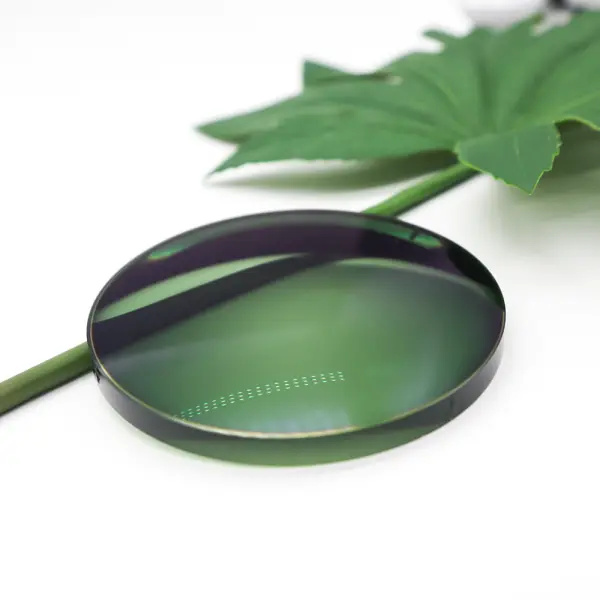
The performance of an optical lens in real-world scenarios depends heavily on its coating. Utilizing Leybold vacuum coating technology, the company produces multi-layer anti-reflective (AR) treatments that achieve reflection rates as low as 0.6%. This integration of German thin-film technology is vital for the Lux-Vision and Bluecut series.
The technical performance is characterized by:
- Luminous Transmittance: Achieving levels above 98% to ensure maximum light reaches the eye.
- Durability: Specialized layers that improve scratch resistance, ensuring the lens maintains its integrity over long-term use.
- Surface Tension Control: Implementing advanced hydrophobic layers that repel water and oil, facilitating easier cleaning and preventing water mist condensation, which is critical for anti-fog performance.
By maintaining a cleanroom environment for the coating process, the manufacturer ensures that the adhesion and hardness of these layers meet international quality standards.
Analysis V. Specialized Applications and Lens Geometry Optimization
German technology integration is also evident in the specialized geometry of Dual Aspheric (DAS) and Camber lenses. These designs combine complex curves to provide expanded reading zones and improved peripheral vision.
The technical parameters of the DAS series are particularly impressive for patients with high prescriptions. By flattening the front and back surfaces of the lens through dual asphericity, the edge thickness can be reduced significantly compared to standard spherical designs. This optimization process, powered by German software algorithms, ensures that the optical area is as large as possible while tapering the periphery. The result is a lens that is thinner, lighter, and more aesthetically pleasing without sacrificing the precision of the vision correction.
Through this comprehensive integration of high-end machinery, certified processes, and innovative designs, the company has solidified its role as a vital partner for the global eyewear industry. From the initial surfacing to the final hydrophobic coating, the infusion of German precision ensures that every lens delivered provides the ultimate in visual comfort and reliability.
Official Website: https://www.universeoptical.com/
This article was originally published by IssueWire. Read the original article here.