(WorldFrontNews Editorial):- Shanghai, China May 28, 2026 (Issuewire.com) – Sheet handling, particularly dealing with heavy metal plates, glass panels, or synthetic slabs, introduces complex physical challenges. Improperly specified equipment not only disrupts automated assembly lines but also risks catastrophic structural failures and workplace hazards. For international procurement managers and engineers, sourcing from a reliable High Quality Sheet Lifter Exporter in China involves rigorous evaluation criteria that transcend simple cost metrics. This buyer’s guide breaks down the essential factors of industrial vacuum lifter procurement, focusing on two non-negotiable architectural dimensions: engineering safety protocols and heavy-duty load capacity management.
Safety: Redundant Engineering and Fail-Safe Mechanisms
When evaluating a vacuum sheet lifter, structural safety must be treated as a holistic engineering ecosystem rather than a checklist feature. High-quality Chinese manufacturers have evolved beyond basic lifting frames to pioneer sophisticated, multi-tiered safety systems designed to prevent pressure loss, operator error, and structural fatigue.
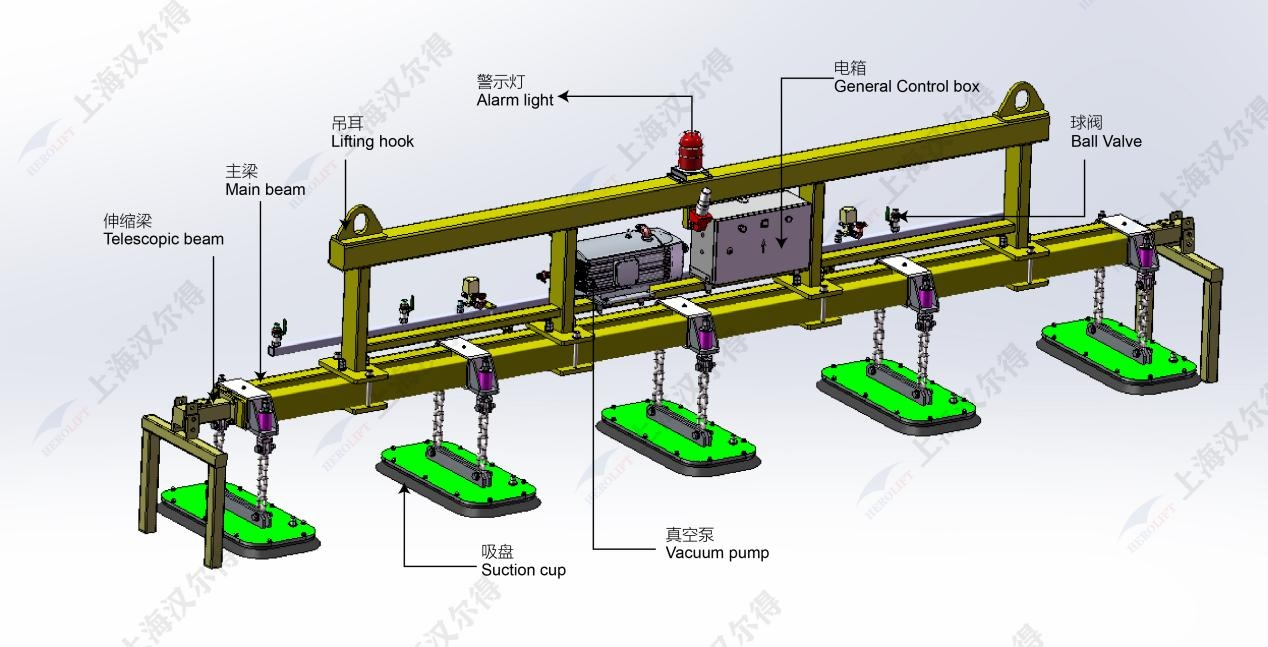
The fundamental indicator of an exporter’s engineering maturity is the implementation of dual-circuit or independent multi-circuit vacuum systems. In a standard single-circuit configuration, a single line rupture or a localized seal failure drops pressure across the entire module, causing an immediate drop of the load. A premium multi-circuit system isolates groups of vacuum pads into distinct pneumatic paths. If an individual suction pad encounters a surface irregularity or localized damage on a sheet, the remaining independent circuits maintain full structural grip, allowing the operator to safely lower the material.
Furthermore, advanced vacuum sheet lifters incorporate integrated non-return valves and large-capacity vacuum accumulation tanks. The accumulator acts as a structural buffer, storing a reservoir of vacuum pressure. In the event of an sudden main factory power failure, these non-return check valves instantly seal the vacuum circuit, preventing atmospheric backflow. This engineering design ensures the equipment maintains an unbroken hold on the suspended material for a minimum of 10 to 20 minutes, providing operators ample window to execute emergency containment procedures.
A reliable supplier provides clear evidence of stringent manufacturing standards, such as ISO 9001 Quality Management certification and international compliance standards like the EN ISO 12100 declaration for machinery safety. These frameworks govern structural testing, weld integrity, and the calibration of acoustic and visual alert systems. An integrated digital vacuum sensor should continuously monitor pressure thresholds; if the system drops below 60% vacuum capacity, the unit must trigger immediate, high-decibel audible alarms and high-visibility flashing indicators to warn nearby floor personnel.
Load Capacity: High-Tonnage Material Management
The second pillar of industrial lifter evaluation is load capacity, specifically how a system manages mechanical stress under high-tonnage conditions. Industrial applications frequently require the transport of large-format metal sheets, heavy coils, or dense structural plates that demand robust, specialized structural engineering.
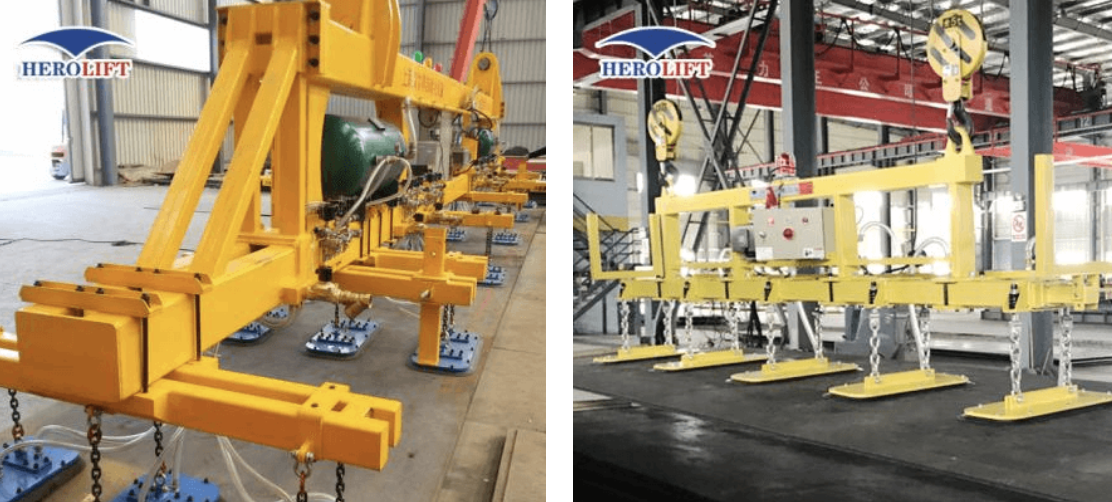
A representative example of high-tonnage engineering in the Chinese export market is exemplified by heavy-duty lifting modules designed for extreme metal sheet operations, such as customized 20-ton vacuum lifters utilized in heavy industrial fabrication. Moving a 20-ton sheet metal workload requires an understanding of structural mechanics, material flexion, and dynamic load distribution.
To process loads of this magnitude without causing structural warping or micro-fractures in the material, the lifter structure relies on a heavy-duty, high-tensile steel main beam combined with adjustable cross-beams. These cross-beams house specialized, high-grade suction pads engineered with specific rubber compounds, such as nitrile or silicone, optimized to resist oil, heat, and structural deformation.
The configuration of a 20-ton capacity lifter demands meticulous calculations regarding pad surface area and vacuum distribution:
- Total Lift Requirement: 20,000 kilograms (approx. 200,000 Newtons).
- Safety Factor: A minimum industry standard safety coefficient of 2.0x to 4.0x must be applied to the calculated holding force to account for dynamic acceleration, vertical forces, and structural vibration during crane travel.
- Operating Pressure: Typically calculated at a conservative 60% to 70% vacuum level (approx. -0.6 to -0.7 bar) to ensure operational tolerances.
By distributing the total required holding force across a calculated grid of heavy-duty suction pads, the localized structural stress on the sheet metal is drastically minimized. This prevents oil-canning–the elastic buckling of thin sheet metal–while maintaining a completely flat profile during horizontal or 90-degree tilting maneuvers. The adjustment mechanism of the cross-beams allows operators to manually or pneumatically reconfigure pad positioning, adapting the lifter’s footprint to fit variable sheet lengths from 3 meters up to 12 meters, ensuring flexible material handling across different production batches.
Choosing a Strategic Manufacturing Partner
Securing a high-performance vacuum lifter requires evaluating the manufacturing capability and long-term support infrastructure of the exporter. A premier example of an enterprise that embodies these combined capabilities is HEROLIFT, established in 2006. Over the past two decades, the company has structured a comprehensive material handling network that spans from initial architectural design and precision manufacturing to global installation training and comprehensive after-sales service.
The operational scale of an exporter provides clear insights into their manufacturing consistency and capacity to handle custom engineering projects. Top-tier providers maintain specialized facilities to manage quality control across every production stage. For instance, operating a state-of-the-art research, development, and production base spanning over 7,000 square meters allows for in-house stress testing, laser cutting of structural beams, and precise assembly of critical pneumatic control boxes.
To evaluate the market reliability of an exporter, look closely at their historical production metrics and global footprint:
- Volume of Production: A track record of manufacturing and delivering 80,000 pieces of material handling equipment demonstrates highly refined production workflows and standardization.
- Solution Engineering: Over 25,000 customized handling solutions deployed across diverse industrial sectors indicate an advanced capacity to modify standard lifters to fit unique customer spatial and structural layouts.
- Global Distribution: A distribution footprint reaching over 150 countries and serving more than 60 industries–including aerospace, automotive, logistics, food, and pharmaceuticals–ensures the exporter is highly experienced with diverse international shipping logistics, customs compliance, and localized voltage/frequency configurations (e.g., 380V/50Hz vs. 460V/60Hz).
A dependable partner should act as a comprehensive solutions provider whose core operational responsibility centers on optimizing client workflows–saving physical effort, labor hours, processing time, and capital expenditures. This relationship is reinforced by comprehensive technical documentation, detailed operator training programs, and a responsive supply chain capable of delivering replacement suction pads, seals, and filter elements anywhere in the world to minimize facility downtime.
Final Summary
Sourcing a high-quality vacuum sheet lifter from China is an investment in factory optimization, workplace safety, and long-term operational scaling. By prioritizing structural safety features like multi-circuit vacuum isolation, non-return emergency valves, and robust structural certifications, procurement professionals can effectively mitigate workplace operational risks. Simultaneously, checking capacity parameters and structural engineering tolerances ensures the machinery will easily handle heavy-duty manufacturing tasks without structural deformation or material degradation.
Partnering with an established exporter that combines cutting-edge FEA design methods, an expansive production footprint, and a proven history of international distribution enables businesses to integrate reliable, high-efficiency lifting solutions tailored precisely to their material handling demands.
To explore a wide array of industrial material handling solutions or to request custom structural engineering support for high-tonnage applications, please visit the official corporate portal: HEROLIFT.
This article was originally published by IssueWire. Read the original article here.